

How to Grow and Care for Spider Plant
Chlorophytum comosum
Written by Emilio Marruso · last checked
Not toxic to cats and dogs, according to the sources · Sources
At a glance
The spider plant is an easygoing perennial that grows happily indoors and in containers, reaching 1 to 1½ feet tall. It makes little plantlets you can start at any time of year, so you can fill your home with new plants. Water it with rainwater or distilled water to keep the leaf tips from browning, and relax: it's non-toxic for cats, dogs and horses.
- Water
Water less in winter; use rainwater or distilled water, since tap water browns the leaf tips
What the sources say (2)
Watering notes: Reduce watering during winter; avoid tap water, as chlorine and fluorides can cause leaf tip burn; distilled water or rainwater helps prevent tip browning
Avoid watering with tap water as the chlorine and fluorides can cause leaf tip burn. Reduce watering during winter.
— Chlorophytum comosum (Anthericum Comosum, Chlorophytum, Ribbon Plant, Spider Ivy, Spiderplant, Spider Plant, Walking Anthericum) | North Carolina Extension Gardener Plant Toolbox [1] Using distilled water or rainwater will help prevent tip browning.
— Spider plant, Chlorophytum comosum – Wisconsin Horticulture [2] - Cold
Survives winters down to 20 °F (−6.7 °C)
Hardy in average winters · USDA 9a · RHS H4 · Z9
What the sources say (2)
Hardiness, coldest zone: 9a [winter low −6.7 to −3.9 °C (20 to 25 °F)]
USDA Plant Hardiness Zone: 9a, 9b, 10a, 10b, 11a, 11b
— Chlorophytum comosum (Anthericum Comosum, Chlorophytum, Ribbon Plant, Spider Ivy, Spiderplant, Spider Plant, Walking Anthericum) | North Carolina Extension Gardener Plant Toolbox [1] Hardiness, warmest zone: 11b [winter low 7.2 to 10 °C (45 to 50 °F)]
USDA Plant Hardiness Zone: 9a, 9b, 10a, 10b, 11a, 11b
— Chlorophytum comosum (Anthericum Comosum, Chlorophytum, Ribbon Plant, Spider Ivy, Spiderplant, Spider Plant, Walking Anthericum) | North Carolina Extension Gardener Plant Toolbox [1] - Soil
Fast-draining soil, pH 6.0–8.0
What the sources say (2)
Soil pH, minimum: 6.0
Soil pH: Neutral (6.0-8.0) Soil Drainage: Good Drainage
— Chlorophytum comosum (Anthericum Comosum, Chlorophytum, Ribbon Plant, Spider Ivy, Spiderplant, Spider Plant, Walking Anthericum) | North Carolina Extension Gardener Plant Toolbox [1] Soil pH, maximum: 8.0
Soil pH: Neutral (6.0-8.0) Soil Drainage: Good Drainage
— Chlorophytum comosum (Anthericum Comosum, Chlorophytum, Ribbon Plant, Spider Ivy, Spiderplant, Spider Plant, Walking Anthericum) | North Carolina Extension Gardener Plant Toolbox [1] - Planting
In cool climates, move it outdoors only after the last frost
What the sources say (4)
Planting: Outdoors in cool climates, bed out after the last frost; plantlets can be started at any time of year
outdoors in cool climates: It does well in most well-drained soils and should be bedded out after the last frost.
— Spider plant, Chlorophytum comosum – Wisconsin Horticulture [2] South Carolina (plantlets): Start new plants at any time of year from the plantlets.
— Spider Plant (Chlorophytum comosum) | Home & Garden Information Center [6] It does well in most well-drained soils and should be bedded out after the last frost.
— Spider plant, Chlorophytum comosum – Wisconsin Horticulture [2] Start new plants at any time of year from the plantlets.
— Spider Plant (Chlorophytum comosum) | Home & Garden Information Center [6] - Feeding
Houseplant fertilizer every 3–4 months while growing; too much means fewer plantlets
What the sources say (5)
When: During active growth
Feed plants during periods of active growth with a water-soluble or time-release houseplant fertilizer.
— Spider Plant (Chlorophytum comosum) | Home & Garden Information Center [6] How often: Every three to four months, or more often at half strength
Fertilizing every 3-4 months is usually sufficient, or feed more frequently using half strength fertilizer solution.
— Spider plant, Chlorophytum comosum – Wisconsin Horticulture [2] Fertilizer: Fertilize the plant every three to four months.
— Spider Plants: Houseplant How-To [5] Mineral fertilizers: Water-soluble or time-release houseplant fertilizer
Feed plants during periods of active growth with a water-soluble or time-release houseplant fertilizer.
— Spider Plant (Chlorophytum comosum) | Home & Garden Information Center [6] Avoid: Over-fertilizing, which reduces plantlet formation
Do not over-fertilize, as this decreases plantlet formation. Spider plant propagates easily by plantlets or division.
— Chlorophytum comosum (Anthericum Comosum, Chlorophytum, Ribbon Plant, Spider Ivy, Spiderplant, Spider Plant, Walking Anthericum) | North Carolina Extension Gardener Plant Toolbox [1] - Pests
Watch for scale insects and mealybugs; overwatering causes root rot
What the sources say (3)
Pests: scale insects, mealybugs, whiteflies, spider mites, aphids
Spider plants generally have few pest problems other than scale insects and mealybugs.
— Spider plant, Chlorophytum comosum – Wisconsin Horticulture [2] The most common insect pest problems include: - Whiteflies - Spider mites - Scales - Aphids
— Spider Plant (Chlorophytum comosum) | Home & Garden Information Center [6] Diseases: root rot
Root rot usually results from a soil mix that does not drain quickly or from excessive watering.
— Spider Plant (Chlorophytum comosum) | Home & Garden Information Center [6] - Size
1 to 1½ ft tall
What the sources say (1)
Mature height: 30.5-45.7 cm (1 ft to 1 ft 6 in)
Dimensions: Height: 1 ft. 0 in. - 1 ft. 6 in. Width: 1 ft. 0 in. - 2 ft. 0 in.
— Chlorophytum comosum (Anthericum Comosum, Chlorophytum, Ribbon Plant, Spider Ivy, Spiderplant, Spider Plant, Walking Anthericum) | North Carolina Extension Gardener Plant Toolbox [1] - Propagation
From plantlets, division or seed; plantlets can be started any time of year
What the sources say (6)
Propagation: Plantlets, division, seed
Spider plant propagates easily by plantlets or division.
— Chlorophytum comosum (Anthericum Comosum, Chlorophytum, Ribbon Plant, Spider Ivy, Spiderplant, Spider Plant, Walking Anthericum) | North Carolina Extension Gardener Plant Toolbox [1] Larger plants can also be divided. They can also be grown from seed, but seedlings will not necessarily have the same leaf coloration as the parent.
— Spider plant, Chlorophytum comosum – Wisconsin Horticulture [2] Planting: Outdoors in cool climates, bed out after the last frost; plantlets can be started at any time of year
outdoors in cool climates: It does well in most well-drained soils and should be bedded out after the last frost.
— Spider plant, Chlorophytum comosum – Wisconsin Horticulture [2] South Carolina (plantlets): Start new plants at any time of year from the plantlets.
— Spider Plant (Chlorophytum comosum) | Home & Garden Information Center [6] It does well in most well-drained soils and should be bedded out after the last frost.
— Spider plant, Chlorophytum comosum – Wisconsin Horticulture [2] Start new plants at any time of year from the plantlets.
— Spider Plant (Chlorophytum comosum) | Home & Garden Information Center [6] - Containers
Grows well indoors and in containers
What the sources say (2)
Indoors: Yes
It is commonly grown as a houseplant for its adaptability to many conditions.
— Chlorophytum comosum (Anthericum Comosum, Chlorophytum, Ribbon Plant, Spider Ivy, Spiderplant, Spider Plant, Walking Anthericum) | North Carolina Extension Gardener Plant Toolbox [1] In containers: Yes
Spider plant does particularly well in hanging baskets or other containers where the leaves and stems can cascade down the side.
— Chlorophytum comosum (Anthericum Comosum, Chlorophytum, Ribbon Plant, Spider Ivy, Spiderplant, Spider Plant, Walking Anthericum) | North Carolina Extension Gardener Plant Toolbox [1] - Safety
Non-toxic for cats, dogs and horses
Overview
Spider plant is an herbaceous perennial houseplant commonly grown in hanging baskets and other containers. [1] It propagates easily from plantlets or by division. [1]
Spider Plant care
How to water Spider Plant
Watering
The sources give different values depending on region, zone or growing conditions.
What each source says
According to NC State Extension: Grows best in moist soil; tolerant of drought and dry soil
According to University of Wisconsin-Madison Extension: Allow the soil to dry slightly between thorough waterings
According to Clemson HGIC: Allow to dry out briefly between waterings
According to SDSU Extension: Water once a week, allowing the soil to dry out between waterings
What the sources say (7)
According to NC State Extension: It grows best in moist soil and medium air humidity, though it is tolerant of drought and dry soil.According to University of Wisconsin-Madison Extension: Allow the soil to dry slightly between thorough waterings.According to Clemson HGIC: Spider plants should be allowed to dry out briefly between waterings.According to SDSU Extension: Water once a week, allowing the soil to dry out between waterings.Allow the soil to dry slightly between thorough waterings.Spider plants should be allowed to dry out briefly between waterings.It grows best in moist soil and medium air humidity, though it is tolerant of drought and dry soil.Watering notes
Reduce watering during winter; avoid tap water, as chlorine and fluorides can cause leaf tip burn; distilled water or rainwater helps prevent tip browning
What the sources say (2)
Avoid watering with tap water as the chlorine and fluorides can cause leaf tip burn. Reduce watering during winter.Using distilled water or rainwater will help prevent tip browning.How much light Spider Plant needs
The sources give different values depending on region, zone or growing conditions.
What each source says
According to NC State Extension: Medium light; tolerates deep shade; intolerant of direct sunlight
indoors (fonte: University of Wisconsin-Madison Extension): Medium to bright light
outdoors (fonte: University of Wisconsin-Madison Extension): Bright light; can sunburn in full sun
South Carolina: Bright indirect light; tolerates some direct sunlight, midday light may scorch leaves
According to SDSU Extension: Indirect to moderate light
What the sources say (8)
According to NC State Extension: Spider plant prefers medium light levels yet can tolerate deep shade. It is intolerant of direct sunlight.indoors (fonte: University of Wisconsin-Madison Extension): Spider plants are very easy to grow indoors in medium to bright light throughout the yearoutdoors (fonte: University of Wisconsin-Madison Extension): Outdoors they need bright light but can sunburn if grown in full sun.South Carolina: They can tolerate some direct sunlight, but midday light may scorch leaves.According to SDSU Extension: Light: Indirect to moderate light.Spider plants are very easy to grow indoors in medium to bright light throughout the year .They can tolerate some direct sunlight, but midday light may scorch leaves.Spider plant prefers medium light levels yet can tolerate deep shade. It is intolerant of direct sunlight.How much cold Spider Plant can take
Hardiness, coldest zone
9a [winter low −6.7 to −3.9 °C (20 to 25 °F)]
What the sources say (1)
USDA Plant Hardiness Zone:
9a, 9b, 10a, 10b, 11a, 11bHardiness, warmest zone
11b [winter low 7.2 to 10 °C (45 to 50 °F)]
What the sources say (1)
USDA Plant Hardiness Zone:
9a, 9b, 10a, 10b, 11a, 11bBest soil for Spider Plant
Soil pH, minimum
6.0
What the sources say (1)
Soil pH:
Neutral (6.0-8.0)
Soil Drainage:
Good DrainageSoil pH, maximum
8.0
What the sources say (1)
Soil pH:
Neutral (6.0-8.0)
Soil Drainage:
Good DrainageWhere to grow Spider Plant
Indoors
Yes
What the sources say (1)
It is commonly grown as a houseplant for its adaptability to many conditions.In containers
Yes
What the sources say (1)
Spider plant does particularly well in hanging baskets or other containers where the leaves and stems can cascade down the side.How to propagate Spider Plant
Plantlets, division, seed
What the sources say (2)
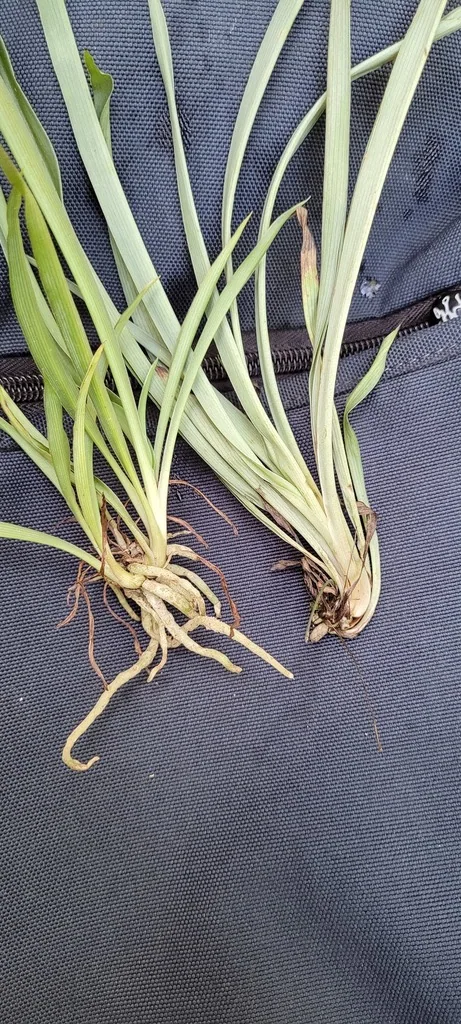
Spider plant propagates easily by plantlets or division.Larger plants can also be divided. They can also be grown from seed, but seedlings will not necessarily have the same leaf coloration as the parent.How to grow Spider Plant
The plant
Life cycle
perennial
What the sources say (1)
This clump-forming, perennial, herbaceous plant, native to coastal areas of South Africa, has narrow, strap-shaped leaves arising from a central point.Family
Asparagaceae
What the sources say (1)
Spider plant is an herbaceous perennial houseplant in the Asparagaceae (asparagus) family.Mature height
30.5-45.7 cm (1 ft to 1 ft 6 in)
What the sources say (1)
Dimensions:
Height: 1 ft. 0 in. - 1 ft. 6 in.
Width: 1 ft. 0 in. - 2 ft. 0 in.Pests and diseases
Pests
scale insects, mealybugs, whiteflies, spider mites, aphids
What the sources say (2)
Spider plants generally have few pest problems other than scale insects and mealybugs.The most common insect pest problems include:
- Whiteflies
- Spider mites
- Scales
- AphidsDiseases
root rot
What the sources say (1)
Root rot usually results from a soil mix that does not drain quickly or from excessive watering.Fertilizing
When
During active growth
What the sources say (1)
Feed plants during periods of active growth with a water-soluble or time-release houseplant fertilizer.How often
Every three to four months, or more often at half strength
What the sources say (2)
Fertilizing every 3-4 months is usually sufficient, or feed more frequently using half strength fertilizer solution.Fertilizer: Fertilize the plant every three to four months.Mineral fertilizers
Water-soluble or time-release houseplant fertilizer
What the sources say (1)
Feed plants during periods of active growth with a water-soluble or time-release houseplant fertilizer.Avoid
Over-fertilizing, which reduces plantlet formation
What the sources say (1)
Do not over-fertilize, as this decreases plantlet formation. Spider plant propagates easily by plantlets or division.Signs of excess
Fewer plantlets; browning or burned leaf tips
What the sources say (2)
Heavily fertilized plants, however, may not form as many plantlets and excessive fertilizer may lead to tip browning.Leaf tip burn is caused by too much fertilizer or water that is high in soluble salts.Spider Plant pests and problems
Leaf tip burn
Symptom: Brown leaf tips, caused by low humidity, excessively dry soil, salt accumulation or fluoride and chlorine in tap water.
What to do: Use distilled water or rainwater.
What the sources say (2)
Low humidity, excessively dry soil, salt accumulation and/or chemicals, particularly fluoride or chlorine, in tap water may cause brown leaf tips.
— Spider plant, Chlorophytum comosum – Wisconsin Horticulture [2] Using distilled water or rainwater will help prevent tip browning.
— Spider plant, Chlorophytum comosum – Wisconsin Horticulture [2] Root rot
Symptom: Root rot results from a soil mix that does not drain quickly or from excessive watering.
What to do: Avoid overwatering and poorly drained soil.
What the sources say (1)
Root rot usually results from a soil mix that does not drain quickly or from excessive watering.
— Spider Plant (Chlorophytum comosum) | Home & Garden Information Center [6] Scale insects and mealybugs
Symptom: Few pest problems other than scale insects and mealybugs.
What the sources say (1)
Spider plants generally have few pest problems other than scale insects and mealybugs.
— Spider plant, Chlorophytum comosum – Wisconsin Horticulture [2]
Remedies
Each remedy shows what official sources say about it; traditional remedies without an official source are marked as such. Harmful ones are listed so you know to avoid them.
Treating the plant
spider mites
hosing with water in the sink or shower Works
How: Periodically hose small plants in the sink or shower; wipe the leaves of larger plants with a soft, damp cloth; repeat every one to two weeks while the mites persist.
Periodically hose small plants in the sink or shower. Wipe leaves of larger plants with a soft, damp cloth. Reapply these treatments at one- to two-week intervals while populations persist.
— extension.colostate.edu [7] What the evidence says Periodic hosing of plants with a forceful jet of water can physically remove and kill many mites, as well as remove the dust that collects on foliage and interferes with mite predators.
— extension.colostate.edu [7] soap solution Partly works
spraying home remedies that contain dish detergent on plants on a sunny day can injure the plant, essentially burning it
— extension.psu.edu [9] How: Soap solution used as a first step against any pest infestation, for sooty mold, honeydew, scale and spider mites.
crops affected by honeydew, washing leaves when infected with a diaspididae, and in the fight against spider mites.
— myplantin.com [8] What the evidence says insecticidal soap | several | Marginally effective against twospotted spider mite and where webbing prevents penetration.
— extension.colostate.edu [7] salt solution Not verified
Traditional remedy, not verified by an official source.
Leaf tip burn is caused by too much fertilizer or water that is high in soluble salts.
— Spider Plant (Chlorophytum comosum) | Home & Garden Information Center [6] How: Dissolve 2 heaped tablespoons of Himalayan salt in 4 liters of water and spray on the affected areas.
insect pests
neem oil spray Works
Despite these being biological pesticides, it is important to read the directions on the label and wear safety equipment.
— extension.illinois.edu [10] How: Mix a teaspoon of neem oil into a liter of warm water, add a few drops of gentle liquid soap and shake; spray on affected leaves, especially underneath.
Mix a teaspoon of neem oil into a liter of warm water, add a few drops of gentle liquid soap, and give it a good shake. Spray it on affected leaves, especially underneath.
— myplantin.com [8] What the evidence says Neem oil is found in the seeds of the neem tree. The active component found in this biological pesticide reduces insect feeding, interferes with hormones -- making it hard to grow or lay eggs -- and acts as a repellent.
— extension.illinois.edu [10] essential oil spray Not verified
Traditional remedy, not verified by an official source.
How: Add 2-3 drops of essential oil (lemon, orange, lavender, tea tree, mint, cedar, pine) per 100 ml of water and spray on the plants.
chrysanthemum tea Not verified
Traditional remedy, not verified by an official source.
Conversely, the insecticide pyrethrum, derived from chrysanthemums, is also organic and natural, yet it can be toxic to some beneficial insects, as well as humans and animals, if not handled properly.
— extension.psu.edu [11] How: Pour a liter of boiling water over 100 grams of dried flowers and boil for 20 minutes; strain, cool and spray.
root rot
trimming dead roots Not verified
Traditional remedy, not verified by an official source.
How: Take the plant out of its pot, remove the soil from around the roots and trim away dead or mushy roots.
leaf tip burn
cutting off brown tips Not verified
Traditional remedy, not verified by an official source.
How: Avoid fluoridated or chlorinated water and cut off brown tips if they occur.
Is Spider Plant poisonous?
Reported by the source, quoted verbatim. This is not medical or veterinary advice: if a person or an animal may have eaten this plant, contact a poison control centre or a veterinarian.
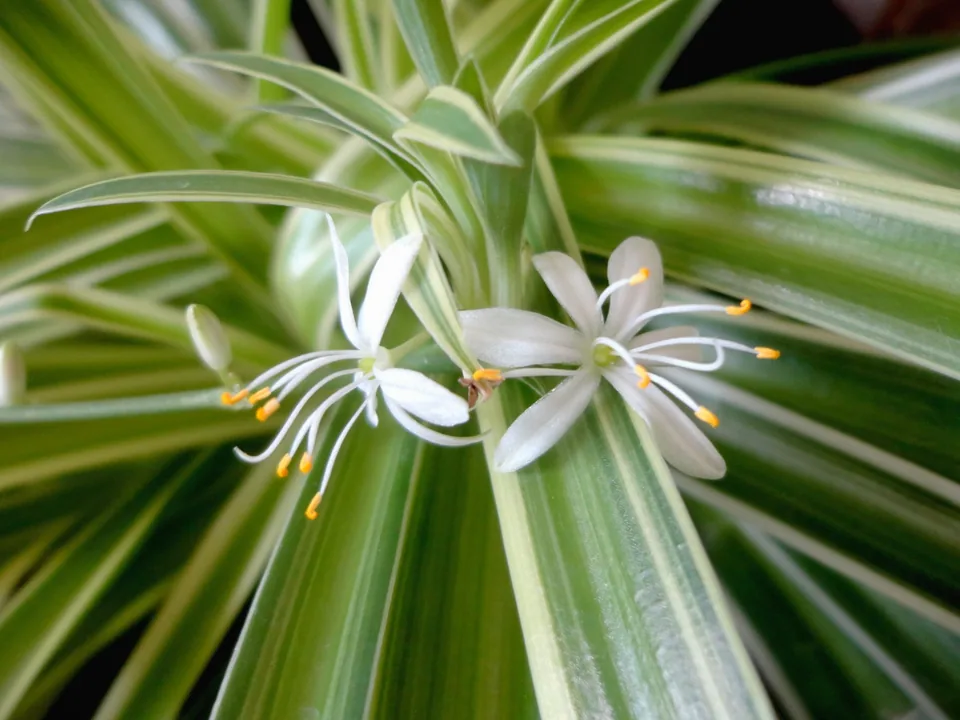
#hanging baskets #white flowers #white leaves #striped leaves #fantz #cascading #evergreen #ebh-h #ebh #non-toxic for cats #non-toxic for horses #non-toxic for dogs
[1]The source flags the risk for this animal but does not explain why.
Calendar
Planting
Outdoors in cool climates, bed out after the last frost; plantlets can be started at any time of year
What each source says
outdoors in cool climates: Bed out after the last frost
South Carolina (plantlets): Start new plants at any time of year
What the sources say (4)
outdoors in cool climates: It does well in most well-drained soils and should be bedded out after the last frost.South Carolina (plantlets): Start new plants at any time of year from the plantlets.It does well in most well-drained soils and should be bedded out after the last frost.Start new plants at any time of year from the plantlets.Months as given by the sources, which are mostly from the United States (northern hemisphere). In the southern hemisphere they shift by about six months.
Relative to frost
Less precise estimate: there is no weather station within 300 km.
Find frost dates by ZIP code or city
Transplant: around the last frost
It does well in most well-drained soils and should be bedded out after the last frost.
— Spider plant, Chlorophytum comosum – Wisconsin Horticulture [2]
Count from the average frost dates where you live.
Indicative values
Values from a secondary source, not checked word for word like the rest of this page. Use them as a starting point.
- Hours of sun
- 4-6 hoursIndicative value, adapt it to your climate · Secondary source · Data for the variety Chlorophytum comosum 'Vittatum'
- Care level
- EasyIndicative value, adapt it to your climate · Secondary source · Data for the variety Chlorophytum comosum 'Vittatum'
- Growth rate
- LowIndicative value, adapt it to your climate · Secondary source · Data for the variety Chlorophytum comosum 'Vittatum'
- Pruning
- February, March, AprilIndicative value, adapt it to your climate · Secondary source · Data for the variety Chlorophytum comosum 'Vittatum'
Similar plants
- Bichetii Grass Chlorophytum laxum
- Adam's Needle Yucca flaccida
- African Spear Dracaena angolensis
- Alpine squill Scilla bifolia
- American Agave Agave virginica
- Asparagus Asparagus officinalis
- Asparagus Fern Asparagus setaceus
- Beaked Yucca Yucca rostrata
Sources
Every value above is quoted from these documents. Links lead to the original publisher.
- Chlorophytum comosum (Anthericum Comosum, Chlorophytum, Ribbon Plant, Spider Ivy, Spiderplant, Spider Plant, Walking Anthericum) | North Carolina Extension Gardener Plant Toolbox · plants.ces.ncsu.edu, consulted
- Spider plant, Chlorophytum comosum – Wisconsin Horticulture · hort.extension.wisc.edu, consulted
- Chlorophytum - Chlorophytum comosum | North Carolina Extension Gardener Plant Toolbox · plants.ces.ncsu.edu, consulted
- Spiderplant - Chlorophytum comosum | North Carolina Extension Gardener Plant Toolbox · plants.ces.ncsu.edu, consulted
- Spider Plants: Houseplant How-To · extension.sdstate.edu, consulted
- Spider Plant (Chlorophytum comosum) | Home & Garden Information Center · hgic.clemson.edu, consulted
- extension.colostate.edu · extension.colostate.edu
- myplantin.com · myplantin.com
- extension.psu.edu · extension.psu.edu
- extension.illinois.edu · extension.illinois.edu
- extension.psu.edu · extension.psu.edu
Written by Emilio Marruso · last checked