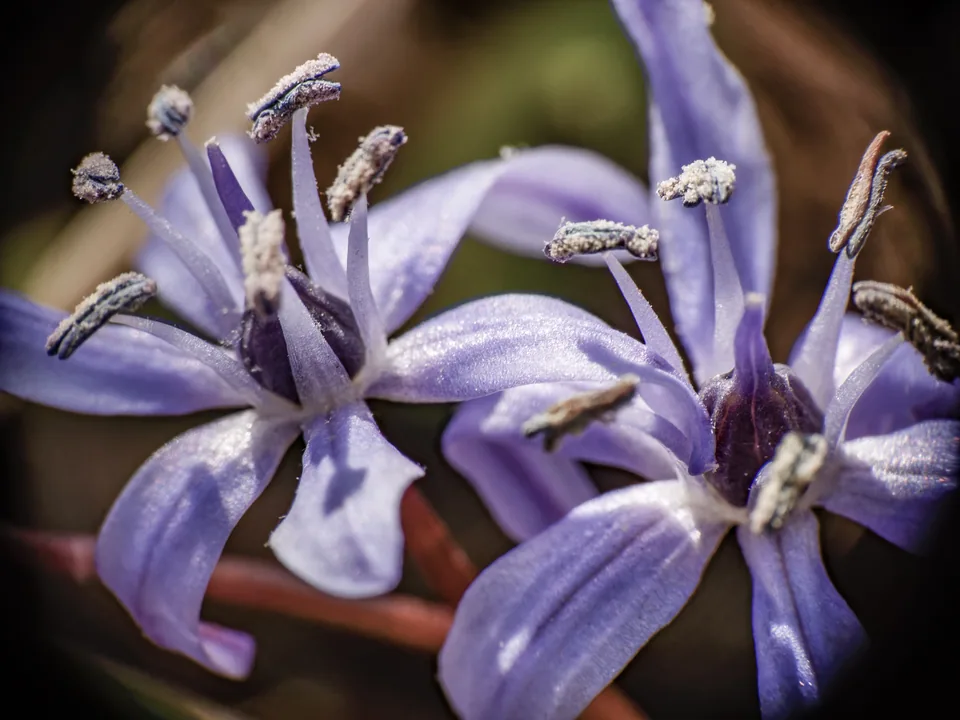
How to Grow and Care for Alpine squill
Scilla bifolia
Written by Emilio Marruso · last checked
Classified as poisonous · Why
At a glance
Two-leaf squill is a small, tough plant from the asparagus family that stays just 4 to 10 inches tall. It handles cold winters well, growing in hardiness zones 3a to 8b, so it suits a great many gardens. Short on space? It grows happily in containers too, ready to brighten a balcony or a patio step.
- Cold
Survives winters down to −40 °F (−40 °C)
Very hardy · USDA 3a · RHS H7 · Z3
What the sources say (2)
Hardiness, coldest zone: 3a [winter low −40 to −37.2 °C (−40 to −35 °F)]
It seldom reaches more than 7.5cm but often starts flowering when much shorter. 7.5cm. AGM. RHS H6, USDA 3a-8b.
— How to grow scilla | Gardens Illustrated [4] Hardiness, warmest zone: 8b [winter low −9.4 to −6.7 °C (15 to 20 °F)]
It seldom reaches more than 7.5cm but often starts flowering when much shorter. 7.5cm. AGM. RHS H6, USDA 3a-8b.
— How to grow scilla | Gardens Illustrated [4] - Size
4 to 10 inches tall
What the sources say (1)
Mature height: 10-25 cm [3.9–9.8 in]
10-25 cm hoch, aufrecht, mit meist 2 lineal-lanzettlichen, 3-10(-15) mm breiten Stängelblättern
— Scilla bifolia L. [2] - Containers
Grows in containers too
What the sources say (1)
In containers: Yes
The widespread Scilla bifolia has tiny, starry flowers in blue, pink or white. It can be enjoyed close up in pots, but is perhaps best planted in large swathes in the garden.
— How to grow scilla | Gardens Illustrated [4]
Overview
Alpine squill is a small spring bulb with starry flowers in blue, pink or white, suited to pots or to large swathes in the garden. [4] It is listed as hardy in USDA zones 3a to 8b and seldom exceeds 7.5 cm [3 in] in height. [4] All parts of the plant, especially the bulbs, contain glucosides that make them toxic. [3]
This record is incomplete: the sources we read do not cover every field yet.
Not yet covered by our sources: Watering, Light, Pruning, Propagation
Alpine squill care
Measurements in square brackets are our conversion into the other unit system; the quoted text is unchanged.
How to water Alpine squill
Not stated in the sources we read.
How much light Alpine squill needs
Not stated in the sources we read.
How much cold Alpine squill can take
Hardiness, coldest zone
3a [winter low −40 to −37.2 °C (−40 to −35 °F)]
What the sources say (1)
It seldom reaches more than 7.5cm but often starts flowering when much shorter. 7.5cm. AGM. RHS H6, USDA 3a-8b.Hardiness, warmest zone
8b [winter low −9.4 to −6.7 °C (15 to 20 °F)]
What the sources say (1)
It seldom reaches more than 7.5cm but often starts flowering when much shorter. 7.5cm. AGM. RHS H6, USDA 3a-8b.Where to grow Alpine squill
Yes
What the sources say (1)
The widespread Scilla bifolia has tiny, starry flowers in blue, pink or white. It can be enjoyed close up in pots, but is perhaps best planted in large swathes in the garden.How to propagate Alpine squill
Not stated in the sources we read.
How to grow Alpine squill
The plant
Family
Asparagaceae
What the sources say (1)
ASPARAGACEAE Juss.
Asparagales Link
Lilianae Takht.
Magnoliidae Novák ex Takht.Mature height
10-25 cm [3.9–9.8 in]
What the sources say (1)
10-25 cm hoch, aufrecht, mit meist 2 lineal-lanzettlichen, 3-10(-15) mm breiten StängelblätternRemedies
The sources we checked give no remedies for this plant.
Calendar
Pruning
Not stated in the sources we read.
Months as given by the sources, which are mostly from the United States (northern hemisphere). In the southern hemisphere they shift by about six months.
Indicative values
Values from a secondary source, not checked word for word like the rest of this page. Use them as a starting point.
- Life cycle
- PerennialIndicative value, adapt it to your climate · Secondary source
- Light
- Full sun, part shadeIndicative value, adapt it to your climate · Secondary source
- Watering
- AverageIndicative value, adapt it to your climate · Secondary source
- Soil pH
- 6-7Indicative value, adapt it to your climate · Secondary source
- Growth rate
- LowIndicative value, adapt it to your climate · Secondary source
- Pruning
- March, April, MayIndicative value, adapt it to your climate · Secondary source
- Propagation
- Division, Seed Propagation, Cutting, Layering PropagationIndicative value, adapt it to your climate · Secondary source
Similar plants
- Siberian Squill Scilla siberica
- Squill Scilla mischtschenkoana
- Portuguese Squill Scilla peruviana
- Adam's Needle Yucca flaccida
- African Spear Dracaena angolensis
- American Agave Agave virginica
- Asparagus Asparagus officinalis
- Asparagus Fern Asparagus setaceus
Sources
Every value above is quoted from these documents. Links lead to the original publisher.
- Scilla bifolia L. - Portale della Flora d'Italia / Portal to the Flora of Italy · dryades.units.it, consulted
- Scilla bifolia L. · infoflora.ch, consulted
- Scilla bifolia L. - Sistema informativo sulla flora vascolare dei Colli Euganei · dryades.units.it, consulted
- How to grow scilla | Gardens Illustrated · gardensillustrated.com, consulted
- How to Grow Scilla - Squill · harvesttotable.com, consulted
Written by Emilio Marruso · last checked