

How to Grow and Care for String of Bananas
Curio radicans
Written by Emilio Marruso · last checked
Toxic to: Cats, Dogs, Horses, Cattle, People · Why
At a glance
This easygoing perennial is happy indoors or in a pot, as long as it gets bright, indirect light. It tolerates drought, so you water only when the top half of the soil feels dry. Even better, stem cuttings are the quickest way to new plants, so one pot can soon become many to share with friends.
- Sun
Bright, indirect light or partial shade; no full sun
What the sources say (2)
Light: Bright, indirect sunlight; partial shade; not full-sun tolerant
This plant requires bright, indirect sunlight to all parts of the plant.
— Curio radicans (Banana Vine, Creeping Berry, Necklace Plant, String of Bananas, String of Fishhooks) | North Carolina Extension Gardener Plant Toolbox [1] The plant is not full-sun tolerant nor frost tolerant.
— Curio radicans (Banana Vine, Creeping Berry, Necklace Plant, String of Bananas, String of Fishhooks) | North Carolina Extension Gardener Plant Toolbox [1] - Water
Water only when the top half of the soil is dry; too much water rots the roots
What the sources say (2)
Watering: Water only when the top half of the soil feels dry; drought tolerant
Water the plant only when the top half of the soil feels dry. It is drought tolerant and over-watering needs to be avoided.
— Curio radicans (Banana Vine, Creeping Berry, Necklace Plant, String of Bananas, String of Fishhooks) | North Carolina Extension Gardener Plant Toolbox [1] Watering notes: Avoid overwatering to prevent root rot
Avoid overwatering to prevent root rot.
— Curio radicans (Banana Vine, Creeping Berry, Necklace Plant, String of Bananas, String of Fishhooks) | North Carolina Extension Gardener Plant Toolbox [1] - Cold
Survives winters down to 30 °F (−1.1 °C)
Half hardy: mild winters or an unheated greenhouse · USDA 10a · RHS H3 · Z10
What the sources say (2)
Hardiness, coldest zone: 10a [winter low −1.1 to 1.7 °C (30 to 35 °F)]
USDA Plant Hardiness Zone: 10a, 10b, 11a, 11b
— Curio radicans (Banana Vine, Creeping Berry, Necklace Plant, String of Bananas, String of Fishhooks) | North Carolina Extension Gardener Plant Toolbox [1] Hardiness, warmest zone: 11b [winter low 7.2 to 10 °C (45 to 50 °F)]
USDA Plant Hardiness Zone: 10a, 10b, 11a, 11b
— Curio radicans (Banana Vine, Creeping Berry, Necklace Plant, String of Bananas, String of Fishhooks) | North Carolina Extension Gardener Plant Toolbox [1] - Soil
Soil with pH 6.0–8.0
What the sources say (2)
Soil pH, minimum: 6.0
Soil pH: Neutral (6.0-8.0)
— Curio radicans (Banana Vine, Creeping Berry, Necklace Plant, String of Bananas, String of Fishhooks) | North Carolina Extension Gardener Plant Toolbox [1] Soil pH, maximum: 8.0
Soil pH: Neutral (6.0-8.0)
— Curio radicans (Banana Vine, Creeping Berry, Necklace Plant, String of Bananas, String of Fishhooks) | North Carolina Extension Gardener Plant Toolbox [1] - Pruning
Prune in spring or summer
What the sources say (1)
Pruning: Spring or summer
Prune the plant in the spring or summer to manage its growth and to encourage branching.
— Curio radicans (Banana Vine, Creeping Berry, Necklace Plant, String of Bananas, String of Fishhooks) | North Carolina Extension Gardener Plant Toolbox [1] - Pests
Watch for aphids, mealybugs, scale and spider mites; overwatering causes root rot
What the sources say (2)
Pests: aphids, mealybugs, scale, spider mites
Monitor for aphids, mealybugs, scale, and spider mites. Avoid overwatering to prevent root rot.
— Curio radicans (Banana Vine, Creeping Berry, Necklace Plant, String of Bananas, String of Fishhooks) | North Carolina Extension Gardener Plant Toolbox [1] Diseases: root rot
Avoid overwatering to prevent root rot. Browning or reddish leaves is usually caused by sunburn.
— Curio radicans (Banana Vine, Creeping Berry, Necklace Plant, String of Bananas, String of Fishhooks) | North Carolina Extension Gardener Plant Toolbox [1] - Watch out
Too much sun turns the leaves brown or reddish: keep it out of harsh sun
- Propagation
Stem cuttings are the quickest way; seeds work too
What the sources say (1)
Propagation: Stem cuttings (quickest and most common) or seeds
It can be propagated by stem cuttings or seeds; however, stem cuttings are the quickest and most common method.
— Curio radicans (Banana Vine, Creeping Berry, Necklace Plant, String of Bananas, String of Fishhooks) | North Carolina Extension Gardener Plant Toolbox [1] - Containers
Grows well in containers and indoors
What the sources say (2)
In containers: Yes
Landscape Location: Container Hanging Baskets Houseplants
— Curio radicans (Banana Vine, Creeping Berry, Necklace Plant, String of Bananas, String of Fishhooks) | North Carolina Extension Gardener Plant Toolbox [1] Indoors: Yes
It is native to southern Africa, but it is grown all over the world as a houseplant.
— Curio radicans (Banana Vine, Creeping Berry, Necklace Plant, String of Bananas, String of Fishhooks) | North Carolina Extension Gardener Plant Toolbox [1] - Safety
Toxic if eaten by people, cats, dogs, horses or cattle: nausea and vomiting
Overview
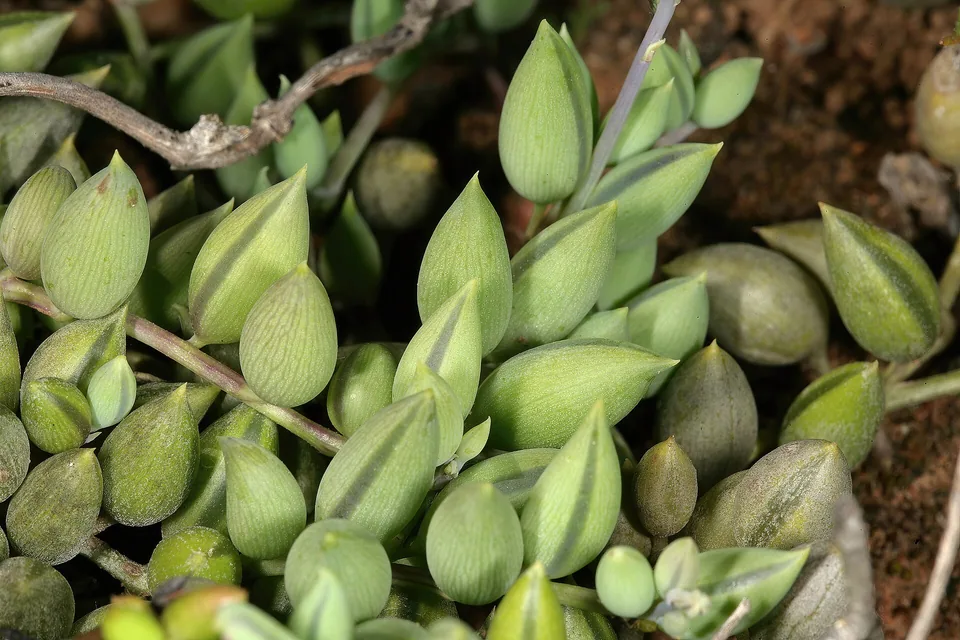
String of bananas is a trailing succulent vine grown as a houseplant. [1] It needs bright indirect light and well-drained medium, and should not be overwatered. [1] It has low severity poison characteristics. [1]
String of Bananas care
How to water String of Bananas
Watering
Water only when the top half of the soil feels dry; drought tolerant
What the sources say (1)
Water the plant only when the top half of the soil feels dry. It is drought tolerant and over-watering needs to be avoided.Watering notes
Avoid overwatering to prevent root rot
What the sources say (1)
Avoid overwatering to prevent root rot.How much light String of Bananas needs
Bright, indirect sunlight; partial shade; not full-sun tolerant
What the sources say (2)
This plant requires bright, indirect sunlight to all parts of the plant.The plant is not full-sun tolerant nor frost tolerant.How much cold String of Bananas can take
Hardiness, coldest zone
10a [winter low −1.1 to 1.7 °C (30 to 35 °F)]
What the sources say (1)
USDA Plant Hardiness Zone:
10a, 10b, 11a, 11bHardiness, warmest zone
11b [winter low 7.2 to 10 °C (45 to 50 °F)]
What the sources say (1)
USDA Plant Hardiness Zone:
10a, 10b, 11a, 11bBest soil for String of Bananas
Soil pH, minimum
6.0
What the sources say (1)
Soil pH:
Neutral (6.0-8.0)Soil pH, maximum
8.0
What the sources say (1)
Soil pH:
Neutral (6.0-8.0)Where to grow String of Bananas
Indoors
Yes
What the sources say (1)
It is native to southern Africa, but it is grown all over the world as a houseplant.In containers
Yes
What the sources say (1)
Landscape Location:
Container
Hanging Baskets
HouseplantsHow to propagate String of Bananas
Stem cuttings (quickest and most common) or seeds
What the sources say (1)
It can be propagated by stem cuttings or seeds; however, stem cuttings are the quickest and most common method.How to grow String of Bananas
The plant
Life cycle
perennial
What the sources say (1)
String of bananas is a trailing, herbaceous, succulent, perennial vine in the daisy family (Asteraceae) that has very unusual banana-shaped leaves.Family
Asteraceae
What the sources say (1)
String of bananas is a trailing, herbaceous, succulent, perennial vine in the daisy family (Asteraceae) that has very unusual banana-shaped leaves.Pests and diseases
Pests
aphids, mealybugs, scale, spider mites
What the sources say (1)
Monitor for aphids, mealybugs, scale, and spider mites. Avoid overwatering to prevent root rot.Diseases
root rot
What the sources say (1)
Avoid overwatering to prevent root rot. Browning or reddish leaves is usually caused by sunburn.String of Bananas pests and problems
Pests
Symptom: Aphids, mealybugs, scale and spider mites
What to do: Monitor for these pests
What the sources say (1)
Monitor for aphids, mealybugs, scale, and spider mites.
— Curio radicans (Banana Vine, Creeping Berry, Necklace Plant, String of Bananas, String of Fishhooks) | North Carolina Extension Gardener Plant Toolbox [1] Root rot
Symptom: Root rot from overwatering
What to do: Avoid overwatering
What the sources say (1)
Avoid overwatering to prevent root rot.
— Curio radicans (Banana Vine, Creeping Berry, Necklace Plant, String of Bananas, String of Fishhooks) | North Carolina Extension Gardener Plant Toolbox [1] Sunburn
Symptom: Browning or reddish leaves
What to do: Protect from excess sun
What the sources say (1)
Browning or reddish leaves is usually caused by sunburn.
— Curio radicans (Banana Vine, Creeping Berry, Necklace Plant, String of Bananas, String of Fishhooks) | North Carolina Extension Gardener Plant Toolbox [1]
Remedies
Each remedy shows what official sources say about it; traditional remedies without an official source are marked as such. Harmful ones are listed so you know to avoid them.
First aid
First aid: not a substitute for a doctor
contact dermatitis
washing the skin with water Official source, not independently tested
Contact your provider if: - You have symptoms of contact dermatitis. - The skin reaction is severe.
— medlineplus.gov [3] How: Treatment often includes washing the area with a lot of water to get rid of any traces of the irritant that are still on the skin. Avoid further exposure to the substance.
Often, treatment includes washing the area with a lot of water to get rid of any traces of the irritant that are still on the skin. You should avoid further exposure to the substance.
— medlineplus.gov [3]
Treating the plant
mealybugs
cotton swab dipped in alcohol Partly works
How: Notice them quickly and kill them by hand with a cotton swab dipped in alcohol.
Mealybugs can be managed by noticing them quickly and killing them by hand with a cotton swab dipped in alcohol or with an insecticide
— yardandgarden.extension.iastate.edu [4] What the evidence says killing them by hand with a cotton swab dipped in alcohol or with an insecticide (including soap-based products) labeled for mealybug control on your specific houseplant. You can also use both methods as neither will kill 100% of mealybugs.
— yardandgarden.extension.iastate.edu [4] insecticidal soap Official source, not independently tested
How: Insecticidal soap can be used indoors to treat this pest. Apply frequently as insecticides are most effective on the immature mealybugs, which hatch every few weeks.
Insecticidal soap, neem, and pyrethrin are all relatively safe insecticides that can be used indoors to treat this pest. Apply frequently as insecticides are most effective on the immature mealybugs, which hatch every few weeks.
— yardandgarden.extension.iastate.edu [5] neem oil Official source, not independently tested
How: Neem can be used indoors to treat this pest. Apply frequently as insecticides are most effective on the immature mealybugs, which hatch every few weeks.
Insecticidal soap, neem, and pyrethrin are all relatively safe insecticides that can be used indoors to treat this pest. Apply frequently as insecticides are most effective on the immature mealybugs, which hatch every few weeks.
— yardandgarden.extension.iastate.edu [5] mild soap solution wash Not verified
Traditional remedy, not verified by an official source.
How: Gently wash the plant using a mild soap solution and rinse thoroughly with water.
scale
removing insects with a fingernail Official source, not independently tested
How: For light infestations, remove individual insects with your fingernail.
For light infestations, remove individual insects with your fingernail.
— yardandgarden.extension.iastate.edu [5] rubbing alcohol swab Official source, not independently tested
How: If only a few are found, spot treat with a spray of rubbing alcohol or a cotton swab dipped in rubbing alcohol.
If only a few are found, spot treat with a spray of rubbing alcohol or a cotton swab dipped in rubbing alcohol.
— yardandgarden.extension.iastate.edu [5]
aphids
forceful water spray Works
How: For light infestations, a forceful spray of water can dislodge most aphids.
For light infestations, a forceful spray of water can dislodge most aphids.
— yardandgarden.extension.iastate.edu [5] What the evidence says For light infestations, a forceful spray of water can dislodge most aphids.
— yardandgarden.extension.iastate.edu [5]
spider mites
insecticidal soap or horticultural oil Official source, not independently tested
How: Insecticidal soap or horticultural oil can be applied according to label directions. Be sure to treat the underside of the leaves thoroughly.
A miticide or other pesticides like insecticidal soap or horticultural oil can be applied according to label directions. Be sure to treat the underside of the leaves thoroughly.
— yardandgarden.extension.iastate.edu [5] raising humidity Official source, not independently tested
How: Since they prefer dry conditions, increasing humidity can slow population growth.
Since they prefer dry conditions, increasing humidity can slow population growth.
— yardandgarden.extension.iastate.edu [5]
Is String of Bananas toxic to pets?
Reported by the source, quoted verbatim. This is not medical or veterinary advice: if a person or an animal may have eaten this plant, contact a poison control centre or a veterinarian.
Animals
People
Toxic if ingested by humans, pets, or livestock: loss of appetite, nausea, and vomiting.
[1]
Calendar
Pruning
Spring or summer
What the sources say (1)
Prune the plant in the spring or summer to manage its growth and to encourage branching.Months as given by the sources, which are mostly from the United States (northern hemisphere). In the southern hemisphere they shift by about six months.
Similar plants
- Blue Chalksticks Curio repens
- String of Pearls Curio rowleyanus
- Boneset Eupatorium perfoliatum
- Chamomile Chamaemelum nobile
- Cocklebur Xanthium strumarium
- Common Burdock Arctium minus
- Costmary Tanacetum balsamita
- Dogfennel Eupatorium capillifolium
Sources
Every value above is quoted from these documents. Links lead to the original publisher.
- Curio radicans (Banana Vine, Creeping Berry, Necklace Plant, String of Bananas, String of Fishhooks) | North Carolina Extension Gardener Plant Toolbox · plants.ces.ncsu.edu, consulted
- Banana Vine - Curio radicans | North Carolina Extension Gardener Plant Toolbox · plants.ces.ncsu.edu, consulted
- medlineplus.gov · medlineplus.gov
- yardandgarden.extension.iastate.edu · yardandgarden.extension.iastate.edu
- yardandgarden.extension.iastate.edu · yardandgarden.extension.iastate.edu
Written by Emilio Marruso · last checked