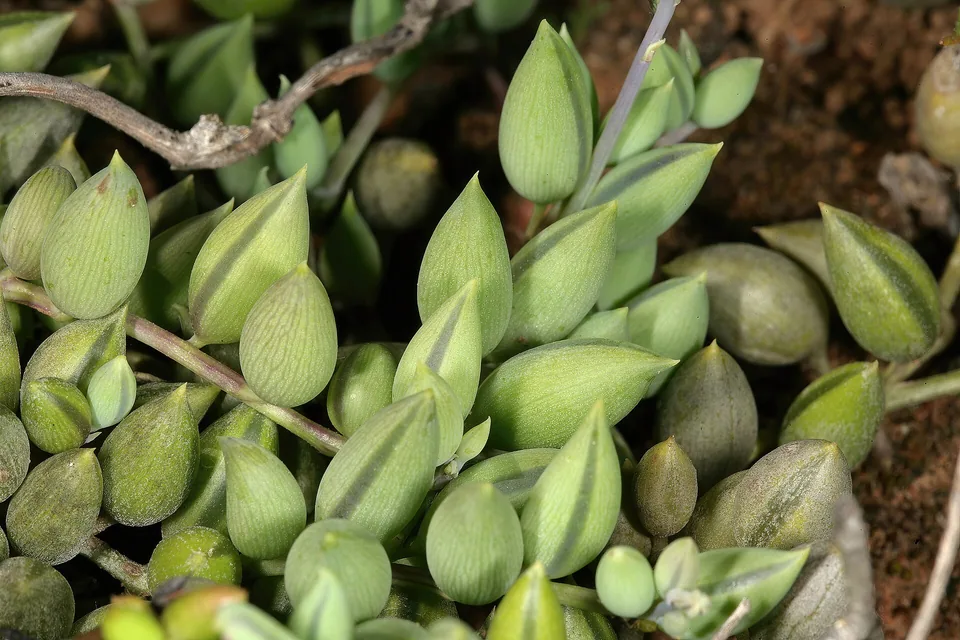


Cómo cultivar y cuidar String of Bananas
Curio radicans
Escrito por Emilio Marruso · última revisión
Tóxica para: Gatos, Perros, Caballos, Ganado vacuno, Personas · Por qué
De un vistazo
Esta vivaz agradecida vive feliz en interior o en maceta, siempre que tenga luz brillante e indirecta. Tolera la sequía, así que solo riegas cuando la mitad superior de la tierra está seca. Y lo mejor: los esquejes de tallo son la forma más rápida de conseguir plantas nuevas, así que una maceta pronto se convierte en muchas para regalar.
- Sol
Luz brillante e indirecta o semisombra; nada de sol pleno
Qué dicen las fuentes (2)
Luz: Luz indirecta brillante; semisombra; no tolera el pleno sol
This plant requires bright, indirect sunlight to all parts of the plant.
— Curio radicans (Banana Vine, Creeping Berry, Necklace Plant, String of Bananas, String of Fishhooks) | North Carolina Extension Gardener Plant Toolbox [1] The plant is not full-sun tolerant nor frost tolerant.
— Curio radicans (Banana Vine, Creeping Berry, Necklace Plant, String of Bananas, String of Fishhooks) | North Carolina Extension Gardener Plant Toolbox [1] - Riego
Riega solo cuando la mitad superior de la tierra esté seca; el exceso de agua pudre las raíces
Qué dicen las fuentes (2)
Riego: Riega solo cuando la mitad superior del suelo se sienta seca; tolerante a la sequía
Water the plant only when the top half of the soil feels dry. It is drought tolerant and over-watering needs to be avoided.
— Curio radicans (Banana Vine, Creeping Berry, Necklace Plant, String of Bananas, String of Fishhooks) | North Carolina Extension Gardener Plant Toolbox [1] Notas sobre el riego: Evita el riego excesivo para prevenir la pudrición de las raíces
Avoid overwatering to prevent root rot.
— Curio radicans (Banana Vine, Creeping Berry, Necklace Plant, String of Bananas, String of Fishhooks) | North Carolina Extension Gardener Plant Toolbox [1] - Frío
Aguanta inviernos de hasta −1,1 °C (30 °F)
Semirrústica: inviernos suaves o invernadero sin calefacción · USDA 10a · RHS H3 · Z10
Qué dicen las fuentes (2)
Rusticidad, zona más fría: 10a [mínima invernal de −1,1 a 1,7 °C (de 30 a 35 °F)]
USDA Plant Hardiness Zone: 10a, 10b, 11a, 11b
— Curio radicans (Banana Vine, Creeping Berry, Necklace Plant, String of Bananas, String of Fishhooks) | North Carolina Extension Gardener Plant Toolbox [1] Rusticidad, zona más cálida: 11b [mínima invernal de 7,2 a 10 °C (de 45 a 50 °F)]
USDA Plant Hardiness Zone: 10a, 10b, 11a, 11b
— Curio radicans (Banana Vine, Creeping Berry, Necklace Plant, String of Bananas, String of Fishhooks) | North Carolina Extension Gardener Plant Toolbox [1] - Suelo
Suelo con pH 6,0–8,0
Qué dicen las fuentes (2)
pH del suelo, mínimo: 6.0
Soil pH: Neutral (6.0-8.0)
— Curio radicans (Banana Vine, Creeping Berry, Necklace Plant, String of Bananas, String of Fishhooks) | North Carolina Extension Gardener Plant Toolbox [1] pH del suelo, máximo: 8.0
Soil pH: Neutral (6.0-8.0)
— Curio radicans (Banana Vine, Creeping Berry, Necklace Plant, String of Bananas, String of Fishhooks) | North Carolina Extension Gardener Plant Toolbox [1] - Poda
Pódala en primavera o verano
Qué dicen las fuentes (1)
Poda: Primavera o verano.
Prune the plant in the spring or summer to manage its growth and to encourage branching.
— Curio radicans (Banana Vine, Creeping Berry, Necklace Plant, String of Bananas, String of Fishhooks) | North Carolina Extension Gardener Plant Toolbox [1] - Plagas
Vigila pulgones, cochinillas algodonosas, cochinillas y arañas rojas; el exceso de riego provoca podredumbre de raíz
Qué dicen las fuentes (2)
Plagas: pulgones, cochinillas, escamas, arañas rojas
Monitor for aphids, mealybugs, scale, and spider mites. Avoid overwatering to prevent root rot.
— Curio radicans (Banana Vine, Creeping Berry, Necklace Plant, String of Bananas, String of Fishhooks) | North Carolina Extension Gardener Plant Toolbox [1] Enfermedades: pudrición de la raíz
Avoid overwatering to prevent root rot. Browning or reddish leaves is usually caused by sunburn.
— Curio radicans (Banana Vine, Creeping Berry, Necklace Plant, String of Bananas, String of Fishhooks) | North Carolina Extension Gardener Plant Toolbox [1] - Atención
Demasiado sol vuelve las hojas marrones o rojizas: protégela del sol fuerte
- Multiplicación
Los esquejes de tallo son lo más rápido; también por semillas
Qué dicen las fuentes (1)
Propagación: Esquejes de tallo (el método más rápido y común) o semillas
It can be propagated by stem cuttings or seeds; however, stem cuttings are the quickest and most common method.
— Curio radicans (Banana Vine, Creeping Berry, Necklace Plant, String of Bananas, String of Fishhooks) | North Carolina Extension Gardener Plant Toolbox [1] - Maceta
Crece bien en maceta y en interior
Qué dicen las fuentes (2)
En maceta: Sí
Landscape Location: Container Hanging Baskets Houseplants
— Curio radicans (Banana Vine, Creeping Berry, Necklace Plant, String of Bananas, String of Fishhooks) | North Carolina Extension Gardener Plant Toolbox [1] En interior: Sí
It is native to southern Africa, but it is grown all over the world as a houseplant.
— Curio radicans (Banana Vine, Creeping Berry, Necklace Plant, String of Bananas, String of Fishhooks) | North Carolina Extension Gardener Plant Toolbox [1] - Seguridad
Tóxica si la comen personas, gatos, perros, caballos o vacas: náuseas y vómitos
Resumen
La cadena de plátanos es una suculenta colgante que se cultiva como planta de interior. [1] Necesita luz indirecta brillante y un sustrato con buen drenaje, y no debe regarse en exceso. [1] Tiene características de toxicidad de baja severidad. [1]
Citado en inglés, como en la fuente.
Cuidados
Riego
Riego
Riega solo cuando la mitad superior del suelo se sienta seca; tolerante a la sequía
Qué dicen las fuentes (1)
Water the plant only when the top half of the soil feels dry. It is drought tolerant and over-watering needs to be avoided.Notas sobre el riego
Evita el riego excesivo para prevenir la pudrición de las raíces
Qué dicen las fuentes (1)
Avoid overwatering to prevent root rot.Luz
Luz indirecta brillante; semisombra; no tolera el pleno sol
Qué dicen las fuentes (2)
This plant requires bright, indirect sunlight to all parts of the plant.The plant is not full-sun tolerant nor frost tolerant.Clima y frío
Rusticidad, zona más fría
10a [mínima invernal de −1,1 a 1,7 °C (de 30 a 35 °F)]
Qué dicen las fuentes (1)
USDA Plant Hardiness Zone:
10a, 10b, 11a, 11bRusticidad, zona más cálida
11b [mínima invernal de 7,2 a 10 °C (de 45 a 50 °F)]
Qué dicen las fuentes (1)
USDA Plant Hardiness Zone:
10a, 10b, 11a, 11bSuelo
pH del suelo, mínimo
6.0
Qué dicen las fuentes (1)
Soil pH:
Neutral (6.0-8.0)pH del suelo, máximo
8.0
Qué dicen las fuentes (1)
Soil pH:
Neutral (6.0-8.0)Dónde cultivarla
En interior
Sí
Qué dicen las fuentes (1)
It is native to southern Africa, but it is grown all over the world as a houseplant.En maceta
Sí
Qué dicen las fuentes (1)
Landscape Location:
Container
Hanging Baskets
HouseplantsPropagación
Esquejes de tallo (el método más rápido y común) o semillas
Qué dicen las fuentes (1)
It can be propagated by stem cuttings or seeds; however, stem cuttings are the quickest and most common method.Cultivo
La planta
Ciclo de vida
perenne
Qué dicen las fuentes (1)
String of bananas is a trailing, herbaceous, succulent, perennial vine in the daisy family (Asteraceae) that has very unusual banana-shaped leaves.Familia
Asteraceae
Qué dicen las fuentes (1)
String of bananas is a trailing, herbaceous, succulent, perennial vine in the daisy family (Asteraceae) that has very unusual banana-shaped leaves.Plagas y enfermedades
Plagas
pulgones, cochinillas, escamas, arañas rojas
Qué dicen las fuentes (1)
Monitor for aphids, mealybugs, scale, and spider mites. Avoid overwatering to prevent root rot.Enfermedades
pudrición de la raíz
Qué dicen las fuentes (1)
Avoid overwatering to prevent root rot. Browning or reddish leaves is usually caused by sunburn.Problemas
Plagas
Síntoma: Pulgones, cochinillas harinosas, cochinillas y arañitas rojas
Qué hacer: Vigila estas plagas
Qué dicen las fuentes (1)
Monitor for aphids, mealybugs, scale, and spider mites.
— Curio radicans (Banana Vine, Creeping Berry, Necklace Plant, String of Bananas, String of Fishhooks) | North Carolina Extension Gardener Plant Toolbox [1] Podredumbre de la raíz
Síntoma: Pudrición de raíces por exceso de riego
Qué hacer: Evita el exceso de riego
Qué dicen las fuentes (1)
Avoid overwatering to prevent root rot.
— Curio radicans (Banana Vine, Creeping Berry, Necklace Plant, String of Bananas, String of Fishhooks) | North Carolina Extension Gardener Plant Toolbox [1] Quemaduras solares
Síntoma: Hojas marrones o rojizas
Qué hacer: Protégela del exceso de sol
Qué dicen las fuentes (1)
Browning or reddish leaves is usually caused by sunburn.
— Curio radicans (Banana Vine, Creeping Berry, Necklace Plant, String of Bananas, String of Fishhooks) | North Carolina Extension Gardener Plant Toolbox [1]
Remedios
Cada remedio indica qué dicen las fuentes oficiales; los remedios tradicionales sin fuente oficial aparecen marcados. Los perjudiciales están para que sepas evitarlos.
Primeros auxilios
Primeros auxilios: no sustituyen al médico
dermatitis por contacto
Lava la piel con agua. Fuente oficial, sin prueba independiente
Contact your provider if: - You have symptoms of contact dermatitis. - The skin reaction is severe.
— medlineplus.gov [3] Cómo: El tratamiento a menudo incluye lavar la zona con mucha agua para eliminar cualquier rastro del irritante que aún esté en la piel. Evita una mayor exposición a la sustancia.
Often, treatment includes washing the area with a lot of water to get rid of any traces of the irritant that are still on the skin. You should avoid further exposure to the substance.
— medlineplus.gov [3]
Cuidar la planta
cochinillas harinosas
hisopo de algodón empapado en alcohol Funciona en parte
Cómo: Detéctalos rápidamente y elimínalos a mano con un hisopo de algodón empapado en alcohol.
Mealybugs can be managed by noticing them quickly and killing them by hand with a cotton swab dipped in alcohol or with an insecticide
— yardandgarden.extension.iastate.edu [4] Qué dicen las pruebas killing them by hand with a cotton swab dipped in alcohol or with an insecticide (including soap-based products) labeled for mealybug control on your specific houseplant. You can also use both methods as neither will kill 100% of mealybugs.
— yardandgarden.extension.iastate.edu [4] jabón insecticida Fuente oficial, sin prueba independiente
Cómo: El jabón insecticida se puede usar en interiores para tratar esta plaga. Aplícalo con frecuencia, ya que los insecticidas son más efectivos contra las cochinillas inmaduras, que eclosionan cada pocas semanas.
Insecticidal soap, neem, and pyrethrin are all relatively safe insecticides that can be used indoors to treat this pest. Apply frequently as insecticides are most effective on the immature mealybugs, which hatch every few weeks.
— yardandgarden.extension.iastate.edu [5] aceite de neem Fuente oficial, sin prueba independiente
Cómo: El neem se puede usar en interiores para tratar esta plaga. Aplícalo con frecuencia, ya que los insecticidas son más efectivos contra las cochinillas inmaduras, que eclosionan cada pocas semanas.
Insecticidal soap, neem, and pyrethrin are all relatively safe insecticides that can be used indoors to treat this pest. Apply frequently as insecticides are most effective on the immature mealybugs, which hatch every few weeks.
— yardandgarden.extension.iastate.edu [5] solución de jabón suave No verificado
Remedio tradicional, no verificado por una fuente oficial.
Cómo: Lava suavemente la planta con una solución de jabón suave y enjuágala bien con agua.
cochinilla
Elimina los insectos con la uña. Fuente oficial, sin prueba independiente
Cómo: Para infestaciones leves, elimina los insectos individuales con la uña.
For light infestations, remove individual insects with your fingernail.
— yardandgarden.extension.iastate.edu [5] hisopo con alcohol isopropílico Fuente oficial, sin prueba independiente
Cómo: Si solo se encuentran unos pocos, trata puntualmente con un rociado de alcohol isopropílico o un hisopo de algodón empapado en alcohol isopropílico.
If only a few are found, spot treat with a spray of rubbing alcohol or a cotton swab dipped in rubbing alcohol.
— yardandgarden.extension.iastate.edu [5]
pulgones
chorro de agua fuerte Funciona
Cómo: Para infestaciones leves, un chorro fuerte de agua puede desprender la mayoría de los pulgones.
For light infestations, a forceful spray of water can dislodge most aphids.
— yardandgarden.extension.iastate.edu [5] Qué dicen las pruebas For light infestations, a forceful spray of water can dislodge most aphids.
— yardandgarden.extension.iastate.edu [5]
ácaros araña
jabón insecticida o aceite hortícola Fuente oficial, sin prueba independiente
Cómo: El jabón insecticida o el aceite hortícola se pueden aplicar según las instrucciones de la etiqueta. Asegúrate de tratar bien el envés de las hojas.
A miticide or other pesticides like insecticidal soap or horticultural oil can be applied according to label directions. Be sure to treat the underside of the leaves thoroughly.
— yardandgarden.extension.iastate.edu [5] Aumenta la humedad. Fuente oficial, sin prueba independiente
Cómo: Como prefieren condiciones secas, un aumento de la humedad puede frenar el crecimiento de la población.
Since they prefer dry conditions, increasing humidity can slow population growth.
— yardandgarden.extension.iastate.edu [5]
Venenosa para los animales
Según la fuente, citada textualmente. No es un consejo médico ni veterinario: si una persona o un animal pudo haber ingerido esta planta, contacta con un centro de toxicología o con un veterinario.
Animales
Personas
Toxic if ingested by humans, pets, or livestock: loss of appetite, nausea, and vomiting.
[1]
Calendario
Poda
Primavera o verano.
Qué dicen las fuentes (1)
Prune the plant in the spring or summer to manage its growth and to encourage branching.Meses tal como los dan las fuentes, en su mayoría de Estados Unidos (hemisferio norte). En el hemisferio sur se desplazan unos seis meses.
Plantas similares
- Senecio azul Curio repens
- Bolitas colgantes Curio rowleyanus
- Boneset Eupatorium perfoliatum
- Manzanilla Chamaemelum nobile
- Bardana común Xanthium strumarium
- Lampazo menor Arctium minus
- Hierba de Santa María Tanacetum balsamita
- Dogfennel Eupatorium capillifolium
Fuentes
Cada valor anterior se cita de estos documentos. Los enlaces llevan al editor original.
- Curio radicans (Banana Vine, Creeping Berry, Necklace Plant, String of Bananas, String of Fishhooks) | North Carolina Extension Gardener Plant Toolbox · plants.ces.ncsu.edu, consultado
- Banana Vine - Curio radicans | North Carolina Extension Gardener Plant Toolbox · plants.ces.ncsu.edu, consultado
- medlineplus.gov · medlineplus.gov
- yardandgarden.extension.iastate.edu · yardandgarden.extension.iastate.edu
- yardandgarden.extension.iastate.edu · yardandgarden.extension.iastate.edu
Escrito por Emilio Marruso · última revisión