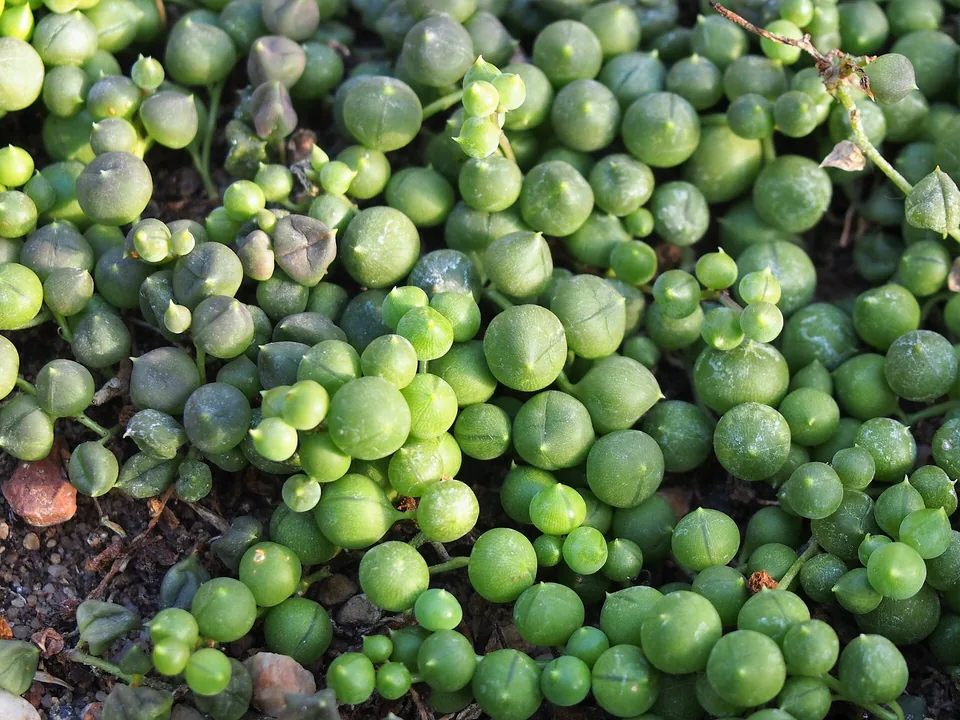


Cómo cultivar y cuidar Bolitas colgantes
Curio rowleyanus
Escrito por Emilio Marruso · última revisión
Tóxica para: Gatos, Perros, Caballos, Personas · Por qué
De un vistazo
Esta planta perenne vive feliz en interior con luz brillante e indirecta o en exterior a semisombra, y crece bien en maceta. Pide poco: riégala solo cuando las hojas empiecen a verse algo arrugadas y abónala ligeramente en primavera. Se multiplica con esquejes de tallo de 8–13 cm, así que podrás compartirla con tus amigos.
- Sol
Luz brillante e indirecta en interior; semisombra en exterior; evita el sol directo
Qué dicen las fuentes (4)
Luz: Semisombra al aire libre; luz indirecta brillante en interiores.
al aire libre: If planted outdoors, it should be in locations that include partial shade; whereas, indoor plants flourish in areas where they receive bright,
— Curio rowleyanus (Bead Plant, Irish Beads, Necklace Plant, Rosary Vine, String of Beads, String of Marbles, String of Pearls, String of Peas) | North Carolina Extension Gardener Plant Toolbox [1] en interiores: If planted outdoors, it should be in locations that include partial shade; whereas, indoor plants flourish in areas where they receive bright,
— Curio rowleyanus (Bead Plant, Irish Beads, Necklace Plant, Rosary Vine, String of Beads, String of Marbles, String of Pearls, String of Peas) | North Carolina Extension Gardener Plant Toolbox [1] Según Wisconsin Horticulture: Like other succulents, this plant is relatively low maintenance and only needs bright light, well-drained soil,
— String of Pearls, Curio rowleyanus – Wisconsin Horticulture [2] If planted outdoors, it should be in locations that include partial shade; whereas, indoor plants flourish in areas where they receive bright, indirect sunlight.
— Curio rowleyanus (Bead Plant, Irish Beads, Necklace Plant, Rosary Vine, String of Beads, String of Marbles, String of Pearls, String of Peas) | North Carolina Extension Gardener Plant Toolbox [1] - Riego
Riega cuando las hojas se vean algo arrugadas; el exceso de agua pudre las raíces
Qué dicen las fuentes (2)
Notas sobre el riego: Riega cuando las hojas empiecen a verse un poco arrugadas; el exceso de riego causa pudrición de las raíces.
Plants need to be watered when the leaves start to look a bit shriveled.
— String of Pearls, Curio rowleyanus – Wisconsin Horticulture [2] Root rot from overwatering is the most common cause of its demise.
— String of Pearls, Curio rowleyanus – Wisconsin Horticulture [2] - Frío
Aguanta inviernos de hasta −3,9 °C (25 °F)
Semirrústica: inviernos suaves o invernadero sin calefacción · USDA 9b · RHS H3 · Z9
Qué dicen las fuentes (1)
Rusticidad, zona más fría: 9b [mínima invernal de −3,9 a −1,1 °C (de 25 a 30 °F)]
USDA Plant Hardiness Zone: 9b, 10a, 10b, 11a, 11b, 12a, 12b
— Curio rowleyanus (Bead Plant, Irish Beads, Necklace Plant, Rosary Vine, String of Beads, String of Marbles, String of Pearls, String of Peas) | North Carolina Extension Gardener Plant Toolbox [1] - Suelo
Usa un sustrato con muy buen drenaje
- Abonado
Abona ligeramente en primavera, o cámbiala de maceta cada uno o dos años
Qué dicen las fuentes (1)
Cuándo: En primavera, ligeramente (o trasplanta cada uno o dos años en su lugar)
Repot every year or two or fertilize lightly in spring.
— String of Pearls, Curio rowleyanus – Wisconsin Horticulture [2] - Plagas
Vigila pulgones, moscas blancas, mosquitos, hormigas y cochinillas algodonosas; el encharcamiento pudre las raíces
Qué dicen las fuentes (2)
Plagas: pulgones, moscas blancas, mosquitos, hormigas, cochinillas harinosas
Monitor for aphids, whiteflies, gnats, ants, and mealybugs. Soggy wet soil will result in root rot and the plant's demise.
— Curio rowleyanus (Bead Plant, Irish Beads, Necklace Plant, Rosary Vine, String of Beads, String of Marbles, String of Pearls, String of Peas) | North Carolina Extension Gardener Plant Toolbox [1] Enfermedades: pudrición de la raíz
Monitor for aphids, whiteflies, gnats, ants, and mealybugs. Soggy wet soil will result in root rot and the plant's demise.
— Curio rowleyanus (Bead Plant, Irish Beads, Necklace Plant, Rosary Vine, String of Beads, String of Marbles, String of Pearls, String of Peas) | North Carolina Extension Gardener Plant Toolbox [1] - Tamaño
30–60 cm de alto
Qué dicen las fuentes (1)
Altura adulta: 30-61 cm (1-2 pies)
The mature size is 1 to 2 feet tall and 1 to 2 feet long. This plant is toxic to both humans and pets.
— Curio rowleyanus (Bead Plant, Irish Beads, Necklace Plant, Rosary Vine, String of Beads, String of Marbles, String of Pearls, String of Peas) | North Carolina Extension Gardener Plant Toolbox [1] - Multiplicación
Esquejes de tallo de 8–13 cm con algunos nudos enterrados; también con una hoja caída o semillas
Qué dicen las fuentes (3)
Propagación: Esquejes de tallo (de 3 a 5 pulgadas [8–13 cm], con algunos nudos cubiertos con sustrato); una hoja caída (más lento, menos fiable); semilla.
Propagation can be easily and quickly accomplished by taking a 3 to 5-inch stem cutting and covering a few of the nodes in the potting mixture
— Curio rowleyanus (Bead Plant, Irish Beads, Necklace Plant, Rosary Vine, String of Beads, String of Marbles, String of Pearls, String of Peas) | North Carolina Extension Gardener Plant Toolbox [1] A slower and less reliable form of propagation can be done by simply dropping a leaf onto your soil mixture.
— Curio rowleyanus (Bead Plant, Irish Beads, Necklace Plant, Rosary Vine, String of Beads, String of Marbles, String of Pearls, String of Peas) | North Carolina Extension Gardener Plant Toolbox [1] This plant can also be grown from seed, but seed is not commonly available.
— String of Pearls, Curio rowleyanus – Wisconsin Horticulture [2] - Maceta
Crece bien en maceta, también en interior; elige una maceta poco profunda
Qué dicen las fuentes (2)
En maceta: Sí
Use a shallow container since the plants will not produce an extensive root system
— String of Pearls, Curio rowleyanus – Wisconsin Horticulture [2] En interior: Sí
It can be grown both indoors as a houseplant or outdoors in a more tropical location.
— Curio rowleyanus (Bead Plant, Irish Beads, Necklace Plant, Rosary Vine, String of Beads, String of Marbles, String of Pearls, String of Peas) | North Carolina Extension Gardener Plant Toolbox [1] - Seguridad
Tóxica para gatos, perros y caballos; comer las hojas provoca vómitos y diarrea; la savia puede irritar la piel
Resumen
La string of pearls es una suculenta enredadera con hojas en forma de guisante en tallos colgantes, cultivada comúnmente en cestas colgantes. [1] Se cultiva principalmente como planta de interior, y la pudrición de raíces por riego excesivo es la causa más común de su pérdida. [2][1] Sus hojas y savia son ligeramente tóxicas si se ingieren o se manipulan. [1]
Citado en inglés, como en la fuente.
Cuidados
Las medidas entre corchetes son nuestra conversión al otro sistema de unidades; el texto citado no cambia.
Riego
Riego
Las fuentes dan valores distintos según la región, la zona o las condiciones de cultivo.
Lo que dice cada fuente
Según Wisconsin Horticulture: Deja que el sustrato se seque por completo entre riegos, con más agua en verano que en invierno.
Según NC State Extension: Nunca dejes que la planta se seque por completo entre riegos; tolera riegos poco frecuentes.
Qué dicen las fuentes (2)
Según Wisconsin Horticulture: Allow the potting medium to dry out completely between waterings, providing more water in summer than in winter when the plant is notSegún NC State Extension: It tolerates infrequent watering, but overwatering can result in root rot. Never allow your plant to completely dry out between watering.Notas sobre el riego
Riega cuando las hojas empiecen a verse un poco arrugadas; el exceso de riego causa pudrición de las raíces.
Luz
Semisombra al aire libre; luz indirecta brillante en interiores.
Lo que dice cada fuente
al aire libre: Semisombra
en interiores: Luz indirecta brillante.
Según Wisconsin Horticulture: Luz brillante.
Qué dicen las fuentes (4)
al aire libre: If planted outdoors, it should be in locations that include partial shade; whereas, indoor plants flourish in areas where they receive bright,en interiores: If planted outdoors, it should be in locations that include partial shade; whereas, indoor plants flourish in areas where they receive bright,Según Wisconsin Horticulture: Like other succulents, this plant is relatively low maintenance and only needs bright light, well-drained soil,If planted outdoors, it should be in locations that include partial shade; whereas, indoor plants flourish in areas where they receive bright, indirect sunlight.Clima y frío
9b [mínima invernal de −3,9 a −1,1 °C (de 25 a 30 °F)]
Qué dicen las fuentes (1)
USDA Plant Hardiness Zone:
9b, 10a, 10b, 11a, 11b, 12a, 12bDónde cultivarla
En interior
Sí
Qué dicen las fuentes (1)
It can be grown both indoors as a houseplant or outdoors in a more tropical location.En maceta
Sí
Qué dicen las fuentes (1)
Use a shallow container since the plants will not produce an extensive root systemPropagación
Esquejes de tallo (de 3 a 5 pulgadas [8–13 cm], con algunos nudos cubiertos con sustrato); una hoja caída (más lento, menos fiable); semilla.
Qué dicen las fuentes (3)
Propagation can be easily and quickly accomplished by taking a 3 to 5-inch stem cutting and covering a few of the nodes in the potting mixtureA slower and less reliable form of propagation can be done by simply dropping a leaf onto your soil mixture.This plant can also be grown from seed, but seed is not commonly available.Cultivo
La planta
Ciclo de vida
perenne
Qué dicen las fuentes (1)
This tender evergreen perennial in the daisy family (Asteraceae) is native to dry areas of the eastern Cape of South AfricaFamilia
Asteraceae
Qué dicen las fuentes (1)
This tender evergreen perennial in the daisy family (Asteraceae) is native to dry areas of the eastern Cape of South AfricaAltura adulta
30-61 cm (1-2 pies)
Qué dicen las fuentes (1)
The mature size is 1 to 2 feet tall and 1 to 2 feet long. This plant is toxic to both humans and pets.Plagas y enfermedades
Plagas
pulgones, moscas blancas, mosquitos, hormigas, cochinillas harinosas
Qué dicen las fuentes (1)
Monitor for aphids, whiteflies, gnats, ants, and mealybugs. Soggy wet soil will result in root rot and the plant's demise.Enfermedades
pudrición de la raíz
Qué dicen las fuentes (1)
Monitor for aphids, whiteflies, gnats, ants, and mealybugs. Soggy wet soil will result in root rot and the plant's demise.Abonado
Cuándo
En primavera, ligeramente (o trasplanta cada uno o dos años en su lugar)
Qué dicen las fuentes (1)
Repot every year or two or fertilize lightly in spring.Problemas
Podredumbre de la raíz
Síntoma: Declive de la planta por suelo empapado
Qué hacer: Usa una mezcla con muy buen drenaje y un contenedor poco profundo; evita regar en exceso
Qué dicen las fuentes (1)
Root rot from overwatering is the most common cause of its demise.
— String of Pearls, Curio rowleyanus – Wisconsin Horticulture [2] Insectos plaga
Síntoma: Hojas amarillas o grisáceas
Qué hacer: Vigila la presencia de pulgones, moscas blancas, mosquitos, hormigas y cochinillas
Qué dicen las fuentes (1)
Monitor for aphids, whiteflies, gnats, ants, and mealybugs.
— Curio rowleyanus (Bead Plant, Irish Beads, Necklace Plant, Rosary Vine, String of Beads, String of Marbles, String of Pearls, String of Peas) | North Carolina Extension Gardener Plant Toolbox [1] Quemadura de hojas
Síntoma: Quemaduras en las hojas
Qué hacer: Evita la luz solar directa
Qué dicen las fuentes (1)
Scorching of the leaves can occur from direct sunlight.
— Curio rowleyanus (Bead Plant, Irish Beads, Necklace Plant, Rosary Vine, String of Beads, String of Marbles, String of Pearls, String of Peas) | North Carolina Extension Gardener Plant Toolbox [1]
Remedios
Cada remedio indica qué dicen las fuentes oficiales; los remedios tradicionales sin fuente oficial aparecen marcados. Los perjudiciales están para que sepas evitarlos.
Cuidar la planta
cochinillas harinosas
spray de jabón orgánico Funciona
Cómo: Trata las infestaciones activas con sprays de jabón orgánico.
These pests can be managed by adjusting your plant care regimen and treating active infestations with organic soap or neem oil sprays.
— almanac.com [7] Qué dicen las pruebas insecticidal soap is a safe, effective organic insecticide with minimal environmental impact.
— extension.psu.edu [8] spray de aceite de neem No verificado
Remedio tradicional, no verificado por una fuente oficial.
Cómo: Trata las infestaciones activas con sprays de aceite de neem.
hisopo con alcohol isopropílico Funciona
Make sure to test the soap and alcohol mixtures on a small portion of the plant prior to full application because some plants may be sensitive to soap or alcohol.
— planttalk.colostate.edu [9] Be careful not to get the alcohol on the leaves of the plants as they may be damaged.
— extension.umd.edu [10] Cómo: Para infestaciones más pequeñas, toca los insectos con un hisopo de algodón empapado en alcohol isopropílico; repite cada semana hasta que los bichos desaparezcan.
For smaller infestations, dab the insects with a cotton swab dipped in rubbing alcohol. Repeat this procedure every week until the bugs are gone.
— planttalk.colostate.edu [9] Qué dicen las pruebas For heavy infestations, spray a mixture of 10 percent rubbing alcohol and 90 percent water directly onto the insects.
— planttalk.colostate.edu [9]
pudrición de la raíz
propagando esquejes saludables No verificado
Remedio tradicional, no verificado por una fuente oficial.
Cómo: Propaga esquejes de tallo para salvar plantas con pudrición de raíz.
recortando raíces podridas y trasplantando No verificado
Remedio tradicional, no verificado por una fuente oficial.
Cómo: Saca la planta de la maceta, limpia las raíces y recorta las partes dañadas; si están blandas, déjalas secar uno o dos días, luego trasplanta en mezcla fresca para suculentas.
Venenosa para los animales
Según la fuente, citada textualmente. No es un consejo médico ni veterinario: si una persona o un animal pudo haber ingerido esta planta, contacta con un centro de toxicología o con un veterinario.
Animales
#problem for dogs #problem for horses #problem for cats
[1]- Síntomas
The leaves are slight toxic , and ingestion may cause vomiting or diarrhea the plant’s sap
[2]
Personas
Ingestion of the leaves can cause vomiting and diarrhea.
[1]- Partes venenosas
Poison Part: Leaves Sap/Juice Download Print-Friendly QR Code
[1]- Principio tóxico
Poison Toxic Principle: Pyrrolizideine alkaloid Causes Contact Dermatitis: Yes Poison
[1]- Síntomas
Poison Symptoms: Ingestion of the leaves can cause vomiting and diarrhea. The plant's sap can cause
[1]- Gravedad
Poison Severity: Low Poison Symptoms: Ingestion of the leaves can cause vomiting
[1]
ingestion may cause vomiting or diarrhea the plant’s sap may cause skin irritation or rash in sensitive individuals.
[2]
Valores orientativos
Valores de una fuente secundaria, no comprobados palabra por palabra como el resto de esta página. Úselos como punto de partida.
- Horas de sol
- 6-8 horasValor orientativo, adáptalo a tu clima · Fuente secundaria
- Resiste la sequía
- SíValor orientativo, adáptalo a tu clima · Fuente secundaria
- pH del suelo
- 6-7Valor orientativo, adáptalo a tu clima · Fuente secundaria
- Crecimiento
- BajoValor orientativo, adáptalo a tu clima · Fuente secundaria
- Poda
- Marzo, Abril, AgostoValor orientativo, adáptalo a tu clima · Fuente secundaria
Plantas similares
- Senecio azul Curio repens
- String of Bananas Curio radicans
- Ageratum Ageratum houstonianum
- Appalachian Blazing Star Liatris squarrulosa
- Appalachian Ironweed Vernonia glauca
- Appalachian Sunflower Helianthus atrorubens
- Aster Symphyotrichum lateriflorum
- Autumn Goldenrod Solidago sphacelata
Fuentes
Cada valor anterior se cita de estos documentos. Los enlaces llevan al editor original.
- Curio rowleyanus (Bead Plant, Irish Beads, Necklace Plant, Rosary Vine, String of Beads, String of Marbles, String of Pearls, String of Peas) | North Carolina Extension Gardener Plant Toolbox · plants.ces.ncsu.edu, consultado
- String of Pearls, Curio rowleyanus – Wisconsin Horticulture · hort.extension.wisc.edu, consultado
- String of Pearls - Curio rowleyanus | North Carolina Extension Gardener Plant Toolbox · plants.ces.ncsu.edu, consultado
- Rosary Vine - Curio rowleyanus | North Carolina Extension Gardener Plant Toolbox · plants.ces.ncsu.edu, consultado
- Necklace Plant - Curio rowleyanus | North Carolina Extension Gardener Plant Toolbox · plants.ces.ncsu.edu, consultado
- Irish Beads - Curio rowleyanus | North Carolina Extension Gardener Plant Toolbox · plants.ces.ncsu.edu, consultado
- almanac.com · almanac.com
- extension.psu.edu · extension.psu.edu
- planttalk.colostate.edu · planttalk.colostate.edu
- extension.umd.edu · extension.umd.edu
Escrito por Emilio Marruso · última revisión