

How to Grow and Care for String of Pearls
Curio rowleyanus
Written by Emilio Marruso · last checked
Toxic to: Cats, Dogs, Horses, People · Why
At a glance
This easygoing perennial is happy indoors in bright, indirect light or outdoors in partial shade, and it grows well in a pot. It asks for little: water only when the leaves start to look a bit shriveled, and feed it lightly in spring. New plants come from 3–5 inch stem cuttings, so you can share it with friends.
- Sun
Bright, indirect light indoors; partial shade outdoors; keep it out of direct sun
What the sources say (4)
Light: Partial shade outdoors; bright, indirect sunlight indoors
outdoors: If planted outdoors, it should be in locations that include partial shade; whereas, indoor plants flourish in areas where they receive bright,
— Curio rowleyanus (Bead Plant, Irish Beads, Necklace Plant, Rosary Vine, String of Beads, String of Marbles, String of Pearls, String of Peas) | North Carolina Extension Gardener Plant Toolbox [1] indoors: If planted outdoors, it should be in locations that include partial shade; whereas, indoor plants flourish in areas where they receive bright,
— Curio rowleyanus (Bead Plant, Irish Beads, Necklace Plant, Rosary Vine, String of Beads, String of Marbles, String of Pearls, String of Peas) | North Carolina Extension Gardener Plant Toolbox [1] According to Wisconsin Horticulture: Like other succulents, this plant is relatively low maintenance and only needs bright light, well-drained soil,
— String of Pearls, Curio rowleyanus – Wisconsin Horticulture [2] If planted outdoors, it should be in locations that include partial shade; whereas, indoor plants flourish in areas where they receive bright, indirect sunlight.
— Curio rowleyanus (Bead Plant, Irish Beads, Necklace Plant, Rosary Vine, String of Beads, String of Marbles, String of Pearls, String of Peas) | North Carolina Extension Gardener Plant Toolbox [1] - Water
Water when the leaves look a bit shriveled; too much water rots the roots
What the sources say (2)
Watering notes: Water when the leaves start to look a bit shriveled; overwatering causes root rot
Plants need to be watered when the leaves start to look a bit shriveled.
— String of Pearls, Curio rowleyanus – Wisconsin Horticulture [2] Root rot from overwatering is the most common cause of its demise.
— String of Pearls, Curio rowleyanus – Wisconsin Horticulture [2] - Cold
Survives winters down to 25 °F (−3.9 °C)
Half hardy: mild winters or an unheated greenhouse · USDA 9b · RHS H3 · Z9
What the sources say (1)
Hardiness, coldest zone: 9b [winter low −3.9 to −1.1 °C (25 to 30 °F)]
USDA Plant Hardiness Zone: 9b, 10a, 10b, 11a, 11b, 12a, 12b
— Curio rowleyanus (Bead Plant, Irish Beads, Necklace Plant, Rosary Vine, String of Beads, String of Marbles, String of Pearls, String of Peas) | North Carolina Extension Gardener Plant Toolbox [1] - Soil
Use a very well-draining potting mix
- Feeding
Feed lightly in spring, or repot every year or two instead
What the sources say (1)
When: In spring, lightly (or repot every year or two instead)
Repot every year or two or fertilize lightly in spring.
— String of Pearls, Curio rowleyanus – Wisconsin Horticulture [2] - Pests
Watch for aphids, whiteflies, gnats, ants and mealybugs; soggy soil causes root rot
What the sources say (2)
Pests: aphids, whiteflies, gnats, ants, mealybugs
Monitor for aphids, whiteflies, gnats, ants, and mealybugs. Soggy wet soil will result in root rot and the plant's demise.
— Curio rowleyanus (Bead Plant, Irish Beads, Necklace Plant, Rosary Vine, String of Beads, String of Marbles, String of Pearls, String of Peas) | North Carolina Extension Gardener Plant Toolbox [1] Diseases: root rot
Monitor for aphids, whiteflies, gnats, ants, and mealybugs. Soggy wet soil will result in root rot and the plant's demise.
— Curio rowleyanus (Bead Plant, Irish Beads, Necklace Plant, Rosary Vine, String of Beads, String of Marbles, String of Pearls, String of Peas) | North Carolina Extension Gardener Plant Toolbox [1] - Size
1–2 ft tall
What the sources say (1)
Mature height: 30-61 cm (1-2 ft)
The mature size is 1 to 2 feet tall and 1 to 2 feet long. This plant is toxic to both humans and pets.
— Curio rowleyanus (Bead Plant, Irish Beads, Necklace Plant, Rosary Vine, String of Beads, String of Marbles, String of Pearls, String of Peas) | North Carolina Extension Gardener Plant Toolbox [1] - Propagation
Stem cuttings 3–5 inches long, a few nodes in potting mix; also a dropped leaf or seed
What the sources say (3)
Propagation: Stem cuttings (3 to 5-inch [8–13 cm], with a few nodes covered in potting mix); a dropped leaf (slower, less reliable); seed
Propagation can be easily and quickly accomplished by taking a 3 to 5-inch stem cutting and covering a few of the nodes in the potting mixture
— Curio rowleyanus (Bead Plant, Irish Beads, Necklace Plant, Rosary Vine, String of Beads, String of Marbles, String of Pearls, String of Peas) | North Carolina Extension Gardener Plant Toolbox [1] A slower and less reliable form of propagation can be done by simply dropping a leaf onto your soil mixture.
— Curio rowleyanus (Bead Plant, Irish Beads, Necklace Plant, Rosary Vine, String of Beads, String of Marbles, String of Pearls, String of Peas) | North Carolina Extension Gardener Plant Toolbox [1] This plant can also be grown from seed, but seed is not commonly available.
— String of Pearls, Curio rowleyanus – Wisconsin Horticulture [2] - Containers
Grows well in a pot, indoors too; choose a shallow container
What the sources say (2)
In containers: Yes
Use a shallow container since the plants will not produce an extensive root system
— String of Pearls, Curio rowleyanus – Wisconsin Horticulture [2] Indoors: Yes
It can be grown both indoors as a houseplant or outdoors in a more tropical location.
— Curio rowleyanus (Bead Plant, Irish Beads, Necklace Plant, Rosary Vine, String of Beads, String of Marbles, String of Pearls, String of Peas) | North Carolina Extension Gardener Plant Toolbox [1] - Safety
Toxic to cats, dogs and horses; eating the leaves causes vomiting and diarrhea; sap can irritate skin
Overview
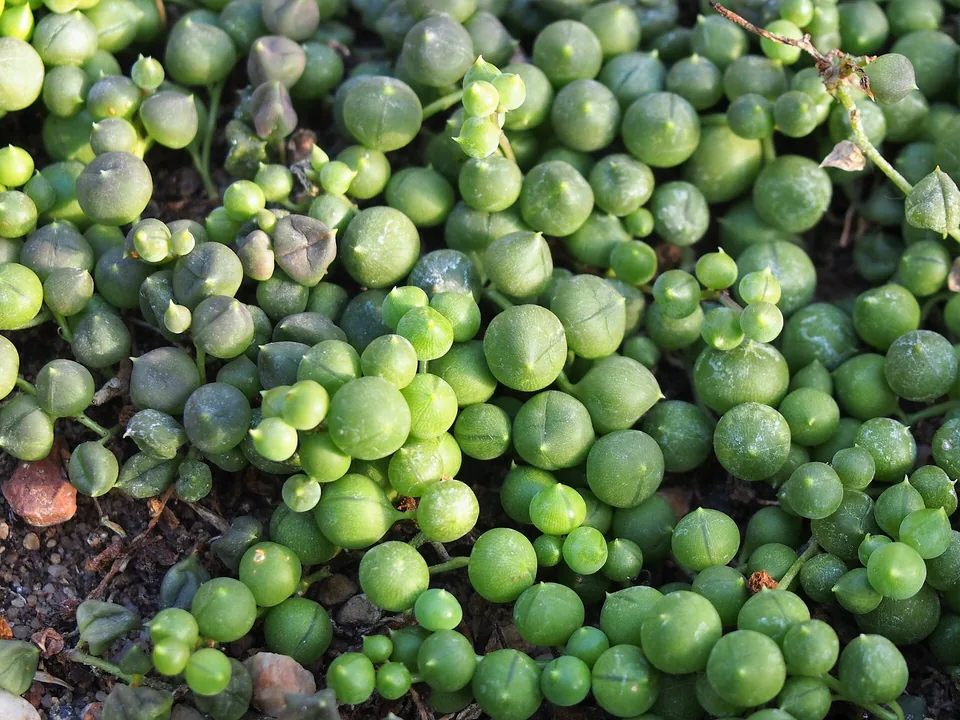
String of pearls is a succulent vine with pea-shaped leaves on trailing stems, popularly grown in hanging baskets. [1] It is mostly grown as a houseplant, and root rot from overwatering is the most common cause of its loss. [2][1] Its leaves and sap are slightly toxic if ingested or handled. [1]
String of Pearls care
Measurements in square brackets are our conversion into the other unit system; the quoted text is unchanged.
How to water String of Pearls
Watering
The sources give different values depending on region, zone or growing conditions.
What each source says
According to Wisconsin Horticulture: Allow the potting medium to dry out completely between waterings, with more water in summer than in winter
According to NC State Extension: Never allow the plant to completely dry out between waterings; tolerates infrequent watering
What the sources say (2)
According to Wisconsin Horticulture: Allow the potting medium to dry out completely between waterings, providing more water in summer than in winter when the plant is notAccording to NC State Extension: It tolerates infrequent watering, but overwatering can result in root rot. Never allow your plant to completely dry out between watering.Watering notes
Water when the leaves start to look a bit shriveled; overwatering causes root rot
How much light String of Pearls needs
Partial shade outdoors; bright, indirect sunlight indoors
What each source says
outdoors: Partial shade
indoors: Bright, indirect sunlight
According to Wisconsin Horticulture: Bright light
What the sources say (4)
outdoors: If planted outdoors, it should be in locations that include partial shade; whereas, indoor plants flourish in areas where they receive bright,indoors: If planted outdoors, it should be in locations that include partial shade; whereas, indoor plants flourish in areas where they receive bright,According to Wisconsin Horticulture: Like other succulents, this plant is relatively low maintenance and only needs bright light, well-drained soil,If planted outdoors, it should be in locations that include partial shade; whereas, indoor plants flourish in areas where they receive bright, indirect sunlight.How much cold String of Pearls can take
9b [winter low −3.9 to −1.1 °C (25 to 30 °F)]
What the sources say (1)
USDA Plant Hardiness Zone:
9b, 10a, 10b, 11a, 11b, 12a, 12bWhere to grow String of Pearls
Indoors
Yes
What the sources say (1)
It can be grown both indoors as a houseplant or outdoors in a more tropical location.In containers
Yes
What the sources say (1)
Use a shallow container since the plants will not produce an extensive root systemHow to propagate String of Pearls
Stem cuttings (3 to 5-inch [8–13 cm], with a few nodes covered in potting mix); a dropped leaf (slower, less reliable); seed
What the sources say (3)
Propagation can be easily and quickly accomplished by taking a 3 to 5-inch stem cutting and covering a few of the nodes in the potting mixtureA slower and less reliable form of propagation can be done by simply dropping a leaf onto your soil mixture.This plant can also be grown from seed, but seed is not commonly available.How to grow String of Pearls
The plant
Life cycle
perennial
What the sources say (1)
This tender evergreen perennial in the daisy family (Asteraceae) is native to dry areas of the eastern Cape of South AfricaFamily
Asteraceae
What the sources say (1)
This tender evergreen perennial in the daisy family (Asteraceae) is native to dry areas of the eastern Cape of South AfricaMature height
30-61 cm (1-2 ft)
What the sources say (1)
The mature size is 1 to 2 feet tall and 1 to 2 feet long. This plant is toxic to both humans and pets.Pests and diseases
Pests
aphids, whiteflies, gnats, ants, mealybugs
What the sources say (1)
Monitor for aphids, whiteflies, gnats, ants, and mealybugs. Soggy wet soil will result in root rot and the plant's demise.Diseases
root rot
What the sources say (1)
Monitor for aphids, whiteflies, gnats, ants, and mealybugs. Soggy wet soil will result in root rot and the plant's demise.Fertilizing
When
In spring, lightly (or repot every year or two instead)
What the sources say (1)
Repot every year or two or fertilize lightly in spring.String of Pearls pests and problems
Root rot
Symptom: Plant decline from soggy soil
What to do: Use a very well-draining mix and a shallow container; avoid overwatering
What the sources say (1)
Root rot from overwatering is the most common cause of its demise.
— String of Pearls, Curio rowleyanus – Wisconsin Horticulture [2] Insect pests
Symptom: Yellow or graying leaves
What to do: Monitor for aphids, whiteflies, gnats, ants, and mealybugs
What the sources say (1)
Monitor for aphids, whiteflies, gnats, ants, and mealybugs.
— Curio rowleyanus (Bead Plant, Irish Beads, Necklace Plant, Rosary Vine, String of Beads, String of Marbles, String of Pearls, String of Peas) | North Carolina Extension Gardener Plant Toolbox [1] Leaf scorch
Symptom: Scorching of the leaves
What to do: Avoid direct sunlight
What the sources say (1)
Scorching of the leaves can occur from direct sunlight.
— Curio rowleyanus (Bead Plant, Irish Beads, Necklace Plant, Rosary Vine, String of Beads, String of Marbles, String of Pearls, String of Peas) | North Carolina Extension Gardener Plant Toolbox [1]
Remedies
Each remedy shows what official sources say about it; traditional remedies without an official source are marked as such. Harmful ones are listed so you know to avoid them.
Treating the plant
mealybugs
organic soap spray Works
How: Treat active infestations with organic soap sprays.
These pests can be managed by adjusting your plant care regimen and treating active infestations with organic soap or neem oil sprays.
— almanac.com [7] What the evidence says insecticidal soap is a safe, effective organic insecticide with minimal environmental impact.
— extension.psu.edu [8] neem oil spray Not verified
Traditional remedy, not verified by an official source.
How: Treat active infestations with neem oil sprays.
rubbing alcohol swab Works
Make sure to test the soap and alcohol mixtures on a small portion of the plant prior to full application because some plants may be sensitive to soap or alcohol.
— planttalk.colostate.edu [9] Be careful not to get the alcohol on the leaves of the plants as they may be damaged.
— extension.umd.edu [10] How: For smaller infestations, dab the insects with a cotton swab dipped in rubbing alcohol; repeat every week until the bugs are gone.
For smaller infestations, dab the insects with a cotton swab dipped in rubbing alcohol. Repeat this procedure every week until the bugs are gone.
— planttalk.colostate.edu [9] What the evidence says For heavy infestations, spray a mixture of 10 percent rubbing alcohol and 90 percent water directly onto the insects.
— planttalk.colostate.edu [9]
root rot
propagating healthy cuttings Not verified
Traditional remedy, not verified by an official source.
How: Propagate stem cuttings to salvage plants with root rot.
trimming rotted roots and repotting Not verified
Traditional remedy, not verified by an official source.
How: Remove the plant from the pot, clean the roots and trim damaged parts; if mushy, let them dry a day or two, then repot in fresh succulent mix.
Is String of Pearls toxic to pets?
Reported by the source, quoted verbatim. This is not medical or veterinary advice: if a person or an animal may have eaten this plant, contact a poison control centre or a veterinarian.
Animals
#problem for dogs #problem for horses #problem for cats
[1]- Symptoms
The leaves are slight toxic , and ingestion may cause vomiting or diarrhea the plant’s sap
[2]
People
Ingestion of the leaves can cause vomiting and diarrhea.
[1]- Poisonous parts
Poison Part: Leaves Sap/Juice Download Print-Friendly QR Code
[1]- Toxic principle
Poison Toxic Principle: Pyrrolizideine alkaloid Causes Contact Dermatitis: Yes Poison
[1]- Symptoms
Poison Symptoms: Ingestion of the leaves can cause vomiting and diarrhea. The plant's sap can cause
[1]- Severity
Poison Severity: Low Poison Symptoms: Ingestion of the leaves can cause vomiting
[1]
ingestion may cause vomiting or diarrhea the plant’s sap may cause skin irritation or rash in sensitive individuals.
[2]
Indicative values
Values from a secondary source, not checked word for word like the rest of this page. Use them as a starting point.
- Hours of sun
- 6-8 hoursIndicative value, adapt it to your climate · Secondary source
- Drought tolerant
- yesIndicative value, adapt it to your climate · Secondary source
- Soil pH
- 6-7Indicative value, adapt it to your climate · Secondary source
- Growth rate
- LowIndicative value, adapt it to your climate · Secondary source
- Pruning
- March, April, AugustIndicative value, adapt it to your climate · Secondary source
Similar plants
- Blue Chalksticks Curio repens
- String of Bananas Curio radicans
- Ageratum Ageratum houstonianum
- Appalachian Blazing Star Liatris squarrulosa
- Appalachian Ironweed Vernonia glauca
- Appalachian Sunflower Helianthus atrorubens
- Aster Symphyotrichum lateriflorum
- Autumn Goldenrod Solidago sphacelata
Sources
Every value above is quoted from these documents. Links lead to the original publisher.
- Curio rowleyanus (Bead Plant, Irish Beads, Necklace Plant, Rosary Vine, String of Beads, String of Marbles, String of Pearls, String of Peas) | North Carolina Extension Gardener Plant Toolbox · plants.ces.ncsu.edu, consulted
- String of Pearls, Curio rowleyanus – Wisconsin Horticulture · hort.extension.wisc.edu, consulted
- String of Pearls - Curio rowleyanus | North Carolina Extension Gardener Plant Toolbox · plants.ces.ncsu.edu, consulted
- Rosary Vine - Curio rowleyanus | North Carolina Extension Gardener Plant Toolbox · plants.ces.ncsu.edu, consulted
- Necklace Plant - Curio rowleyanus | North Carolina Extension Gardener Plant Toolbox · plants.ces.ncsu.edu, consulted
- Irish Beads - Curio rowleyanus | North Carolina Extension Gardener Plant Toolbox · plants.ces.ncsu.edu, consulted
- almanac.com · almanac.com
- extension.psu.edu · extension.psu.edu
- planttalk.colostate.edu · planttalk.colostate.edu
- extension.umd.edu · extension.umd.edu
Written by Emilio Marruso · last checked