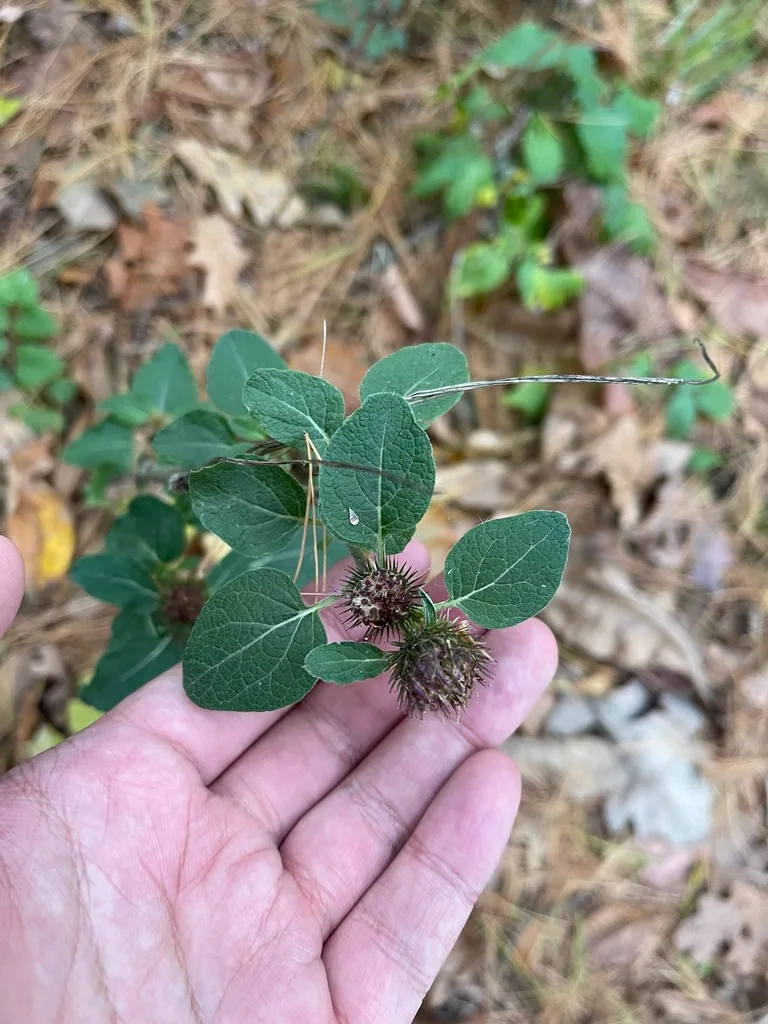
Cómo cultivar y cuidar Lampazo menor
Arctium minus
Escrito por Emilio Marruso · última revisión
Tóxica para: Perros, Caballos, Ganado, Personas · Por qué
De un vistazo
La bardana menor es una bienal que alcanza de 0,9 a 1,8 m de alto a pleno sol o en semisombra. Siémbrala en verano en tierra húmeda y rica, y a finales del otoño de su primer año podrás arrancar sus raíces comestibles, crudas o cocinadas. Las hojas tiernas, los tallos florales jóvenes y los tallos tiernos pelados también se comen.
- Sol
Sol pleno o semisombra
Qué dicen las fuentes (1)
Luz: Pleno sol a semisombra
Light: Full sun (6 or more hours of direct sunlight a day) Partial Shade (Direct sunlight only part of the day, 2-6 hours)
— Arctium minus (Bardane, Common Burdock, Lesser Burdock) | North Carolina Extension Gardener Plant Toolbox [1] - Riego
Mantén la tierra húmeda, pero que el agua drene bien
Qué dicen las fuentes (2)
Notas sobre el riego: Prefiere suelo húmedo, bien drenado y rico en materia orgánica y nitrógeno
It prefers full sun locations with moist, well drained soil rich in organic matter and nitrogen.
— Arctium minus (Bardane, Common Burdock, Lesser Burdock) | North Carolina Extension Gardener Plant Toolbox [1] Prefers moist, fertile soils, but will grow in a variety of soils.
— Burdock | USU [3] - Frío
Aguanta inviernos de hasta −40 °C (−40 °F)
Muy rústica · USDA 3a · RHS H7 · Z3
Qué dicen las fuentes (2)
Rusticidad, zona más fría: 3a [mínima invernal de −40 a −37,2 °C (de −40 a −35 °F)]
USDA Plant Hardiness Zone: 3a, 3b, 4a, 4b, 5a, 5b, 6a, 6b, 7a, 7b, 8a, 8b, 9a, 9b, 10a, 10b
— Arctium minus (Bardane, Common Burdock, Lesser Burdock) | North Carolina Extension Gardener Plant Toolbox [1] Rusticidad, zona más cálida: 10b [mínima invernal de 1,7 a 4,4 °C (de 35 a 40 °F)]
USDA Plant Hardiness Zone: 3a, 3b, 4a, 4b, 5a, 5b, 6a, 6b, 7a, 7b, 8a, 8b, 9a, 9b, 10a, 10b
— Arctium minus (Bardane, Common Burdock, Lesser Burdock) | North Carolina Extension Gardener Plant Toolbox [1] - Suelo
Suelo bien drenado, rico en materia orgánica y nitrógeno
Qué dicen las fuentes (2)
Notas sobre el riego: Prefiere suelo húmedo, bien drenado y rico en materia orgánica y nitrógeno
It prefers full sun locations with moist, well drained soil rich in organic matter and nitrogen.
— Arctium minus (Bardane, Common Burdock, Lesser Burdock) | North Carolina Extension Gardener Plant Toolbox [1] Prefers moist, fertile soils, but will grow in a variety of soils.
— Burdock | USU [3] - Cosecha
Arranca las raíces del primer año a finales de otoño; hojas tiernas y tallos florales antes de la flor
Qué dicen las fuentes (3)
Cosecha: Raíces de primer año a fines de otoño, antes de que se vuelvan demasiado fibrosas; hojas jóvenes y tallos florales inmaduros antes de que aparezcan las flores
Cultivated plants are sown from seed in summer and first-year roots are harvested by late autumn before becoming too fibrous.
— Arctium minus (Bardane, Common Burdock, Lesser Burdock) | North Carolina Extension Gardener Plant Toolbox [1] Primarily the roots are edible. Young leaves and immature flower stalks are also edible before flowers appear.
— Arctium minus (Bardane, Common Burdock, Lesser Burdock) | North Carolina Extension Gardener Plant Toolbox [1] Cómo cosechar: Las raíces del primer año se cosechan a fines de otoño antes de que se vuelvan demasiado fibrosas.
Cultivated plants are sown from seed in summer and first-year roots are harvested by late autumn before becoming too fibrous.
— Arctium minus (Bardane, Common Burdock, Lesser Burdock) | North Carolina Extension Gardener Plant Toolbox [1] - Plagas
Puede sufrir oídio y podredumbre de raíz
Qué dicen las fuentes (1)
Enfermedades: mildiu polvoriento, pudrición de raíz
It is susceptible to powdery mildew and root rot with potential to impact agricultural plants.
— Arctium minus (Bardane, Common Burdock, Lesser Burdock) | North Carolina Extension Gardener Plant Toolbox [1] - Atención
Es invasora: muy difícil de eliminar una vez que se establece
- Tamaño
De 0,9 a 1,8 m de alto
Qué dicen las fuentes (1)
Altura adulta: 91-183 cm (3-6 pies)
In its second year, it bolts to heights 3-6 feet, develops very large heart-shaped leaves, pink to purple thistle-like flowers on branched stems
— Arctium minus (Bardane, Common Burdock, Lesser Burdock) | North Carolina Extension Gardener Plant Toolbox [1] - Multiplicación
Se multiplica por semilla
- Siembra
Siembra en verano
Qué dicen las fuentes (1)
Siembra: Verano (plantas cultivadas)
Cultivated plants are sown from seed in summer and first-year roots are harvested by late autumn before becoming too fibrous.
— Arctium minus (Bardane, Common Burdock, Lesser Burdock) | North Carolina Extension Gardener Plant Toolbox [1] - Seguridad
Las cerdas diminutas de los frutos irritan mucho ojos, piel y vías respiratorias de personas, perros y caballos
Resumen
La bardana común es una flor silvestre bienal y maleza de la familia de las asteráceas, nativa de Europa y ampliamente distribuida. [1] Prefiere pleno sol y suelo húmedo, bien drenado y rico en materia orgánica y nitrógeno. [1] Las raíces son comestibles, pero las cápsulas espinosas y las cerdas pueden causar irritación severa en humanos, perros, caballos y otros animales de ganado. [1]
Citado en inglés, como en la fuente.
Cuidados
Riego
Prefiere suelo húmedo, bien drenado y rico en materia orgánica y nitrógeno
Qué dicen las fuentes (2)
It prefers full sun locations with moist, well drained soil rich in organic matter and nitrogen.Prefers moist, fertile soils, but will grow in a variety of soils.Luz
Pleno sol a semisombra
Qué dicen las fuentes (1)
Light:
Full sun (6 or more hours of direct sunlight a day)
Partial Shade (Direct sunlight only part of the day, 2-6 hours)Clima y frío
Rusticidad, zona más fría
3a [mínima invernal de −40 a −37,2 °C (de −40 a −35 °F)]
Qué dicen las fuentes (1)
USDA Plant Hardiness Zone:
3a, 3b, 4a, 4b, 5a, 5b, 6a, 6b, 7a, 7b, 8a, 8b, 9a, 9b, 10a, 10bRusticidad, zona más cálida
10b [mínima invernal de 1,7 a 4,4 °C (de 35 a 40 °F)]
Qué dicen las fuentes (1)
USDA Plant Hardiness Zone:
3a, 3b, 4a, 4b, 5a, 5b, 6a, 6b, 7a, 7b, 8a, 8b, 9a, 9b, 10a, 10bPropagación
Cultivo
La planta
Ciclo de vida
bienal
Qué dicen las fuentes (1)
Common burdock - Arctium minus (Hill) Bernh.
Family: Asteraceae (Composite family)
Life cycle: BiennialFamilia
Asteraceae
Qué dicen las fuentes (1)
Common burdock - Arctium minus (Hill) Bernh.
Family: Asteraceae (Composite family)
Life cycle: BiennialAltura adulta
91-183 cm (3-6 pies)
Qué dicen las fuentes (1)
In its second year, it bolts to heights 3-6 feet, develops very large heart-shaped leaves, pink to purple thistle-like flowers on branched stemsCosecha y conservación
Cómo cosechar
Las raíces del primer año se cosechan a fines de otoño antes de que se vuelvan demasiado fibrosas.
Qué dicen las fuentes (1)
Cultivated plants are sown from seed in summer and first-year roots are harvested by late autumn before becoming too fibrous.Plagas y enfermedades
Enfermedades
mildiu polvoriento, pudrición de raíz
Qué dicen las fuentes (1)
It is susceptible to powdery mildew and root rot with potential to impact agricultural plants.Problemas
Pudrición de raíces y mildiu polvoriento
Síntoma: Puede albergar pudrición de raíz y mildiu polvoriento, afectando potencialmente cultivos agrícolas
Qué dicen las fuentes (1)
It is susceptible to powdery mildew and root rot with potential to impact agricultural plants.
— Arctium minus (Bardane, Common Burdock, Lesser Burdock) | North Carolina Extension Gardener Plant Toolbox [1] Maleza
Síntoma: Maleza, invasiva y difícil de erradicar una vez establecida
Qué dicen las fuentes (1)
This plant is weedy, invasive and difficult to eradicate once established.
— Arctium minus (Bardane, Common Burdock, Lesser Burdock) | North Carolina Extension Gardener Plant Toolbox [1]
Remedios
Cada remedio indica qué dicen las fuentes oficiales; los remedios tradicionales sin fuente oficial aparecen marcados. Los perjudiciales están para que sepas evitarlos.
Cómo eliminarla
propagación como maleza
excavación manual o arranque Funciona en parte
Established plants will resprout if the whole root is not removed. Any existing seed heads should be bagged and removed from the site.
— ask.extension.org [5] Cómo: excava o arranca las plantas pequeñas; riega la zona antes de arrancarlas y retira toda la raíz principal; embolsa las cabezas de semillas existentes y retíralas del lugar
Digging, hand pulling, or plowing can be effective ways of controlling common burdock when the weeds are small.
— gardeningknowhow.com [4] Qué dicen las pruebas small infestations can be pulled or hand dug
— ask.extension.org [5] siega antes de la floración Funciona en parte
Cómo: siega las plantas más altas antes de que florezcan, o las semillas se dispersarán
You can mow taller plants, but mowing must be done before the plant has bloomed or you will simply spread the seeds.
— gardeningknowhow.com [4] Qué dicen las pruebas Mowing or other cutting methods used prior to seed set will prevent seed formation.
— ask.extension.org [5] vinagre hortícola en el agujero de arranque No verificado
Remedio tradicional, no verificado por una fuente oficial.
If you do use horticultural vinegar be sure to remember that this can affect other plants nearby as well as the soil.
— gardeningknowhow.com [4] Cómo: vierte vinagre hortícola en el agujero que queda al arrancar una planta de bardana, para matar el resto de la raíz principal
Venenosa para los animales
Según la fuente, citada textualmente. No es un consejo médico ni veterinario: si una persona o un animal pudo haber ingerido esta planta, contacta con un centro de toxicología o con un veterinario.
Fruits (achenes) within these burs contain sharp, minute bristles (pappas hairs) that easily become windborne and, if exposed to them, can cause severe eye, skin, and respiratory irritation and/or infection in humans, dogs, horses or other livestock.
[1]- Partes venenosas
Achenes are oblong and have fine, minute bristles (pappas hairs) on one end that soon fall off and easily become airborne.
[1]- Síntomas
These can be seriously irritating to humans or other mammals (particularly dogs, horses, or livestock) if exposed to eyes, skin, or the respiratory tract.
[1]
Burs and bristles may cause severe eye, skin or respiratory problems in humans, dogs, horses, and other livestock.
[1]- Partes venenosas
Achenes are oblong and have fine, minute bristles (pappas hairs) on one end that soon fall off and easily become airborne.
[1]- Síntomas
These can be seriously irritating to humans or other mammals (particularly dogs, horses, or livestock) if exposed to eyes, skin, or the respiratory tract.
[1]
Calendario
Siembra
Verano (plantas cultivadas)
Qué dicen las fuentes (1)
Cultivated plants are sown from seed in summer and first-year roots are harvested by late autumn before becoming too fibrous.Cosecha
Raíces de primer año a fines de otoño, antes de que se vuelvan demasiado fibrosas; hojas jóvenes y tallos florales inmaduros antes de que aparezcan las flores
Qué dicen las fuentes (2)
Cultivated plants are sown from seed in summer and first-year roots are harvested by late autumn before becoming too fibrous.Primarily the roots are edible. Young leaves and immature flower stalks are also edible before flowers appear.Meses tal como los dan las fuentes, en su mayoría de Estados Unidos (hemisferio norte). En el hemisferio sur se desplazan unos seis meses.
Comestibilidad
Según la fuente, citada textualmente. No comas una planta basándote solo en esta página: los errores de identificación pueden ser peligrosos.
Primarily the roots are edible. Young leaves and immature flower stalks are also edible before flowers appear.
[1]After peeling away the outer husk of young stems, the pith can be eaten as a vegetable.
[1]The root of common burdock is edible raw or cooked. The best roots are obtained from young plants.
[3]The roots of young plants are harvested for consumption.
[2]
Valores orientativos
Valores de una fuente secundaria, no comprobados palabra por palabra como el resto de esta página. Úselos como punto de partida.
- Riego
- MínimoValor orientativo, adáptalo a tu clima · Fuente secundaria
- pH del suelo
- 6-7.5Valor orientativo, adáptalo a tu clima · Fuente secundaria
- Nivel de cuidado
- MedioValor orientativo, adáptalo a tu clima · Fuente secundaria
- Crecimiento
- BajoValor orientativo, adáptalo a tu clima · Fuente secundaria
- Poda
- Mayo, junio, julioValor orientativo, adáptalo a tu clima · Fuente secundaria
Plantas similares
- Lampazo Arctium lappa
- Cempasúchil Tagetes erecta
- American Burnweed Erechtites hieraciifolius
- Margarita de Oregón Erigeron speciosus
- Autumn Goldenrod Solidago sphacelata
- Senecio azul Curio repens
- Blue Wood Aster Symphyotrichum cordifolium
- Boneset Eupatorium perfoliatum
Fuentes
Cada valor anterior se cita de estos documentos. Los enlaces llevan al editor original.
- Arctium minus (Bardane, Common Burdock, Lesser Burdock) | North Carolina Extension Gardener Plant Toolbox · plants.ces.ncsu.edu, consultado
- Common burdock | Integrated Crop Management · crops.extension.iastate.edu, consultado
- Burdock | USU · extension.usu.edu, consultado
- gardeningknowhow.com · gardeningknowhow.com
- ask.extension.org · ask.extension.org
Escrito por Emilio Marruso · última revisión