

How to Grow and Care for Cocklebur
Xanthium strumarium
Written by Emilio Marruso · last checked
Toxic to: Horses, Animals, People · Why
At a glance
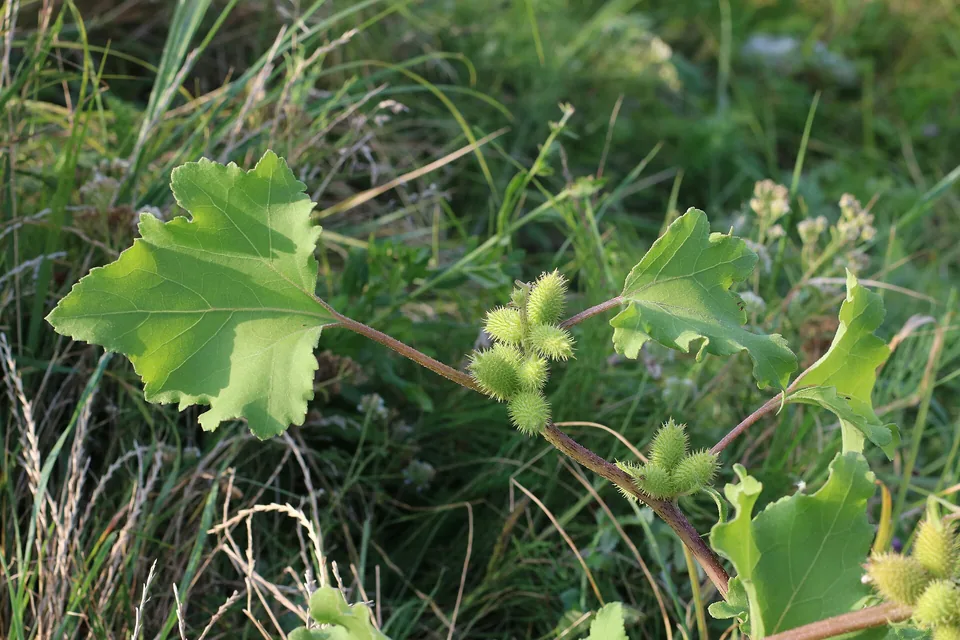
Cocklebur is a tough annual of the daisy family that thrives in full sun or partial shade and loves moist sandy soil, reaching 2–4 feet tall. Native American tribes once used it as food, as medicine and in ceremonies. Grow it with care: it is highly poisonous, its burs cling to clothes and fur, and it spreads aggressively from its own seed.
- Sun
Full sun to partial shade; it can't grow in full shade
What the sources say (1)
Light: Full sun to partial shade; cannot grow in full shade
They grow 2-4 feet tall and prefer moist to wet sandy loam or loams in full sun to partial shade. It cannot grow in full shade.
— Xanthium strumarium (Clotbur, Cocklebur, Common Cocklebur, Donkeybur, Donkey Burr, Heartleaf, Rough Cocklebur, Woolgarie Bur) | North Carolina Extension Gardener Plant Toolbox [1] - Water
Likes soil that stays moist to wet
What the sources say (1)
Watering notes: Prefers moist to wet sandy loam or loams
They grow 2-4 feet tall and prefer moist to wet sandy loam or loams in full sun to partial shade. It cannot grow in full shade.
— Xanthium strumarium (Clotbur, Cocklebur, Common Cocklebur, Donkeybur, Donkey Burr, Heartleaf, Rough Cocklebur, Woolgarie Bur) | North Carolina Extension Gardener Plant Toolbox [1] - Soil
Sandy loam or loam soil
What the sources say (1)
Watering notes: Prefers moist to wet sandy loam or loams
They grow 2-4 feet tall and prefer moist to wet sandy loam or loams in full sun to partial shade. It cannot grow in full shade.
— Xanthium strumarium (Clotbur, Cocklebur, Common Cocklebur, Donkeybur, Donkey Burr, Heartleaf, Rough Cocklebur, Woolgarie Bur) | North Carolina Extension Gardener Plant Toolbox [1] - Harvest
Native Americans once ate the seeds, but the plant is highly poisonous: don't eat it
- Watch out
Spreads like a weed, harms nearby seedlings, and its burs stick hard to clothes and fur
- Size
2 to 4 ft tall
What the sources say (1)
Mature height: 60-120 cm (2-4 feet)
They grow 2-4 feet tall and prefer moist to wet sandy loam or loams in full sun to partial shade.
— Xanthium strumarium (Clotbur, Cocklebur, Common Cocklebur, Donkeybur, Donkey Burr, Heartleaf, Rough Cocklebur, Woolgarie Bur) | North Carolina Extension Gardener Plant Toolbox [1] - Propagation
Grows from seed and sows itself every year
What the sources say (2)
Propagation: Seed (self-seeding)
Pollination occurs by wind, reproduction by self-seeding. This often leads to colonies being formed.
— Xanthium strumarium (Clotbur, Cocklebur, Common Cocklebur, Donkeybur, Donkey Burr, Heartleaf, Rough Cocklebur, Woolgarie Bur) | North Carolina Extension Gardener Plant Toolbox [1] Life cycle: annual
Cocklebur is a summer annual weed in the daisy family that is native to Europe and has naturalized elsewhere.
— Xanthium strumarium (Clotbur, Cocklebur, Common Cocklebur, Donkeybur, Donkey Burr, Heartleaf, Rough Cocklebur, Woolgarie Bur) | North Carolina Extension Gardener Plant Toolbox [1] - Safety
Highly poisonous to people and a problem for horses: it causes vomiting, weakness and spasms
Overview
Cocklebur is a summer annual weed in the daisy family that has naturalized widely and forms a prickly bur. [1] It is listed with high poison severity, with leaves and seeds as the poisonous parts. [1] It prefers moist to wet soils in full sun to partial shade and cannot grow in full shade. [1]
This record is incomplete: the sources we read do not cover every field yet.
Not yet covered by our sources: Hardiness, coldest zone, Hardiness, warmest zone
Cocklebur care
How to water Cocklebur
Prefers moist to wet sandy loam or loams
What the sources say (1)
They grow 2-4 feet tall and prefer moist to wet sandy loam or loams in full sun to partial shade. It cannot grow in full shade.How much light Cocklebur needs
Full sun to partial shade; cannot grow in full shade
What the sources say (1)
They grow 2-4 feet tall and prefer moist to wet sandy loam or loams in full sun to partial shade. It cannot grow in full shade.How much cold Cocklebur can take
Hardiness, coldest zone
Not stated in the sources we read.
Hardiness, warmest zone
Not stated in the sources we read.
How to propagate Cocklebur
Seed (self-seeding)
What the sources say (1)
Pollination occurs by wind, reproduction by self-seeding. This often leads to colonies being formed.How to grow Cocklebur
The plant
Life cycle
annual
What the sources say (1)
Cocklebur is a summer annual weed in the daisy family that is native to Europe and has naturalized elsewhere.Family
Asteraceae
What the sources say (1)
Scientific Family
Asteraceae
Synonyms
Xanthium acerosum, Xanthium californicum,Mature height
60-120 cm (2-4 feet)
What the sources say (1)
They grow 2-4 feet tall and prefer moist to wet sandy loam or loams in full sun to partial shade.Cocklebur pests and problems
Aggressive weedy growth
Symptom: Aggressive growth can be a problem for pastures, fields, roadsides, stream banks, dunes or poorly drained areas.
What to do: Not described in the source.
What the sources say (1)
Their aggressive growth can be a problem for pastures, fields, roadsides, along stream banks, dunes or poorly drained areas.
— Xanthium strumarium (Clotbur, Cocklebur, Common Cocklebur, Donkeybur, Donkey Burr, Heartleaf, Rough Cocklebur, Woolgarie Bur) | North Carolina Extension Gardener Plant Toolbox [1] Allelopathy
Symptom: Young seedlings exude toxic chemicals that can affect germination of surrounding plants, or kill seedlings.
What to do: Not described in the source.
What the sources say (1)
Young Cocklebur seedlings exude toxic chemicals that can affect germination of surrounding plants, or kill seedlings.
— Xanthium strumarium (Clotbur, Cocklebur, Common Cocklebur, Donkeybur, Donkey Burr, Heartleaf, Rough Cocklebur, Woolgarie Bur) | North Carolina Extension Gardener Plant Toolbox [1] Burs attach to clothing and fur
Symptom: Burs can stick to fur and clothing and can be very difficult to extract.
What to do: Not described in the source.
What the sources say (1)
burs can stick to fur and clothing and can be very difficult to extract.
— Xanthium strumarium - rough cocklebur | Yavapai County Native and Naturalized Plants [2]
Remedies
Each remedy shows what official sources say about it; traditional remedies without an official source are marked as such. Harmful ones are listed so you know to avoid them.
Getting rid of it
cocklebur infestation
hand pulling and hoeing before burs form Not verified
Traditional remedy, not verified by an official source.
protect yourself by wearing heavy gloves , long sleeves, and long pants.
— hunker.com [3] How: Hand pull or hoe small areas before burs form, so seeds are not dispersed; several sessions may be needed.
frequent mowing before seed set Not verified
Traditional remedy, not verified by an official source.
How: Mow frequently, before the seeds form; use a bagger attachment if seed heads have formed.
cocklebur seedlings
burn small seedlings with a propane burner Official source, not independently tested
How: Concentrations of small seedlings can be burned with a hand-held propane burner.
Concentrations of small seedlings can be burned with a hand-held propane burner.
— rangeplants.tamu.edu [4]
cocklebur reseeding
compost pulled plants and pick up fallen burs Not verified
Traditional remedy, not verified by an official source.
How: Compost the entire plant in a properly maintained pile and pick up any fallen burs to prevent reseeding.
Is Cocklebur toxic to pets?
Reported by the source, quoted verbatim. This is not medical or veterinary advice: if a person or an animal may have eaten this plant, contact a poison control centre or a veterinarian.
Animals
The glycocide carboxyatractyloside is present in the cotyledon stage. It causes hypoglycemia in animals that ingest the seedling
[1]Allelopathic Poisonous to Humans Problem for Horses Weedy
[1]
People
Poisonous to Humans: Poison Severity: High Poison Symptoms: Poisoning leads to vomiting, weakness, muscular spasms and sometimes coma and death of the animal.
[1]
Edibility
Reported by the source, quoted verbatim. Do not eat a plant on the basis of this page alone: identification mistakes can be dangerous.
Native American tribes used the cocklebur medicinally, as a food source (seeds), and in ceremonies.
[1]
Similar plants
- African Marigold Tagetes erecta
- American Burnweed Erechtites hieraciifolius
- Aspen Fleabane Erigeron speciosus
- Autumn Goldenrod Solidago sphacelata
- Blue Chalksticks Curio repens
- Blue Wood Aster Symphyotrichum cordifolium
- Boneset Eupatorium perfoliatum
- Bull Thistle Cirsium vulgare
Sources
Every value above is quoted from these documents. Links lead to the original publisher.
- Xanthium strumarium (Clotbur, Cocklebur, Common Cocklebur, Donkeybur, Donkey Burr, Heartleaf, Rough Cocklebur, Woolgarie Bur) | North Carolina Extension Gardener Plant Toolbox · plants.ces.ncsu.edu, consulted
- Xanthium strumarium - rough cocklebur | Yavapai County Native and Naturalized Plants · yavapaiplants.extension.arizona.edu, consulted
- hunker.com · hunker.com
- rangeplants.tamu.edu · rangeplants.tamu.edu
Written by Emilio Marruso · last checked