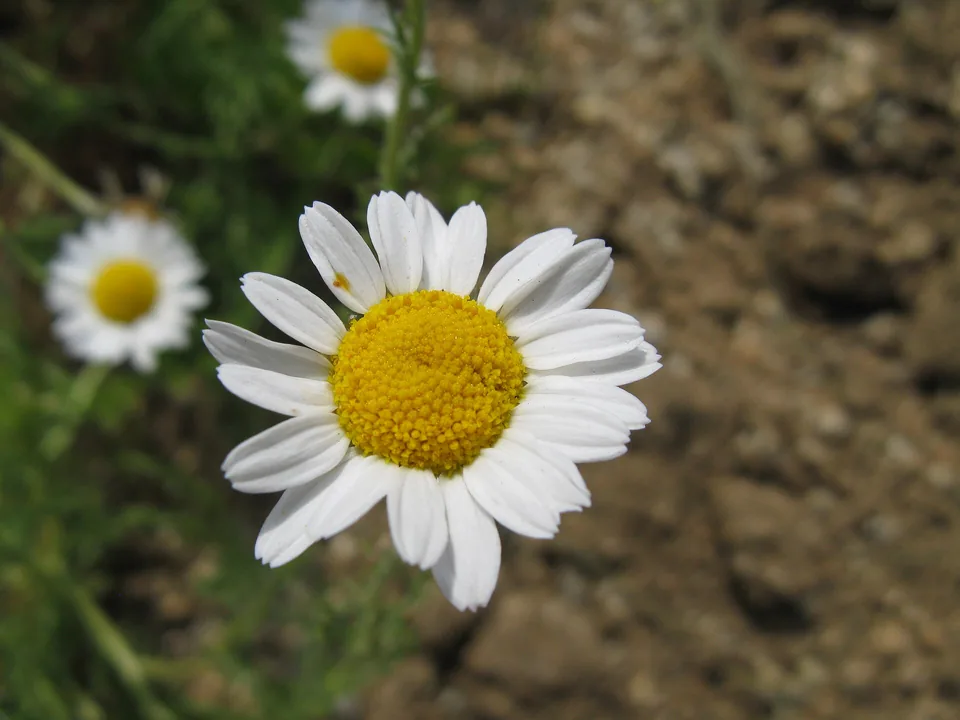


How to Grow and Care for Chamomile
Chamaemelum nobile
Written by Emilio Marruso · last checked
Toxic to: Cats, Dogs, Horses, People · Why
At a glance
Roman chamomile is a hardy perennial that grows in part sun to full sun and comes back year after year. Its flowers draw pollinators, it even tolerates foot traffic, and you can dry the flowers to brew your own tea. Plant it 2–4 inches apart, and remember: no more than one cup of tea a day.
- Sun
Part sun to full sun
What the sources say (1)
Light: Part sun to full sun
Provide part sun to full sun in well-drained, moist to dry soils.
— Chamaemelum nobile (Barnyard Daisy, Chamomile, Corn Feverfew, Garden Chamomile, Ground-apple, Manzanilla, Roman Chamomile, True Chamomile, Turkey-weed) | North Carolina Extension Gardener Plant Toolbox [1] - Cold
Survives winters down to −30 °F (−34.4 °C)
Very hardy · USDA 4a · RHS H7 · Z4
What the sources say (2)
Hardiness, coldest zone: 4a [winter low −34.4 to −31.7 °C (−30 to −25 °F)]
4a, 4b, 5a, 5b, 6a, 6b, 7a, 7b, 8a, 8b, 9a, 9b
— Chamaemelum nobile (Barnyard Daisy, Chamomile, Corn Feverfew, Garden Chamomile, Ground-apple, Manzanilla, Roman Chamomile, True Chamomile, Turkey-weed) | North Carolina Extension Gardener Plant Toolbox [1] Hardiness, warmest zone: 9b [winter low −3.9 to −1.1 °C (25 to 30 °F)]
4a, 4b, 5a, 5b, 6a, 6b, 7a, 7b, 8a, 8b, 9a, 9b
— Chamaemelum nobile (Barnyard Daisy, Chamomile, Corn Feverfew, Garden Chamomile, Ground-apple, Manzanilla, Roman Chamomile, True Chamomile, Turkey-weed) | North Carolina Extension Gardener Plant Toolbox [1] - Spacing
2–4 in between plants
What the sources say (1)
Spacing: 5.1-10.2 cm (2-4 in)
This plant grow 1 to 2 feet tall and needs 2 to 4 inches of space when planting to allow its greatest potential.
— Chamaemelum nobile (Barnyard Daisy, Chamomile, Corn Feverfew, Garden Chamomile, Ground-apple, Manzanilla, Roman Chamomile, True Chamomile, Turkey-weed) | North Carolina Extension Gardener Plant Toolbox [1] - Harvest
Dry the flowers for tea: no more than one cup a day, and not during pregnancy
- Pollination
Its flowers attract pollinators
- Size
1–2 ft tall and 2–4 in wide
What the sources say (2)
Mature height: 30-61 cm (1 ft - 2 ft)
Dimensions: Height: 1 ft. 0 in. - 2 ft. 0 in. Width: 0 ft. 2 in. - 0 ft. 4 in.
— Chamaemelum nobile (Barnyard Daisy, Chamomile, Corn Feverfew, Garden Chamomile, Ground-apple, Manzanilla, Roman Chamomile, True Chamomile, Turkey-weed) | North Carolina Extension Gardener Plant Toolbox [1] Mature width: 5-10 cm (2 in - 4 in)
Dimensions: Height: 1 ft. 0 in. - 2 ft. 0 in. Width: 0 ft. 2 in. - 0 ft. 4 in.
— Chamaemelum nobile (Barnyard Daisy, Chamomile, Corn Feverfew, Garden Chamomile, Ground-apple, Manzanilla, Roman Chamomile, True Chamomile, Turkey-weed) | North Carolina Extension Gardener Plant Toolbox [1] - Propagation
Divide the clumps or grow from seed
What the sources say (1)
Propagation: Division; seed
Recommended Propagation Strategy: Division Seed Country Or Region Of Origin:
— Chamaemelum nobile (Barnyard Daisy, Chamomile, Corn Feverfew, Garden Chamomile, Ground-apple, Manzanilla, Roman Chamomile, True Chamomile, Turkey-weed) | North Carolina Extension Gardener Plant Toolbox [1] - Safety
Wear gloves: it can irritate skin. Harmful to cats, dogs and horses
Overview
Roman chamomile is a low-growing herbaceous perennial native to Europe and western Asia. [1] It is grown in part sun to full sun in well-drained, moist to dry soils and needs 2 to 4 inches [5–10 cm] of space when planting. [1] Dried flowers are used for tea, and the plant may cause contact dermatitis in some people. [1]
This record is incomplete: the sources we read do not cover every field yet.
Not yet covered by our sources: Watering, Pruning
Chamomile care
Measurements in square brackets are our conversion into the other unit system; the quoted text is unchanged.
How to water Chamomile
Not stated in the sources we read.
How much light Chamomile needs
Part sun to full sun
What the sources say (1)
Provide part sun to full sun in well-drained, moist to dry soils.How much cold Chamomile can take
Hardiness, coldest zone
4a [winter low −34.4 to −31.7 °C (−30 to −25 °F)]
What the sources say (1)
4a, 4b, 5a, 5b, 6a, 6b, 7a, 7b, 8a, 8b, 9a, 9bHardiness, warmest zone
9b [winter low −3.9 to −1.1 °C (25 to 30 °F)]
What the sources say (1)
4a, 4b, 5a, 5b, 6a, 6b, 7a, 7b, 8a, 8b, 9a, 9bWhere to grow Chamomile
5.1-10.2 cm (2-4 in)
What the sources say (1)
This plant grow 1 to 2 feet tall and needs 2 to 4 inches of space when planting to allow its greatest potential.How to propagate Chamomile
Division; seed
What the sources say (1)
Recommended Propagation Strategy:
Division
Seed
Country Or Region Of Origin:How to grow Chamomile
The plant
Life cycle
perennial
What the sources say (1)
Roman chamomile is a low growing herbaceous perennial in the Asteraceae (daisy) family. It is native to Europe and western Asia.Family
Asteraceae
What the sources say (1)
Roman chamomile is a low growing herbaceous perennial in the Asteraceae (daisy) family. It is native to Europe and western Asia.Mature height
30-61 cm (1 ft - 2 ft)
What the sources say (1)
Dimensions:
Height: 1 ft. 0 in. - 2 ft. 0 in.
Width: 0 ft. 2 in. - 0 ft. 4 in.Mature width
5-10 cm (2 in - 4 in)
What the sources say (1)
Dimensions:
Height: 1 ft. 0 in. - 2 ft. 0 in.
Width: 0 ft. 2 in. - 0 ft. 4 in.Remedies
Each remedy shows what official sources say about it; traditional remedies without an official source are marked as such. Harmful ones are listed so you know to avoid them.
Treating the plant
aphids
potassium soap spray Not verified
Traditional remedy, not verified by an official source.
It is advisable to apply this solution during the coolest hours of the day, i.e., at dawn or dusk, to prevent the sun from burning the leaves.
— jardineriaon.com [6] How: Mix 30 grams of natural potassium soap with one liter of water in a spray bottle, shake until foamy and spray generously on the plant, especially the most affected areas.
powdery mildew
diluted hydrogen peroxide spray Not verified
Traditional remedy, not verified by an official source.
How: Dilute hydrogen peroxide, 9 parts water to 1 part hydrogen peroxide; spray it on the plants thoroughly about once a week.
Is Chamomile toxic to pets?
Reported by the source, quoted verbatim. This is not medical or veterinary advice: if a person or an animal may have eaten this plant, contact a poison control centre or a veterinarian.
Animals
#pollinator plant #problem for cats #problem for dogs #problem for horses #foot traffic tolerant
[1]The source flags the risk for this animal but does not explain why.
People
Contact dermatitis, vomiting, diarrhea, anorexia, and allergic reactions. Long-term use can lead to an increased risk of bleeding.
[1]Wear gloves as it may cause contact dermatitis in some people.
[1]- Symptoms
Causes Contact Dermatitis: Yes
[1]
Drink no more than one cup of tea per day, as it contains thujone, a substance that can be toxic in high doses. Do not use if pregnant.
[1]- Toxic principle
as it contains thujone, a substance that can be toxic in high doses.
[1]
Calendar
Pruning
Not stated in the sources we read.
Months as given by the sources, which are mostly from the United States (northern hemisphere). In the southern hemisphere they shift by about six months.
Edibility
Reported by the source, quoted verbatim. Do not eat a plant on the basis of this page alone: identification mistakes can be dangerous.
Use dried flowers for tea. Drink no more than one cup of tea per day, as it contains thujone, a substance that can be toxic in high doses. Do not use if pregnant.
[1]
Indicative values
Values from a secondary source, not checked word for word like the rest of this page. Use them as a starting point.
- Hours of sun
- 6-8 hoursIndicative value, adapt it to your climate · Secondary source
- Watering
- AverageIndicative value, adapt it to your climate · Secondary source
- Drought tolerant
- yesIndicative value, adapt it to your climate · Secondary source
- Soil
- Rocky, gravelly, dry, Well-drainedIndicative value, adapt it to your climate · Secondary source
- Soil pH
- 6-7.5Indicative value, adapt it to your climate · Secondary source
- Care level
- MediumIndicative value, adapt it to your climate · Secondary source
- Growth rate
- HighIndicative value, adapt it to your climate · Secondary source
- Pruning
- December, January, FebruaryIndicative value, adapt it to your climate · Secondary source
- Pests
- Pest resistant, Disease resistant, Drought resistantIndicative value, adapt it to your climate · Secondary source
Similar plants
- African Daisy Dimorphotheca pluvialis
- African Marigold Tagetes erecta
- Ageratum Ageratum houstonianum
- Alpine aster Aster alpinus
- Appalachian Blazing Star Liatris squarrulosa
- Appalachian Ironweed Vernonia glauca
- Appalachian Sunflower Helianthus atrorubens
- Aromatic Aster Symphyotrichum oblongifolium
Sources
Every value above is quoted from these documents. Links lead to the original publisher.
- Chamaemelum nobile (Barnyard Daisy, Chamomile, Corn Feverfew, Garden Chamomile, Ground-apple, Manzanilla, Roman Chamomile, True Chamomile, Turkey-weed) | North Carolina Extension Gardener Plant Toolbox · plants.ces.ncsu.edu, consulted
- Roman Chamomile - Chamaemelum nobile | North Carolina Extension Gardener Plant Toolbox · plants.ces.ncsu.edu, consulted
- Chamomile - Chamaemelum nobile | North Carolina Extension Gardener Plant Toolbox · plants.ces.ncsu.edu, consulted
- Manzanilla - Chamaemelum nobile | North Carolina Extension Gardener Plant Toolbox · plants.ces.ncsu.edu, consulted
- German Chamomile, Matricaria chamomilla – Wisconsin Horticulture · hort.extension.wisc.edu, consulted
- jardineriaon.com · jardineriaon.com
Written by Emilio Marruso · last checked