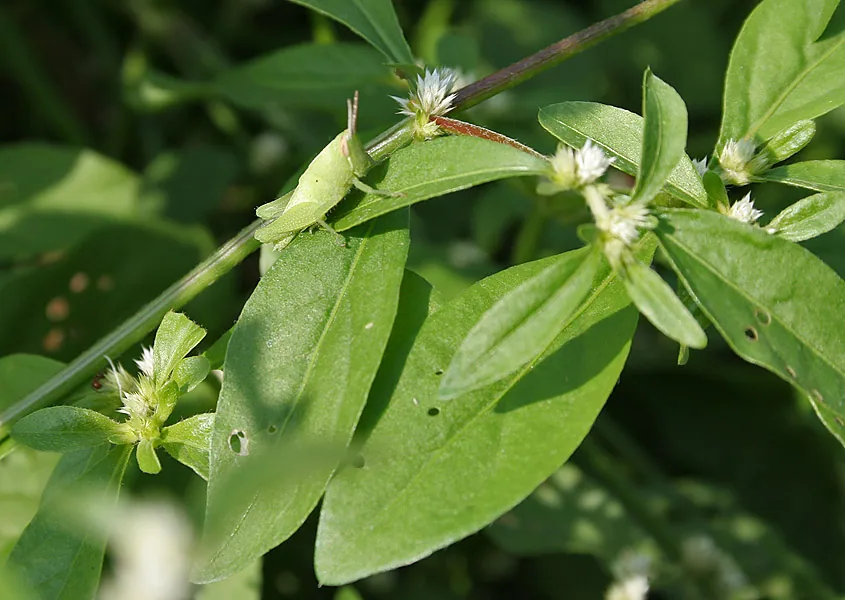


How to Grow and Care for Joseph's Coat
Alternanthera ficoidea
Written by Emilio Marruso · last checked
At a glance
This compact plant fits almost anywhere: it grows in full sun or partial shade, in garden beds, in containers or even indoors. Give it moist, well-drained soil, and once it is established it handles dry spells with ease. New plants are simple to start from tip cuttings, so one plant can quickly turn into many.
- Sun
Full sun to partial shade
What the sources say (2)
Light: Full sun to partial shade
This plant grows in full sun to partial shade in moist organically rich well-drained soil.
— Alternanthera ficoidea (Bloodleaf, Calico Plant, Copperleaf, Joseph's Coat, Joyweed, Parrot Leaf) | North Carolina Extension Gardener Plant Toolbox [1] Plant joyweed in full sun to part-shade areas in rich, well-drained soil.
— Joyweed – not what you think! - UF/IFAS Extension Charlotte County [4] - Water
Keep the soil moist; once established, it handles drought
What the sources say (1)
Watering: Moist, well-drained soil; drought tolerant once established
This plant grows in full sun to partial shade in moist organically rich well-drained soil. Brightly colored leaves are most showy in full sun conditions. Once established, it is quite drought and heat tolerant.
— Alternanthera ficoidea (Bloodleaf, Calico Plant, Copperleaf, Joseph's Coat, Joyweed, Parrot Leaf) | North Carolina Extension Gardener Plant Toolbox [1] - Cold
Survives winters down to 30 °F (−1.1 °C)
Half hardy: mild winters or an unheated greenhouse · USDA 10a · RHS H3 · Z10
What the sources say (2)
Hardiness, coldest zone: 10a [winter low −1.1 to 1.7 °C (30 to 35 °F)]
USDA Plant Hardiness Zone: 10a, 10b, 11a, 11b
— Alternanthera ficoidea (Bloodleaf, Calico Plant, Copperleaf, Joseph's Coat, Joyweed, Parrot Leaf) | North Carolina Extension Gardener Plant Toolbox [1] Hardiness, warmest zone: 11b [winter low 7.2 to 10 °C (45 to 50 °F)]
USDA Plant Hardiness Zone: 10a, 10b, 11a, 11b
— Alternanthera ficoidea (Bloodleaf, Calico Plant, Copperleaf, Joseph's Coat, Joyweed, Parrot Leaf) | North Carolina Extension Gardener Plant Toolbox [1] - Soil
Moist soil that drains well
What the sources say (1)
Watering: Moist, well-drained soil; drought tolerant once established
This plant grows in full sun to partial shade in moist organically rich well-drained soil. Brightly colored leaves are most showy in full sun conditions. Once established, it is quite drought and heat tolerant.
— Alternanthera ficoidea (Bloodleaf, Calico Plant, Copperleaf, Joseph's Coat, Joyweed, Parrot Leaf) | North Carolina Extension Gardener Plant Toolbox [1] - Spacing
4–9 in between plants
What the sources say (1)
Spacing: 10.2-22.9 cm (4 to 9 in)
If planting outdoors as a groundcover, place plants 4 to 9 inches apart.
— Alternanthera ficoidea (Bloodleaf, Calico Plant, Copperleaf, Joseph's Coat, Joyweed, Parrot Leaf) | North Carolina Extension Gardener Plant Toolbox [1] - Watch out
In hot summers, full sun can bleach the leaves
- Size
1 to 1.5 ft wide
What the sources say (1)
Mature width: 30.48-45.72 cm (1-1.5 ft)
Height: 0 ft. 6 in. - 1 ft. 0 in. Width: 1 ft. 0 in. - 1 ft. 6 in.
— Alternanthera ficoidea (Bloodleaf, Calico Plant, Copperleaf, Joseph's Coat, Joyweed, Parrot Leaf) | North Carolina Extension Gardener Plant Toolbox [1] - Propagation
From tip cuttings or from seed
What the sources say (2)
Propagation: Tip cuttings, seed
Plants can be overwintered indoors, tip cuttings can be taken, or they can be grown from seed.
— Alternanthera ficoidea (Bloodleaf, Calico Plant, Copperleaf, Joseph's Coat, Joyweed, Parrot Leaf) | North Carolina Extension Gardener Plant Toolbox [1] Fortunately, joyweed is easily propagated using tip cuttings.
— Joyweed – not what you think! - UF/IFAS Extension Charlotte County [4] - Containers
Grows in containers and indoors too
What the sources say (2)
In containers: Yes
While Alternanthera ficoidea can do well in containers, they look their best in mass planting where a pop of color is needed.
— Joyweed – not what you think! - UF/IFAS Extension Charlotte County [4] Indoors: Yes
Plant in an English or cottage garden, or use in a container on a patio. This plant can also be grown as a houseplant.
— Alternanthera ficoidea (Bloodleaf, Calico Plant, Copperleaf, Joseph's Coat, Joyweed, Parrot Leaf) | North Carolina Extension Gardener Plant Toolbox [1]
Overview
Joseph's coat is an herbaceous perennial grown for strikingly colored foliage, as a houseplant or annual groundcover. [1] It grows in full sun to partial shade in moist, organically rich, well-drained soil and is drought and heat tolerant once established. [1] It is hardy in USDA zones 10a to 11b and can be propagated by tip cuttings or seed. [1]
This record is incomplete: the sources we read do not cover every field yet.
Not yet covered by our sources: Pruning
Joseph's Coat care
How to water Joseph's Coat
Moist, well-drained soil; drought tolerant once established
What the sources say (1)
This plant grows in full sun to partial shade in moist organically rich well-drained soil. Brightly colored leaves are most showy in full sun conditions. Once established, it is quite drought and heat tolerant.How much light Joseph's Coat needs
Full sun to partial shade
What the sources say (2)
This plant grows in full sun to partial shade in moist organically rich well-drained soil.Plant joyweed in full sun to part-shade areas in rich, well-drained soil.How much cold Joseph's Coat can take
Hardiness, coldest zone
10a [winter low −1.1 to 1.7 °C (30 to 35 °F)]
What the sources say (1)
USDA Plant Hardiness Zone:
10a, 10b, 11a, 11bHardiness, warmest zone
11b [winter low 7.2 to 10 °C (45 to 50 °F)]
What the sources say (1)
USDA Plant Hardiness Zone:
10a, 10b, 11a, 11bWhere to grow Joseph's Coat
Indoors
Yes
What the sources say (1)
Plant in an English or cottage garden, or use in a container on a patio. This plant can also be grown as a houseplant.In containers
Yes
What the sources say (1)
While Alternanthera ficoidea can do well in containers, they look their best in mass planting where a pop of color is needed.Spacing
10.2-22.9 cm (4 to 9 in)
What the sources say (1)
If planting outdoors as a groundcover, place plants 4 to 9 inches apart.How to propagate Joseph's Coat
Tip cuttings, seed
What the sources say (2)
Plants can be overwintered indoors, tip cuttings can be taken, or they can be grown from seed.Fortunately, joyweed is easily propagated using tip cuttings.How to grow Joseph's Coat
The plant
Life cycle
Family
Amaranthaceae
What the sources say (1)
Joseph's coat is an herbaceous perennial in the Amaranthaceae (buckwheat) family.Mature height
Mature width
30.48-45.72 cm (1-1.5 ft)
What the sources say (1)
Height: 0 ft. 6 in. - 1 ft. 0 in.
Width: 1 ft. 0 in. - 1 ft. 6 in.Fertilizing
When
The sources give different values depending on region, zone or growing conditions.
What each source says
cultivar 'Chartreuse': At planting time
What the sources say (1)
cultivar 'Chartreuse': at planting time. Follow the label directions. You shouldn’t need to fertilize again.How often
The sources give different values depending on region, zone or growing conditions.
What each source says
cultivar 'Chartreuse': Once, at planting; no further feeding needed
What the sources say (1)
cultivar 'Chartreuse': at planting time. Follow the label directions. You shouldn’t need to fertilize again.Mineral fertilizers
The sources give different values depending on region, zone or growing conditions.
What each source says
cultivar 'Chartreuse': Complete, slow-release fertilizer at planting
What the sources say (1)
cultivar 'Chartreuse': Fertilize Chartreuse Joseph’s Coat with a complete, slow-release fertilizer…Joseph's Coat pests and problems
Leaf bleaching in full sun
Symptom: Leaves may bleach in the full sun during hot summers
What the sources say (1)
Leaves may bleach in the full sun during hot summers.
— Alternanthera ficoidea (Bloodleaf, Calico Plant, Copperleaf, Joseph's Coat, Joyweed, Parrot Leaf) | North Carolina Extension Gardener Plant Toolbox [1]
Remedies
Each remedy shows what official sources say about it; traditional remedies without an official source are marked as such. Harmful ones are listed so you know to avoid them.
Treating the plant
spider mites
insecticidal soap spray Partly works
Insecticidal soaps are made from potassium salts of fatty acids (don’t make a homemade soap solution as this can burn and damage plants).
— extension.umn.edu [7] How: Target the underside of leaves as well as the top; repeat applications may be needed.
Soaps and horticultural oils are reasonably effective against mites and have little impact on people, animals and nontarget insects.
— extension.umn.edu [7] What the evidence says Soaps and horticultural oils are reasonably effective against mites and have little impact on people, animals and nontarget insects.
— extension.umn.edu [7] horticultural oil spray Partly works
How: Target the underside of leaves as well as the top; repeat applications may be needed.
Soaps and horticultural oils are reasonably effective against mites and have little impact on people, animals and nontarget insects.
— extension.umn.edu [7] What the evidence says Soaps and horticultural oils are reasonably effective against mites and have little impact on people, animals and nontarget insects.
— extension.umn.edu [7] homemade soap solution Harmful
How: Insecticidal soaps are made from potassium salts of fatty acids.
Insecticidal soaps are made from potassium salts of fatty acids (don’t make a homemade soap solution as this can burn and damage plants).
— extension.umn.edu [7] What the evidence says Insecticidal soaps are made from potassium salts of fatty acids (don’t make a homemade soap solution as this can burn and damage plants).
— extension.umn.edu [7] high-pressure water spray Official source, not independently tested
How: Dislodges the mites and can wash away their protective webbing.
Use a high-pressure water spray to dislodge twospotted spider mites. This can also wash away their protective webbing.
— extension.umn.edu [7]
Calendar
Pruning
Not stated in the sources we read.
Months as given by the sources, which are mostly from the United States (northern hemisphere). In the southern hemisphere they shift by about six months.
Indicative values
Values from a secondary source, not checked word for word like the rest of this page. Use them as a starting point.
- Hours of sun
- 4-6 hoursIndicative value, adapt it to your climate · Secondary source
- Soil pH
- 6-7.5Indicative value, adapt it to your climate · Secondary source
- Care level
- MediumIndicative value, adapt it to your climate · Secondary source
- Growth rate
- HighIndicative value, adapt it to your climate · Secondary source
- Pruning
- May, June, JulyIndicative value, adapt it to your climate · Secondary source
Similar plants
- Brazilian joyweed Alternanthera dentata
- Alligatorweed Alternanthera philoxeroides
- Bloodleaf Iresine herbstii
- Cockscomb Celosia argentea
- Foxtail amaranth Amaranthus caudatus
- Globe Amaranth Gomphrena globosa
- Joseph's Coat Amaranthus tricolor
- Prince's Feather Amaranthus hypochondriacus
Sources
Every value above is quoted from these documents. Links lead to the original publisher.
- Alternanthera ficoidea (Bloodleaf, Calico Plant, Copperleaf, Joseph's Coat, Joyweed, Parrot Leaf) | North Carolina Extension Gardener Plant Toolbox · plants.ces.ncsu.edu, consulted
- Alternanthera (Alternanthera ficoidea)-Hort Answers - University of Illinois Extension · web.extension.illinois.edu, consulted
- Joyweed - Alternanthera ficoidea | North Carolina Extension Gardener Plant Toolbox · plants.ces.ncsu.edu, consulted
- Joyweed – not what you think! - UF/IFAS Extension Charlotte County · blogs.ifas.ufl.edu, consulted
- Joseph's Coat - Alternanthera ficoidea | North Carolina Extension Gardener Plant Toolbox · plants.ces.ncsu.edu, consulted
- newswire.caes.uga.edu · newswire.caes.uga.edu
- extension.umn.edu · extension.umn.edu
Written by Emilio Marruso · last checked