
How to Grow and Care for Foxtail amaranth
Amaranthus caudatus
Written by Emilio Marruso · last checked
At a glance
This amaranth is an easy annual that gives you two harvests in one: its leaves are eaten as a vegetable and its seeds as a grain. Grow it from seed, set the plants out after the last frost, and give it full sun or partial shade with moist soil. It grows 3–5 feet tall and even thrives in a container.
- Sun
Full sun to partial shade
What the sources say (1)
Light: Full sun to partial shade
Light: Full sun (6 or more hours of direct sunlight a day) Partial Shade (Direct sunlight only part of the day, 2-6 hours)
— Amaranthus caudatus (foxtail amaranth, Love-Lies Bleeding, Tassel Flower, velvet flower) | North Carolina Extension Gardener Plant Toolbox [1] - Water
Keep the soil moist
What the sources say (1)
Watering: Keep the soil moist
The soil should be kept moist. Set out plants after last frost. This plant is good in hanging baskets.
— Amaranthus caudatus (foxtail amaranth, Love-Lies Bleeding, Tassel Flower, velvet flower) | North Carolina Extension Gardener Plant Toolbox [1] - Cold
Survives winters down to −50 °F (−45.6 °C)
Very hardy · USDA 2a · RHS H7 · Z2
What the sources say (2)
Hardiness, coldest zone: 2a [winter low −45.6 to −42.8 °C (−50 to −45 °F)]
USDA Plant Hardiness Zone: 2a, 2b, 3a, 3b, 4a, 4b, 5a, 5b, 6a, 6b, 7a, 7b, 8a, 8b, 9a, 9b, 10a, 10b, 11a, 11b
— Amaranthus caudatus (foxtail amaranth, Love-Lies Bleeding, Tassel Flower, velvet flower) | North Carolina Extension Gardener Plant Toolbox [1] Hardiness, warmest zone: 11b [winter low 7.2 to 10 °C (45 to 50 °F)]
USDA Plant Hardiness Zone: 2a, 2b, 3a, 3b, 4a, 4b, 5a, 5b, 6a, 6b, 7a, 7b, 8a, 8b, 9a, 9b, 10a, 10b, 11a, 11b
— Amaranthus caudatus (foxtail amaranth, Love-Lies Bleeding, Tassel Flower, velvet flower) | North Carolina Extension Gardener Plant Toolbox [1] - Planting
Set the plants out after the last frost
What the sources say (1)
Planting: Set out plants after last frost
The soil should be kept moist. Set out plants after last frost. This plant is good in hanging baskets.
— Amaranthus caudatus (foxtail amaranth, Love-Lies Bleeding, Tassel Flower, velvet flower) | North Carolina Extension Gardener Plant Toolbox [1] - Harvest
Both the leaves and the seeds are edible: a leaf vegetable and a grain
- Size
3–5 ft tall and 1–2 ft wide
What the sources say (2)
Mature height: 91-152 cm (3-5 ft)
Dimensions: Height: 3 ft. 0 in. - 5 ft. 0 in. Width: 1 ft. 0 in. - 2 ft. 0 in.
— Amaranthus caudatus (foxtail amaranth, Love-Lies Bleeding, Tassel Flower, velvet flower) | North Carolina Extension Gardener Plant Toolbox [1] Mature width: 30-61 cm (1-2 ft)
Dimensions: Height: 3 ft. 0 in. - 5 ft. 0 in. Width: 1 ft. 0 in. - 2 ft. 0 in.
— Amaranthus caudatus (foxtail amaranth, Love-Lies Bleeding, Tassel Flower, velvet flower) | North Carolina Extension Gardener Plant Toolbox [1] - Propagation
Grows from seed
What the sources say (1)
Propagation: Seed
Uses (Ethnobotany): Grain crop, leaf vegetable Life Cycle: Annual Recommended Propagation Strategy: Seed Country Or Region Of Origin:
— Amaranthus caudatus (foxtail amaranth, Love-Lies Bleeding, Tassel Flower, velvet flower) | North Carolina Extension Gardener Plant Toolbox [1] - Containers
Grows in containers too
What the sources say (1)
In containers: Yes
The soil should be kept moist. Set out plants after last frost. This plant is good in hanging baskets.
— Amaranthus caudatus (foxtail amaranth, Love-Lies Bleeding, Tassel Flower, velvet flower) | North Carolina Extension Gardener Plant Toolbox [1]
Overview
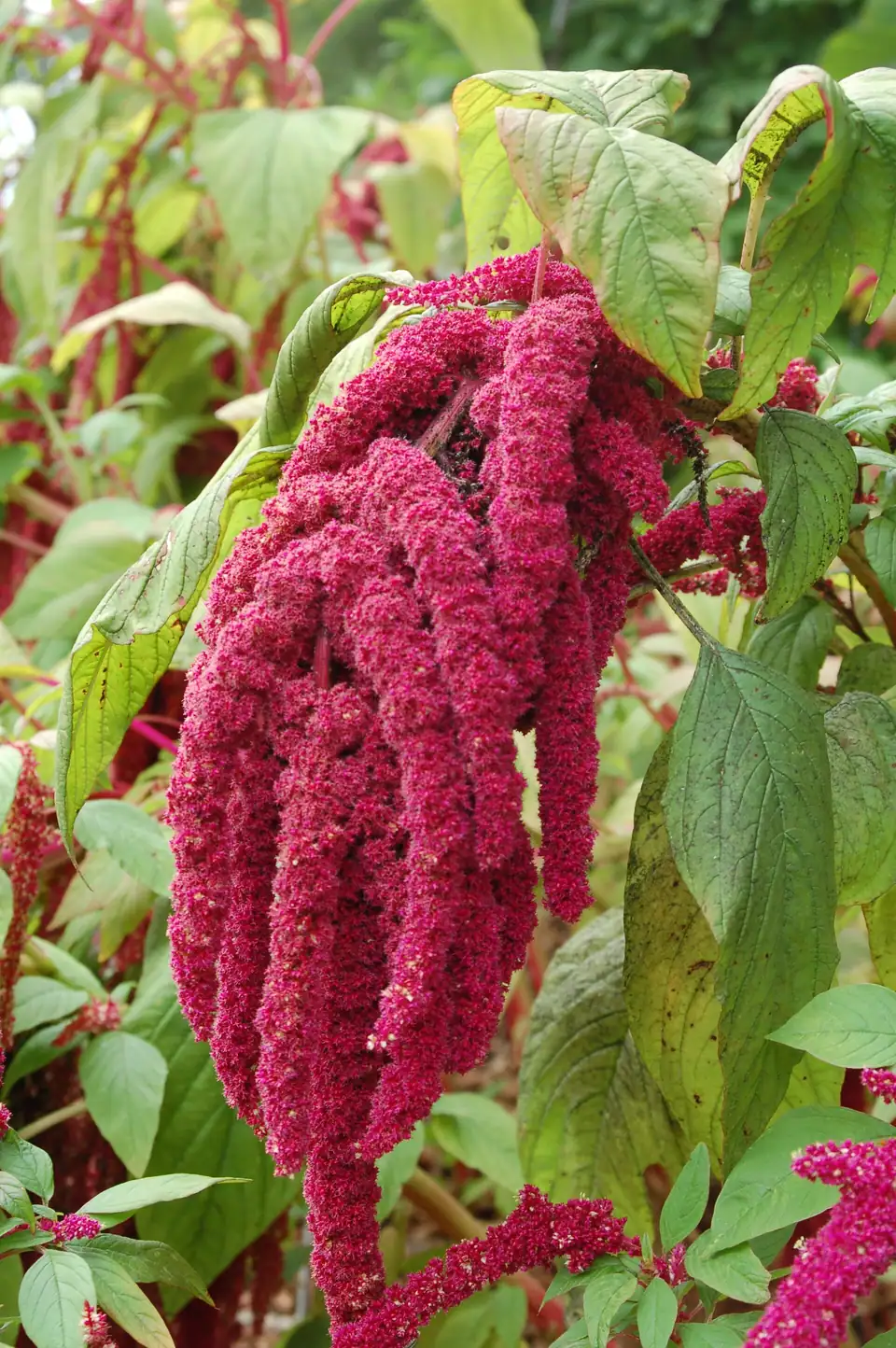
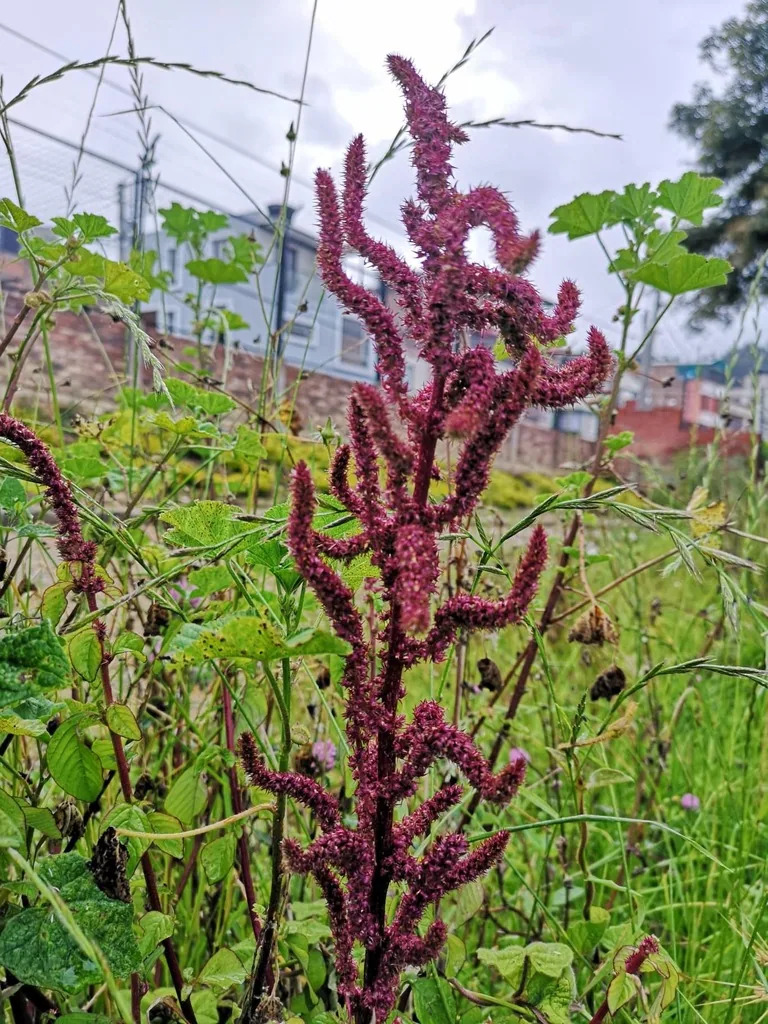
Love-lies-bleeding is an annual known for long, drooping, red or gold tassels that bloom from summer until frost. [1] The soil should be kept moist, and plants are set out after the last frost. [1]
This record is incomplete: the sources we read do not cover every field yet.
Not yet covered by our sources: Pruning
Foxtail amaranth care
How to water Foxtail amaranth
Keep the soil moist
What the sources say (1)
The soil should be kept moist. Set out plants after last frost. This plant is good in hanging baskets.How much light Foxtail amaranth needs
Full sun to partial shade
What the sources say (1)
Light:
Full sun (6 or more hours of direct sunlight a day)
Partial Shade (Direct sunlight only part of the day, 2-6 hours)How much cold Foxtail amaranth can take
Hardiness, coldest zone
2a [winter low −45.6 to −42.8 °C (−50 to −45 °F)]
What the sources say (1)
USDA Plant Hardiness Zone:
2a, 2b, 3a, 3b, 4a, 4b, 5a, 5b, 6a, 6b, 7a, 7b, 8a, 8b, 9a, 9b, 10a, 10b, 11a, 11bHardiness, warmest zone
11b [winter low 7.2 to 10 °C (45 to 50 °F)]
What the sources say (1)
USDA Plant Hardiness Zone:
2a, 2b, 3a, 3b, 4a, 4b, 5a, 5b, 6a, 6b, 7a, 7b, 8a, 8b, 9a, 9b, 10a, 10b, 11a, 11bWhere to grow Foxtail amaranth
Yes
What the sources say (1)
The soil should be kept moist. Set out plants after last frost. This plant is good in hanging baskets.How to propagate Foxtail amaranth
Seed
What the sources say (1)
Uses (Ethnobotany):
Grain crop, leaf vegetable
Life Cycle:
Annual
Recommended Propagation Strategy:
Seed
Country Or Region Of Origin:How to grow Foxtail amaranth
The plant
Life cycle
annual
What the sources say (1)
An annual plant known best for its long, drooping, red or gold tassels. Blooms from summer until frost.Family
Amaranthaceae
What the sources say (1)
Genus:
Amaranthus
Species:
caudatus
Family:
Amaranthaceae
Uses (Ethnobotany):
Grain crop, leaf vegetableMature height
91-152 cm (3-5 ft)
What the sources say (1)
Dimensions:
Height: 3 ft. 0 in. - 5 ft. 0 in.
Width: 1 ft. 0 in. - 2 ft. 0 in.Mature width
30-61 cm (1-2 ft)
What the sources say (1)
Dimensions:
Height: 3 ft. 0 in. - 5 ft. 0 in.
Width: 1 ft. 0 in. - 2 ft. 0 in.Remedies
Each remedy shows what official sources say about it; traditional remedies without an official source are marked as such. Harmful ones are listed so you know to avoid them.
Treating the plant
leaf spot
removing infected leaves Not verified
Traditional remedy, not verified by an official source.
How: remove and destroy any infected leaves to prevent the spread of the disease
Calendar
Planting
Set out plants after last frost
What the sources say (1)
The soil should be kept moist. Set out plants after last frost. This plant is good in hanging baskets.Pruning
Not stated in the sources we read.
Months as given by the sources, which are mostly from the United States (northern hemisphere). In the southern hemisphere they shift by about six months.
Relative to frost
Less precise estimate: there is no weather station within 300 km.
Find frost dates by ZIP code or city
Transplant: around the last frost
The soil should be kept moist. Set out plants after last frost. This plant is good in hanging baskets.
— Amaranthus caudatus (foxtail amaranth, Love-Lies Bleeding, Tassel Flower, velvet flower) | North Carolina Extension Gardener Plant Toolbox [1]
Count from the average frost dates where you live.
Edibility
Reported by the source, quoted verbatim. Do not eat a plant on the basis of this page alone: identification mistakes can be dangerous.
Uses (Ethnobotany): Grain crop, leaf vegetable Life Cycle: Annual Recommended Propagation Strategy: Seed Country Or Region Of Origin:
[1]
Indicative values
Values from a secondary source, not checked word for word like the rest of this page. Use them as a starting point.
- Hours of sun
- 6-8 hoursIndicative value, adapt it to your climate · Secondary source
- Drought tolerant
- yesIndicative value, adapt it to your climate · Secondary source
- Soil pH
- 6-7.5Indicative value, adapt it to your climate · Secondary source
- Care level
- MediumIndicative value, adapt it to your climate · Secondary source
- Growth rate
- HighIndicative value, adapt it to your climate · Secondary source
- Pruning
- March, April, May, AugustIndicative value, adapt it to your climate · Secondary source
Similar plants
- Amaranth pigweed Amaranthus hybridus
- Carelessweed Amaranthus palmeri
- Joseph's Coat Amaranthus tricolor
- Livid Amaranth Amaranthus blitum
- Pigweed Amaranthus retroflexus
- Prince's Feather Amaranthus hypochondriacus
- Amaranth Amaranthus cruentus
- Bloodleaf Iresine herbstii
Sources
Every value above is quoted from these documents. Links lead to the original publisher.
- Amaranthus caudatus (foxtail amaranth, Love-Lies Bleeding, Tassel Flower, velvet flower) | North Carolina Extension Gardener Plant Toolbox · plants.ces.ncsu.edu, consulted
- foxtail amaranth - Amaranthus caudatus | North Carolina Extension Gardener Plant Toolbox · plants.ces.ncsu.edu, consulted
Written by Emilio Marruso · last checked