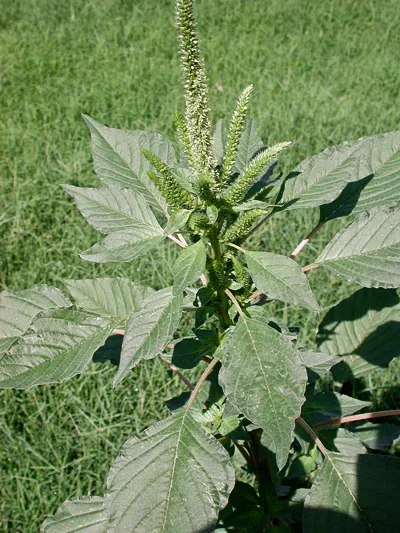


How to Grow and Care for Carelessweed
Amaranthus palmeri
Written by Emilio Marruso · last checked
Toxic to: Cattle, Sheep, People · Why
At a glance
Palmer amaranth is a fast, tall annual: its seeds can sprout in less than a day when the temperature is right, and in full sun the plant reaches 6–8 ft. It grows from seed, and both the leaves and the seeds are edible. Native Americans ate them cooked, and the seeds can be ground into flour.
- Sun
Full sun
What the sources say (1)
Light: Full sun
Light: Full sun (6 or more hours of direct sunlight a day)
— Amaranthus palmeri (Carelessweed, Dioecious amaranth, Palmer's pigweed) | North Carolina Extension Gardener Plant Toolbox [1] - Harvest
Eat the leaves cooked or dried; grind the seeds into flour
- Size
6–8 ft tall
What the sources say (2)
Mature height: 183-244 cm (6-8 ft)
Palmer amaranth is an erect pigweed species (growing to heights of 6 to 8 feet).
— Field scouting guide: Palmer amaranth | UC Weed Science (weed control, management, ecology, and minutia) [6] Erect plant reaching heights of 6 ft or greater.
— Palmer amaranth | Integrated Crop Management [2] - Propagation
Grows from seed
What the sources say (1)
Propagation: Seed
Life Cycle: Annual Recommended Propagation Strategy: Seed Country Or Region Of Origin:
— Amaranthus palmeri (Carelessweed, Dioecious amaranth, Palmer's pigweed) | North Carolina Extension Gardener Plant Toolbox [1] - Sowing
Seeds can sprout in less than a day when the temperature is right
What the sources say (1)
Days to germination: less than 1 day at optimal temperatures
At optimal temperatures, germination is very rapid, with most seeds germinating in less than one day
— Palmer amaranth | CALS [3] - Safety
Male plants shed lots of pollen that can cause allergies; too much harms pigs, cattle and sheep
Overview
Palmer amaranth is described as an extremely aggressive, fast-growing weed of vegetable and row crops in the southern half of the United States. [1] It grows in full sun and is adapted to heat and extremely low rainfall. [1] Its leaves and seeds are eaten, while heavy consumption by pigs, cattle and sheep can cause perirenal edema. [1][3]
This record is incomplete: the sources we read do not cover every field yet.
Not yet covered by our sources: Hardiness, coldest zone, Hardiness, warmest zone
Carelessweed care
How much light Carelessweed needs
Full sun
What the sources say (1)
Light:
Full sun (6 or more hours of direct sunlight a day)How much cold Carelessweed can take
Hardiness, coldest zone
Not stated in the sources we read.
Hardiness, warmest zone
Not stated in the sources we read.
How to propagate Carelessweed
Seed
What the sources say (1)
Life Cycle:
Annual
Recommended Propagation Strategy:
Seed
Country Or Region Of Origin:How to grow Carelessweed
The plant
Life cycle
annual
What the sources say (2)
Palmer amaranth - Amaranthus palmeri L.
Family: Amaranthaceae (pigweed)
Life cycle: summer annualOther common names: carelessweed, Palmer pigweed
Family: pigweed family, Amaranthaceae
Habit: Tall, erect annual herb.Family
Amaranthaceae
What the sources say (2)
Palmer amaranth - Amaranthus palmeri L.
Family: Amaranthaceae (pigweed)
Life cycle: summer annualOther common names: carelessweed, Palmer pigweed
Family: pigweed family, Amaranthaceae
Habit: Tall, erect annual herb.Mature height
183-244 cm (6-8 ft)
What the sources say (2)
Palmer amaranth is an erect pigweed species (growing to heights of 6 to 8 feet).Erect plant reaching heights of 6 ft or greater.Sowing and growth
Days to germination
less than 1 day at optimal temperatures
What the sources say (1)
At optimal temperatures, germination is very rapid, with most seeds germinating in less than one dayRemedies
Each remedy shows what official sources say about it; traditional remedies without an official source are marked as such. Harmful ones are listed so you know to avoid them.
Getting rid of it
palmer amaranth infestation
hand pulling Partly works
Monitor that area for the rest of the summer and the next crop year. It is very likely more plants will germinate in that vicinity.
— extension.umd.edu [7] How: If Palmer is found, mark the location and pull, bag and remove any plants from the field.
If Palmer is found, mark the location and pull, bag and remove any plants from the field. Plants left in the field will re-root!
— extension.umd.edu [7] What the evidence says Non-herbicide treatments include hand pulling, removing plants with tools, routine tilling to keep plants from going to seed, and routine mowing to keep plants from seeding.
— extension.arizona.edu [8] mowing to prevent seeding Partly works
How: Routine mowing to keep plants from seeding.
Non-herbicide treatments include hand pulling, removing plants with tools, routine tilling to keep plants from going to seed, and routine mowing to keep plants from seeding.
— extension.arizona.edu [8] What the evidence says Non-herbicide treatments include hand pulling, removing plants with tools, routine tilling to keep plants from going to seed, and routine mowing to keep plants from seeding.
— extension.arizona.edu [8] tillage or cultivation of seedlings Partly works
How: Tillage and cultivation are effective on small seedlings (less than 3 inches tall).
Tillage and cultivation are effective on small seedlings (less than 3 inches tall), but as plants increase in size this method is less effective as plants will re-root and continue to grow.
— extension.umd.edu [7] What the evidence says Tillage and cultivation are effective on small seedlings (less than 3 inches tall), but as plants increase in size this method is less effective as plants will re-root and continue to grow.
— extension.umd.edu [7] black plastic mulch Not verified
Traditional remedy, not verified by an official source.
How: Black plastic mulch is effective for suppressing most Palmer amaranth in vegetable crops.
cover crop mulch Works
How: Cover crops must remain on the soil surface throughout the growing season to suppress Palmer amaranth.
Cover crops must remain on the soil surface throughout the growing season to suppress Palmer amaranth. Incorporating cover crops into the soil will not help with weed suppression.
— extension.umd.edu [7] What the evidence says Cover crops have been proven to significantly reduce germination of Palmer amaranth seedlings, as well as allowing for the crop to grow and canopy.
— extension.umd.edu [7]
Is Carelessweed toxic to pets?
Reported by the source, quoted verbatim. This is not medical or veterinary advice: if a person or an animal may have eaten this plant, contact a poison control centre or a veterinarian.
Animals
Heavy consumption for 5-10 days, however, can cause swelling of tissues around the kidneys (perirenal edema) in pigs, cattle, and sheep.
[3]- Symptoms
can cause swelling of tissues around the kidneys (perirenal edema) in pigs, cattle, and sheep.
[3]
People
Edibility
Reported by the source, quoted verbatim. Do not eat a plant on the basis of this page alone: identification mistakes can be dangerous.
Similar plants
- Amaranth pigweed Amaranthus hybridus
- Foxtail amaranth Amaranthus caudatus
- Joseph's Coat Amaranthus tricolor
- Livid Amaranth Amaranthus blitum
- Pigweed Amaranthus retroflexus
- Prince's Feather Amaranthus hypochondriacus
- Amaranth Amaranthus cruentus
- Alligatorweed Alternanthera philoxeroides
Sources
Every value above is quoted from these documents. Links lead to the original publisher.
- Amaranthus palmeri (Carelessweed, Dioecious amaranth, Palmer's pigweed) | North Carolina Extension Gardener Plant Toolbox · plants.ces.ncsu.edu, consulted
- Palmer amaranth | Integrated Crop Management · crops.extension.iastate.edu, consulted
- Palmer amaranth | CALS · cals.cornell.edu, consulted
- Palmer amaranth: ID, biology and management | Integrated Crop Management · crops.extension.iastate.edu, consulted
- Dioecious amaranth - Amaranthus palmeri | North Carolina Extension Gardener Plant Toolbox · plants.ces.ncsu.edu, consulted
- Field scouting guide: Palmer amaranth | UC Weed Science (weed control, management, ecology, and minutia) · ucanr.edu, consulted
- extension.umd.edu · extension.umd.edu
- extension.arizona.edu · extension.arizona.edu
Written by Emilio Marruso · last checked