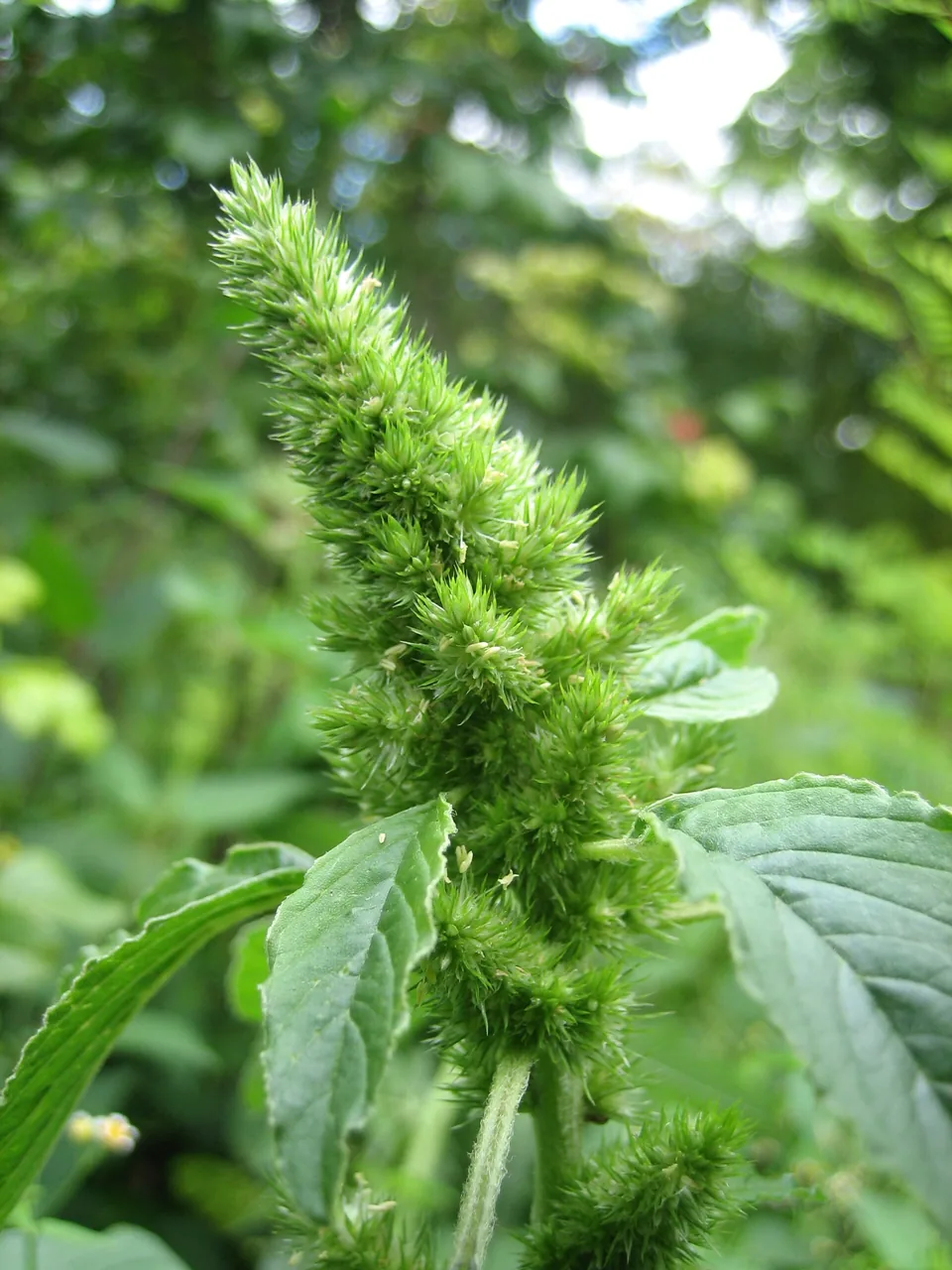


How to Grow and Care for Pigweed
Amaranthus retroflexus
Written by Emilio Marruso · last checked
Toxic to: Horses, Cattle, Sheep, Goats, Animals · Why
At a glance
Pigweed amaranth is a tough annual that loves full sun and can reach 6 feet tall. Its young leaves can be eaten raw or cooked, and its seeds, ripe from August through October, can be eaten raw, cooked or ground like a cereal. Just pull or mow the plants before they set seed, because it can become an invasive weed.
- Sun
Full sun: 6 or more hours a day
What the sources say (1)
Light: Full sun (6 or more hours of direct sunlight a day)
Light: Full sun (6 or more hours of direct sunlight a day)
— Amaranthus retroflexus (Careless Weed, Common Amaranth, Common Tumbleweed, Pigweed, Pigweed Amaranth, Red Root Amaranth, Red-Root Amaranth, Redroot Amaranth, Red Root Pigweed, Red-Root Pigweed, Redroot Pigweed, Rough Pigweed, Wild Beet Amaranth) | North Carolina Extension Gardener Plant Toolbox [1] - Cold
Survives winters down to −40 °F (−40 °C)
Very hardy · USDA 3a · RHS H7 · Z3
What the sources say (2)
Hardiness, coldest zone: 3a [winter low −40 to −37.2 °C (−40 to −35 °F)]
USDA Plant Hardiness Zone: 3a, 3b, 4a, 4b, 5a, 5b, 6a, 6b, 7a, 7b, 8a, 8b, 9a, 9b, 10a, 10b, 11a, 11b
— Amaranthus retroflexus (Careless Weed, Common Amaranth, Common Tumbleweed, Pigweed, Pigweed Amaranth, Red Root Amaranth, Red-Root Amaranth, Redroot Amaranth, Red Root Pigweed, Red-Root Pigweed, Redroot Pigweed, Rough Pigweed, Wild Beet Amaranth) | North Carolina Extension Gardener Plant Toolbox [1] Hardiness, warmest zone: 11b [winter low 7.2 to 10 °C (45 to 50 °F)]
USDA Plant Hardiness Zone: 3a, 3b, 4a, 4b, 5a, 5b, 6a, 6b, 7a, 7b, 8a, 8b, 9a, 9b, 10a, 10b, 11a, 11b
— Amaranthus retroflexus (Careless Weed, Common Amaranth, Common Tumbleweed, Pigweed, Pigweed Amaranth, Red Root Amaranth, Red-Root Amaranth, Redroot Amaranth, Red Root Pigweed, Red-Root Pigweed, Redroot Pigweed, Rough Pigweed, Wild Beet Amaranth) | North Carolina Extension Gardener Plant Toolbox [1] - Soil
Slightly acidic to alkaline soil, pH 6.0–8.0
What the sources say (2)
Soil pH, minimum: 6.0
Soil pH: Neutral (6.0-8.0) Soil Drainage: Good Drainage
— Amaranthus retroflexus (Careless Weed, Common Amaranth, Common Tumbleweed, Pigweed, Pigweed Amaranth, Red Root Amaranth, Red-Root Amaranth, Redroot Amaranth, Red Root Pigweed, Red-Root Pigweed, Redroot Pigweed, Rough Pigweed, Wild Beet Amaranth) | North Carolina Extension Gardener Plant Toolbox [1] Soil pH, maximum: 8.0
Soil pH: Neutral (6.0-8.0) Soil Drainage: Good Drainage
— Amaranthus retroflexus (Careless Weed, Common Amaranth, Common Tumbleweed, Pigweed, Pigweed Amaranth, Red Root Amaranth, Red-Root Amaranth, Redroot Amaranth, Red Root Pigweed, Red-Root Pigweed, Redroot Pigweed, Rough Pigweed, Wild Beet Amaranth) | North Carolina Extension Gardener Plant Toolbox [1] - Harvest
Eat young leaves raw or cooked; seeds ripen from August through October
What the sources say (1)
Harvest: Seeds ripen from August through October
It will flower from July through September, the seeds ripen from August through October.
— Amaranthus retroflexus (Careless Weed, Common Amaranth, Common Tumbleweed, Pigweed, Pigweed Amaranth, Red Root Amaranth, Red-Root Amaranth, Redroot Amaranth, Red Root Pigweed, Red-Root Pigweed, Redroot Pigweed, Rough Pigweed, Wild Beet Amaranth) | North Carolina Extension Gardener Plant Toolbox [1] - Watch out
Invasive weed: pull or mow plants before they make seeds
- Size
Up to 6 ft tall
What the sources say (2)
Mature height: 183 cm (6 feet)
General description: Erect, branched plant reaching heights of 6 ft.
— Redroot pigweed | Integrated Crop Management [3] Mature pigweeds have a short taproot, can reach up to six feet tall, and produce small green flowers in clusters
— Redroot and Smooth Pigweed Life Cycle Disruptions for Effective Control in Specialty Crops | Rutgers Cooperative Extension [4] - Propagation
Grows from seed
What the sources say (2)
Propagation: Seed
Recommended Propagation Strategy: Seed Country Or Region Of Origin:
— Amaranthus retroflexus (Careless Weed, Common Amaranth, Common Tumbleweed, Pigweed, Pigweed Amaranth, Red Root Amaranth, Red-Root Amaranth, Redroot Amaranth, Red Root Pigweed, Red-Root Pigweed, Redroot Pigweed, Rough Pigweed, Wild Beet Amaranth) | North Carolina Extension Gardener Plant Toolbox [1] Spreads strictly by seeds. - Growth benefits from nitrogen and phosphorus fertilizers.
— Redroot and Smooth Pigweed Life Cycle Disruptions for Effective Control in Specialty Crops | Rutgers Cooperative Extension [4] - Safety
Harmful to pigs, cattle, sheep, goats and horses if they eat it
Overview
Redroot pigweed is a summer annual weed in the amaranth family that is also reported to have edible seeds and young leaves. [1] It grows in full sun and spreads only by seed. [1][4] Ingestion of the plant is reported as detrimental to several kinds of livestock. [1]
Pigweed care
How much light Pigweed needs
Full sun (6 or more hours of direct sunlight a day)
What the sources say (1)
Light:
Full sun (6 or more hours of direct sunlight a day)How much cold Pigweed can take
Hardiness, coldest zone
3a [winter low −40 to −37.2 °C (−40 to −35 °F)]
What the sources say (1)
USDA Plant Hardiness Zone:
3a, 3b, 4a, 4b, 5a, 5b, 6a, 6b, 7a, 7b, 8a, 8b, 9a, 9b, 10a, 10b, 11a, 11bHardiness, warmest zone
11b [winter low 7.2 to 10 °C (45 to 50 °F)]
What the sources say (1)
USDA Plant Hardiness Zone:
3a, 3b, 4a, 4b, 5a, 5b, 6a, 6b, 7a, 7b, 8a, 8b, 9a, 9b, 10a, 10b, 11a, 11bBest soil for Pigweed
Soil pH, minimum
6.0
What the sources say (1)
Soil pH:
Neutral (6.0-8.0)
Soil Drainage:
Good DrainageSoil pH, maximum
8.0
What the sources say (1)
Soil pH:
Neutral (6.0-8.0)
Soil Drainage:
Good DrainageHow to propagate Pigweed
Seed
What the sources say (2)
Recommended Propagation Strategy:
Seed
Country Or Region Of Origin:Spreads strictly by seeds.
- Growth benefits from nitrogen and phosphorus fertilizers.How to grow Pigweed
The plant
Life cycle
annual
What the sources say (1)
Redroot pigweed - Amaranthus retroflexus L. Family: Amaranthaceae Life cycle: Annual Native status: Native to North AmericaFamily
Amaranthaceae
What the sources say (1)
Redroot pigweed - Amaranthus retroflexus L. Family: Amaranthaceae Life cycle: Annual Native status: Native to North AmericaMature height
183 cm (6 feet)
What the sources say (2)
General description: Erect, branched plant reaching heights of 6 ft.Mature pigweeds have a short taproot, can reach up to six feet tall, and produce small green flowers in clustersPigweed pests and problems
Invasive weed in crops
Symptom: Invasiveness causes yield loss in many vegetable row crops; not recommended for most gardens.
What to do: Pull larger plants by hand before they start producing mature seeds; mow or weed-whack plants before they produce seeds.
What the sources say (3)
Its invasiveness causes yield loss in many vegetable row crops.
— Amaranthus retroflexus (Careless Weed, Common Amaranth, Common Tumbleweed, Pigweed, Pigweed Amaranth, Red Root Amaranth, Red-Root Amaranth, Redroot Amaranth, Red Root Pigweed, Red-Root Pigweed, Redroot Pigweed, Rough Pigweed, Wild Beet Amaranth) | North Carolina Extension Gardener Plant Toolbox [1] Pull larger plants by hand before they start producing mature seeds.
— Redroot and Smooth Pigweed Life Cycle Disruptions for Effective Control in Specialty Crops | Rutgers Cooperative Extension [4] Mow or weed-whack plants before they produce seeds.
— Redroot and Smooth Pigweed Life Cycle Disruptions for Effective Control in Specialty Crops | Rutgers Cooperative Extension [4] Nitrate accumulation
Symptom: Pigweeds accumulate nitrates, which can lead to nitrate poisoning in grazing animals.
What to do: Do not allow grazing animals to ingest the plant.
What the sources say (1)
Pigweeds accumulate nitrates, which can lead to nitrate poisoning in grazing animals such as horses and ruminants.
— Amaranthus retroflexus (Careless Weed, Common Amaranth, Common Tumbleweed, Pigweed, Pigweed Amaranth, Red Root Amaranth, Red-Root Amaranth, Redroot Amaranth, Red Root Pigweed, Red-Root Pigweed, Redroot Pigweed, Rough Pigweed, Wild Beet Amaranth) | North Carolina Extension Gardener Plant Toolbox [1]
Remedies
Each remedy shows what official sources say about it; traditional remedies without an official source are marked as such. Harmful ones are listed so you know to avoid them.
Getting rid of it
redroot pigweed
hand pulling Works
How: Pull larger plants by hand before they start producing mature seeds.
Pull larger plants by hand before they start producing mature seeds.
— Redroot and Smooth Pigweed Life Cycle Disruptions for Effective Control in Specialty Crops | Rutgers Cooperative Extension [4] What the evidence says Non-herbicide treatments include hand pulling, removing plants with tools, routine tilling to keep plants from going to seed, and routine mowing to keep plants from seeding.
— extension.arizona.edu [5] mowing before seed set Works
How: Mow or weed-whack plants before they produce seeds.
Mow or weed-whack plants before they produce seeds.
— Redroot and Smooth Pigweed Life Cycle Disruptions for Effective Control in Specialty Crops | Rutgers Cooperative Extension [4] What the evidence says Non-herbicide treatments include hand pulling, removing plants with tools, routine tilling to keep plants from going to seed, and routine mowing to keep plants from seeding.
— extension.arizona.edu [5] cardboard or mulch cover Works
How: Cardboards as well as organic or plastic mulches are very effective at suppressing pigweeds.
Cardboards as well as organic or plastic mulches are very effective at suppressing pigweeds.
— Redroot and Smooth Pigweed Life Cycle Disruptions for Effective Control in Specialty Crops | Rutgers Cooperative Extension [4] What the evidence says Cardboards as well as organic or plastic mulches are very effective at suppressing pigweeds.
— Redroot and Smooth Pigweed Life Cycle Disruptions for Effective Control in Specialty Crops | Rutgers Cooperative Extension [4] shallow cultivation of seedlings Works
How: Cultivate in spring to encourage seed germination and repeat cultivation with tine weeder or rotary hoe to kill young pigweed seedlings; the final cultivation should be very shallow.
Cultivate in spring to encourage seed germination and repeat cultivation with tine weeder or rotary hoe to kill young pigweed seedlings before planting or seeding of a crop.
— Redroot and Smooth Pigweed Life Cycle Disruptions for Effective Control in Specialty Crops | Rutgers Cooperative Extension [4] What the evidence says Cultivate in spring to encourage seed germination and repeat cultivation with tine weeder or rotary hoe to kill young pigweed seedlings before planting or seeding of a crop.
— Redroot and Smooth Pigweed Life Cycle Disruptions for Effective Control in Specialty Crops | Rutgers Cooperative Extension [4] tarps before planting Partly works
How: Use tarps to encourage germination over a two-to-three-week period before planting; cultivation or flaming may be needed once the tarp is removed.
Use tarps to encourage germination over a two-to-three-week period before planting.
— Redroot and Smooth Pigweed Life Cycle Disruptions for Effective Control in Specialty Crops | Rutgers Cooperative Extension [4] What the evidence says items such as plastic shower curtains or old tarps are good barriers but can be difficult to work with later when it is time to rework the site.
— extension.usu.edu [6] cereal rye or oat cover crop Official source, not independently tested
How: High-biomass cover crops are terminated and rolled before seeding the crop to form a physical barrier.
Cover crops (cereal rye, oat) producing high biomass that are terminated and rolled before seeding the crop may create a physical barrier preventing pigweed emergence.
— Redroot and Smooth Pigweed Life Cycle Disruptions for Effective Control in Specialty Crops | Rutgers Cooperative Extension [4]
Is Pigweed toxic to pets?
Reported by the source, quoted verbatim. This is not medical or veterinary advice: if a person or an animal may have eaten this plant, contact a poison control centre or a veterinarian.
Although portions of this plant are edible, ingestion is detrimental to pigs, cattle, sheep, goats, and horses.
[1]- Poisonous parts
Poison Part: Leaves Stems
[1]- Toxic principle
Pigweeds accumulate nitrates, which can lead to nitrate poisoning in grazing animals such as horses and ruminants.
[1]- Symptoms
Nitrate poisoning in horses and ruminants is characterized by a bluish cast to the mucous membranes, respiratory distress, weakness and trembling. High oxalate ingestion can result in kidney failure.
[1]- Severity
Poison Severity: High
[1]
Nitrate poisoning in horses and ruminants is characterized by a bluish cast to the mucous membranes, respiratory distress, weakness and trembling.
[1]- Poisonous parts
Poison Part: Leaves Stems
[1]- Toxic principle
Pigweeds accumulate nitrates, which can lead to nitrate poisoning in grazing animals such as horses and ruminants.
[1]- Symptoms
Nitrate poisoning in horses and ruminants is characterized by a bluish cast to the mucous membranes, respiratory distress, weakness and trembling. High oxalate ingestion can result in kidney failure.
[1]- Severity
Poison Severity: High
[1]
Calendar
Seeds ripen from August through October
What the sources say (1)
It will flower from July through September, the seeds ripen from August through October.Months as given by the sources, which are mostly from the United States (northern hemisphere). In the southern hemisphere they shift by about six months.
Edibility
Reported by the source, quoted verbatim. Do not eat a plant on the basis of this page alone: identification mistakes can be dangerous.
The seeds are edible and can be eaten raw or cooked. They are sometimes ground into a powder and eaten as a substitute for cereal.
[1]Young leaves may be eaten raw or cooked.
[1]The seeds are edible and can be eaten raw or cooked. They are sometimes ground into a powder and eaten as a substitute for cereal. Sprouts can be added to salads.
[1]
Indicative values
Values from a secondary source, not checked word for word like the rest of this page. Use them as a starting point.
- Watering
- FrequentIndicative value, adapt it to your climate · Secondary source
- Care level
- MediumIndicative value, adapt it to your climate · Secondary source
- Growth rate
- LowIndicative value, adapt it to your climate · Secondary source
- Pruning
- March, AprilIndicative value, adapt it to your climate · Secondary source
Similar plants
- Amaranth pigweed Amaranthus hybridus
- Carelessweed Amaranthus palmeri
- Foxtail amaranth Amaranthus caudatus
- Joseph's Coat Amaranthus tricolor
- Livid Amaranth Amaranthus blitum
- Prince's Feather Amaranthus hypochondriacus
- Amaranth Amaranthus cruentus
- Alligatorweed Alternanthera philoxeroides
Sources
Every value above is quoted from these documents. Links lead to the original publisher.
- Amaranthus retroflexus (Careless Weed, Common Amaranth, Common Tumbleweed, Pigweed, Pigweed Amaranth, Red Root Amaranth, Red-Root Amaranth, Redroot Amaranth, Red Root Pigweed, Red-Root Pigweed, Redroot Pigweed, Rough Pigweed, Wild Beet Amaranth) | North Carolina Extension Gardener Plant Toolbox · plants.ces.ncsu.edu, consulted
- Common Amaranth - Amaranthus retroflexus | North Carolina Extension Gardener Plant Toolbox · plants.ces.ncsu.edu, consulted
- Redroot pigweed | Integrated Crop Management · crops.extension.iastate.edu, consulted
- Redroot and Smooth Pigweed Life Cycle Disruptions for Effective Control in Specialty Crops | Rutgers Cooperative Extension · njaes.rutgers.edu, consulted
- extension.arizona.edu · extension.arizona.edu
- extension.usu.edu · extension.usu.edu
Written by Emilio Marruso · last checked