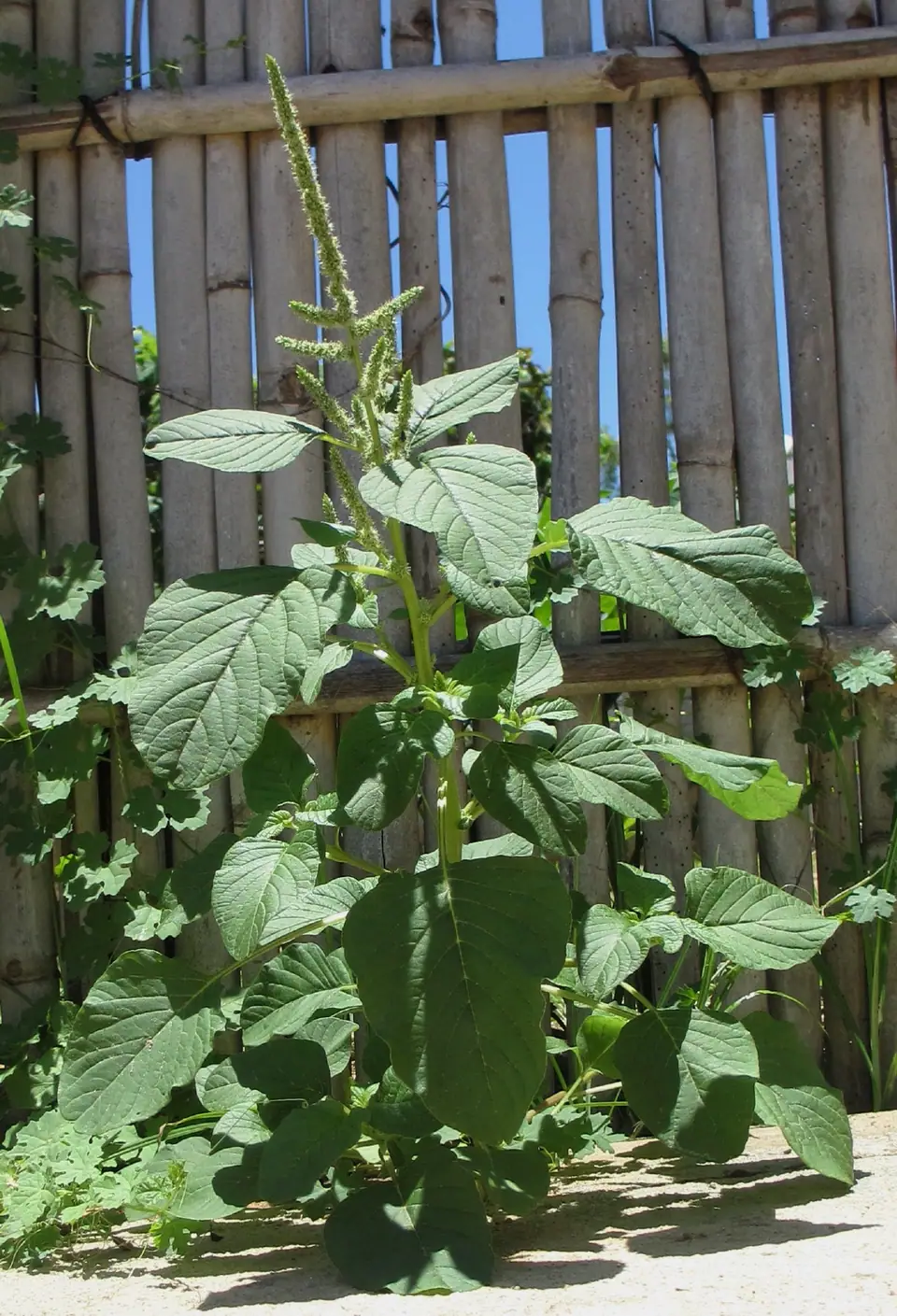


How to Grow and Care for Livid Amaranth
Amaranthus blitum
Written by Emilio Marruso · last checked
At a glance
This annual amaranth loves full sun, grows from seed and reaches up to 3 ft tall. Its leaves and shoots are eaten as a cooked vegetable, and in some Mediterranean cultures it is enjoyed as a delicacy. It is non-toxic to people and happy in a container too, so even a small sunny balcony can give you your own harvest of greens.
- Sun
Full sun
What the sources say (1)
Light: Full sun
Full sun (6 or more hours of direct sunlight a day)
— Amaranthus blitum (Livid Amaranth, Pigweed, Purple Amaranth) | North Carolina Extension Gardener Plant Toolbox [1] - Harvest
Pick the leaves and shoots and cook them as a vegetable
- Pests
Caterpillars and grasshoppers can do serious damage; also aphids, mites and stem rot
What the sources say (2)
Pests: caterpillars, grasshoppers, aphids, leafminers, stinkbugs, mole crickets, mites
Caterpillars and grasshoppers can cause serious damage. Other insects that may cause damage are aphids, leafminers, stinkbugs, mole crickets, and mites, however, the damage from these insects is minor.
— Amaranthus blitum (Livid Amaranth, Pigweed, Purple Amaranth) | North Carolina Extension Gardener Plant Toolbox [1] Diseases: stem rot
Stem rot is the main disease affecting this plant. Caterpillars and grasshoppers can cause serious damage.
— Amaranthus blitum (Livid Amaranth, Pigweed, Purple Amaranth) | North Carolina Extension Gardener Plant Toolbox [1] - Size
Up to 3 ft tall
What the sources say (1)
Mature height: up to 91.4 cm (3 ft)
Stems grow up to 3 feet in height with green or purplish leaves.
— Amaranthus blitum - MREC - UF/IFAS - University of Florida, Institute of Food and Agricultural Sciences - UF/IFAS [2] - Propagation
Grows from seed
What the sources say (1)
Propagation: Seed
Recommended Propagation Strategy: Seed Country Or Region Of Origin: Mediterranean
— Amaranthus blitum (Livid Amaranth, Pigweed, Purple Amaranth) | North Carolina Extension Gardener Plant Toolbox [1] - Containers
Grows in containers too
What the sources say (1)
In containers: Yes
#border planting #bedding plants #container plant #annual #herb garden #weedy
— Amaranthus blitum (Livid Amaranth, Pigweed, Purple Amaranth) | North Carolina Extension Gardener Plant Toolbox [1] - Safety
Non-toxic to people
Overview
Livid amaranth is a summer annual pigweed with a prostrate to ascending growth habit. [1] The leaves and shoots can be eaten as a vegetable. [1] It is listed as non-toxic and is enjoyed as a delicacy in some Mediterranean cultures. [2]
This record is incomplete: the sources we read do not cover every field yet.
Not yet covered by our sources: Hardiness, coldest zone, Hardiness, warmest zone
Livid Amaranth care
How much light Livid Amaranth needs
Full sun
What the sources say (1)
Full sun (6 or more hours of direct sunlight a day)How much cold Livid Amaranth can take
Hardiness, coldest zone
Not stated in the sources we read.
Hardiness, warmest zone
Not stated in the sources we read.
Where to grow Livid Amaranth
Yes
What the sources say (1)
#border planting #bedding plants #container plant #annual #herb garden #weedyHow to propagate Livid Amaranth
Seed
What the sources say (1)
Recommended Propagation Strategy:
Seed
Country Or Region Of Origin:
MediterraneanHow to grow Livid Amaranth
The plant
Life cycle
annual
What the sources say (1)
Livid amaranth, in the family Amaranthaceae, is a summer annual pigweed, distinguished by a prostrate to ascending growth habitFamily
Amaranthaceae
What the sources say (1)
Livid amaranth, in the family Amaranthaceae, is a summer annual pigweed, distinguished by a prostrate to ascending growth habitMature height
up to 91.4 cm (3 ft)
What the sources say (1)
Stems grow up to 3 feet in height with green or purplish leaves.Pests and diseases
Pests
caterpillars, grasshoppers, aphids, leafminers, stinkbugs, mole crickets, mites
What the sources say (1)
Caterpillars and grasshoppers can cause serious damage. Other insects that may cause damage are aphids, leafminers, stinkbugs, mole crickets, and mites, however, the damage from these insects is minor.Diseases
stem rot
What the sources say (1)
Stem rot is the main disease affecting this plant. Caterpillars and grasshoppers can cause serious damage.Livid Amaranth pests and problems
Stem rot
Symptom: Main disease affecting the plant
What to do: Not stated in the source
What the sources say (1)
Stem rot is the main disease affecting this plant. Caterpillars and grasshoppers can cause serious damage.
— Amaranthus blitum (Livid Amaranth, Pigweed, Purple Amaranth) | North Carolina Extension Gardener Plant Toolbox [1] Caterpillars and grasshoppers
Symptom: Can cause serious damage
What to do: Not stated in the source
What the sources say (1)
Stem rot is the main disease affecting this plant. Caterpillars and grasshoppers can cause serious damage.
— Amaranthus blitum (Livid Amaranth, Pigweed, Purple Amaranth) | North Carolina Extension Gardener Plant Toolbox [1]
Remedies
Each remedy shows what official sources say about it; traditional remedies without an official source are marked as such. Harmful ones are listed so you know to avoid them.
Treating the plant
weevils
uprooting and destroying attacked plants Not verified
Traditional remedy, not verified by an official source.
How: uproot and destroy attacked plants to reduce the number of weevils and prevent damage to healthy plants
caterpillars
hand-picking caterpillars Works
How: collect and destroy the affected plant parts with the caterpillars
Collect and destroy affected plant parts with caterpillars
— agritech.tnau.ac.in [3] What the evidence says Many insect and disease issues can be solved in the home garden by hand-picking insects or clipping and disposing of diseased plant parts.
— extension.unh.edu [4]
Getting rid of it
weeds
hand pulling Official source, not independently tested
How: hand pull the weeds, getting as much of the roots as possible and compost them
Basically, hand pull the weeds, getting as much of the roots as possible and compost them.
— ask.extension.org [5] cutting at the base with a hoe Official source, not independently tested
How: pull them out or cut it off at the base with your hoe, while the plants are still small
Yours are still small and because they are in your flower beds, I recommend that you just pull them out or cut it off at the base with your hoe.
— ask.extension.org [6] organic mulch Not verified
Traditional remedy, not verified by an official source.
How: mulching with organic materials such as straw or wood chips suppresses weed growth
Is Livid Amaranth poisonous?
Reported by the source, quoted verbatim. This is not medical or veterinary advice: if a person or an animal may have eaten this plant, contact a poison control centre or a veterinarian.
Toxicity: Non-toxic, enjoyed as a delicacy in some Mediterranean cultures
[2]
Edibility
Reported by the source, quoted verbatim. Do not eat a plant on the basis of this page alone: identification mistakes can be dangerous.
Indicative values
Values from a secondary source, not checked word for word like the rest of this page. Use them as a starting point.
- Watering
- FrequentIndicative value, adapt it to your climate · Secondary source
- Soil pH
- 6-7.5Indicative value, adapt it to your climate · Secondary source
- Care level
- MediumIndicative value, adapt it to your climate · Secondary source
- Growth rate
- LowIndicative value, adapt it to your climate · Secondary source
- Pruning
- February, March, AprilIndicative value, adapt it to your climate · Secondary source
Similar plants
- Amaranth pigweed Amaranthus hybridus
- Carelessweed Amaranthus palmeri
- Foxtail amaranth Amaranthus caudatus
- Joseph's Coat Amaranthus tricolor
- Pigweed Amaranthus retroflexus
- Prince's Feather Amaranthus hypochondriacus
- Amaranth Amaranthus cruentus
- Alligatorweed Alternanthera philoxeroides
Sources
Every value above is quoted from these documents. Links lead to the original publisher.
- Amaranthus blitum (Livid Amaranth, Pigweed, Purple Amaranth) | North Carolina Extension Gardener Plant Toolbox · plants.ces.ncsu.edu, consulted
- Amaranthus blitum - MREC - UF/IFAS - University of Florida, Institute of Food and Agricultural Sciences - UF/IFAS · mrec.ifas.ufl.edu, consulted
- agritech.tnau.ac.in · agritech.tnau.ac.in
- extension.unh.edu · extension.unh.edu
- ask.extension.org · ask.extension.org
- ask.extension.org · ask.extension.org
Written by Emilio Marruso · last checked