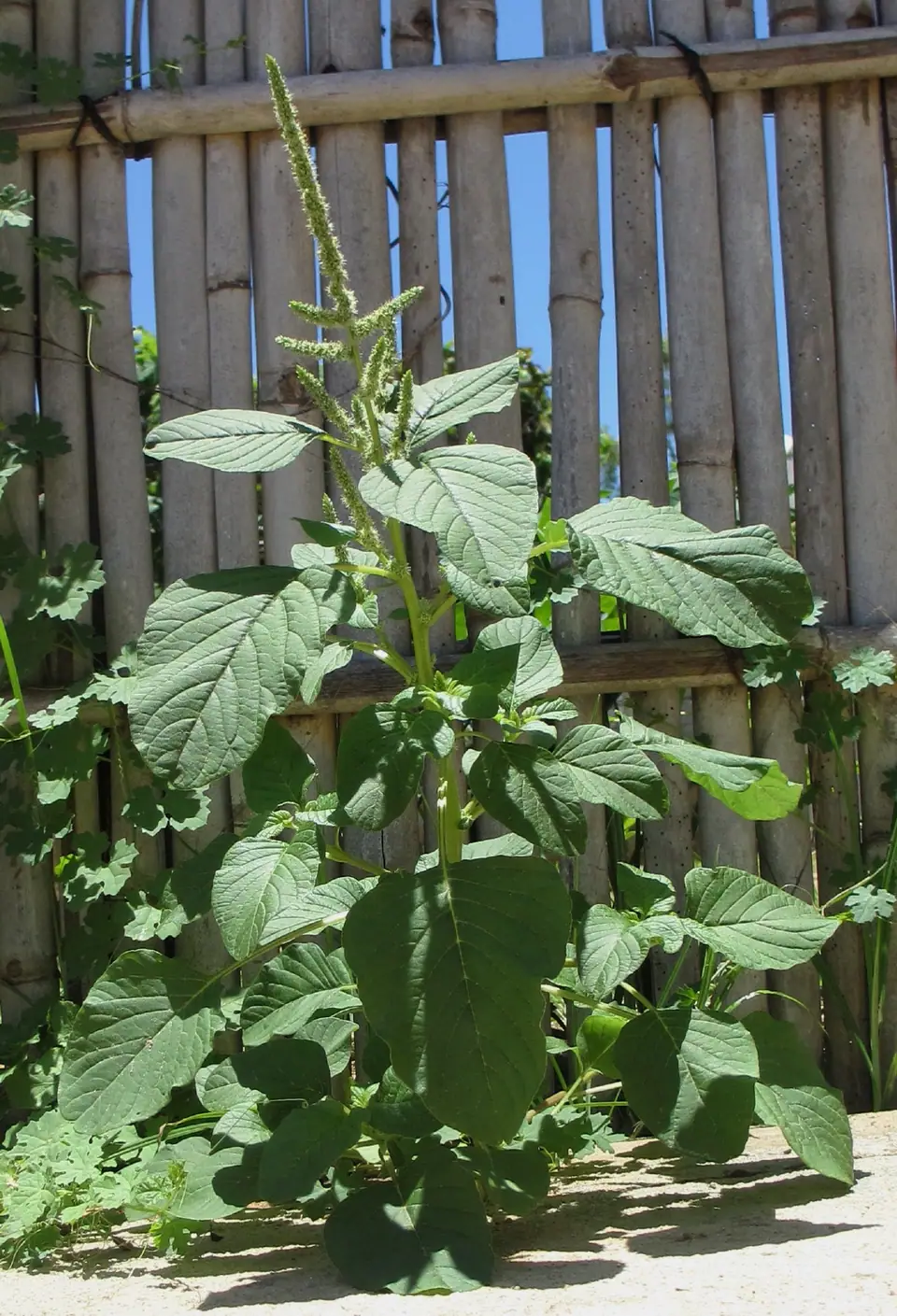


Cómo cultivar y cuidar Bledo
Amaranthus blitum
Escrito por Emilio Marruso · última revisión
De un vistazo
Este bledo es una planta anual que adora el sol pleno, se multiplica por semilla y llega hasta 91 cm de alto. Sus hojas y brotes se comen como verdura cocinada, y en algunas culturas mediterráneas se considera un manjar. No es tóxico para las personas y también crece en maceta, así que hasta un pequeño balcón soleado puede darte tu propia cosecha de verdura.
- Sol
Sol pleno
Qué dicen las fuentes (1)
Luz: Pleno sol
Full sun (6 or more hours of direct sunlight a day)
— Amaranthus blitum (Livid Amaranth, Pigweed, Purple Amaranth) | North Carolina Extension Gardener Plant Toolbox [1] - Cosecha
Cosecha las hojas y los brotes y cocínalos como verdura
- Plagas
Orugas y saltamontes pueden causar daños graves; también pulgones, ácaros y podredumbre del tallo
Qué dicen las fuentes (2)
Plagas: orugas, saltamontes, pulgones, minadores de hoja, chinches, grillos topo, ácaros
Caterpillars and grasshoppers can cause serious damage. Other insects that may cause damage are aphids, leafminers, stinkbugs, mole crickets, and mites, however, the damage from these insects is minor.
— Amaranthus blitum (Livid Amaranth, Pigweed, Purple Amaranth) | North Carolina Extension Gardener Plant Toolbox [1] Enfermedades: pudrición del tallo
Stem rot is the main disease affecting this plant. Caterpillars and grasshoppers can cause serious damage.
— Amaranthus blitum (Livid Amaranth, Pigweed, Purple Amaranth) | North Carolina Extension Gardener Plant Toolbox [1] - Tamaño
Hasta 91 cm de alto
Qué dicen las fuentes (1)
Altura adulta: hasta 91.4 cm (3 pies)
Stems grow up to 3 feet in height with green or purplish leaves.
— Amaranthus blitum - MREC - UF/IFAS - University of Florida, Institute of Food and Agricultural Sciences - UF/IFAS [2] - Multiplicación
Se multiplica por semilla
Qué dicen las fuentes (1)
Propagación: Semilla
Recommended Propagation Strategy: Seed Country Or Region Of Origin: Mediterranean
— Amaranthus blitum (Livid Amaranth, Pigweed, Purple Amaranth) | North Carolina Extension Gardener Plant Toolbox [1] - Maceta
Crece también en maceta
Qué dicen las fuentes (1)
En maceta: Sí
#border planting #bedding plants #container plant #annual #herb garden #weedy
— Amaranthus blitum (Livid Amaranth, Pigweed, Purple Amaranth) | North Carolina Extension Gardener Plant Toolbox [1] - Seguridad
No es tóxico para las personas
Resumen
El amaranto lívido es un quelite anual de verano con un hábito de crecimiento postrado a ascendente. [1] Las hojas y brotes se pueden comer como verdura. [1] Está catalogado como no tóxico y se disfruta como un manjar en algunas culturas mediterráneas. [2]
Citado en inglés, como en la fuente.
Esta ficha está incompleta: las fuentes consultadas aún no cubren todos los campos.
Aún no cubierto por nuestras fuentes: Rusticidad, zona más fría, Rusticidad, zona más cálida
Cuidados
Luz
Pleno sol
Qué dicen las fuentes (1)
Full sun (6 or more hours of direct sunlight a day)Clima y frío
Rusticidad, zona más fría
No figura en las fuentes consultadas.
Rusticidad, zona más cálida
No figura en las fuentes consultadas.
Dónde cultivarla
Sí
Qué dicen las fuentes (1)
#border planting #bedding plants #container plant #annual #herb garden #weedyPropagación
Semilla
Qué dicen las fuentes (1)
Recommended Propagation Strategy:
Seed
Country Or Region Of Origin:
MediterraneanCultivo
La planta
Ciclo de vida
anual
Qué dicen las fuentes (1)
Livid amaranth, in the family Amaranthaceae, is a summer annual pigweed, distinguished by a prostrate to ascending growth habitFamilia
Amaranthaceae
Qué dicen las fuentes (1)
Livid amaranth, in the family Amaranthaceae, is a summer annual pigweed, distinguished by a prostrate to ascending growth habitAltura adulta
hasta 91.4 cm (3 pies)
Qué dicen las fuentes (1)
Stems grow up to 3 feet in height with green or purplish leaves.Plagas y enfermedades
Plagas
orugas, saltamontes, pulgones, minadores de hoja, chinches, grillos topo, ácaros
Qué dicen las fuentes (1)
Caterpillars and grasshoppers can cause serious damage. Other insects that may cause damage are aphids, leafminers, stinkbugs, mole crickets, and mites, however, the damage from these insects is minor.Enfermedades
pudrición del tallo
Qué dicen las fuentes (1)
Stem rot is the main disease affecting this plant. Caterpillars and grasshoppers can cause serious damage.Problemas
Pudrición del tallo
Síntoma: Principal enfermedad que afecta a la planta
Qué hacer: No indicado en la fuente
Qué dicen las fuentes (1)
Stem rot is the main disease affecting this plant. Caterpillars and grasshoppers can cause serious damage.
— Amaranthus blitum (Livid Amaranth, Pigweed, Purple Amaranth) | North Carolina Extension Gardener Plant Toolbox [1] Orugas y saltamontes
Síntoma: Puede causar daños graves
Qué hacer: No indicado en la fuente
Qué dicen las fuentes (1)
Stem rot is the main disease affecting this plant. Caterpillars and grasshoppers can cause serious damage.
— Amaranthus blitum (Livid Amaranth, Pigweed, Purple Amaranth) | North Carolina Extension Gardener Plant Toolbox [1]
Remedios
Cada remedio indica qué dicen las fuentes oficiales; los remedios tradicionales sin fuente oficial aparecen marcados. Los perjudiciales están para que sepas evitarlos.
Cuidar la planta
gorgojos
Desentierra y destruye las plantas atacadas. No verificado
Remedio tradicional, no verificado por una fuente oficial.
Cómo: desentierra y destruye las plantas atacadas para reducir el número de gorgojos y evitar daños a las plantas sanas
orugas
Recolección manual de orugas. Funciona
Cómo: recoge y destruye las partes de la planta afectadas con las orugas
Collect and destroy affected plant parts with caterpillars
— agritech.tnau.ac.in [3] Qué dicen las pruebas Many insect and disease issues can be solved in the home garden by hand-picking insects or clipping and disposing of diseased plant parts.
— extension.unh.edu [4]
Cómo eliminarla
malezas
arrancado a mano Fuente oficial, sin prueba independiente
Cómo: arranca las malezas a mano, sacando la mayor cantidad de raíces posible, y hazlas compost
Basically, hand pull the weeds, getting as much of the roots as possible and compost them.
— ask.extension.org [5] Corta en la base con una azada. Fuente oficial, sin prueba independiente
Cómo: arráncalas o córtalas en la base con tu azada, mientras las plantas aún sean pequeñas
Yours are still small and because they are in your flower beds, I recommend that you just pull them out or cut it off at the base with your hoe.
— ask.extension.org [6] mantillo orgánico No verificado
Remedio tradicional, no verificado por una fuente oficial.
Cómo: el acolchado con materiales orgánicos como paja o astillas de madera suprime el crecimiento de las malezas
Toxicidad
Según la fuente, citada textualmente. No es un consejo médico ni veterinario: si una persona o un animal pudo haber ingerido esta planta, contacta con un centro de toxicología o con un veterinario.
Toxicity: Non-toxic, enjoyed as a delicacy in some Mediterranean cultures
[2]
Comestibilidad
Según la fuente, citada textualmente. No comas una planta basándote solo en esta página: los errores de identificación pueden ser peligrosos.
Valores orientativos
Valores de una fuente secundaria, no comprobados palabra por palabra como el resto de esta página. Úselos como punto de partida.
- Riego
- FrecuenteValor orientativo, adáptalo a tu clima · Fuente secundaria
- pH del suelo
- 6-7.5Valor orientativo, adáptalo a tu clima · Fuente secundaria
- Nivel de cuidado
- MedioValor orientativo, adáptalo a tu clima · Fuente secundaria
- Crecimiento
- BajoValor orientativo, adáptalo a tu clima · Fuente secundaria
- Poda
- Febrero, marzo, abrilValor orientativo, adáptalo a tu clima · Fuente secundaria
Plantas similares
- Bledo Amaranthus hybridus
- Carelessweed Amaranthus palmeri
- Quihuicha Amaranthus caudatus
- Ala de loro Amaranthus tricolor
- Pigweed Amaranthus retroflexus
- Amaranto Amaranthus hypochondriacus
- Amaranth Amaranthus cruentus
- Lagunilla Alternanthera philoxeroides
Fuentes
Cada valor anterior se cita de estos documentos. Los enlaces llevan al editor original.
- Amaranthus blitum (Livid Amaranth, Pigweed, Purple Amaranth) | North Carolina Extension Gardener Plant Toolbox · plants.ces.ncsu.edu, consultado
- Amaranthus blitum - MREC - UF/IFAS - University of Florida, Institute of Food and Agricultural Sciences - UF/IFAS · mrec.ifas.ufl.edu, consultado
- agritech.tnau.ac.in · agritech.tnau.ac.in
- extension.unh.edu · extension.unh.edu
- ask.extension.org · ask.extension.org
- ask.extension.org · ask.extension.org
Escrito por Emilio Marruso · última revisión