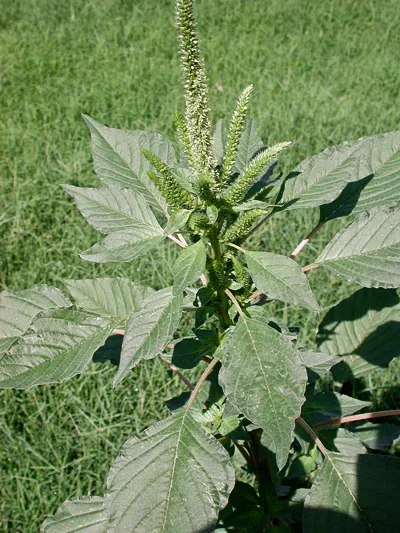


Cómo cultivar y cuidar Carelessweed
Amaranthus palmeri
Escrito por Emilio Marruso · última revisión
Tóxica para: Ganado vacuno, Ovejas, Personas · Por qué
De un vistazo
El amaranto de Palmer es una anual rápida y alta: sus semillas pueden germinar en menos de un día con la temperatura adecuada, y a pleno sol la planta alcanza 1,8–2,4 m. Se multiplica por semilla, y tanto las hojas como las semillas son comestibles. Los nativos americanos las comían cocinadas, y las semillas se pueden moler para hacer harina.
- Sol
Sol pleno
Qué dicen las fuentes (1)
Luz: Pleno sol
Light: Full sun (6 or more hours of direct sunlight a day)
— Amaranthus palmeri (Carelessweed, Dioecious amaranth, Palmer's pigweed) | North Carolina Extension Gardener Plant Toolbox [1] - Cosecha
Come las hojas cocinadas o secas; muele las semillas para hacer harina
- Tamaño
De 1,8 a 2,4 m de alto
Qué dicen las fuentes (2)
Altura adulta: 183-244 cm (6-8 pies)
Palmer amaranth is an erect pigweed species (growing to heights of 6 to 8 feet).
— Field scouting guide: Palmer amaranth | UC Weed Science (weed control, management, ecology, and minutia) [6] Erect plant reaching heights of 6 ft or greater.
— Palmer amaranth | Integrated Crop Management [2] - Multiplicación
Se multiplica por semilla
Qué dicen las fuentes (1)
Propagación: Semilla
Life Cycle: Annual Recommended Propagation Strategy: Seed Country Or Region Of Origin:
— Amaranthus palmeri (Carelessweed, Dioecious amaranth, Palmer's pigweed) | North Carolina Extension Gardener Plant Toolbox [1] - Siembra
Las semillas pueden germinar en menos de un día con la temperatura adecuada
Qué dicen las fuentes (1)
Días de germinación: menos de 1 día a temperaturas óptimas
At optimal temperatures, germination is very rapid, with most seeds germinating in less than one day
— Palmer amaranth | CALS [3] - Seguridad
Las plantas macho sueltan mucho polen que puede dar alergia; en exceso daña a cerdos, vacas y ovejas
Resumen
El amaranto de Palmer se describe como una maleza extremadamente agresiva y de crecimiento rápido de cultivos de hortalizas y de hilera en la mitad sur de los Estados Unidos. [1] Crece a pleno sol y está adaptado al calor y a precipitaciones extremadamente bajas. [1] Sus hojas y semillas se comen, mientras que el consumo abundante por cerdos, ganado vacuno y ovejas puede causar edema perirrenal. [1][3]
Citado en inglés, como en la fuente.
Esta ficha está incompleta: las fuentes consultadas aún no cubren todos los campos.
Aún no cubierto por nuestras fuentes: Rusticidad, zona más fría, Rusticidad, zona más cálida
Cuidados
Luz
Pleno sol
Qué dicen las fuentes (1)
Light:
Full sun (6 or more hours of direct sunlight a day)Clima y frío
Rusticidad, zona más fría
No figura en las fuentes consultadas.
Rusticidad, zona más cálida
No figura en las fuentes consultadas.
Propagación
Semilla
Qué dicen las fuentes (1)
Life Cycle:
Annual
Recommended Propagation Strategy:
Seed
Country Or Region Of Origin:Cultivo
La planta
Ciclo de vida
anual
Qué dicen las fuentes (2)
Palmer amaranth - Amaranthus palmeri L.
Family: Amaranthaceae (pigweed)
Life cycle: summer annualOther common names: carelessweed, Palmer pigweed
Family: pigweed family, Amaranthaceae
Habit: Tall, erect annual herb.Familia
Amaranthaceae
Qué dicen las fuentes (2)
Palmer amaranth - Amaranthus palmeri L.
Family: Amaranthaceae (pigweed)
Life cycle: summer annualOther common names: carelessweed, Palmer pigweed
Family: pigweed family, Amaranthaceae
Habit: Tall, erect annual herb.Altura adulta
183-244 cm (6-8 pies)
Qué dicen las fuentes (2)
Palmer amaranth is an erect pigweed species (growing to heights of 6 to 8 feet).Erect plant reaching heights of 6 ft or greater.Siembra y crecimiento
Días de germinación
menos de 1 día a temperaturas óptimas
Qué dicen las fuentes (1)
At optimal temperatures, germination is very rapid, with most seeds germinating in less than one dayRemedios
Cada remedio indica qué dicen las fuentes oficiales; los remedios tradicionales sin fuente oficial aparecen marcados. Los perjudiciales están para que sepas evitarlos.
Cómo eliminarla
infestación de amaranto de Palmer
arrancado a mano Funciona en parte
Monitor that area for the rest of the summer and the next crop year. It is very likely more plants will germinate in that vicinity.
— extension.umd.edu [7] Cómo: Si se encuentra amaranto de Palmer, marca la ubicación y arranca, embolsa y retira cualquier planta del campo.
If Palmer is found, mark the location and pull, bag and remove any plants from the field. Plants left in the field will re-root!
— extension.umd.edu [7] Qué dicen las pruebas Non-herbicide treatments include hand pulling, removing plants with tools, routine tilling to keep plants from going to seed, and routine mowing to keep plants from seeding.
— extension.arizona.edu [8] siega para prevenir la producción de semillas Funciona en parte
Cómo: Siega rutinaria para evitar que las plantas produzcan semillas.
Non-herbicide treatments include hand pulling, removing plants with tools, routine tilling to keep plants from going to seed, and routine mowing to keep plants from seeding.
— extension.arizona.edu [8] Qué dicen las pruebas Non-herbicide treatments include hand pulling, removing plants with tools, routine tilling to keep plants from going to seed, and routine mowing to keep plants from seeding.
— extension.arizona.edu [8] labranza o cultivo de plántulas Funciona en parte
Cómo: La labranza y el cultivo son efectivos en plántulas pequeñas (menos de 3 pulgadas de alto).
Tillage and cultivation are effective on small seedlings (less than 3 inches tall), but as plants increase in size this method is less effective as plants will re-root and continue to grow.
— extension.umd.edu [7] Qué dicen las pruebas Tillage and cultivation are effective on small seedlings (less than 3 inches tall), but as plants increase in size this method is less effective as plants will re-root and continue to grow.
— extension.umd.edu [7] mantillo de plástico negro No verificado
Remedio tradicional, no verificado por una fuente oficial.
Cómo: El acolchado de plástico negro es eficaz para suprimir la mayoría del amaranto de Palmer en cultivos de hortalizas.
acolchado con cultivos de cobertura Funciona
Cómo: Los cultivos de cobertura deben permanecer en la superficie del suelo durante toda la temporada de crecimiento para suprimir el amaranto de Palmer.
Cover crops must remain on the soil surface throughout the growing season to suppress Palmer amaranth. Incorporating cover crops into the soil will not help with weed suppression.
— extension.umd.edu [7] Qué dicen las pruebas Cover crops have been proven to significantly reduce germination of Palmer amaranth seedlings, as well as allowing for the crop to grow and canopy.
— extension.umd.edu [7]
Venenosa para los animales
Según la fuente, citada textualmente. No es un consejo médico ni veterinario: si una persona o un animal pudo haber ingerido esta planta, contacta con un centro de toxicología o con un veterinario.
Animales
Heavy consumption for 5-10 days, however, can cause swelling of tissues around the kidneys (perirenal edema) in pigs, cattle, and sheep.
[3]- Síntomas
can cause swelling of tissues around the kidneys (perirenal edema) in pigs, cattle, and sheep.
[3]
Personas
Comestibilidad
Según la fuente, citada textualmente. No comas una planta basándote solo en esta página: los errores de identificación pueden ser peligrosos.
Plantas similares
Fuentes
Cada valor anterior se cita de estos documentos. Los enlaces llevan al editor original.
- Amaranthus palmeri (Carelessweed, Dioecious amaranth, Palmer's pigweed) | North Carolina Extension Gardener Plant Toolbox · plants.ces.ncsu.edu, consultado
- Palmer amaranth | Integrated Crop Management · crops.extension.iastate.edu, consultado
- Palmer amaranth | CALS · cals.cornell.edu, consultado
- Palmer amaranth: ID, biology and management | Integrated Crop Management · crops.extension.iastate.edu, consultado
- Dioecious amaranth - Amaranthus palmeri | North Carolina Extension Gardener Plant Toolbox · plants.ces.ncsu.edu, consultado
- Field scouting guide: Palmer amaranth | UC Weed Science (weed control, management, ecology, and minutia) · ucanr.edu, consultado
- extension.umd.edu · extension.umd.edu
- extension.arizona.edu · extension.arizona.edu
Escrito por Emilio Marruso · última revisión