
How to Grow and Care for Amaranth pigweed
Amaranthus hybridus
Written by Emilio Marruso · last checked
Toxic to: Livestock, People · Why
At a glance
This sun-loving summer annual gives you two harvests in one: tender leaves to cook like spinach or toss raw into salads, and seeds you can grind into flour for porridge and bread. Sow it right in the garden in late spring, give it full sun, and enjoy a plant that needs less water than many others to grow.
- Sun
Full sun
- Water
Needs less water than other weedy plants to grow
What the sources say (1)
Watering notes: Needs less water to grow and reproduce than other weed species (C4 photosynthetic pathway)
that means they need less water to grow and reproduce than other weed species.
— Redroot & Smooth Pigweed - Getting Rid Of Weeds [2] - Soil
Soil with pH 6.0–8.5; best between 6.5 and 7.5
What the sources say (6)
Soil pH, minimum: 6.0
preferred range: Prefers a pH in the range 6.5 - 7.5, tolerating 6 - 8.5
— Amaranthus hybridus - Useful Temperate Plants [5] tolerated range: Prefers a pH in the range 6.5 - 7.5, tolerating 6 - 8.5
— Amaranthus hybridus - Useful Temperate Plants [5] Prefers a pH in the range 6.5 - 7.5, tolerating 6 - 8.5
— Amaranthus hybridus - Useful Temperate Plants [5] Soil pH, maximum: 8.5
preferred range: Prefers a pH in the range 6.5 - 7.5, tolerating 6 - 8.5
— Amaranthus hybridus - Useful Temperate Plants [5] tolerated range: Prefers a pH in the range 6.5 - 7.5, tolerating 6 - 8.5
— Amaranthus hybridus - Useful Temperate Plants [5] Prefers a pH in the range 6.5 - 7.5, tolerating 6 - 8.5
— Amaranthus hybridus - Useful Temperate Plants [5] - Planting
Plant out after the last expected frosts
What the sources say (1)
Planting: After the last expected frosts
Seed - sow late spring in situ. An earlier sowing can be made in a greenhouse and the plants put out after the last expected frosts.
— Amaranthus hybridus - Useful Temperate Plants [5] - Harvest
Eat leaves and young seedlings raw or cooked like spinach; grind the seeds into flour
- Pests
Leaf-chewing insects can attack the leaves
- Propagation
Grows from seed
What the sources say (2)
Propagation: Seed
Seed - sow late spring in situ. An earlier sowing can be made in a greenhouse and the plants put out after the last expected frosts.
— Amaranthus hybridus - Useful Temperate Plants [5] Redroot pigweed and smooth pigweed rely on seed dispersal for spread.
— Redroot & Smooth Pigweed - Getting Rid Of Weeds [2] - Sowing
Sow right in the garden in late spring, or earlier in a greenhouse
What the sources say (1)
Sowing: Late spring, in situ; earlier sowing possible in a greenhouse
Seed - sow late spring in situ. An earlier sowing can be made in a greenhouse and the plants put out after the last expected frosts.
— Amaranthus hybridus - Useful Temperate Plants [5] - Safety
Can be toxic to livestock, and its pollen can cause allergies in people
Overview
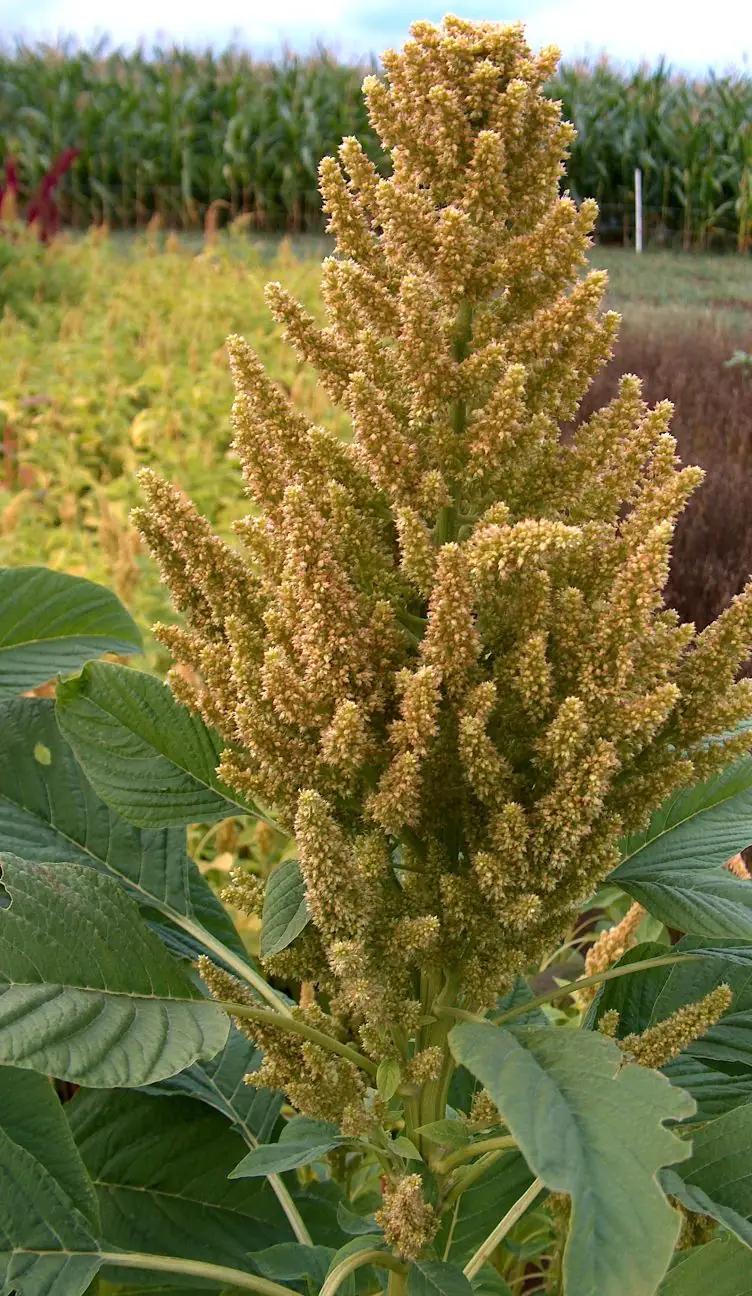
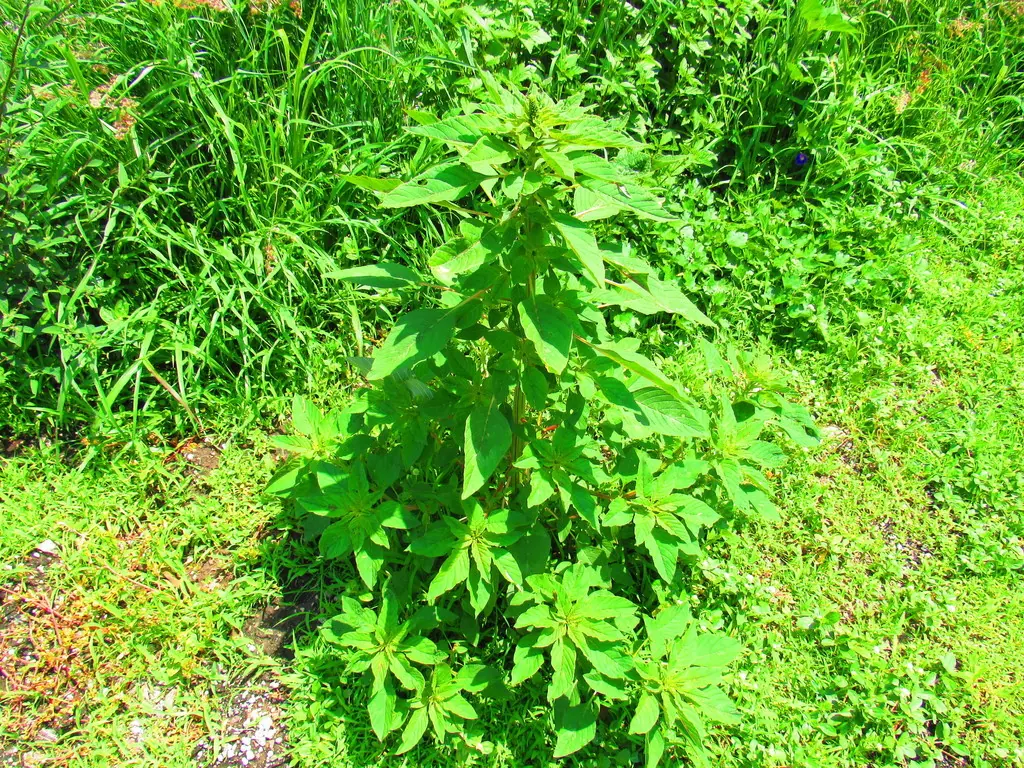
Smooth pigweed is an erect summer annual found in pastures, along roadsides and on other disturbed soils. [1] It has a long history of cultivation as a food crop for its edible leaves and seeds. [5] It prefers a well-drained fertile soil in a sunny position and does not tolerate shade. [5][2]
This record is incomplete: the sources we read do not cover every field yet.
Not yet covered by our sources: Hardiness, coldest zone, Hardiness, warmest zone
Amaranth pigweed care
How to water Amaranth pigweed
Needs less water to grow and reproduce than other weed species (C4 photosynthetic pathway)
What the sources say (1)
that means they need less water to grow and reproduce than other weed species.How much light Amaranth pigweed needs
How much cold Amaranth pigweed can take
Hardiness, coldest zone
Not stated in the sources we read.
Hardiness, warmest zone
Not stated in the sources we read.
Best soil for Amaranth pigweed
Soil pH, minimum
6.0
What each source says
preferred range: 6.5
tolerated range: 6.0
What the sources say (3)
preferred range: Prefers a pH in the range 6.5 - 7.5, tolerating 6 - 8.5tolerated range: Prefers a pH in the range 6.5 - 7.5, tolerating 6 - 8.5Prefers a pH in the range 6.5 - 7.5, tolerating 6 - 8.5Soil pH, maximum
8.5
What each source says
preferred range: 7.5
tolerated range: 8.5
What the sources say (3)
preferred range: Prefers a pH in the range 6.5 - 7.5, tolerating 6 - 8.5tolerated range: Prefers a pH in the range 6.5 - 7.5, tolerating 6 - 8.5Prefers a pH in the range 6.5 - 7.5, tolerating 6 - 8.5How to propagate Amaranth pigweed
Seed
What the sources say (2)
Seed - sow late spring in situ. An earlier sowing can be made in a greenhouse and the plants put out after the last expected frosts.Redroot pigweed and smooth pigweed rely on seed dispersal for spread.How to grow Amaranth pigweed
The plant
Life cycle
annual (summer annual)
What the sources say (1)
This erect summer annual flowers from June through October.Family
Amaranthaceae
What the sources say (1)
smooth pigweed
## Family
Amaranthaceae
## Scientific Name
Amaranthus hybridusAmaranth pigweed pests and problems
Leaf-chewing insects
Symptom: Foliage attacked by leaf-chewing insects
What the sources say (1)
Plants are particularly susceptible to attacks by leaf-chewing insects
— Amaranthus hybridus - Useful Temperate Plants [5]
Remedies
Each remedy shows what official sources say about it; traditional remedies without an official source are marked as such. Harmful ones are listed so you know to avoid them.
Getting rid of it
smooth pigweed
hand pulling before seed set Works
How: Pull larger plants by hand before they start producing mature seeds.
Pull larger plants by hand before they start producing mature seeds.
— njaes.rutgers.edu [6] What the evidence says Pull larger plants by hand before they start producing mature seeds.
— njaes.rutgers.edu [6] mowing before seed set Works
How: Mow or weed-whack plants before they produce seeds.
Mow or weed-whack plants before they produce seeds.
— njaes.rutgers.edu [6] What the evidence says Mow or weed-whack plants before they produce seeds.
— njaes.rutgers.edu [6] cardboard or organic mulch Works
How: Cardboard and organic or plastic mulches suppress pigweeds.
Cardboards as well as organic or plastic mulches are very effective at suppressing pigweeds.
— njaes.rutgers.edu [6] What the evidence says Cardboards as well as organic or plastic mulches are very effective at suppressing pigweeds.
— njaes.rutgers.edu [6] stale seedbed with flame weeding Works
How: After preparing the bed, let weed seeds germinate, then kill the emerged seedlings with light cultivation or a flame weeder before planting.
Allow time for weed seeds to germinate and then follow with light cultivation or a flame weeder to kill emerged weed seedlings prior to planting.
— njaes.rutgers.edu [6] What the evidence says Allow time for weed seeds to germinate and then follow with light cultivation or a flame weeder to kill emerged weed seedlings prior to planting.
— njaes.rutgers.edu [6] repeated shallow cultivation Works
The final cultivation should be very shallow (no more than 1.5" deep) to prevent pigweed seeds from being brought back to the surface.
— njaes.rutgers.edu [6] How: Cultivate in spring to make seeds germinate, then cultivate again with a tine weeder or rotary hoe to kill young seedlings before planting; keep the final cultivation very shallow.
repeat cultivation with tine weeder or rotary hoe to kill young pigweed seedlings before planting or seeding of a crop.
— njaes.rutgers.edu [6] What the evidence says repeat cultivation with tine weeder or rotary hoe to kill young pigweed seedlings before planting or seeding of a crop.
— njaes.rutgers.edu [6] covering soil with tarps Works
How: Cover the soil with tarps for two to three weeks before planting to make seeds germinate, then cultivate or flame the seedlings once the tarp is removed.
Use tarps to encourage germination over a two-to-three-week period before planting.
— njaes.rutgers.edu [6] What the evidence says Use tarps to encourage germination over a two-to-three-week period before planting.
— njaes.rutgers.edu [6]
Is Amaranth pigweed toxic to pets?
Reported by the source, quoted verbatim. This is not medical or veterinary advice: if a person or an animal may have eaten this plant, contact a poison control centre or a veterinarian.
Calendar
Sowing
Late spring, in situ; earlier sowing possible in a greenhouse
What the sources say (1)
Seed - sow late spring in situ. An earlier sowing can be made in a greenhouse and the plants put out after the last expected frosts.Planting
After the last expected frosts
What the sources say (1)
Seed - sow late spring in situ. An earlier sowing can be made in a greenhouse and the plants put out after the last expected frosts.Months as given by the sources, which are mostly from the United States (northern hemisphere). In the southern hemisphere they shift by about six months.
Edibility
Reported by the source, quoted verbatim. Do not eat a plant on the basis of this page alone: identification mistakes can be dangerous.
Similar plants
- Carelessweed Amaranthus palmeri
- Foxtail amaranth Amaranthus caudatus
- Joseph's Coat Amaranthus tricolor
- Livid Amaranth Amaranthus blitum
- Pigweed Amaranthus retroflexus
- Prince's Feather Amaranthus hypochondriacus
- Amaranth Amaranthus cruentus
- Alligatorweed Alternanthera philoxeroides
Sources
Every value above is quoted from these documents. Links lead to the original publisher.
- smooth pigweed Amaranthus hybridus Weed Profile - Weed Identification · weedid.cals.vt.edu, consulted
- Redroot & Smooth Pigweed - Getting Rid Of Weeds · growiwm.org, consulted
- A Guide for Identifying Pigweed Species Commonly Found in Maryland (EB-2023-0654) | University of Maryland Extension · extension.umd.edu, consulted
- The Pigweed family identification guide | CFAES Knowledge Hub · ohioline.osu.edu, consulted
- Amaranthus hybridus - Useful Temperate Plants · temperate.theferns.info, consulted
- njaes.rutgers.edu · njaes.rutgers.edu
Written by Emilio Marruso · last checked