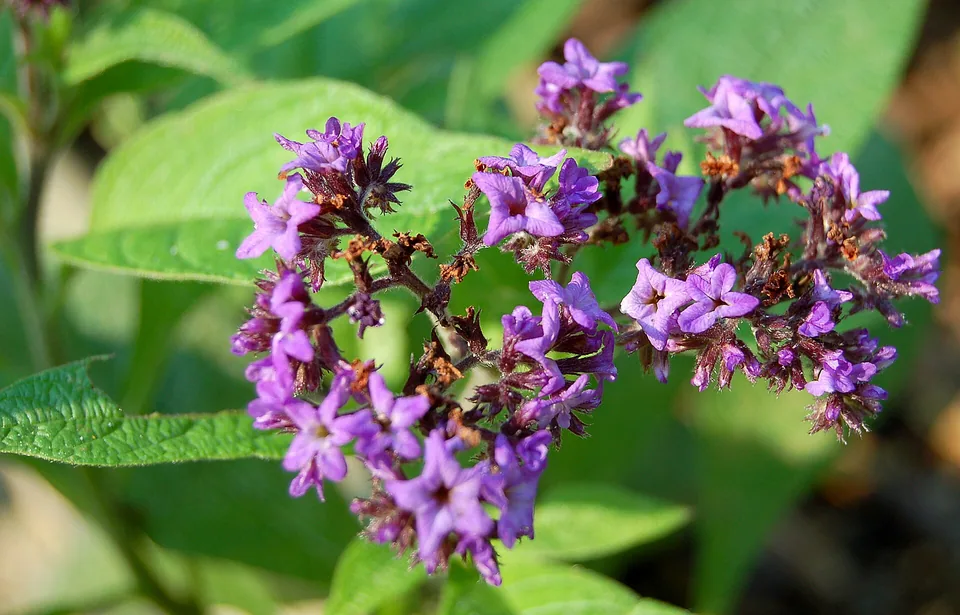


How to Grow and Care for Heliotrope
Heliotropium arborescens
Written by Emilio Marruso · last checked
Toxic to: Horses, People · Why
At a glance
Heliotrope is a tender perennial that fits almost anywhere: in garden beds, in containers, even indoors. Give it full sun or partial shade, with some afternoon shade where summers are hot, and keep the soil moist. It grows 1 to 2.5 feet tall and just as wide, and you can easily start new plants from seed or stem cuttings.
- Sun
Full sun to partial shade; some afternoon shade in hot summer climates
What the sources say (2)
Light: Full sun to partial shade; some afternoon shade in hot summer climates
Light: Full sun (6 or more hours of direct sunlight a day) Partial Shade (Direct sunlight only part of the day, 2-6 hours)
— Heliotropium arborescens (Cherry Pie Heliotrope, Common Heliotrope, Heliotrope, Peruvian Heliotrope) | North Carolina Extension Gardener Plant Toolbox [1] In hot summer climates, some afternoon shade is appreciated.
— Heliotropium arborescens (Cherry Pie Heliotrope, Common Heliotrope, Heliotrope, Peruvian Heliotrope) | North Carolina Extension Gardener Plant Toolbox [1] - Water
Keep the soil moist
What the sources say (1)
Watering: Keep soil moist
Grow in full sun in moist, humus-rich, well-drained soil and keep soil moist.
— Heliotropium arborescens (Cherry Pie Heliotrope, Common Heliotrope, Heliotrope, Peruvian Heliotrope) | North Carolina Extension Gardener Plant Toolbox [1] - Cold
Survives winters down to 30 °F (−1.1 °C)
Half hardy: mild winters or an unheated greenhouse · USDA 10a · RHS H3 · Z10
What the sources say (2)
Hardiness, coldest zone: 10a [winter low −1.1 to 1.7 °C (30 to 35 °F)]
USDA Plant Hardiness Zone: 10a, 10b, 11a, 11b
— Heliotropium arborescens (Cherry Pie Heliotrope, Common Heliotrope, Heliotrope, Peruvian Heliotrope) | North Carolina Extension Gardener Plant Toolbox [1] Hardiness, warmest zone: 11b [winter low 7.2 to 10 °C (45 to 50 °F)]
USDA Plant Hardiness Zone: 10a, 10b, 11a, 11b
— Heliotropium arborescens (Cherry Pie Heliotrope, Common Heliotrope, Heliotrope, Peruvian Heliotrope) | North Carolina Extension Gardener Plant Toolbox [1] - Pests
Watch for whiteflies, spider mites, aphids and mealybugs
What the sources say (1)
Pests: whiteflies, spider mites, aphids, mealybugs
Watch for whiteflies, spider mites, aphids and mealybugs,
— Heliotropium arborescens (Cherry Pie Heliotrope, Common Heliotrope, Heliotrope, Peruvian Heliotrope) | North Carolina Extension Gardener Plant Toolbox [1] - Size
1–2.5 ft tall and just as wide
What the sources say (2)
Mature height: 30-76 cm (1-2.5 ft)
Dimensions: Height: 1 ft. 0 in. - 2 ft. 6 in. Width: 1 ft. 0 in. - 2 ft. 6 in.
— Heliotropium arborescens (Cherry Pie Heliotrope, Common Heliotrope, Heliotrope, Peruvian Heliotrope) | North Carolina Extension Gardener Plant Toolbox [1] Mature width: 30-76 cm (1-2.5 ft)
Dimensions: Height: 1 ft. 0 in. - 2 ft. 6 in. Width: 1 ft. 0 in. - 2 ft. 6 in.
— Heliotropium arborescens (Cherry Pie Heliotrope, Common Heliotrope, Heliotrope, Peruvian Heliotrope) | North Carolina Extension Gardener Plant Toolbox [1] - Propagation
Grow new plants from seed or stem cuttings
What the sources say (1)
Propagation: Seed, stem cutting
Recommended Propagation Strategy: Seed Stem Cutting Country Or
— Heliotropium arborescens (Cherry Pie Heliotrope, Common Heliotrope, Heliotrope, Peruvian Heliotrope) | North Carolina Extension Gardener Plant Toolbox [1] - Containers
Grows well in containers and indoors
What the sources say (2)
In containers: Yes
Landscape Location: Container Houseplants Landscape Theme: Butterfly Garden
— Heliotropium arborescens (Cherry Pie Heliotrope, Common Heliotrope, Heliotrope, Peruvian Heliotrope) | North Carolina Extension Gardener Plant Toolbox [1] Indoors: Yes
As an annual or houseplant, it will grow 1 to 2 feet tall and wide.
— Heliotropium arborescens (Cherry Pie Heliotrope, Common Heliotrope, Heliotrope, Peruvian Heliotrope) | North Carolina Extension Gardener Plant Toolbox [1] - Safety
Toxic to people if eaten in large amounts; can cause liver failure in horses
Overview
Heliotropium arborescens is a tender perennial grown for its showy, strongly fragrant purple flowers. [1] It grows in full sun in moist, humus-rich, well-drained soil that is kept moist. [1] It can cause liver failure in horses and is toxic to humans if eaten in large amounts. [1]
This record is incomplete: the sources we read do not cover every field yet.
Not yet covered by our sources: Pruning
Heliotrope care
How to water Heliotrope
Keep soil moist
What the sources say (1)
Grow in full sun in moist, humus-rich, well-drained soil and keep soil moist.How much light Heliotrope needs
Full sun to partial shade; some afternoon shade in hot summer climates
What the sources say (2)
Light:
Full sun (6 or more hours of direct sunlight a day)
Partial Shade (Direct sunlight only part of the day, 2-6 hours)In hot summer climates, some afternoon shade is appreciated.How much cold Heliotrope can take
Hardiness, coldest zone
10a [winter low −1.1 to 1.7 °C (30 to 35 °F)]
What the sources say (1)
USDA Plant Hardiness Zone:
10a, 10b, 11a, 11bHardiness, warmest zone
11b [winter low 7.2 to 10 °C (45 to 50 °F)]
What the sources say (1)
USDA Plant Hardiness Zone:
10a, 10b, 11a, 11bWhere to grow Heliotrope
Indoors
Yes
What the sources say (1)
As an annual or houseplant, it will grow 1 to 2 feet tall and wide.In containers
Yes
What the sources say (1)
Landscape Location:
Container
Houseplants
Landscape Theme:
Butterfly GardenHow to propagate Heliotrope
Seed, stem cutting
What the sources say (1)
Recommended Propagation Strategy:
Seed
Stem Cutting
Country OrHow to grow Heliotrope
The plant
Life cycle
perennial (tender)
What the sources say (1)
Heliotrope is a tender perennial in the borage family (Boraginaceae) native to Peru, Columbia and Bolivia.Family
Boraginaceae
What the sources say (1)
Heliotrope is a tender perennial in the borage family (Boraginaceae) native to Peru, Columbia and Bolivia.Mature height
30-76 cm (1-2.5 ft)
What the sources say (1)
Dimensions:
Height: 1 ft. 0 in. - 2 ft. 6 in.
Width: 1 ft. 0 in. - 2 ft. 6 in.Mature width
30-76 cm (1-2.5 ft)
What the sources say (1)
Dimensions:
Height: 1 ft. 0 in. - 2 ft. 6 in.
Width: 1 ft. 0 in. - 2 ft. 6 in.Pests and diseases
Pests
whiteflies, spider mites, aphids, mealybugs
What the sources say (1)
Watch for whiteflies, spider mites, aphids and mealybugs,Heliotrope pests and problems
Insect pests
Symptom: Whiteflies, spider mites, aphids and mealybugs
What to do: Watch for these pests.
What the sources say (1)
Watch for whiteflies, spider mites, aphids and mealybugs,
— Heliotropium arborescens (Cherry Pie Heliotrope, Common Heliotrope, Heliotrope, Peruvian Heliotrope) | North Carolina Extension Gardener Plant Toolbox [1]
Remedies
Each remedy shows what official sources say about it; traditional remedies without an official source are marked as such. Harmful ones are listed so you know to avoid them.
Treating the plant
spider mites
strong water spray Official source, not independently tested
How: Put the plant in the bathtub or shower and spray with a strong, but fine mist of water; washing frequently reduces their numbers.
It is easier to just put the houseplant in the bathtub or shower and spray with a strong, but fine mist of water.
— swyg.nmsu.edu [3] insecticidal soap spray Partly works
If you can delay, apply the insecticidal soap to a small portion of the plant to check for phytotoxicity (some plants are damaged by the soap).
— swyg.nmsu.edu [3] How: Spray the plant with insecticidal soap on top and bottom of leaves and stems; repeat once or twice a week for two to three weeks.
If the plants cannot be moved to the bathtub or shower, you can spray the plant with insecticidal soap.
— swyg.nmsu.edu [3] What the evidence says The insecticidal soap will kill some of the mites and assist in washing them from the plant.
— swyg.nmsu.edu [3]
whiteflies
insecticidal soap Not verified
Traditional remedy, not verified by an official source.
How: Coat the plant, especially the undersides of the leaves, so the soap makes direct contact with the whiteflies; several rounds of treatment are needed.
neem oil Not verified
Traditional remedy, not verified by an official source.
How: Coat the plant, especially the undersides of the leaves, so the oil makes direct contact with the whiteflies.
water spray Not verified
Traditional remedy, not verified by an official source.
How: Spray the plants with water to remove adults and eggs.
mealybugs
rubbing alcohol spray Official source, not independently tested
Make sure to test the soap and alcohol mixtures on a small portion of the plant prior to full application because some plants may be sensitive to soap or alcohol.
— planttalk.colostate.edu [4] How: Spray a mixture of 10 percent rubbing alcohol and 90 percent water directly onto the insects; repeat every week until the bugs are gone.
For heavy infestations, spray a mixture of 10 percent rubbing alcohol and 90 percent water directly onto the insects.
— planttalk.colostate.edu [4]
Is Heliotrope toxic to pets?
Reported by the source, quoted verbatim. This is not medical or veterinary advice: if a person or an animal may have eaten this plant, contact a poison control centre or a veterinarian.
Animals
Heliotrope can cause liver failure in horses. It
[1]- Symptoms
Heliotrope can cause liver failure in horses. It
[1]
People
It is toxic to humans if eaten in large amounts.
[1]- Poisonous parts
Poison Part: Flowers Fruits Leaves Roots Sap/Juice Seeds Stems
[1]- Toxic principle
Poison Toxic Principle: Pyrrolizidine alkaloid Causes Contact Dermatitis:
[1]- Symptoms
Poison Symptoms: Digestive upset and liver damage Poison
[1]- Severity
Poison Severity: Medium Poison Symptoms: Digestive upset and
[1]
Calendar
Pruning
Not stated in the sources we read.
Months as given by the sources, which are mostly from the United States (northern hemisphere). In the southern hemisphere they shift by about six months.
Indicative values
Values from a secondary source, not checked word for word like the rest of this page. Use them as a starting point.
- Hours of sun
- 6-8 hoursIndicative value, adapt it to your climate · Secondary source
- Drought tolerant
- yesIndicative value, adapt it to your climate · Secondary source
- Soil pH
- 6-7.5Indicative value, adapt it to your climate · Secondary source
- Care level
- MediumIndicative value, adapt it to your climate · Secondary source
- Growth rate
- LowIndicative value, adapt it to your climate · Secondary source
- Pruning
- MayIndicative value, adapt it to your climate · Secondary source
Similar plants
- Clasping Heliotrope Heliotropium amplexicaule
- Abraham Trachystemon orientalis
- Alkanet Anchusa azurea
- Blue Showers Cynoglossum amabile
- Blueweed Echium vulgare
- Borage Borago officinalis
- Broad-leaf Waterleaf Hydrophyllum canadense
- Bugloss Anchusa capensis
Sources
Every value above is quoted from these documents. Links lead to the original publisher.
- Heliotropium arborescens (Cherry Pie Heliotrope, Common Heliotrope, Heliotrope, Peruvian Heliotrope) | North Carolina Extension Gardener Plant Toolbox · plants.ces.ncsu.edu, consulted
- Heliotropium (Cherry Pie Flower, Garden Heliotrope, Heliotrope, Monkey Tail) | North Carolina Extension Gardener Plant Toolbox · plants.ces.ncsu.edu, consulted
- swyg.nmsu.edu · swyg.nmsu.edu
- planttalk.colostate.edu · planttalk.colostate.edu
Written by Emilio Marruso · last checked