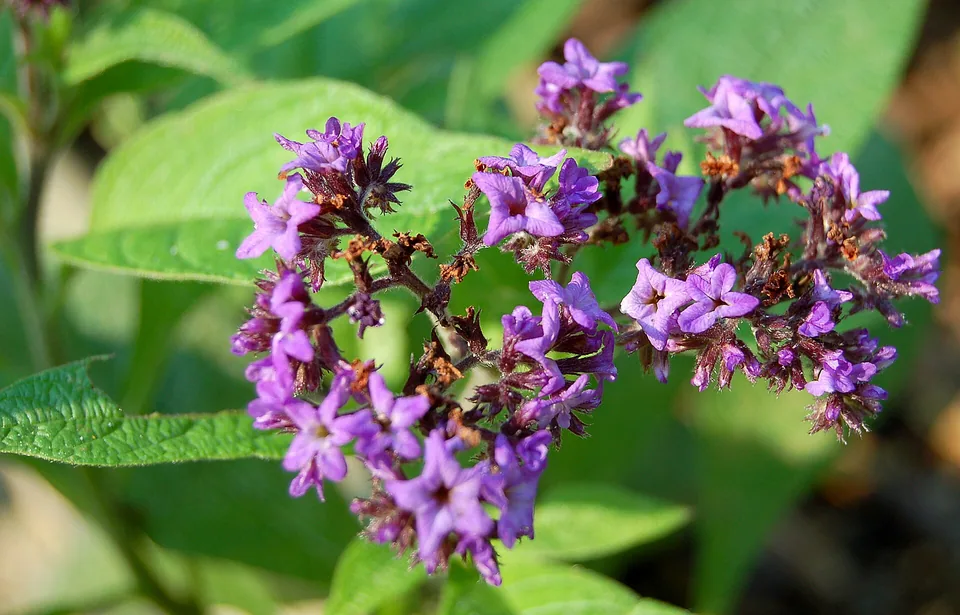


Cómo cultivar y cuidar Heliotrope
Heliotropium arborescens
Escrito por Emilio Marruso · última revisión
Tóxica para: Caballos, Personas · Por qué
De un vistazo
El heliotropo es una perenne delicada que encaja casi en cualquier sitio: en el jardín, en maceta e incluso dentro de casa. Dale sol pleno o semisombra, con algo de sombra por la tarde donde los veranos son calurosos, y mantén la tierra húmeda. Alcanza de 30 a 76 cm de alto e igual de ancho, y puedes multiplicarlo por semilla o por esquejes de tallo.
- Sol
Sol pleno o semisombra; algo de sombra por la tarde en climas de veranos calurosos
Qué dicen las fuentes (2)
Luz: Pleno sol a semisombra; algo de sombra por la tarde en climas cálidos de verano.
Light: Full sun (6 or more hours of direct sunlight a day) Partial Shade (Direct sunlight only part of the day, 2-6 hours)
— Heliotropium arborescens (Cherry Pie Heliotrope, Common Heliotrope, Heliotrope, Peruvian Heliotrope) | North Carolina Extension Gardener Plant Toolbox [1] In hot summer climates, some afternoon shade is appreciated.
— Heliotropium arborescens (Cherry Pie Heliotrope, Common Heliotrope, Heliotrope, Peruvian Heliotrope) | North Carolina Extension Gardener Plant Toolbox [1] - Riego
Mantén la tierra húmeda
Qué dicen las fuentes (1)
Riego: Mantén la tierra húmeda
Grow in full sun in moist, humus-rich, well-drained soil and keep soil moist.
— Heliotropium arborescens (Cherry Pie Heliotrope, Common Heliotrope, Heliotrope, Peruvian Heliotrope) | North Carolina Extension Gardener Plant Toolbox [1] - Frío
Aguanta inviernos de hasta −1,1 °C (30 °F)
Semirrústica: inviernos suaves o invernadero sin calefacción · USDA 10a · RHS H3 · Z10
Qué dicen las fuentes (2)
Rusticidad, zona más fría: 10a [mínima invernal de −1,1 a 1,7 °C (de 30 a 35 °F)]
USDA Plant Hardiness Zone: 10a, 10b, 11a, 11b
— Heliotropium arborescens (Cherry Pie Heliotrope, Common Heliotrope, Heliotrope, Peruvian Heliotrope) | North Carolina Extension Gardener Plant Toolbox [1] Rusticidad, zona más cálida: 11b [mínima invernal de 7,2 a 10 °C (de 45 a 50 °F)]
USDA Plant Hardiness Zone: 10a, 10b, 11a, 11b
— Heliotropium arborescens (Cherry Pie Heliotrope, Common Heliotrope, Heliotrope, Peruvian Heliotrope) | North Carolina Extension Gardener Plant Toolbox [1] - Plagas
Vigila la mosca blanca, la araña roja, el pulgón y la cochinilla algodonosa
Qué dicen las fuentes (1)
Plagas: moscas blancas, arañitas rojas, pulgones, cochinillas harinosas
Watch for whiteflies, spider mites, aphids and mealybugs,
— Heliotropium arborescens (Cherry Pie Heliotrope, Common Heliotrope, Heliotrope, Peruvian Heliotrope) | North Carolina Extension Gardener Plant Toolbox [1] - Tamaño
30–76 cm de alto e igual de ancho
Qué dicen las fuentes (2)
Altura adulta: 30-76 cm (1-2.5 pies)
Dimensions: Height: 1 ft. 0 in. - 2 ft. 6 in. Width: 1 ft. 0 in. - 2 ft. 6 in.
— Heliotropium arborescens (Cherry Pie Heliotrope, Common Heliotrope, Heliotrope, Peruvian Heliotrope) | North Carolina Extension Gardener Plant Toolbox [1] Anchura adulta: 30-76 cm (1-2.5 pies)
Dimensions: Height: 1 ft. 0 in. - 2 ft. 6 in. Width: 1 ft. 0 in. - 2 ft. 6 in.
— Heliotropium arborescens (Cherry Pie Heliotrope, Common Heliotrope, Heliotrope, Peruvian Heliotrope) | North Carolina Extension Gardener Plant Toolbox [1] - Multiplicación
Multiplícalo por semilla o por esquejes de tallo
Qué dicen las fuentes (1)
Propagación: Semilla, esqueje de tallo
Recommended Propagation Strategy: Seed Stem Cutting Country Or
— Heliotropium arborescens (Cherry Pie Heliotrope, Common Heliotrope, Heliotrope, Peruvian Heliotrope) | North Carolina Extension Gardener Plant Toolbox [1] - Maceta
Crece bien en maceta y dentro de casa
Qué dicen las fuentes (2)
En maceta: Sí
Landscape Location: Container Houseplants Landscape Theme: Butterfly Garden
— Heliotropium arborescens (Cherry Pie Heliotrope, Common Heliotrope, Heliotrope, Peruvian Heliotrope) | North Carolina Extension Gardener Plant Toolbox [1] En interior: Sí
As an annual or houseplant, it will grow 1 to 2 feet tall and wide.
— Heliotropium arborescens (Cherry Pie Heliotrope, Common Heliotrope, Heliotrope, Peruvian Heliotrope) | North Carolina Extension Gardener Plant Toolbox [1] - Seguridad
Tóxico para las personas si se come en grandes cantidades; puede causar fallo hepático en caballos
Resumen
Heliotropium arborescens es una perenne tierna cultivada por sus llamativas y fragantes flores púrpuras. [1] Crece a pleno sol en suelo húmedo, rico en humus y bien drenado que se mantiene húmedo. [1] Puede causar insuficiencia hepática en caballos y es tóxico para los humanos si se ingiere en grandes cantidades. [1]
Citado en inglés, como en la fuente.
Esta ficha está incompleta: las fuentes consultadas aún no cubren todos los campos.
Aún no cubierto por nuestras fuentes: Poda
Cuidados
Riego
Mantén la tierra húmeda
Qué dicen las fuentes (1)
Grow in full sun in moist, humus-rich, well-drained soil and keep soil moist.Luz
Pleno sol a semisombra; algo de sombra por la tarde en climas cálidos de verano.
Qué dicen las fuentes (2)
Light:
Full sun (6 or more hours of direct sunlight a day)
Partial Shade (Direct sunlight only part of the day, 2-6 hours)In hot summer climates, some afternoon shade is appreciated.Clima y frío
Rusticidad, zona más fría
10a [mínima invernal de −1,1 a 1,7 °C (de 30 a 35 °F)]
Qué dicen las fuentes (1)
USDA Plant Hardiness Zone:
10a, 10b, 11a, 11bRusticidad, zona más cálida
11b [mínima invernal de 7,2 a 10 °C (de 45 a 50 °F)]
Qué dicen las fuentes (1)
USDA Plant Hardiness Zone:
10a, 10b, 11a, 11bDónde cultivarla
En interior
Sí
Qué dicen las fuentes (1)
As an annual or houseplant, it will grow 1 to 2 feet tall and wide.En maceta
Sí
Qué dicen las fuentes (1)
Landscape Location:
Container
Houseplants
Landscape Theme:
Butterfly GardenPropagación
Semilla, esqueje de tallo
Qué dicen las fuentes (1)
Recommended Propagation Strategy:
Seed
Stem Cutting
Country OrCultivo
La planta
Ciclo de vida
perenne (tierna)
Qué dicen las fuentes (1)
Heliotrope is a tender perennial in the borage family (Boraginaceae) native to Peru, Columbia and Bolivia.Familia
Boraginaceae
Qué dicen las fuentes (1)
Heliotrope is a tender perennial in the borage family (Boraginaceae) native to Peru, Columbia and Bolivia.Altura adulta
30-76 cm (1-2.5 pies)
Qué dicen las fuentes (1)
Dimensions:
Height: 1 ft. 0 in. - 2 ft. 6 in.
Width: 1 ft. 0 in. - 2 ft. 6 in.Anchura adulta
30-76 cm (1-2.5 pies)
Qué dicen las fuentes (1)
Dimensions:
Height: 1 ft. 0 in. - 2 ft. 6 in.
Width: 1 ft. 0 in. - 2 ft. 6 in.Plagas y enfermedades
Plagas
moscas blancas, arañitas rojas, pulgones, cochinillas harinosas
Qué dicen las fuentes (1)
Watch for whiteflies, spider mites, aphids and mealybugs,Problemas
Insectos plaga
Síntoma: Moscas blancas, arañitas rojas, pulgones y cochinillas harinosas.
Qué hacer: Vigila estas plagas.
Qué dicen las fuentes (1)
Watch for whiteflies, spider mites, aphids and mealybugs,
— Heliotropium arborescens (Cherry Pie Heliotrope, Common Heliotrope, Heliotrope, Peruvian Heliotrope) | North Carolina Extension Gardener Plant Toolbox [1]
Remedios
Cada remedio indica qué dicen las fuentes oficiales; los remedios tradicionales sin fuente oficial aparecen marcados. Los perjudiciales están para que sepas evitarlos.
Cuidar la planta
ácaros araña
chorro de agua fuerte Fuente oficial, sin prueba independiente
Cómo: Pon la planta en la bañera o en la ducha y rocía con una niebla fuerte pero fina de agua; lavarla con frecuencia reduce su número.
It is easier to just put the houseplant in the bathtub or shower and spray with a strong, but fine mist of water.
— swyg.nmsu.edu [3] spray de jabón insecticida Funciona en parte
If you can delay, apply the insecticidal soap to a small portion of the plant to check for phytotoxicity (some plants are damaged by the soap).
— swyg.nmsu.edu [3] Cómo: Rocía la planta con jabón insecticida por la parte superior e inferior de las hojas y los tallos; repite una o dos veces por semana durante dos o tres semanas.
If the plants cannot be moved to the bathtub or shower, you can spray the plant with insecticidal soap.
— swyg.nmsu.edu [3] Qué dicen las pruebas The insecticidal soap will kill some of the mites and assist in washing them from the plant.
— swyg.nmsu.edu [3]
moscas blancas
jabón insecticida No verificado
Remedio tradicional, no verificado por una fuente oficial.
Cómo: Cubre la planta, especialmente la parte inferior de las hojas, para que el jabón haga contacto directo con las moscas blancas; se necesitan varios tratamientos.
aceite de neem No verificado
Remedio tradicional, no verificado por una fuente oficial.
Cómo: Cubre la planta, especialmente el envés de las hojas, para que el aceite haga contacto directo con las moscas blancas.
rociado con agua No verificado
Remedio tradicional, no verificado por una fuente oficial.
Cómo: Rocía las plantas con agua para eliminar los adultos y los huevos.
cochinillas harinosas
rocío de alcohol isopropílico Fuente oficial, sin prueba independiente
Make sure to test the soap and alcohol mixtures on a small portion of the plant prior to full application because some plants may be sensitive to soap or alcohol.
— planttalk.colostate.edu [4] Cómo: Rocía una mezcla de 10 por ciento de alcohol isopropílico y 90 por ciento de agua directamente sobre los insectos; repite cada semana hasta que los insectos desaparezcan.
For heavy infestations, spray a mixture of 10 percent rubbing alcohol and 90 percent water directly onto the insects.
— planttalk.colostate.edu [4]
Venenosa para los animales
Según la fuente, citada textualmente. No es un consejo médico ni veterinario: si una persona o un animal pudo haber ingerido esta planta, contacta con un centro de toxicología o con un veterinario.
Animales
Heliotrope can cause liver failure in horses. It
[1]- Síntomas
Heliotrope can cause liver failure in horses. It
[1]
Personas
It is toxic to humans if eaten in large amounts.
[1]- Partes venenosas
Poison Part: Flowers Fruits Leaves Roots Sap/Juice Seeds Stems
[1]- Principio tóxico
Poison Toxic Principle: Pyrrolizidine alkaloid Causes Contact Dermatitis:
[1]- Síntomas
Poison Symptoms: Digestive upset and liver damage Poison
[1]- Gravedad
Poison Severity: Medium Poison Symptoms: Digestive upset and
[1]
Calendario
Poda
No figura en las fuentes consultadas.
Meses tal como los dan las fuentes, en su mayoría de Estados Unidos (hemisferio norte). En el hemisferio sur se desplazan unos seis meses.
Valores orientativos
Valores de una fuente secundaria, no comprobados palabra por palabra como el resto de esta página. Úselos como punto de partida.
- Horas de sol
- 6-8 horasValor orientativo, adáptalo a tu clima · Fuente secundaria
- Resiste la sequía
- SíValor orientativo, adáptalo a tu clima · Fuente secundaria
- pH del suelo
- 6-7.5Valor orientativo, adáptalo a tu clima · Fuente secundaria
- Nivel de cuidado
- MedioValor orientativo, adáptalo a tu clima · Fuente secundaria
- Crecimiento
- BajoValor orientativo, adáptalo a tu clima · Fuente secundaria
- Poda
- MayoValor orientativo, adáptalo a tu clima · Fuente secundaria
Plantas similares
- Clasping Heliotrope Heliotropium amplexicaule
- Abraham Trachystemon orientalis
- Lengua de vaca Anchusa azurea
- Blue Showers Cynoglossum amabile
- Viperina Echium vulgare
- Borraja Borago officinalis
- Broad-leaf Waterleaf Hydrophyllum canadense
- Bugloss Anchusa capensis
Fuentes
Cada valor anterior se cita de estos documentos. Los enlaces llevan al editor original.
- Heliotropium arborescens (Cherry Pie Heliotrope, Common Heliotrope, Heliotrope, Peruvian Heliotrope) | North Carolina Extension Gardener Plant Toolbox · plants.ces.ncsu.edu, consultado
- Heliotropium (Cherry Pie Flower, Garden Heliotrope, Heliotrope, Monkey Tail) | North Carolina Extension Gardener Plant Toolbox · plants.ces.ncsu.edu, consultado
- swyg.nmsu.edu · swyg.nmsu.edu
- planttalk.colostate.edu · planttalk.colostate.edu
Escrito por Emilio Marruso · última revisión