
How to Grow and Care for Dieffenbachia
Dieffenbachia seguine
Written by Emilio Marruso · last checked
Toxic to: Livestock, Animals, People · Why
At a glance
Dieffenbachia is a carefree perennial that grows happily indoors and in containers. Give it partial shade or indirect light, away from direct sun, and water thoroughly whenever the top 1 inch of soil has dried. In return it can reach 3 to 8 feet tall and 2 to 3 feet wide, a generous green companion for any room.
- Sun
Partial shade or indirect light; keep it out of direct sun
What the sources say (5)
Light: Partial shade; indirect light, protected from direct sunlight
According to NC State Extension: It needs to be protected from cold drafts and direct sunlight.
— Dieffenbachia seguine (Dieffenbachia, Dumbcane, Gold Dieffenbachia, Spotted Dumbcane, Variable Dieffenbachia) | North Carolina Extension Gardener Plant Toolbox [1] According to UF/IFAS Gardening Solutions: Dieffenbachia prefers diffused sunlight or partial shade, but will tolerate full shade, which is why it is well-suited as a houseplant.
— Dieffenbachia – Gardening Solutions [6] Partial Shade (Direct sunlight only part of the day, 2-6 hours)
— Dieffenbachia seguine (Dieffenbachia, Dumbcane, Gold Dieffenbachia, Spotted Dumbcane, Variable Dieffenbachia) | North Carolina Extension Gardener Plant Toolbox [1] This plant prefers loose, fertile, high organic soil and indirect light, moderate temperatures, and high humidity.
— Dieffenbachia seguine (Dieffenbachia, Dumbcane, Gold Dieffenbachia, Spotted Dumbcane, Variable Dieffenbachia) | North Carolina Extension Gardener Plant Toolbox [1] It needs to be protected from cold drafts and direct sunlight.
— Dieffenbachia seguine (Dieffenbachia, Dumbcane, Gold Dieffenbachia, Spotted Dumbcane, Variable Dieffenbachia) | North Carolina Extension Gardener Plant Toolbox [1] - Water
Water thoroughly, then let the top 1 inch of soil dry out to prevent root rot
What the sources say (4)
Watering: Water thoroughly and allow the top 1 inch (2.5 cm) of soil to dry completely before watering again
According to NC State Extension: Water the plant thoroughly and allow the top 1-inch surface of the soil to dry completely before watering the plant again.
— Dieffenbachia seguine (Dieffenbachia, Dumbcane, Gold Dieffenbachia, Spotted Dumbcane, Variable Dieffenbachia) | North Carolina Extension Gardener Plant Toolbox [1] According to UF/IFAS Gardening Solutions: Your dieffenbachia should be watered regularly, with soil being allowed to dry between waterings.
— Dieffenbachia – Gardening Solutions [6] Water the plant thoroughly and allow the top 1-inch surface of the soil to dry completely before watering the plant again.
— Dieffenbachia seguine (Dieffenbachia, Dumbcane, Gold Dieffenbachia, Spotted Dumbcane, Variable Dieffenbachia) | North Carolina Extension Gardener Plant Toolbox [1] Watering notes: Letting the soil surface dry helps prevent root rot
Water the plant thoroughly and allow the top 1-inch surface of the soil to dry completely before watering the plant again. This will help prevent root rot.
— Dieffenbachia seguine (Dieffenbachia, Dumbcane, Gold Dieffenbachia, Spotted Dumbcane, Variable Dieffenbachia) | North Carolina Extension Gardener Plant Toolbox [1] - Cold
Survives winters down to 30 °F (−1.1 °C)
Half hardy: mild winters or an unheated greenhouse · USDA 10a · RHS H3 · Z10
What the sources say (2)
Hardiness, coldest zone: 10a [winter low −1.1 to 1.7 °C (30 to 35 °F)]
Available Space To Plant: 12 inches-3 feet USDA Plant Hardiness Zone: 10a, 10b, 11a, 11b
— Dieffenbachia seguine (Dieffenbachia, Dumbcane, Gold Dieffenbachia, Spotted Dumbcane, Variable Dieffenbachia) | North Carolina Extension Gardener Plant Toolbox [1] Hardiness, warmest zone: 11b [winter low 7.2 to 10 °C (45 to 50 °F)]
Available Space To Plant: 12 inches-3 feet USDA Plant Hardiness Zone: 10a, 10b, 11a, 11b
— Dieffenbachia seguine (Dieffenbachia, Dumbcane, Gold Dieffenbachia, Spotted Dumbcane, Variable Dieffenbachia) | North Carolina Extension Gardener Plant Toolbox [1] - Feeding
High-nitrogen foliage plant food; curled, brown-edged leaves mean too much: flush with clean water
What the sources say (3)
Mineral fertilizers: High-nitrogen foliage plant fertilizer at the label rate
Move your plant to a brighter location and consider feeding your plant a high-nitrogen foliage plant food as recommended.
— Dieffenbachia – Gardening Solutions [6] Flush away accumulated salts and fertilizer with clean water. Follow label instructions for correct fertilizer application rates.
— Dieffenbachia – Gardening Solutions [6] Signs of excess: Curled leaves with brown edges; flush the accumulated salts and fertilizer out with clean water
Leaves are curled with brown edges — Curled, browning leaves could be caused by excessive fertilizer application. Flush away accumulated salts and fertilizer with clean water.
— Dieffenbachia – Gardening Solutions [6] - Pests
Spider mites, scale, whiteflies, fungus gnats and aphids; also leaf spot and root rot
What the sources say (2)
Pests: spider mites, scale, whiteflies, fungus gnats, aphids
Monitor for spider mites, scale, whiteflies, fungus gnats, and aphids.
— Dieffenbachia seguine (Dieffenbachia, Dumbcane, Gold Dieffenbachia, Spotted Dumbcane, Variable Dieffenbachia) | North Carolina Extension Gardener Plant Toolbox [1] Diseases: fungal leaf spot, root rot, blight
Potential diseases include fungal leaf spot, root rot, and blight.
— Dieffenbachia seguine (Dieffenbachia, Dumbcane, Gold Dieffenbachia, Spotted Dumbcane, Variable Dieffenbachia) | North Carolina Extension Gardener Plant Toolbox [1] - Watch out
Wear gloves when handling it: the sap irritates the skin
- Size
3 to 8 ft tall and 2 to 3 ft wide
What the sources say (2)
Mature height: 91-244 cm (3-8 ft)
Dimensions: Height: 3 ft. 0 in. - 8 ft. 0 in. Width: 2 ft. 0 in. - 3 ft. 0 in.
— Dieffenbachia seguine (Dieffenbachia, Dumbcane, Gold Dieffenbachia, Spotted Dumbcane, Variable Dieffenbachia) | North Carolina Extension Gardener Plant Toolbox [1] Mature width: 61-91 cm (2-3 ft)
Dimensions: Height: 3 ft. 0 in. - 8 ft. 0 in. Width: 2 ft. 0 in. - 3 ft. 0 in.
— Dieffenbachia seguine (Dieffenbachia, Dumbcane, Gold Dieffenbachia, Spotted Dumbcane, Variable Dieffenbachia) | North Carolina Extension Gardener Plant Toolbox [1] - Propagation
By division, stem cuttings or root cuttings
What the sources say (1)
Propagation: Division; stem cuttings; root cuttings
It needs to be protected from cold drafts and direct sunlight. Propagate by division or stem/root cuttings.
— Dieffenbachia seguine (Dieffenbachia, Dumbcane, Gold Dieffenbachia, Spotted Dumbcane, Variable Dieffenbachia) | North Carolina Extension Gardener Plant Toolbox [1] - Containers
Grows well indoors and in containers
What the sources say (2)
Indoors: Yes
It is a popular houseplant and is grown for its ornamental foliage.
— Dieffenbachia seguine (Dieffenbachia, Dumbcane, Gold Dieffenbachia, Spotted Dumbcane, Variable Dieffenbachia) | North Carolina Extension Gardener Plant Toolbox [1] In containers: Yes
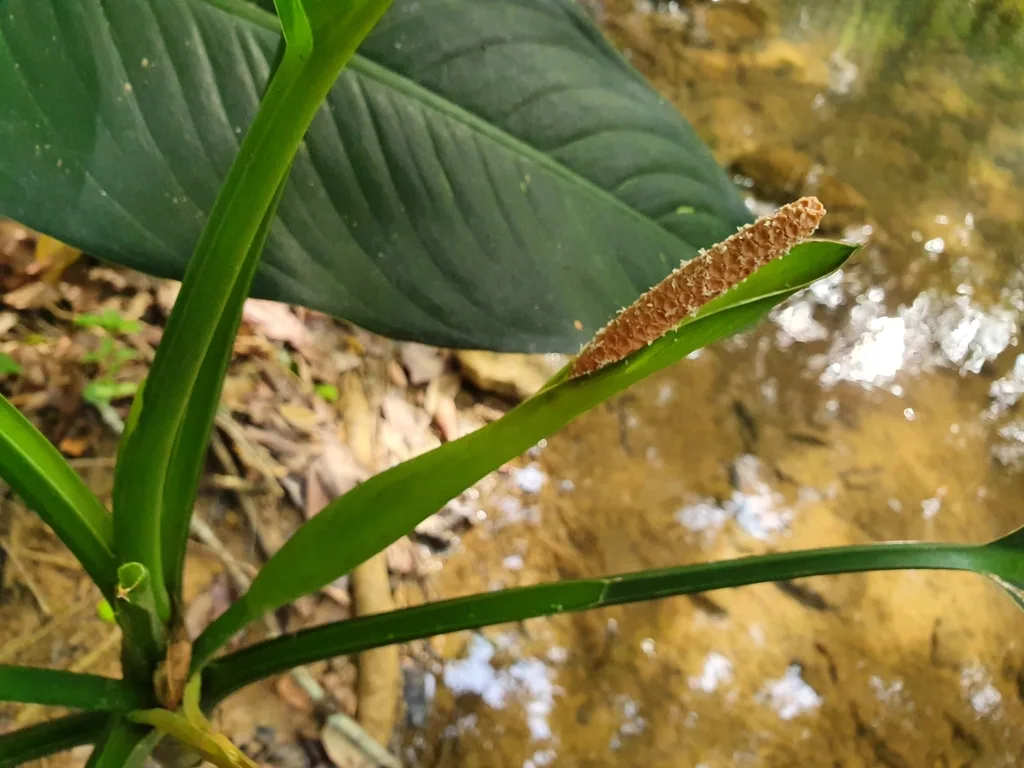
#tropical feel #spadix #container plant #white flowers #cream flowers
— Dieffenbachia seguine (Dieffenbachia, Dumbcane, Gold Dieffenbachia, Spotted Dumbcane, Variable Dieffenbachia) | North Carolina Extension Gardener Plant Toolbox [1] - Safety
Toxic: the sap burns and swells the mouth and throat and can harm the eyes; may be fatal to pets
Overview
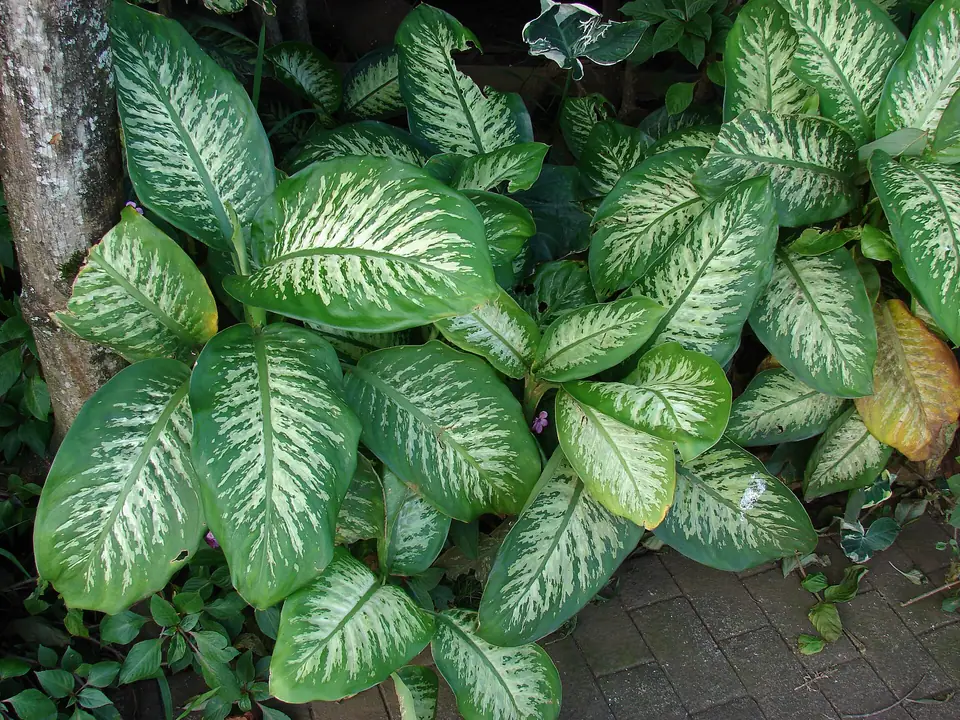
Dieffenbachia seguine is an erect, broadleaf evergreen perennial in the Araceae family that grows 3 to 8 feet [0.9–2.4 m] tall and is popular as a houseplant. [1] It prefers indirect light, loose, fertile, high organic soil and thorough watering once the top 1 inch [2.5 cm] of soil has dried completely. [1] The sap contains calcium oxalate crystals and is toxic to humans and pets if ingested. [1]
Dieffenbachia care
Measurements in square brackets are our conversion into the other unit system; the quoted text is unchanged.
How to water Dieffenbachia
Watering
Water thoroughly and allow the top 1 inch (2.5 cm) of soil to dry completely before watering again
What each source says
According to NC State Extension: Water thoroughly and let the top 1 inch (2.5 cm) of soil dry completely before watering again
According to UF/IFAS Gardening Solutions: Water regularly, allowing the soil to dry between waterings
What the sources say (3)
According to NC State Extension: Water the plant thoroughly and allow the top 1-inch surface of the soil to dry completely before watering the plant again.According to UF/IFAS Gardening Solutions: Your dieffenbachia should be watered regularly, with soil being allowed to dry between waterings.Water the plant thoroughly and allow the top 1-inch surface of the soil to dry completely before watering the plant again.Watering notes
Letting the soil surface dry helps prevent root rot
What the sources say (1)
Water the plant thoroughly and allow the top 1-inch surface of the soil to dry completely before watering the plant again. This will help prevent root rot.How much light Dieffenbachia needs
Partial shade; indirect light, protected from direct sunlight
What each source says
According to NC State Extension: Partial shade; indirect light, protected from direct sunlight
According to UF/IFAS Gardening Solutions: Diffused sunlight or partial shade; tolerates full shade
What the sources say (5)
According to NC State Extension: It needs to be protected from cold drafts and direct sunlight.According to UF/IFAS Gardening Solutions: Dieffenbachia prefers diffused sunlight or partial shade, but will tolerate full shade, which is why it is well-suited as a houseplant.Partial Shade (Direct sunlight only part of the day, 2-6 hours)This plant prefers loose, fertile, high organic soil and indirect light, moderate temperatures, and high humidity.It needs to be protected from cold drafts and direct sunlight.How much cold Dieffenbachia can take
Hardiness, coldest zone
10a [winter low −1.1 to 1.7 °C (30 to 35 °F)]
What the sources say (1)
Available Space To Plant:
12 inches-3 feet
USDA Plant Hardiness Zone:
10a, 10b, 11a, 11bHardiness, warmest zone
11b [winter low 7.2 to 10 °C (45 to 50 °F)]
What the sources say (1)
Available Space To Plant:
12 inches-3 feet
USDA Plant Hardiness Zone:
10a, 10b, 11a, 11bWhere to grow Dieffenbachia
Indoors
Yes
What the sources say (1)
It is a popular houseplant and is grown for its ornamental foliage.In containers
Yes
What the sources say (1)
#tropical feel #spadix #container plant #white flowers #cream flowersHow to propagate Dieffenbachia
Division; stem cuttings; root cuttings
What the sources say (1)
It needs to be protected from cold drafts and direct sunlight. Propagate by division or stem/root cuttings.How to grow Dieffenbachia
The plant
Life cycle
perennial
What the sources say (1)
Dieffenbachia is an erect, broadleaf evergreen perennial in the Araceae family that is native to Central and South America.Family
Araceae
What the sources say (1)
Dieffenbachia is an erect, broadleaf evergreen perennial in the Araceae family that is native to Central and South America.Mature height
91-244 cm (3-8 ft)
What the sources say (1)
Dimensions:
Height: 3 ft. 0 in. - 8 ft. 0 in.
Width: 2 ft. 0 in. - 3 ft. 0 in.Mature width
61-91 cm (2-3 ft)
What the sources say (1)
Dimensions:
Height: 3 ft. 0 in. - 8 ft. 0 in.
Width: 2 ft. 0 in. - 3 ft. 0 in.Pests and diseases
Pests
spider mites, scale, whiteflies, fungus gnats, aphids
What the sources say (1)
Monitor for spider mites, scale, whiteflies, fungus gnats, and aphids.Diseases
fungal leaf spot, root rot, blight
What the sources say (1)
Potential diseases include fungal leaf spot, root rot, and blight.Fertilizing
Mineral fertilizers
High-nitrogen foliage plant fertilizer at the label rate
What the sources say (2)
Move your plant to a brighter location and consider feeding your plant a high-nitrogen foliage plant food as recommended.Flush away accumulated salts and fertilizer with clean water. Follow label instructions for correct fertilizer application rates.Signs of excess
Curled leaves with brown edges; flush the accumulated salts and fertilizer out with clean water
What the sources say (1)
Leaves are curled with brown edges — Curled, browning leaves could be caused by excessive fertilizer application. Flush away accumulated salts and fertilizer with clean water.Dieffenbachia pests and problems
Pests and diseases
Symptom: Spider mites, scale, whiteflies, fungus gnats and aphids; fungal leaf spot, root rot and blight.
What to do: Monitor for pests; allow the top 1 inch of soil to dry between waterings to help prevent root rot; wear gloves when handling to prevent skin irritation or contact dermatitis.
What the sources say (2)
Monitor for spider mites, scale, whiteflies, fungus gnats, and aphids. Potential diseases include fungal leaf spot, root rot, and blight.
— Dieffenbachia seguine (Dieffenbachia, Dumbcane, Gold Dieffenbachia, Spotted Dumbcane, Variable Dieffenbachia) | North Carolina Extension Gardener Plant Toolbox [1] Wear gloves when handling this plant to prevent skin irritation or contact dermatitis.
— Dieffenbachia seguine (Dieffenbachia, Dumbcane, Gold Dieffenbachia, Spotted Dumbcane, Variable Dieffenbachia) | North Carolina Extension Gardener Plant Toolbox [1]
Remedies
Each remedy shows what official sources say about it; traditional remedies without an official source are marked as such. Harmful ones are listed so you know to avoid them.
First aid
First aid: not a substitute for a doctor
sap contact with skin
wash with soap and water Official source, not independently tested
Seek medical attention if symptoms are severe or do not improve.
— poison.org [7] How: immediately wash the affected area thoroughly with soap and water for 15 minutes
If you come into contact with the sap, you should immediately wash the affected area thoroughly with soap and water for 15 minutes.
— poison.org [7]
sap contact with eyes
irrigate with water Official source, not independently tested
Seek medical attention if symptoms are severe or do not improve.
— poison.org [7] How: immediately irrigate with water for at least 15 minutes
If the sap comes into contact with your eyes, immediately irrigate with water for at least 15 minutes.
— poison.org [7]
ingestion
rinse mouth with water and spit Official source, not independently tested
If the person is drooling excessively, has severe mouth swelling, or is having difficulty swallowing or breathing, call 911 .
— poison.org [7] How: rinse with water and spit to remove any remaining plant materials from the mouth; sucking on ice chips or frozen treats can relieve pain; do not force fluids
For ingestions, rinse with water and spit to remove any remaining plant materials from the mouth. If the mouth continues to be irritated, sucking on ice chips or frozen treats can relieve pain. Do not force fluids.
— poison.org [7]
child ingestion
wipe out mouth and offer cool snack Official source, not independently tested
If there is swelling that prevents the child taking anything by mouth or causes difficulty breathing, go to the nearest emergency department immediately.
— chop.edu [8] How: wipe out the residue of the plant from the mouth and offer a cool drink or snack
If a child eats any part of an oxalate-containing plant, wipe out the residue of the plant from the mouth and offer a cool drink or snack such as a popsicle, applesauce or yogurt.
— chop.edu [8]
Treating the plant
aphids
household soap spray Not proven
They can contain detergents and degreasers that are harmful to groundwater and aquatic and soil organisms.
— ucanr.edu [10] How: wipe the aphids from the plant by hand after spraying with mild soapy water
Aphids are easy to wipe from plants, by hand after spraying with mild soapy water
— whyfarmit.com [9] What the evidence says When “oils and soaps” are mentioned in UC IPM publications, we are referring to commercially available oils and soaps that are formulated specifically for use as pesticides- not household oils and soaps meant for cooking, cleaning, or other purposes.
— ucanr.edu [10] dusting with flour Not verified
Traditional remedy, not verified by an official source.
How: lightly dust the plants with flour to discourage aphids
spider mites
forceful spray of water Works
How: take the plant outside and spray it with a forceful spray of water
Mite populations can be reduced by taking the plant outside and spraying it with a forceful spray of water.
— Dieffenbachia – Gardening Solutions [6] What the evidence says Mite populations can be reduced by taking the plant outside and spraying it with a forceful spray of water.
— Dieffenbachia – Gardening Solutions [6] alcohol and water mix Not verified
Traditional remedy, not verified by an official source.
How: apply a homemade alcohol-water mix of 16 ounces of water and half a cup of alcohol to the leaves and stems
mealybugs
rubbing alcohol on cotton ball Not verified
Traditional remedy, not verified by an official source.
How: dip a cotton ball or cotton bud in rubbing alcohol and wipe the backs of the insects
myrothecium leaf spot
clipping and disposing of infected leaves Works
How: remove dead and infected leaves
Remove dead and infected leaves, and apply fungicide to the healthiest parts of the plant.
— whyfarmit.com [9] What the evidence says Many insect and disease issues can be solved in the home garden by hand-picking insects or clipping and disposing of diseased plant parts.
— extension.unh.edu [11]
Is Dieffenbachia toxic to pets?
Reported by the source, quoted verbatim. This is not medical or veterinary advice: if a person or an animal may have eaten this plant, contact a poison control centre or a veterinarian.
Animals
The common name, dumbcane, refers to the numbing and paralyzing effects of the sap of this plant on the vocal cords of humans and pets if it is ingested.
[1]- Poisonous parts
Poison Part: Leaves Roots Sap/Juice Stems
[1]- Toxic principle
Poison Toxic Principle: Calcium oxalate crystals, oxalic acid
[1]- Symptoms
Poison Symptoms: Burning and swelling of the lips, tongue, and throat due to needle-like crystals becoming embedded in the mouth and throat.
[1]- Severity
Poison Severity: High
[1]
Sap exposure to the eyes can result in damage to the cornea. It may be fatal to pets and livestock.
[1]- Poisonous parts
Poison Part: Leaves Roots Sap/Juice Stems
[1]- Toxic principle
Poison Toxic Principle: Calcium oxalate crystals, oxalic acid
[1]- Symptoms
Poison Symptoms: Burning and swelling of the lips, tongue, and throat due to needle-like crystals becoming embedded in the mouth and throat.
[1]- Severity
Poison Severity: High
[1]
People
Burning and swelling of the lips, tongue, and throat due to needle-like crystals becoming embedded in the mouth and throat.
[1]- Poisonous parts
Poison Part: Leaves Roots Sap/Juice Stems
[1]- Toxic principle
Poison Toxic Principle: Calcium oxalate crystals, oxalic acid
[1]- Symptoms
Poison Symptoms: Burning and swelling of the lips, tongue, and throat due to needle-like crystals becoming embedded in the mouth and throat.
[1]- Severity
Poison Severity: High
[1]
Skin irritation if exposed to cell sap. Sap exposure to the eyes can result in damage to the cornea.
[1]- Poisonous parts
Poison Part: Leaves Roots Sap/Juice Stems
[1]- Toxic principle
Poison Toxic Principle: Calcium oxalate crystals, oxalic acid
[1]- Symptoms
Poison Symptoms: Burning and swelling of the lips, tongue, and throat due to needle-like crystals becoming embedded in the mouth and throat.
[1]- Severity
Poison Severity: High
[1]
Although Dieffenbachia is grown as a houseplant, it can be toxic for pets and children.
[1]- Poisonous parts
Poison Part: Leaves Roots Sap/Juice Stems
[1]- Toxic principle
Poison Toxic Principle: Calcium oxalate crystals, oxalic acid
[1]- Symptoms
Poison Symptoms: Burning and swelling of the lips, tongue, and throat due to needle-like crystals becoming embedded in the mouth and throat.
[1]- Severity
Poison Severity: High
[1]
Indicative values
Values from a secondary source, not checked word for word like the rest of this page. Use them as a starting point.
- Soil
- Humus rich, Well-drainedIndicative value, adapt it to your climate · Secondary source
- Soil pH
- 6-6.5Indicative value, adapt it to your climate · Secondary source
- Care level
- MediumIndicative value, adapt it to your climate · Secondary source
- Growth rate
- ModerateIndicative value, adapt it to your climate · Secondary source
- Pruning
- May, June, JulyIndicative value, adapt it to your climate · Secondary source
Similar plants
- Anthurium Anthurium andraeanum
- Arrowhead Plant Syngonium podophyllum
- Arum Arum maculatum
- Black Calla Arum palaestinum
- Blushing Philodendron Philodendron erubescens
- Calla Lily Zantedeschia aethiopica
- Chinese Evergreen Aglaonema commutatum
- Cobra Lily Arisaema ringens
Sources
Every value above is quoted from these documents. Links lead to the original publisher.
- Dieffenbachia seguine (Dieffenbachia, Dumbcane, Gold Dieffenbachia, Spotted Dumbcane, Variable Dieffenbachia) | North Carolina Extension Gardener Plant Toolbox · plants.ces.ncsu.edu, consulted
- Variable Dieffenbachia - Dieffenbachia seguine | North Carolina Extension Gardener Plant Toolbox · plants.ces.ncsu.edu, consulted
- Dieffenbachia - Dieffenbachia seguine | North Carolina Extension Gardener Plant Toolbox · plants.ces.ncsu.edu, consulted
- Gold Dieffenbachia - Dieffenbachia seguine | North Carolina Extension Gardener Plant Toolbox · plants.ces.ncsu.edu, consulted
- Spotted Dumbcane - Dieffenbachia seguine | North Carolina Extension Gardener Plant Toolbox · plants.ces.ncsu.edu, consulted
- Dieffenbachia – Gardening Solutions · gardeningsolutions.ifas.ufl.edu, consulted
- poison.org · poison.org
- chop.edu · chop.edu
- whyfarmit.com · whyfarmit.com
- ucanr.edu · ucanr.edu
- extension.unh.edu · extension.unh.edu
Written by Emilio Marruso · last checked