
How to Grow and Care for European Fan Palm
Chamaerops humilis
Written by Emilio Marruso · last checked
At a glance
This tough palm shrugs off drought and heat once it is established, so it forgives the occasional forgotten watering. It grows happily in a pot, even indoors, and accepts soils from slightly acidic to slightly alkaline. Just go easy on the water: too much rots the roots and stems. Sow fresh seed in early spring, or divide the plant to make more.
- Water
Handles drought and heat once established; overwatering rots roots and stems
What the sources say (3)
Watering: Withstands drought and heat once established
Once established, it withstands drought and heat. The best growth occurs in Mediterranean-type climates.
— Chamaerops humilis (Dwarf Palm, European Fan Palm, Mediterranean Fan Palm) | North Carolina Extension Gardener Plant Toolbox [1] As an added bonus these plants are highly drought tolerant once established.
— European Fan Palm – Gardening Solutions [3] Watering notes: Overwatering can cause root rot and stem rot
Overwatering can cause root rot and stem rot. Monitor for mealy bugs, scale, and spider mites when grown indoors.
— Chamaerops humilis (Dwarf Palm, European Fan Palm, Mediterranean Fan Palm) | North Carolina Extension Gardener Plant Toolbox [1] - Cold
Survives winters down to 10 °F (−12.2 °C)
Hardy in cold winters · USDA 8a · RHS H5 · Z8
What the sources say (2)
Hardiness, coldest zone: 8a [winter low −12.2 to −9.4 °C (10 to 15 °F)]
8a, 8b, 9a, 9b, 10a, 10b, 11a, 11b
— Chamaerops humilis (Dwarf Palm, European Fan Palm, Mediterranean Fan Palm) | North Carolina Extension Gardener Plant Toolbox [1] Hardiness, warmest zone: 11b [winter low 7.2 to 10 °C (45 to 50 °F)]
8a, 8b, 9a, 9b, 10a, 10b, 11a, 11b
— Chamaerops humilis (Dwarf Palm, European Fan Palm, Mediterranean Fan Palm) | North Carolina Extension Gardener Plant Toolbox [1] - Soil
Slightly acidic to slightly alkaline soil, pH 6.0–8.0
What the sources say (2)
Soil pH, minimum: 6.0
Soil pH: Neutral (6.0-8.0) Soil Drainage: Good Drainage
— Chamaerops humilis (Dwarf Palm, European Fan Palm, Mediterranean Fan Palm) | North Carolina Extension Gardener Plant Toolbox [1] Soil pH, maximum: 8.0
Soil pH: Neutral (6.0-8.0) Soil Drainage: Good Drainage
— Chamaerops humilis (Dwarf Palm, European Fan Palm, Mediterranean Fan Palm) | North Carolina Extension Gardener Plant Toolbox [1] - Pests
Mealybugs, scale and spider mites; root and stem rot when kept too wet
What the sources say (2)
Pests: mealybugs, scale, spider mites
Monitor for mealy bugs, scale, and spider mites when grown indoors.
— Chamaerops humilis (Dwarf Palm, European Fan Palm, Mediterranean Fan Palm) | North Carolina Extension Gardener Plant Toolbox [1] Diseases: root rot, stem rot
Overwatering can cause root rot and stem rot.
— Chamaerops humilis (Dwarf Palm, European Fan Palm, Mediterranean Fan Palm) | North Carolina Extension Gardener Plant Toolbox [1] - Propagation
From seed, by division or from the suckers at the base
What the sources say (2)
Propagation: Seed, division, suckers (basal growths)
Methods of propagation: Fresh seed sown in early spring or from suckers (basal growths)
— European Fan Palm - Ornamental Production Ornamental Production [4] Recommended Propagation Strategy: Division Seed Country Or Region Of Origin:
— Chamaerops humilis (Dwarf Palm, European Fan Palm, Mediterranean Fan Palm) | North Carolina Extension Gardener Plant Toolbox [1] - Sowing
Sow fresh seed in early spring
What the sources say (1)
Sowing: Early spring (fresh seed)
Methods of propagation: Fresh seed sown in early spring or from suckers (basal growths)
— European Fan Palm - Ornamental Production Ornamental Production [4] - Containers
Grows in containers, even indoors
What the sources say (2)
In containers: Yes
Use in containers for patio, deck or foundation areas. It is often used in commercial landscapes where its slow growth needs little maintenance.
— Chamaerops humilis (Dwarf Palm, European Fan Palm, Mediterranean Fan Palm) | North Carolina Extension Gardener Plant Toolbox [1] Indoors: Yes
It may even be grown indoors as a houseplant, although other palms are more well-suited to low-light interiors.
— Chamaerops humilis (Dwarf Palm, European Fan Palm, Mediterranean Fan Palm) | North Carolina Extension Gardener Plant Toolbox [1]
Overview
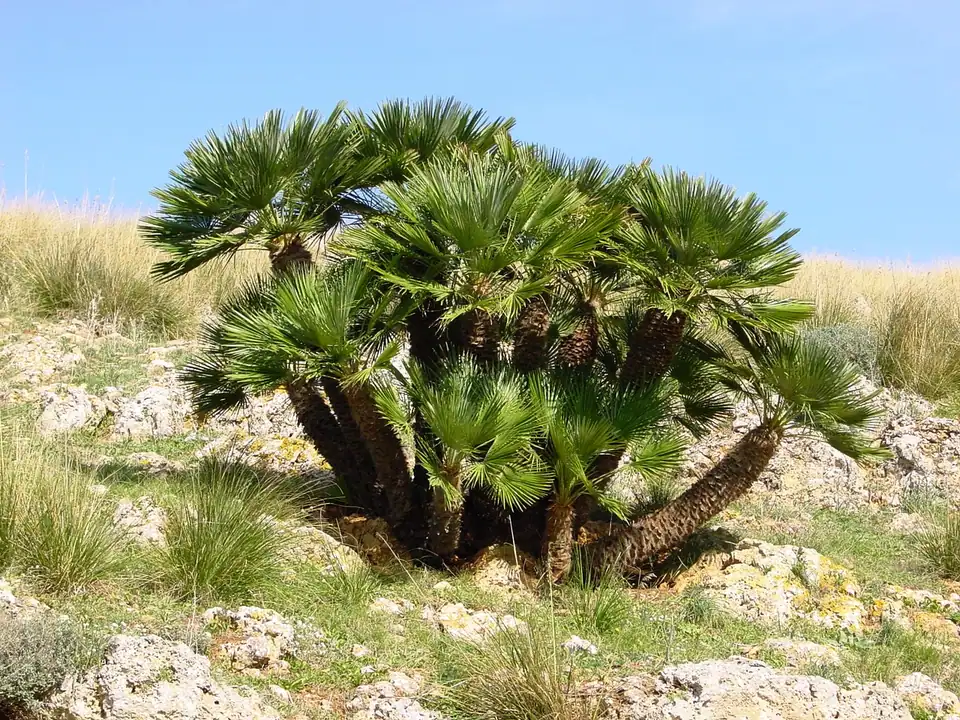
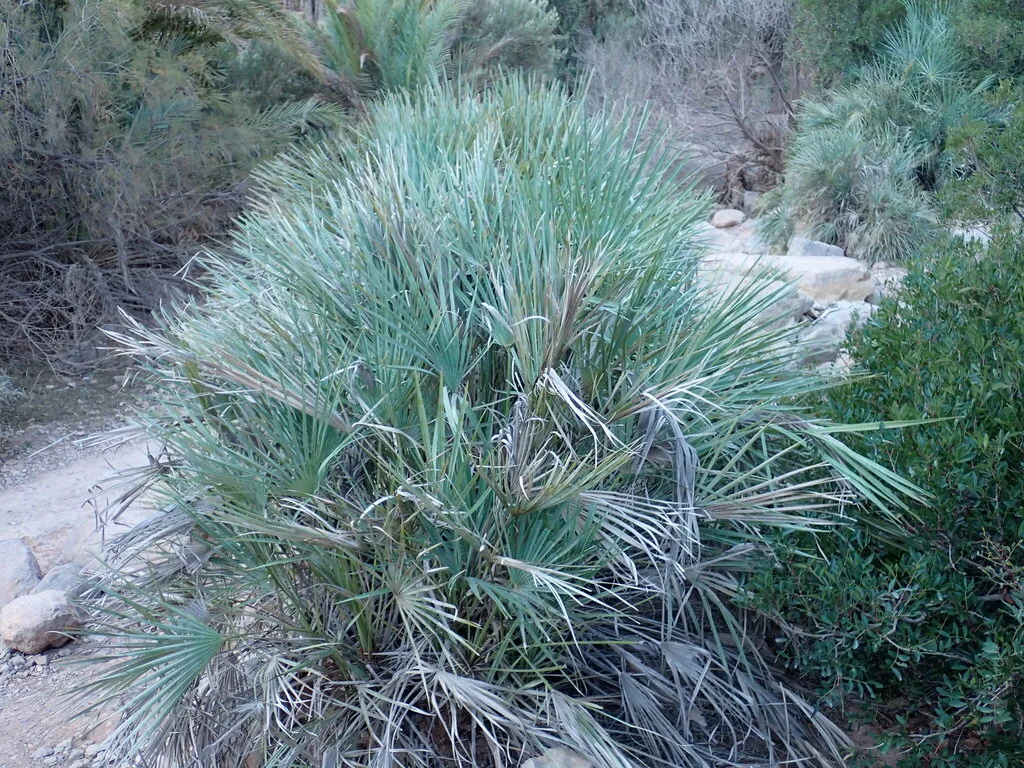
European fan palm is a slow-growing, clumping evergreen palm native to the Mediterranean coast of Europe and North Africa. [1][3] It can be grown in containers and may be grown indoors as a houseplant. [1]
This record is incomplete: the sources we read do not cover every field yet.
Not yet covered by our sources: Pruning
European Fan Palm care
How to water European Fan Palm
Watering
Withstands drought and heat once established
What the sources say (2)
Once established, it withstands drought and heat. The best growth occurs in Mediterranean-type climates.As an added bonus these plants are highly drought tolerant once established.Watering notes
Overwatering can cause root rot and stem rot
What the sources say (1)
Overwatering can cause root rot and stem rot. Monitor for mealy bugs, scale, and spider mites when grown indoors.How much light European Fan Palm needs
The sources give different values depending on region, zone or growing conditions.
What each source says
According to NC State Extension: Full sun to partial shade
According to UF/IFAS Gardening Solutions: Partial sun and partial shade
According to Texas A&M AgriLife (indoor plant care): 3-4 hours of direct sunlight daily
What the sources say (4)
According to NC State Extension: Full sun (6 or more hours of direct sunlight a day)
Partial Shade (Direct sunlight only part of the day, 2-6 hours)According to UF/IFAS Gardening Solutions: European fan palm grows in partial sun and partial shade.According to Texas A&M AgriLife (indoor plant care): Light: Three to four hours of direct sunlight dailyIt is easily grown in a bright sunny location (but tolerates partial shade). It loses its compact shape if it has too much shade.How much cold European Fan Palm can take
Hardiness, coldest zone
8a [winter low −12.2 to −9.4 °C (10 to 15 °F)]
What the sources say (1)
8a, 8b, 9a, 9b, 10a, 10b, 11a, 11bHardiness, warmest zone
11b [winter low 7.2 to 10 °C (45 to 50 °F)]
What the sources say (1)
8a, 8b, 9a, 9b, 10a, 10b, 11a, 11bBest soil for European Fan Palm
Soil pH, minimum
6.0
What the sources say (1)
Soil pH:
Neutral (6.0-8.0)
Soil Drainage:
Good DrainageSoil pH, maximum
8.0
What the sources say (1)
Soil pH:
Neutral (6.0-8.0)
Soil Drainage:
Good DrainageWhere to grow European Fan Palm
Indoors
Yes
What the sources say (1)
It may even be grown indoors as a houseplant, although other palms are more well-suited to low-light interiors.In containers
Yes
What the sources say (1)
Use in containers for patio, deck or foundation areas. It is often used in commercial landscapes where its slow growth needs little maintenance.How to propagate European Fan Palm
Seed, division, suckers (basal growths)
What the sources say (2)
Methods of propagation: Fresh seed sown in early spring or from suckers (basal growths)Recommended Propagation Strategy:
Division
Seed
Country Or Region Of Origin:How to grow European Fan Palm
The plant
Life cycle
perennial
What the sources say (1)
The European fan palm is a perennial, evergreen shrub in the palm family (Arecaceae)Family
Arecaceae
What the sources say (1)
The European fan palm is a perennial, evergreen shrub in the palm family (Arecaceae)Mature height
Pests and diseases
Pests
mealybugs, scale, spider mites
What the sources say (1)
Monitor for mealy bugs, scale, and spider mites when grown indoors.Diseases
root rot, stem rot
What the sources say (1)
Overwatering can cause root rot and stem rot.European Fan Palm pests and problems
Root rot and stem rot
What the sources say (1)
Overwatering can cause root rot and stem rot.
— Chamaerops humilis (Dwarf Palm, European Fan Palm, Mediterranean Fan Palm) | North Carolina Extension Gardener Plant Toolbox [1] Mealybugs, scale and spider mites
What the sources say (1)
Monitor for mealy bugs, scale, and spider mites when grown indoors.
— Chamaerops humilis (Dwarf Palm, European Fan Palm, Mediterranean Fan Palm) | North Carolina Extension Gardener Plant Toolbox [1]
Remedies
Each remedy shows what official sources say about it; traditional remedies without an official source are marked as such. Harmful ones are listed so you know to avoid them.
Treating the plant
spider mites
strong water spray Works
How: Remove any visible spider mites with a powerful stream of running water, such as a hose outside or the shower for a potted palm.
You should first remove any visible spider mites with a powerful stream of running water.
— hunker.com [5] What the evidence says Hosing tough plants with a forceful spray of water knocks off mites and destroys their webs.
— extension.missouri.edu [6]
mealybugs
alcohol swab Partly works
How: Remove mealybugs by wiping them off the plant with a swab dipped in alcohol.
You can remove mealybugs easily by wiping them off plants with a swab dipped in alcohol.
— hunker.com [5] What the evidence says A few mealybugs found on a plant can be killed by dabbing the visible insects with alcohol on a cotton swab
— extension.missouri.edu [6]
scale insects
soapy water wash Works
Certain chemicals, including oils and insecticidal soaps, may cause plant injury if used at the wrong stage of plant development or when temperatures are too high.
— extension.missouri.edu [6] How: Wash plants with soapy water (2 teaspoons mild detergent per gallon of water) and a soft brush, making sure to wash the infested parts.
Wash plants with soapy water (2 teaspoons mild detergent per gallon of water) and a soft brush, making sure to wash the infested parts.
— extension.missouri.edu [6] What the evidence says Wash plants with soapy water (2 teaspoons mild detergent per gallon of water) and a soft brush, making sure to wash the infested parts.
— extension.missouri.edu [6]
insect pests
neem oil Works
Certain chemicals, including oils and insecticidal soaps, may cause plant injury if used at the wrong stage of plant development or when temperatures are too high.
— extension.missouri.edu [6] How: Use organic remedies such as neem oil if you detect pests.
Use insecticides specific for palm trees or organic remedies such as neem oil if you detect pests.
— jardineriaon.com [7] What the evidence says Use the botanical insecticides pyrethrins or neem.
— extension.missouri.edu [6]
Calendar
Sowing
Early spring (fresh seed)
What the sources say (1)
Methods of propagation: Fresh seed sown in early spring or from suckers (basal growths)Pruning
Not stated in the sources we read.
Months as given by the sources, which are mostly from the United States (northern hemisphere). In the southern hemisphere they shift by about six months.
Indicative values
Values from a secondary source, not checked word for word like the rest of this page. Use them as a starting point.
- Hours of sun
- 6-8 hoursIndicative value, adapt it to your climate · Secondary source
- Drought tolerant
- yesIndicative value, adapt it to your climate · Secondary source
- Care level
- ModerateIndicative value, adapt it to your climate · Secondary source
- Growth rate
- LowIndicative value, adapt it to your climate · Secondary source
- Pruning
- March, April, March, April, August, August, SeptemberIndicative value, adapt it to your climate · Secondary source
Similar plants
- Areca Palm Chrysalidocarpus lutescens
- Bamboo Palm Chamaedorea seifrizii
- Bismark Palm Bismarckia nobilis
- California fan palm Washingtonia filifera
- Canary Island Date Palm Phoenix canariensis
- Christmas Palm Adonidia merrillii
- Cyrtostachys renda Cyrtostachys renda
- Double coconut Lodoicea maldivica
Sources
Every value above is quoted from these documents. Links lead to the original publisher.
- Chamaerops humilis (Dwarf Palm, European Fan Palm, Mediterranean Fan Palm) | North Carolina Extension Gardener Plant Toolbox · plants.ces.ncsu.edu, consulted
- Dwarf Palm - Chamaerops humilis | North Carolina Extension Gardener Plant Toolbox · plants.ces.ncsu.edu, consulted
- European Fan Palm – Gardening Solutions · gardeningsolutions.ifas.ufl.edu, consulted
- European Fan Palm - Ornamental Production Ornamental Production · aggie-horticulture.tamu.edu, consulted
- hunker.com · hunker.com
- extension.missouri.edu · extension.missouri.edu
- jardineriaon.com · jardineriaon.com
Written by Emilio Marruso · last checked