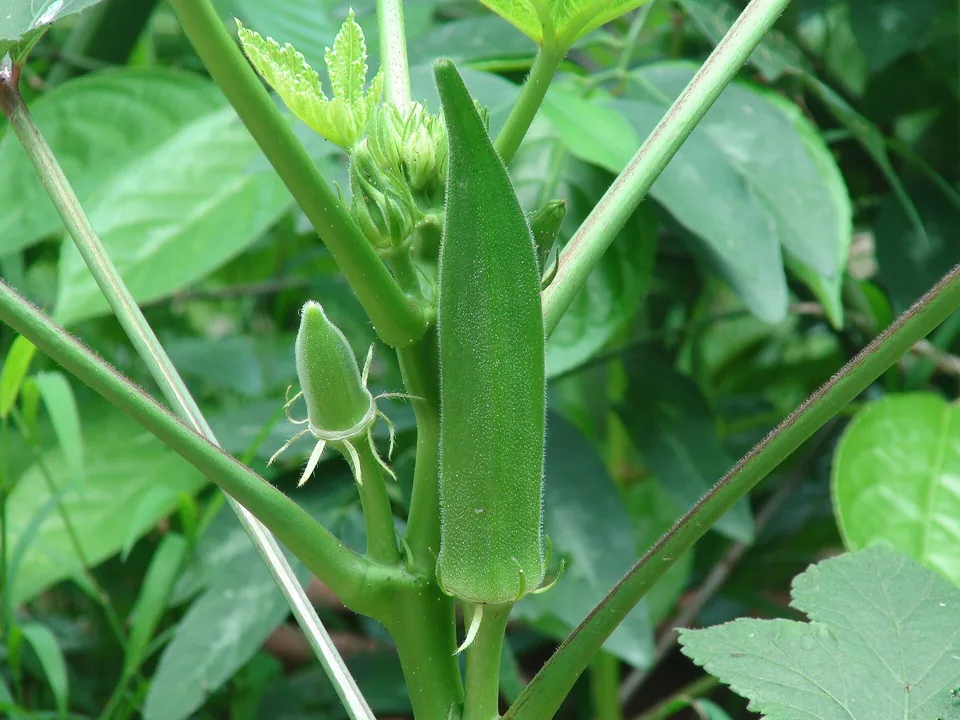


How to Grow and Care for Okra
Abelmoschus esculentus
Written by Emilio Marruso · last checked
Toxic to: People · Why
At a glance
Okra is a sun-loving annual whose tender young pods can be cooked, pickled or even eaten raw, and its pretty flowers are edible too. Give it full sun and a deep drink every 7 to 10 days, then pick the pods at 2 to 5 inches long every one or two days. Wear gloves: the pod hairs can irritate, but they wash off easily.
- Sun
Full sun: 6 or more hours a day
What the sources say (1)
Light: Full sun (6 or more hours of direct sunlight a day)
Full sun (6 or more hours of direct sunlight a day)
— Abelmoschus esculentus (Common Ivy, Gobbo, Gumbo, Ivy Gum Plant, Ladies' Fingers, Ochro, Okra, Okro) | North Carolina Extension Gardener Plant Toolbox [1] - Water
1.5–2 inches of water every 7–10 days; water in the morning so leaves dry before dark
What the sources say (6)
Watering: Tolerates relatively dry conditions, but adequate water increases growth and yield; for maximum yields apply 1.5 to 2 inches [3.8–5.1 cm] of water every 7 to 10 days; water to moisten the soil to a depth of 6 inches [15 cm]
Okra tolerates relatively dry conditions, but adequate water will increase growth and yield.
— Okra in the Garden | USU [3] For maximum yields apply 1.5 to 2 inches of water every 7 to 10 days.
— Okra in the Garden | USU [3] Water the garden sufficiently to moisten the soil to a depth of 6 inches.
— How to Grow Okra in South Carolina | Home & Garden Information Center [2] Watering notes: Water in the morning so the foliage dries before dark; drip irrigation is an alternative to a hose or sprinkler; the critical period for soil moisture is during pod set and pod development; okra does not tolerate wet soil conditions
Water in the morning, allowing the foliage to dry before dark.
— How to Grow Okra in South Carolina | Home & Garden Information Center [2] The critical period for soil moisture is during pod set and pod development.
— How to Grow Okra in South Carolina | Home & Garden Information Center [2] Almost all soils are suitable for okra production, provided they are well-drained. Okra does not tolerate wet soil conditions.
— Okra in the Garden | USU [3] - Cold
Plant out in spring only after the chance of frost has passed
What the sources say (2)
Planting: Transplants in spring after the chance of frost has passed; in short-season areas, start seeds indoors 4 to 5 weeks before transplanting outdoors
Sow seeds or plant transplants in spring after the chance of frost has passed.
— Abelmoschus esculentus (Common Ivy, Gobbo, Gumbo, Ivy Gum Plant, Ladies' Fingers, Ochro, Okra, Okro) | North Carolina Extension Gardener Plant Toolbox [1] In areas with a short growing season, start seeds indoors 4 to 5 weeks before they are to be transplanted outdoors.
— Okra in the Garden | USU [3] - Spacing
3–6 feet between rows
What the sources say (2)
Row spacing: 91-183 cm (3 to 6 feet)
Okra should be planted in rows 3 to 6 feet apart with 9 to 12 inches between seeds in the row at a depth of ¾ inch.
— How to Grow Okra in South Carolina | Home & Garden Information Center [2] Plant seeds 1 inch deep and 2 inches apart, thin to 1 to 2 feet apart depending on plant size after plants develop their first true leaves. Space rows 3 feet apart.
— Okra in the Garden | USU [3] - Sowing
In short-season areas, start seeds indoors 4–5 weeks before transplanting
What the sources say (2)
Planting: Transplants in spring after the chance of frost has passed; in short-season areas, start seeds indoors 4 to 5 weeks before transplanting outdoors
Sow seeds or plant transplants in spring after the chance of frost has passed.
— Abelmoschus esculentus (Common Ivy, Gobbo, Gumbo, Ivy Gum Plant, Ladies' Fingers, Ochro, Okra, Okro) | North Carolina Extension Gardener Plant Toolbox [1] In areas with a short growing season, start seeds indoors 4 to 5 weeks before they are to be transplanted outdoors.
— Okra in the Garden | USU [3] - Feeding
Fertilize before planting, then side-dress with nitrogen; too much early nitrogen gives leaves, not pods
What the sources say (7)
When: Before planting, worked into the soil; then nitrogen side-dressings while the plants are producing
side-dressing (South Carolina): Sidedressing should occur at 3 to 4 weeks and again at 6 to 8 weeks after planting.
— How to Grow Okra in South Carolina | Home & Garden Information Center [2] side-dressing (Utah): Side dress okra with ¼ pound of 21-0-0 fertilizer per 100 sq ft when pods begin to size and repeat 4 weeks later.
— Okra in the Garden | USU [3] late season: It is important to supply additional nitrogen late in the season when the blooms are concentrated at the top of the plant.
— How to Grow Okra in South Carolina | Home & Garden Information Center [2] Fertilizer or compost should be incorporated 3 to 6 inches into the soil before planting.
— Okra in the Garden | USU [3] Sidedressing should occur at 3 to 4 weeks and again at 6 to 8 weeks after planting.
— How to Grow Okra in South Carolina | Home & Garden Information Center [2] Avoid: Excess nitrogen early in the season and while plants are small: it gives leaves instead of pods
Excess nitrogen when plants are small will cause increased vegetative (leaf) growth and decreases yield and pod set.
— Okra in the Garden | USU [3] The use of additional nitrogen should be avoided on vigorous plantings until fruiting begins to manage plant growth and ensure pod production.
— How to Grow Okra in South Carolina | Home & Garden Information Center [2] - Pruning
Mid-July to mid-August, when pods slow down, cut back to 6–12 inches above the soil
What the sources say (2)
Pruning: Mid-July to mid-August, when okra production slows or flower production ceases (ratooning: mow or prune to 6 to 12 inches [15–30 cm] above the soil line)
If okra production slows or flower production ceases, gardeners can ratoon okra (mid-July to mid-August).
— How to Grow Okra in South Carolina | Home & Garden Information Center [2] Mow or prune to 6 to 12 inches above the soil line.
— How to Grow Okra in South Carolina | Home & Garden Information Center [2] - Harvest
Pick pods 2–5 inches long every 1–2 days; store unwashed in the fridge
What the sources say (9)
How to harvest: Pick pods while immature and tender, 5-7.6 cm (2 to 3 inches) to 7.6-12.7 cm (3 to 5 inches) long; cut the stem leaving a 0.6 cm (1/4 inch) stalk on the pod, or pull the pod downward to break the stem near its base; harvest every one to two days and do not let pods mature on the plant; wear gloves because the hairs on the pods can irritate.
Pods are harvested when they are 3 to 5 inches long, immature and tender.
— Okra in the Garden | USU [3] Harvest about 60 to 70 days after planting, when pods are 2 to 3 inches long.
— How to Grow Okra in South Carolina | Home & Garden Information Center [2] Harvest pods by cutting the stem leaving a ¼ inch stalk on the pod or by pulling the pod downward, thus breaking the stem near its base.
— Okra in the Garden | USU [3] Okra grows very quickly; therefore, it must be harvested at least every two days.
— How to Grow Okra in South Carolina | Home & Garden Information Center [2] The hairs on the seed pods can be an irritant, gloves should be used when handling.
— Abelmoschus esculentus (Common Ivy, Gobbo, Gumbo, Ivy Gum Plant, Ladies' Fingers, Ochro, Okra, Okro) | North Carolina Extension Gardener Plant Toolbox [1] Storage: Do not wash the pods before storing; keep them in a plastic bag in the refrigerator in a moist environment at 7-10 °C (45 to 50 °F), where good-quality pods last up to about seven days.
Do not wash okra before storing it in the refrigerator, as this can speed up decay.
— How to Grow Okra in South Carolina | Home & Garden Information Center [2] If properly harvested, handled, and stored, good-quality pods can last up to seven days in the refrigerator.
— How to Grow Okra in South Carolina | Home & Garden Information Center [2] Okra should be stored in a plastic bag and can be refrigerated for about seven days.
— Okra in the Garden | USU [3] The optimum conditions for storing fresh okra are a moist environment and temperatures of 45 °F to 50 °F.
— How to Grow Okra in South Carolina | Home & Garden Information Center [2] - Pests
Aphids, corn earworms, slugs, whiteflies; root rot in wet, poorly drained soil
What the sources say (5)
Pests: aphids, corn earworms, slugs, whiteflies, spider mites, stink bugs, leaf-footed bugs, root-knot nematodes
Insects include aphids, corn earworms, slugs, whiteflies, and spider mites.
— Abelmoschus esculentus (Common Ivy, Gobbo, Gumbo, Ivy Gum Plant, Ladies' Fingers, Ochro, Okra, Okro) | North Carolina Extension Gardener Plant Toolbox [1] Stink bugs and leaf-footed bugs will cause the pods to be twisted and distorted.
— How to Grow Okra in South Carolina | Home & Garden Information Center [2] Root-knot nematodes can be a serious problem with okra.
— How to Grow Okra in South Carolina | Home & Garden Information Center [2] Diseases: root rot, root-decay diseases of seedlings, powdery mildew
Poorly drained soil can lead to root rot. Powdery mildew can be an issue.
— Abelmoschus esculentus (Common Ivy, Gobbo, Gumbo, Ivy Gum Plant, Ladies' Fingers, Ochro, Okra, Okro) | North Carolina Extension Gardener Plant Toolbox [1] Root-decay diseases, causing young seedling death, are the most serious okra disease problems.
— How to Grow Okra in South Carolina | Home & Garden Information Center [2] - Size
3–5 feet tall
What the sources say (1)
Mature height: 91-152 cm (3 to 5 feet)
Dimensions: Height: 3 ft. 0 in. - 5 ft. 0 in. Width: 3 ft. 0 in. - 5 ft. 0 in.
— Abelmoschus esculentus (Common Ivy, Gobbo, Gumbo, Ivy Gum Plant, Ladies' Fingers, Ochro, Okra, Okro) | North Carolina Extension Gardener Plant Toolbox [1] - Safety
The hairs on the pods can irritate skin; wear gloves
Overview
Okra is a warm-season annual vegetable grown in full sun for its immature seed pods. [1][2] It is sown or transplanted in spring after the chance of frost has passed, and it tolerates relatively dry conditions although adequate water increases growth and yield. [1][3] The hairs on the seed pods can be an irritant, so gloves should be used when handling them. [1]
Okra care
Measurements in square brackets are our conversion into the other unit system; the quoted text is unchanged.
How to water Okra
Watering
Tolerates relatively dry conditions, but adequate water increases growth and yield; for maximum yields apply 1.5 to 2 inches [3.8–5.1 cm] of water every 7 to 10 days; water to moisten the soil to a depth of 6 inches [15 cm]
What the sources say (3)
Okra tolerates relatively dry conditions, but adequate water will increase growth and yield.For maximum yields apply 1.5 to 2 inches of water every 7 to 10 days.Water the garden sufficiently to moisten the soil to a depth of 6 inches.Watering notes
Water in the morning so the foliage dries before dark; drip irrigation is an alternative to a hose or sprinkler; the critical period for soil moisture is during pod set and pod development; okra does not tolerate wet soil conditions
What the sources say (3)
Water in the morning, allowing the foliage to dry before dark.The critical period for soil moisture is during pod set and pod development.Almost all soils are suitable for okra production, provided they are well-drained. Okra does not tolerate wet soil conditions.How much light Okra needs
Full sun (6 or more hours of direct sunlight a day)
What the sources say (1)
Full sun (6 or more hours of direct sunlight a day)Best soil for Okra
Soil pH, minimum
The sources give different values depending on region, zone or growing conditions.
What each source says
According to Clemson Cooperative Extension HGIC: 5.8
According to Utah State University Extension: 6.0
What the sources say (2)
According to Clemson Cooperative Extension HGIC: Follow the results of a soil test to maintain a soil pH between 5.8 and 6.5 and optimal fertility levels.According to Utah State University Extension: Fertile, sandy loam soils with a pH of 6.0 to 7.0 are ideal for growing okra.Soil pH, maximum
The sources give different values depending on region, zone or growing conditions.
What each source says
According to Clemson Cooperative Extension HGIC: 6.5
According to Utah State University Extension: 7.0
What the sources say (2)
According to Clemson Cooperative Extension HGIC: Follow the results of a soil test to maintain a soil pH between 5.8 and 6.5 and optimal fertility levels.According to Utah State University Extension: Fertile, sandy loam soils with a pH of 6.0 to 7.0 are ideal for growing okra.Where to grow Okra
In containers
Yes
What the sources say (1)
#warm season vegetable #edible flowers #edible fruits #yellow flowers #contact dermatitis #container plantSpacing
The sources give different values depending on region, zone or growing conditions.
What each source says
According to Clemson Cooperative Extension HGIC: 22.9-30.5 cm (9-12 in) between plants; rows 91.4-182.9 cm (3 to 6 ft) apart
According to Utah State University Extension: 30.5-61.0 cm (1-2 ft) apart after thinning; rows 91.4 cm (3 ft) apart
What the sources say (2)
According to Clemson Cooperative Extension HGIC: Okra should be planted in rows 3 to 6 feet apart with 9 to 12 inches between seeds in the row at a depth of ¾ inch.According to Utah State University Extension: Plant seeds 1 inch deep and 2 inches apart, thin to 1 to 2 feet apart depending on plant size after plants develop their first true leaves.How to propagate Okra
Seed (direct sown, or started indoors and transplanted)
What the sources say (2)
Sow seeds or plant transplants in spring after the chance of frost has passed.To enhance germination soak seeds overnight before sowing.How to grow Okra
The plant
Life cycle
annual
What the sources say (1)
Life Cycle: Annual Recommended Propagation Strategy: Seed Country Or Region Of Origin: Tropical Africa and AsiaFamily
Malvaceae
What the sources say (1)
Okra is a warm-season vegetable in the mallow family (Malvaceae). It is native to tropical areas of Africa and AsiaMature height
91-152 cm (3 to 5 feet)
What the sources say (1)
Dimensions: Height: 3 ft. 0 in. - 5 ft. 0 in. Width: 3 ft. 0 in. - 5 ft. 0 in.Sowing and growth
Sowing depth
Row spacing
91-183 cm (3 to 6 feet)
What the sources say (2)
Okra should be planted in rows 3 to 6 feet apart with 9 to 12 inches between seeds in the row at a depth of ¾ inch.Plant seeds 1 inch deep and 2 inches apart, thin to 1 to 2 feet apart depending on plant size after plants develop their first true leaves. Space rows 3 feet apart.Days to maturity
The sources disagree:
Harvest and storage
How to harvest
Pick pods while immature and tender, 5-7.6 cm (2 to 3 inches) to 7.6-12.7 cm (3 to 5 inches) long; cut the stem leaving a 0.6 cm (1/4 inch) stalk on the pod, or pull the pod downward to break the stem near its base; harvest every one to two days and do not let pods mature on the plant; wear gloves because the hairs on the pods can irritate.
What the sources say (5)
Pods are harvested when they are 3 to 5 inches long, immature and tender.Harvest about 60 to 70 days after planting, when pods are 2 to 3 inches long.Harvest pods by cutting the stem leaving a ¼ inch stalk on the pod or by pulling the pod downward, thus breaking the stem near its base.Okra grows very quickly; therefore, it must be harvested at least every two days.The hairs on the seed pods can be an irritant, gloves should be used when handling.Storage
Do not wash the pods before storing; keep them in a plastic bag in the refrigerator in a moist environment at 7-10 °C (45 to 50 °F), where good-quality pods last up to about seven days.
What the sources say (4)
Do not wash okra before storing it in the refrigerator, as this can speed up decay.If properly harvested, handled, and stored, good-quality pods can last up to seven days in the refrigerator.Okra should be stored in a plastic bag and can be refrigerated for about seven days.The optimum conditions for storing fresh okra are a moist environment and temperatures of 45 °F to 50 °F.Saving seeds
Leave pods on the plant to dry and save the seed for next year.
What the sources say (1)
Leave okra pods on the plant to dry after harvest to save seed for next year.Pests and diseases
Pests
aphids, corn earworms, slugs, whiteflies, spider mites, stink bugs, leaf-footed bugs, root-knot nematodes
What the sources say (3)
Insects include aphids, corn earworms, slugs, whiteflies, and spider mites.Stink bugs and leaf-footed bugs will cause the pods to be twisted and distorted.Root-knot nematodes can be a serious problem with okra.Diseases
root rot, root-decay diseases of seedlings, powdery mildew
What the sources say (2)
Poorly drained soil can lead to root rot. Powdery mildew can be an issue.Root-decay diseases, causing young seedling death, are the most serious okra disease problems.Fertilizing
When
Before planting, worked into the soil; then nitrogen side-dressings while the plants are producing
What each source says
side-dressing (South Carolina): 3 to 4 weeks and again 6 to 8 weeks after planting
side-dressing (Utah): When pods begin to size, repeated 4 weeks later
late season: Extra nitrogen when the blooms are concentrated at the top of the plant
What the sources say (5)
side-dressing (South Carolina): Sidedressing should occur at 3 to 4 weeks and again at 6 to 8 weeks after planting.side-dressing (Utah): Side dress okra with ¼ pound of 21-0-0 fertilizer per 100 sq ft when pods begin to size and repeat 4 weeks later.late season: It is important to supply additional nitrogen late in the season when the blooms are concentrated at the top of the plant.Fertilizer or compost should be incorporated 3 to 6 inches into the soil before planting.Sidedressing should occur at 3 to 4 weeks and again at 6 to 8 weeks after planting.How often
Two nitrogen side-dressings during the season, with more if production lasts long
What the sources say (3)
Sidedressing should occur at 3 to 4 weeks and again at 6 to 8 weeks after planting.Additional applications of calcium nitrate may be needed later, depending on rainfall and the duration of okra production.Side dress okra with ¼ pound of 21-0-0 fertilizer per 100 sq ft when pods begin to size and repeat 4 weeks later.Natural fertilizers
Manure-based compost, a layer 1.27–2.54 cm [0.5–1 in] deep, worked 7.62–15.2 cm [3–6 in] into the soil before planting
What the sources say (2)
For most gardens, 2 to 3 pounds of 10-10-10 fertilizer per 100 sq ft or 0.5 to 1 inch of manure-based compost provides sufficient nutrients.Fertilizer or compost should be incorporated 3 to 6 inches into the soil before planting.Mineral fertilizers
10-10-10 worked in before planting, then nitrogen side-dressings such as calcium nitrate (15.5-0-0) or 21-0-0
What each source says
before planting: 97.6–146 g/m² of 10-10-10
side-dressing (South Carolina): 14.6–29.3 g/m² of calcium nitrate (15.5-0-0)
side-dressing (Utah): 12.2 g/m² of 21-0-0
after ratooning: A 1:2 nitrogen to potassium fertilizer (4-0-8, 5-0-10 or 10-0-20), 907 g–1.36 kg [3 lb] per 30.5 m [100 ft] of row
What the sources say (7)
before planting: For most gardens, 2 to 3 pounds of 10-10-10 fertilizer per 100 sq ft or 0.5 to 1 inch of manure-based compost provides sufficient nutrients.side-dressing (South Carolina): Apply 3 to 6 pounds of calcium nitrate (15.5-0-0) per 1,000 square feet.side-dressing (Utah): Side dress okra with ¼ pound of 21-0-0 fertilizer per 100 sq ft when pods begin to size and repeat 4 weeks later.after ratooning: Fertilize with a 1:2 nitrogen to potassium ratio fertilizer (4-0-8, 5-0-10, or 10-0-20). - Apply 2 to 3 pounds per 100 feet of row.For most gardens, 2 to 3 pounds of 10-10-10 fertilizer per 100 sq ft or 0.5 to 1 inch of manure-based compost provides sufficient nutrients.Apply 3 to 6 pounds of calcium nitrate (15.5-0-0) per 1,000 square feet.Side dress okra with ¼ pound of 21-0-0 fertilizer per 100 sq ft when pods begin to size and repeat 4 weeks later.Avoid
Excess nitrogen early in the season and while plants are small: it gives leaves instead of pods
What the sources say (2)
Excess nitrogen when plants are small will cause increased vegetative (leaf) growth and decreases yield and pod set.The use of additional nitrogen should be avoided on vigorous plantings until fruiting begins to manage plant growth and ensure pod production.Signs of excess
Lush leafy growth with fewer pods and lower yield
What the sources say (1)
Excess nitrogen when plants are small will cause increased vegetative (leaf) growth and decreases yield and pod set.Okra pests and problems
Root rots and damping off
What to do: Avoid planting in cold, wet, poorly drained soils; start transplants in quality potting soil in a bright, warm area
What the sources say (1)
Plants are stunted, have yellow leaves, and brown, rotting roots. Plants die after emergence.
— Okra in the Garden | USU [3] Aphids
What to do: Use insecticidal soaps or a strong water stream to dislodge aphids
What the sources say (1)
Use insecticidal soaps or a strong water stream to dislodge aphids from the plants.
— Okra in the Garden | USU [3] Root-knot nematodes
What to do: Practice crop rotations and remove and destroy damaged plants
What the sources say (1)
Infected plants have stunted growth and have galls on their roots.
— Okra in the Garden | USU [3] Powdery mildew and other insects
What to do: Poorly drained soil can lead to root rot, so plant in well-drained soil
What the sources say (1)
Poorly drained soil can lead to root rot. Powdery mildew can be an issue. Insects include aphids, corn earworms, slugs, whiteflies, and spider mites.
— Abelmoschus esculentus (Common Ivy, Gobbo, Gumbo, Ivy Gum Plant, Ladies' Fingers, Ochro, Okra, Okro) | North Carolina Extension Gardener Plant Toolbox [1]
Remedies
Each remedy shows what official sources say about it; traditional remedies without an official source are marked as such. Harmful ones are listed so you know to avoid them.
First aid
First aid: not a substitute for a doctor
irritant pod hairs
washing off the hairs Official source, not independently tested
How: The hairs easily wash off; use gloves when handling.
The hairs on the seed pods can be an irritant, gloves should be used when handling. The hairs easily wash off.
— Abelmoschus esculentus (Common Ivy, Gobbo, Gumbo, Ivy Gum Plant, Ladies' Fingers, Ochro, Okra, Okro) | North Carolina Extension Gardener Plant Toolbox [1]
Treating the plant
aphids
strong water spray Not verified
Traditional remedy, not verified by an official source.
How: Knock aphids off with a strong, steady stream of water.
insecticidal soap spray Works
How: Apply insecticidal soap.
knock off with water spray; apply insecticidal soap; put banana or orange peels around plants
— almanac.com [4] What the evidence says For example, insecticidal soap is a safe, effective organic insecticide with minimal environmental impact.
— extension.psu.edu [5] banana or orange peels Not verified
Traditional remedy, not verified by an official source.
How: Put banana or orange peels around the plants.
dish soap solution wipe Harmful
Home remedies often lack specific mix or use rates or identify how often to use them. Not using enough may not control the pest, while using too much may be harmful to the environment.
— extension.psu.edu [6] How: Wipe leaves with a 1 to 2 percent solution of dish soap (no additives) and water every 2 to 3 days for 2 weeks.
wipe leaves with a 1 to 2 percent solution of dish soap (no additives) and water every 2 to 3 days for 2 weeks
— almanac.com [4] What the evidence says For example, spraying home remedies that contain dish detergent on plants on a sunny day can injure the plant, essentially burning it.
— extension.psu.edu [6] diatomaceous earth Not verified
Traditional remedy, not verified by an official source.
How: Sprinkle diatomaceous earth around the plants.
nasturtium trap crop Not verified
Traditional remedy, not verified by an official source.
How: Plant early cabbage and nasturtiums near the garden to attract aphids.
flea beetles
strong water spray Not verified
Traditional remedy, not verified by an official source.
How: Knock flea beetles off with a strong, steady stream of water.
diatomaceous earth Not verified
Traditional remedy, not verified by an official source.
How: Sprinkle diatomaceous earth around the plants.
bok choy and radish trap crops Not verified
Traditional remedy, not verified by an official source.
How: Plant bok choy and radishes as trap crops near the garden.
insect pests
neem oil spray Works
How: Neem oil is a readily available alternative to insecticidal soap.
Insecticidal soap is a natural insecticide that will kill many of the pests on your okra. You can buy insecticidal soaps and horticultural oils at garden centers. Neem oil is another choice that is readily available.
— weekand.com [7] What the evidence says Neem oil is found in the seeds of the neem tree. The active component found in this biological pesticide reduces insect feeding, interferes with hormones
— extension.illinois.edu [8] homemade castile soap spray Not verified
Traditional remedy, not verified by an official source.
Home remedies often lack specific mix or use rates or identify how often to use them. Not using enough may not control the pest, while using too much may be harmful to the environment.
— extension.psu.edu [6] How: Mix 2 tablespoons of dye- and fragrance-free vegetable-based liquid soap, such as castile soap, with 1 gallon of water and spray the okra.
stink bugs
handpicking Not verified
Traditional remedy, not verified by an official source.
How: Handpick bugs (they emit odor, wear gloves).
insecticidal soap spray Works
How: Destroy eggs and spray nymphs with insecticidal soap.
handpick (bugs emit odor, wear gloves); destroy eggs, spray nymphs with insecticidal soap; use row covers
— almanac.com [4] What the evidence says For example, insecticidal soap is a safe, effective organic insecticide with minimal environmental impact.
— extension.psu.edu [5]
whiteflies
handheld vacuum Not verified
Traditional remedy, not verified by an official source.
How: Use a handheld vacuum to remove the pests.
water spray on leaf undersides Not verified
Traditional remedy, not verified by an official source.
How: Spray water on leaf undersides in morning or evening to knock off pests.
insecticidal soap spray Works
How: Spray with insecticidal soap.
monitor adults with yellow sticky traps; spray with insecticidal soap; invite beneficial insects and hummingbirds with native plants
— almanac.com [4] What the evidence says For example, insecticidal soap is a safe, effective organic insecticide with minimal environmental impact.
— extension.psu.edu [5]
powdery mildew
baking soda spray Not verified
Traditional remedy, not verified by an official source.
How: Spray plants with 1 teaspoon baking soda dissolved in 1 quart water.
Is Okra poisonous?
Reported by the source, quoted verbatim. This is not medical or veterinary advice: if a person or an animal may have eaten this plant, contact a poison control centre or a veterinarian.
Calendar
Sowing
The sources give different values depending on region, zone or growing conditions.
What each source says
According to NC State Extension: Temperatures remain above 55 degrees F [13 °C]; sow in spring after the chance of frost has passed
According to Clemson Cooperative Extension HGIC: Optimum soil temperature 70-95 F; hold off planting if below 65 F at 4-inch [10 cm] depth
According to Utah State University Extension: 2 to 3 weeks after the last frost date or when soil temperatures are at least 75 F
What the sources say (6)
According to NC State Extension: Sow seeds or plant transplants in spring after the chance of frost has passed. If grown from seed, ensure the temperatures remain above 55 degrees F or start indoors.According to Clemson Cooperative Extension HGIC: If soil temperatures are less than 65 °F, at a soil depth of 4 inches, gardeners should hold off on planting until soil temperatures are warmer.According to Utah State University Extension: Plant seeds 2 to 3 weeks after the last frost date or when soil temperatures are at least 75˚F.Sow seeds or plant transplants in spring after the chance of frost has passed.If grown from seed, ensure the temperatures remain above 55 degrees F or start indoors.Plant seeds 2 to 3 weeks after the last frost date or when soil temperatures are at least 75˚F.Planting
Transplants in spring after the chance of frost has passed; in short-season areas, start seeds indoors 4 to 5 weeks before transplanting outdoors
What the sources say (2)
Sow seeds or plant transplants in spring after the chance of frost has passed.In areas with a short growing season, start seeds indoors 4 to 5 weeks before they are to be transplanted outdoors.Harvest
The sources give different values depending on region, zone or growing conditions.
What each source says
According to Clemson Cooperative Extension HGIC: 60 to 70 days after planting, pods 2 to 3 inches [5.1–7.6 cm] long
According to Utah State University Extension: 90 days after planting seeds, pods 3 to 5 inches [8–13 cm] long
According to NC State Extension: approximately 4 months after sowing, pods 3 inches [7.6 cm] long
What the sources say (3)
According to Clemson Cooperative Extension HGIC: Harvest about 60 to 70 days after planting, when pods are 2 to 3 inches long.According to Utah State University Extension: Okra is a warm season vegetable that requires 90 days to mature harvestable pods once seeds are planted.According to NC State Extension: The pods can be harvested when they reach a length of 3 inches, approximately 4 months after sowing.Pruning
Mid-July to mid-August, when okra production slows or flower production ceases (ratooning: mow or prune to 6 to 12 inches [15–30 cm] above the soil line)
What the sources say (2)
If okra production slows or flower production ceases, gardeners can ratoon okra (mid-July to mid-August).Mow or prune to 6 to 12 inches above the soil line.Months as given by the sources, which are mostly from the United States (northern hemisphere). In the southern hemisphere they shift by about six months.
Relative to frost
Less precise estimate: there is no weather station within 300 km.
Find frost dates by ZIP code or city
Sow outdoors: around the last frost
Sow seeds or plant transplants in spring after the chance of frost has passed.
— Abelmoschus esculentus (Common Ivy, Gobbo, Gumbo, Ivy Gum Plant, Ladies' Fingers, Ochro, Okra, Okro) | North Carolina Extension Gardener Plant Toolbox [1] Transplant: around the last frost
Sow seeds or plant transplants in spring after the chance of frost has passed.
— Abelmoschus esculentus (Common Ivy, Gobbo, Gumbo, Ivy Gum Plant, Ladies' Fingers, Ochro, Okra, Okro) | North Carolina Extension Gardener Plant Toolbox [1] Sow outdoors: 2 to 3 weeks after the last frost
Plant seeds 2 to 3 weeks after the last frost date
— Okra in the Garden | USU [3]
Count from the average frost dates where you live.
Edibility
Reported by the source, quoted verbatim. Do not eat a plant on the basis of this page alone: identification mistakes can be dangerous.
Indicative values
Values from a secondary source, not checked word for word like the rest of this page. Use them as a starting point.
- Hours of sun
- 6-8 hoursIndicative value, adapt it to your climate · Secondary source
- USDA hardiness zones
- 2-11 [winter low −45.6 to 10 °C (−50 to 50 °F)]Indicative value, adapt it to your climate · Secondary source
- Growth rate
- HighIndicative value, adapt it to your climate · Secondary source
Similar plants
- Sunset Huskmallow Abelmoschus manihot
- Musk okra Abelmoschus moschatus
- African Baobab Adansonia digitata
- Bastardcedar Guazuma ulmifolia
- Bigleaf Linden Tilia platyphyllos
- Brazilian Bellflower Callianthe megapotamica
- Cape Mallow Anisodontea capensis
- Chinese Hibiscus Hibiscus × rosa-sinensis
Sources
Every value above is quoted from these documents. Links lead to the original publisher.
- Abelmoschus esculentus (Common Ivy, Gobbo, Gumbo, Ivy Gum Plant, Ladies' Fingers, Ochro, Okra, Okro) | North Carolina Extension Gardener Plant Toolbox · plants.ces.ncsu.edu, consulted
- How to Grow Okra in South Carolina | Home & Garden Information Center · hgic.clemson.edu, consulted
- Okra in the Garden | USU · extension.usu.edu, consulted
- almanac.com · almanac.com
- extension.psu.edu · extension.psu.edu
- extension.psu.edu · extension.psu.edu
- weekand.com · weekand.com
- extension.illinois.edu · extension.illinois.edu
Written by Emilio Marruso · last checked