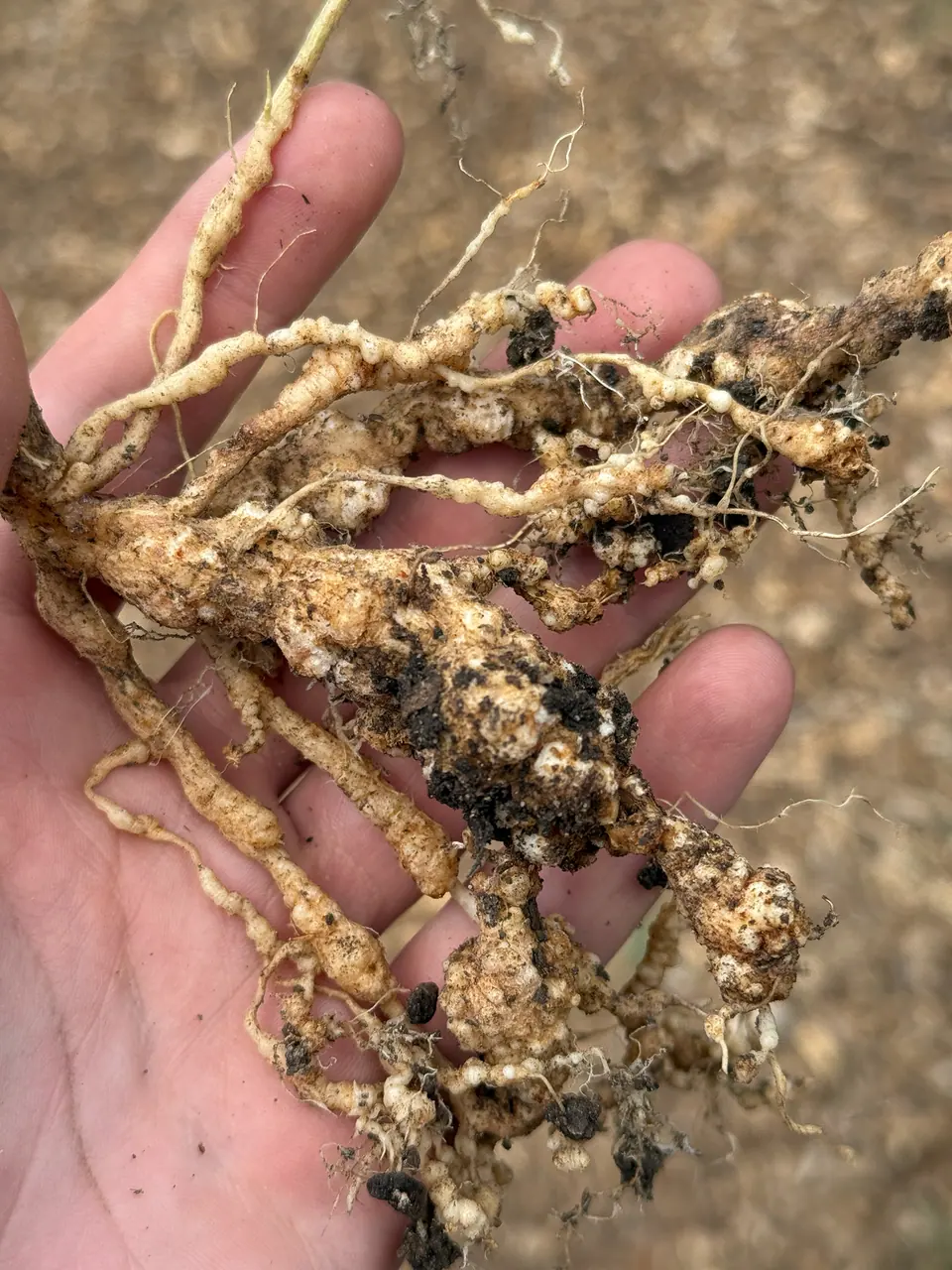
Nematode
Root-knot nematodes
Meloidogyne
Written by Emilio Marruso
Classification: Nematoda › Chromadorea › Rhabditida › Meloidogynidae
Plants it attacks
Plants in our guide where this problem is reported. Open a plant to see the sources.
- Kiwi
Symptom: Occasional root-knot nematodes, thrips, passion vine hopper, crown gall and root rot may affect the plant.
- Fig
Symptom: Characteristic galling or swelling of the roots
- Goldenseal
Symptom: Severely reduced growth and root yield
- Sweet Potato
Symptom: Soil pests that can affect home garden crops.
- Blazing Star
Symptom: Root-knot nematodes are an occasional problem in southern gardens; stems often lean with age
- Crimson Clover
Symptom: Susceptible to some root-knot nematodes; no symptoms described.
Also reported on: Black cardamom, Breath of Spring Spiraea, Cardamom, Cockscomb, Cowpea, Faba Bean, Fennel, Ginkgo, Hardy Cyclamen, Himalayan Indigo, Okra, Pittosporum, St. Andrew's Cross
Remedies
What our plant sheets report, with the outcome checked against official sources. Traditional remedies without an official source are flagged.
Treat
crop rotation Works
How: Crop rotation is the best method of controlling root-knot nematodes in indigo.
Reported for 1 plant: Himalayan Indigo
selecting nematode-free transplants Works
How: Select transplants free of root knots; wash and inspect plant roots for signs of nematode injury and select planting sites free of nematode infestations.
Reported for 1 plant: Himalayan Indigo
soil solarization Partly works
How: Solarize the nursery beds before transplanting and use nematode-free planting material.
Reported for 1 plant: Cardamom
soil solarization Official source, not independently tested
How: Solarizing soil can reduce nematode populations in the soil and levels of inoculum of many other pathogens.
destroying infected plants Official source, not independently tested
How: If swellings are visible on the roots, destroy the infected plants.
Reported for 1 plant: Cockscomb
solarizing the soil Official source, not independently tested
How: Check roots of plants mid-season or sooner if symptoms indicate nematodes; solarizing soil can reduce nematode populations in the soil and levels of inoculum of many other pathogens
Reported for 1 plant: Black cardamom
soil solarization Not verified
How: If nematodes are known to be present in the soil, solarize the soil to reduce the population as well as pathogens which may cause fennel disease.
Reported for 2 plants: Fennel, Pittosporum
adding compost or peat to the soil Not verified
How: Add compost or peat to the soil to help the trees process nutrients; badly infected trees must be removed and destroyed.
Reported for 1 plant: Ginkgo
compost and leaf mold Not verified
How: Add lots of compost, especially leaf mold, to the soil to encourage fungi that attack nematodes.
Reported for 1 plant: St. Andrew's Cross
destroy infected plants Not verified
How: destroy infected plants and do not replant in the same part of the garden
Reported for 1 plant: Hardy Cyclamen
dilute fish emulsion drench Not verified
How: Drench the soil near affected shrubs with dilute fish emulsion.
Reported for 1 plant: St. Andrew's Cross
diluted liquid fish emulsion Not verified
How: Pour diluted liquid fish emulsion around affected roots; it is toxic to nematodes.
Reported for 1 plant: Breath of Spring Spiraea
4 more remedies are reported in single plant sheets.
Where it is found
Regulated as a quarantine pest in: Argentina, Bahrain, China, Jordan, Türkiye.