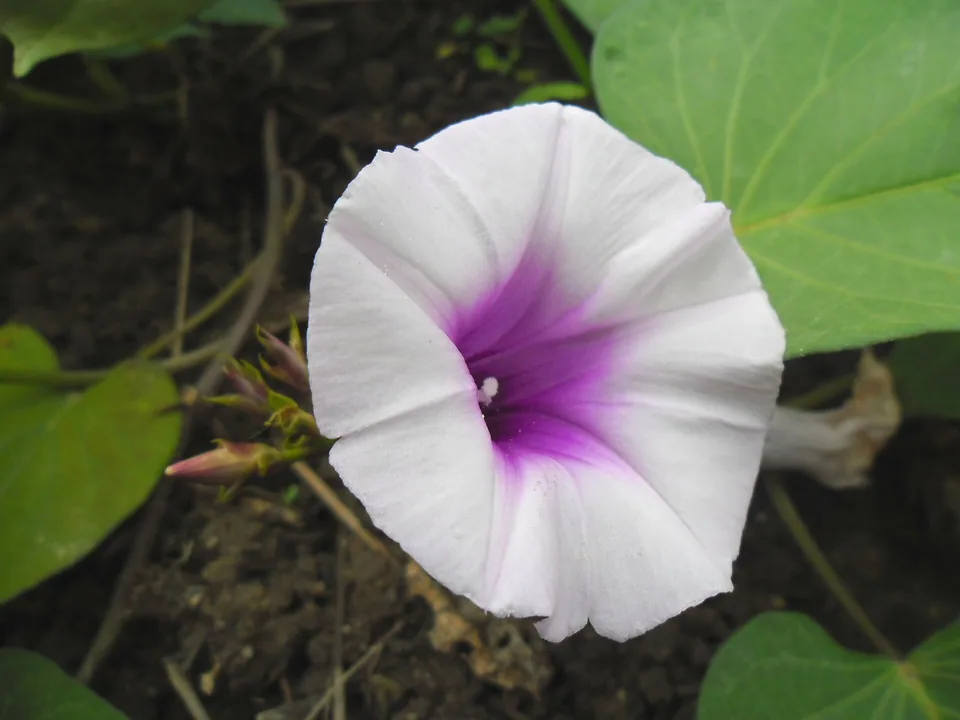


How to Grow and Care for Sweet Potato
Ipomoea batatas
Written by Emilio Marruso · last checked
Toxic to: People · Why
At a glance
Sweet potatoes are a generous crop: the roots, leaves and stems are all edible, and the fresh leaves are lovely in a green salad. Plant slips in full sun once the soil is above 65 °F (18 °C), water evenly while they settle in, and dig up your harvest 85–120 days later, before the first frost.
- Sun
Full sun to partial shade
What the sources say (4)
Light: Full sun to partial shade
According to NC State Extension: Plant in full sun or partial shade in loamy, well-draining soil that is high in organic matter.
— Ipomoea batatas (Edible Sweetpotato, Ornamental Sweetpotato, Sweetpotato, Sweet Potato Vine, Sweetpotato Vine) | North Carolina Extension Gardener Plant Toolbox [1] edible sweet potato (University of Illinois Extension): Sweet potatoes require full sun, well-drained loose fertile soil, and adequate soil moisture.
— Sweet potato (Ipomoea batatas)-Hort Answers - University of Illinois Extension [2] ornamental sweetpotato vine (Clemson Extension): Sunlight: full sun to part shade
— How To Grow and Care for Ornamental Sweetpotato Vine (Ipomoea batatas) | Home & Garden Information Center [5] Plant in full sun or partial shade in loamy, well-draining soil that is high in organic matter.
— Ipomoea batatas (Edible Sweetpotato, Ornamental Sweetpotato, Sweetpotato, Sweet Potato Vine, Sweetpotato Vine) | North Carolina Extension Gardener Plant Toolbox [1] - Water
1 inch of water a week, evenly; stop watering 3–4 weeks before harvest
What the sources say (5)
Watering: Uniform watering, at least 1 inch [2.5 cm] of rainfall or irrigation per week; established plants tolerate relatively dry weather
Sweetpotatoes need uniform watering with at least 1 inch of rainfall or irrigation water per week for normal growth.
— Sweetpotato | Home & Garden Information Center [8] Established sweet potato plants will tolerate relatively dry weather.
— Growing Sweet Potatoes in a Home Garden | University of Maryland Extension [6] Watering notes: Sensitive to drought for the first 50 to 60 days after planting; do not keep the soil saturated (root rot and root splitting); do not water during the last three to four weeks before harvest
Sweet potato is sensitive to drought for the first 50 to 60 days after planting.
— Growing Sweet Potatoes in a Home Garden | University of Maryland Extension [6] Water deeply and regularly during dry periods, but don't keep the soil saturated since excessive water can cause root rot and splitting of the storage roots.
— Growing Sweet Potatoes in a Home Garden | University of Maryland Extension [6] Do not water during the last three to four weeks before harvest.
— Sweet potato (Ipomoea batatas)-Hort Answers - University of Illinois Extension [2] - Cold
Survives winters down to 20 °F (−6.7 °C)
Hardy in average winters · USDA 9a · RHS H4 · Z9
What the sources say (2)
Hardiness, coldest zone: 9a [winter low −6.7 to −3.9 °C (20 to 25 °F)]
USDA Plant Hardiness Zone: 9a, 9b, 10a, 10b, 11a, 11b
— Ipomoea batatas (Edible Sweetpotato, Ornamental Sweetpotato, Sweetpotato, Sweet Potato Vine, Sweetpotato Vine) | North Carolina Extension Gardener Plant Toolbox [1] Hardiness, warmest zone: 11b [winter low 7.2 to 10 °C (45 to 50 °F)]
USDA Plant Hardiness Zone: 9a, 9b, 10a, 10b, 11a, 11b
— Ipomoea batatas (Edible Sweetpotato, Ornamental Sweetpotato, Sweetpotato, Sweet Potato Vine, Sweetpotato Vine) | North Carolina Extension Gardener Plant Toolbox [1] - Spacing
3–4 ft between rows
What the sources say (3)
Row spacing: 91-122 cm (3 to 4 feet)
Set the plants 12 to 18 inches apart in ridges or rows that are 3 to 4 ft apart.
— Sweet potato (Ipomoea batatas)-Hort Answers - University of Illinois Extension [2] Plant slips in rows 36-48 inches apart, spaced 12 inches apart within the row.
— How to Grow Sweet Potatoes in Your Garden | USU [7] Plant the transplants (called slips) in rows 3 feet apart with 8 to 12 inches between plants in the row at a depth of 3 to 4 inches.
— Sweetpotato | Home & Garden Information Center [8] - Planting
Well after the last frost, once the soil is above 65 °F (18 °C); set slips 3–4 in deep
What the sources say (7)
Planting: Well after the last frost in spring, when soil temperature is above 65 °F [18 °C]
Piedmont (South Carolina), spring: Piedmont | May 1-June 15 | Not recommended | Coastal | April 15-June 15
— Sweetpotato | Home & Garden Information Center [8] Coastal (South Carolina), spring: Piedmont | May 1-June 15 | Not recommended | Coastal | April 15-June 15
— Sweetpotato | Home & Garden Information Center [8] According to University of Maryland Extension: Plant sprouted new shoots (called "slips") after the soil has warmed to 65°F.
— Growing Sweet Potatoes in a Home Garden | University of Maryland Extension [6] ornamental sweetpotato tubers (Clemson Extension): The tubers can be planted outside after the danger of frost has passed in spring.
— How To Grow and Care for Ornamental Sweetpotato Vine (Ipomoea batatas) | Home & Garden Information Center [5] The sweetpotato (Ipomoea batatas) is a warm-season crop that is not planted until well after the last chance of frost in the spring.
— Sweetpotato | Home & Garden Information Center [8] Slips are planted in the field after the danger of frost is over.
— How to Grow Sweet Potatoes in Your Garden | USU [7] Sowing depth: 7.6-10 cm (3 to 4 inches; depth at which slips are planted)
Plant the transplants (called slips) in rows 3 feet apart with 8 to 12 inches between plants in the row at a depth of 3 to 4 inches.
— Sweetpotato | Home & Garden Information Center [8] - Feeding
Compost or fertilizer before planting, then again before the vines cover the row
What the sources say (10)
When: Before planting, then a side-dressing before the vines cover the row
nitrogen side-dressing: In addition to the fertilizer applied at planting, sweet potatoes should be side dressed with additional nitrogen fertilizer at ½ lb. (21-0-0) per 100 square feet in early July for optimum vine growth and tuber sizing.
— How to Grow Sweet Potatoes in Your Garden | USU [7] If a soil test is not taken, apply 5-10-10 fertilizer preplant at 30 pounds per 1,000 square feet and till into the soil.
— Sweetpotato | Home & Garden Information Center [8] Sidedress with 4 pounds of 5-10-10 per 100 feet of row before the vines cover the row.
— Sweetpotato | Home & Garden Information Center [8] Natural fertilizers: Compost worked in before planting, as a layer of well-composted organic matter no deeper than 2.54 cm [1 in]
Fertilizer needs: Medium requirement for nutrients, either from soil organic matter or fertilizers. Incorporate compost prior to planting.
— Growing Sweet Potatoes in a Home Garden | University of Maryland Extension [6] If you fertilize with compost, apply no more than 1 inch of wellcomposted organic matter per 100 square feet of garden area.
— How to Grow Sweet Potatoes in Your Garden | USU [7] Mineral fertilizers: 5-10-10 tilled in before planting at 146 g/m², then a 5-10-10 side-dressing at 59.6 g per metre of row
at transplanting: Water in transplants using a high phosphorus starter fertilizer according to label directions.
— Sweetpotato | Home & Garden Information Center [8] nitrogen side-dressing in early July: In addition to the fertilizer applied at planting, sweet potatoes should be side dressed with additional nitrogen fertilizer at ½ lb. (21-0-0) per 100 square feet in early July for optimum vine growth and tuber sizing.
— How to Grow Sweet Potatoes in Your Garden | USU [7] ornamental sweetpotato vine: Fertilizer: usually not necessary due to the vigor of the plant
— How To Grow and Care for Ornamental Sweetpotato Vine (Ipomoea batatas) | Home & Garden Information Center [5] If a soil test is not taken, apply 5-10-10 fertilizer preplant at 30 pounds per 1,000 square feet and till into the soil.
— Sweetpotato | Home & Garden Information Center [8] Sidedress with 4 pounds of 5-10-10 per 100 feet of row before the vines cover the row.
— Sweetpotato | Home & Garden Information Center [8] - Harvest
Dig 85–120 days after planting, before frost; the leaves and stems are edible too
What the sources say (6)
Days to maturity: 85-120 days after planting
Sweet potatoes generally mature 85 to 120 days after planting.
— Growing Sweet Potatoes in a Home Garden | University of Maryland Extension [6] Sweetpotatoes should be ready to harvest about 90 to 120 days after planting.
— Sweetpotato | Home & Garden Information Center [8] How to harvest: Harvest before the first frost, once the roots reach eating size (one benchmark is when 30 percent of the roots are larger than 8.9 cm (3½ inches) in diameter); cut off the vines first, then loosen the soil with a garden fork or spade and lift the roots gently without bruising them; do not rub the skin or wash the roots before storing.
Harvest roots as soon as they reach eating size and before a frost. Digging out the roots is easier if you cut the vines off first.
— Growing Sweet Potatoes in a Home Garden | University of Maryland Extension [6] Harvest the sweetpotatoes when 30 percent of the roots are larger than 3½ inches in diameter.
— Sweetpotato | Home & Garden Information Center [8] Use a garden fork or spade to loosen the soil and gently lift up and expose the sweet potatoes.
— Growing Sweet Potatoes in a Home Garden | University of Maryland Extension [6] Don't rub the skin or wash roots prior to storing indoors.
— Growing Sweet Potatoes in a Home Garden | University of Maryland Extension [6] - Pests
Aphids, flea beetles, wireworms and black rot; don't grow them in the same spot two years running
What the sources say (6)
Pests: aphids, Colorado potato beetles, potato leafhoppers, wireworms, flea beetles, root-knot nematodes, cutworms, thrips
Insect pests: - Aphids - Colorado potato beetle - Potato leafhoppers - Wireworms - Flea beetle Nematode: - Root knot
— Sweet potato (Ipomoea batatas)-Hort Answers - University of Illinois Extension [2] However, home gardeners may experience a problem with wireworms and root-knot nematodes.
— Sweetpotato | Home & Garden Information Center [8] Cutworms feed near the soil surface and eat through the stem causing plants to fall over and die.
— How to Grow Sweet Potatoes in Your Garden | USU [7] Be sure to rotate crops if you are planting in the same area each year, as flea beetle and thrips populations can build up.
— Ipomoea batatas (Edible Sweetpotato, Ornamental Sweetpotato, Sweetpotato, Sweet Potato Vine, Sweetpotato Vine) | North Carolina Extension Gardener Plant Toolbox [1] Diseases: black rot, foot rot, Fusarium wilt, white rust, scurf, storage rots
Diseases: - Black rot - Foot rot - Fusarium wilt - White rust - Scurf - Storage rots
— Sweet potato (Ipomoea batatas)-Hort Answers - University of Illinois Extension [2] Do not use transplants with spots of black rot on the lower stems.
— Sweetpotato | Home & Garden Information Center [8] - Watch out
Never refrigerate the roots: store them cool, never below 50 °F (10 °C)
What the sources say (4)
Storage: Cure the roots first (a week at 29 °C (85 °F) and 90 percent humidity, or about 14 days in the warmest room of the house), then store them in a cool place at 13-16 °C (55 to 60 °F) and 85-90 percent relative humidity; never refrigerate them or expose them to temperatures below 10 °C (50 °F).
The optimal conditions for curing are to expose the roots to 85 °F and 90-percent humidity for one week.
— Sweetpotato | Home & Garden Information Center [8] place the sweetpotatoes in the warmest room in the house, usually the kitchen, for 14 days.
— Sweetpotato | Home & Garden Information Center [8] Roots store best at 55° to 60°F at 85% to 90% RH.
— Growing Sweet Potatoes in a Home Garden | University of Maryland Extension [6] Never expose them to temperatures below 50 °F and never refrigerate them.
— Sweetpotato | Home & Garden Information Center [8] - Propagation
From slips sprouted from the root, vine cuttings or root cuttings
What the sources say (2)
Propagation: Slips (sprouts from the root), vine cuttings, root cuttings
Sweet potatoes are grown from slips, which are plant sprouts from the root. They can also be grown from vine cuttings.
— How to Grow Sweet Potatoes in Your Garden | USU [7] Propagation is through root cutting. It is susceptible to frost so it is considered an annual, but it can be propagated from tuber cuttings planted after the last frost.
— Ipomoea batatas (Edible Sweetpotato, Ornamental Sweetpotato, Sweetpotato, Sweet Potato Vine, Sweetpotato Vine) | North Carolina Extension Gardener Plant Toolbox [1] - Containers
Grows in containers too
What the sources say (1)
In containers: Yes
Ornamental cultivars of sweetpotato vine are frequently used in mixed containers for their vibrant colors.
— Ipomoea batatas (Edible Sweetpotato, Ornamental Sweetpotato, Sweetpotato, Sweet Potato Vine, Sweetpotato Vine) | North Carolina Extension Gardener Plant Toolbox [1] - Safety
Safe for cats, dogs and horses; the sticky sap may irritate the skin
Overview
Sweetpotato is a warm-season annual vine grown both for ornamental foliage and for edible roots. [1][6] It is planted as slips after frost danger has passed and the soil is above 65 F, and it grows in full sun to partial shade. [8][1] Roots are ready about 90 to 120 days after planting and should be dug before frost. [8]
Sweet Potato care
Measurements in square brackets are our conversion into the other unit system; the quoted text is unchanged.
How to water Sweet Potato
Watering
Uniform watering, at least 1 inch [2.5 cm] of rainfall or irrigation per week; established plants tolerate relatively dry weather
What the sources say (2)
Sweetpotatoes need uniform watering with at least 1 inch of rainfall or irrigation water per week for normal growth.Established sweet potato plants will tolerate relatively dry weather.Watering notes
Sensitive to drought for the first 50 to 60 days after planting; do not keep the soil saturated (root rot and root splitting); do not water during the last three to four weeks before harvest
What the sources say (3)
Sweet potato is sensitive to drought for the first 50 to 60 days after planting.Water deeply and regularly during dry periods, but don't keep the soil saturated since excessive water can cause root rot and splitting of the storage roots.Do not water during the last three to four weeks before harvest.How much light Sweet Potato needs
Full sun to partial shade
What each source says
According to NC State Extension: Full sun or partial shade
edible sweet potato (University of Illinois Extension): Full sun
ornamental sweetpotato vine (Clemson Extension): Full sun to part shade
What the sources say (4)
According to NC State Extension: Plant in full sun or partial shade in loamy, well-draining soil that is high in organic matter.edible sweet potato (University of Illinois Extension): Sweet potatoes require full sun, well-drained loose fertile soil, and adequate soil moisture.ornamental sweetpotato vine (Clemson Extension): Sunlight: full sun to part shadePlant in full sun or partial shade in loamy, well-draining soil that is high in organic matter.How much cold Sweet Potato can take
Hardiness, coldest zone
9a [winter low −6.7 to −3.9 °C (20 to 25 °F)]
What the sources say (1)
USDA Plant Hardiness Zone:
9a, 9b, 10a, 10b, 11a, 11bHardiness, warmest zone
11b [winter low 7.2 to 10 °C (45 to 50 °F)]
What the sources say (1)
USDA Plant Hardiness Zone:
9a, 9b, 10a, 10b, 11a, 11bWhere to grow Sweet Potato
In containers
Yes
What the sources say (1)
Ornamental cultivars of sweetpotato vine are frequently used in mixed containers for their vibrant colors.Spacing
The sources give different values depending on region, zone or growing conditions.
What each source says
Utah (USU Extension): 30.5 cm (12 in) within the row; rows 91.4-121.9 cm (36-48 in) apart
South Carolina (Clemson Extension): 20.3-30.5 cm (8-12 in) between plants in the row; rows 91.4 cm (3 ft) apart
Illinois (University of Illinois Extension): 30.5-45.7 cm (12-18 in) apart in ridges or rows 91.4-121.9 cm (3-4 ft) apart
Maryland (University of Maryland Extension): 30.5 cm (12 in) between plants in a row; 101.6 cm (40 in) between rows
What the sources say (5)
Utah (USU Extension): Plant slips in rows 36-48 inches apart, spaced 12 inches apart within the row.South Carolina (Clemson Extension): Plant the transplants (called slips) in rows 3 feet apart with 8 to 12 inches between plants in the row at a depth of 3 to 4 inches.Illinois (University of Illinois Extension): Set the plants 12 to 18 inches apart in ridges or rows that are 3 to 4 ft apart.Maryland (University of Maryland Extension): Spacing: 12 inches between plants within a row, and 40 inches between rowsPlant slips in rows 36-48 inches apart, spaced 12 inches apart within the row.How to propagate Sweet Potato
Slips (sprouts from the root), vine cuttings, root cuttings
What the sources say (2)
Sweet potatoes are grown from slips, which are plant sprouts from the root. They can also be grown from vine cuttings.Propagation is through root cutting. It is susceptible to frost so it is considered an annual, but it can be propagated from tuber cuttings planted after the last frost.How to grow Sweet Potato
The plant
Life cycle
annual
What the sources say (2)
Sweetpotato is a vigorous-growing, annual ground cover or vine in the morning glory family (Convolvulaceae)Hardiness: Very tender warm-season annual. Frost will injure top growth; needs warm weather to grow.Family
Convolvulaceae
What the sources say (1)
Sweetpotato is a vigorous-growing, annual ground cover or vine in the morning glory family (Convolvulaceae) and is native to Mexico, Central America and northern South America.Mature height
Sowing and growth
Sowing depth
7.6-10 cm (3 to 4 inches; depth at which slips are planted)
What the sources say (1)
Plant the transplants (called slips) in rows 3 feet apart with 8 to 12 inches between plants in the row at a depth of 3 to 4 inches.Row spacing
91-122 cm (3 to 4 feet)
What the sources say (3)
Set the plants 12 to 18 inches apart in ridges or rows that are 3 to 4 ft apart.Plant slips in rows 36-48 inches apart, spaced 12 inches apart within the row.Plant the transplants (called slips) in rows 3 feet apart with 8 to 12 inches between plants in the row at a depth of 3 to 4 inches.Days to maturity
85-120 days after planting
Harvest and storage
How to harvest
Harvest before the first frost, once the roots reach eating size (one benchmark is when 30 percent of the roots are larger than 8.9 cm (3½ inches) in diameter); cut off the vines first, then loosen the soil with a garden fork or spade and lift the roots gently without bruising them; do not rub the skin or wash the roots before storing.
What the sources say (4)
Harvest roots as soon as they reach eating size and before a frost. Digging out the roots is easier if you cut the vines off first.Harvest the sweetpotatoes when 30 percent of the roots are larger than 3½ inches in diameter.Use a garden fork or spade to loosen the soil and gently lift up and expose the sweet potatoes.Don't rub the skin or wash roots prior to storing indoors.Storage
Cure the roots first (a week at 29 °C (85 °F) and 90 percent humidity, or about 14 days in the warmest room of the house), then store them in a cool place at 13-16 °C (55 to 60 °F) and 85-90 percent relative humidity; never refrigerate them or expose them to temperatures below 10 °C (50 °F).
What the sources say (4)
The optimal conditions for curing are to expose the roots to 85 °F and 90-percent humidity for one week.place the sweetpotatoes in the warmest room in the house, usually the kitchen, for 14 days.Roots store best at 55° to 60°F at 85% to 90% RH.Never expose them to temperatures below 50 °F and never refrigerate them.Pests and diseases
Pests
aphids, Colorado potato beetles, potato leafhoppers, wireworms, flea beetles, root-knot nematodes, cutworms, thrips
What the sources say (4)
Insect pests: - Aphids - Colorado potato beetle - Potato leafhoppers - Wireworms - Flea beetle Nematode: - Root knotHowever, home gardeners may experience a problem with wireworms and root-knot nematodes.Cutworms feed near the soil surface and eat through the stem causing plants to fall over and die.Be sure to rotate crops if you are planting in the same area each year, as flea beetle and thrips populations can build up.Diseases
black rot, foot rot, Fusarium wilt, white rust, scurf, storage rots
What the sources say (2)
Diseases: - Black rot - Foot rot - Fusarium wilt - White rust - Scurf - Storage rotsDo not use transplants with spots of black rot on the lower stems.Fertilizing
When
Before planting, then a side-dressing before the vines cover the row
What each source says
nitrogen side-dressing: Early July
What the sources say (3)
nitrogen side-dressing: In addition to the fertilizer applied at planting, sweet potatoes should be side dressed with additional nitrogen fertilizer at ½ lb. (21-0-0) per 100 square feet in early July for optimum vine growth and tuber sizing.If a soil test is not taken, apply 5-10-10 fertilizer preplant at 30 pounds per 1,000 square feet and till into the soil.Sidedress with 4 pounds of 5-10-10 per 100 feet of row before the vines cover the row.How often
The sources give different values depending on region, zone or growing conditions.
What each source says
light, sandy soils: Nitrogen side-dressing once or twice during the growing season, if needed
What the sources say (1)
light, sandy soils: On light, sandy soils, side-dress with a nitrogen source once or twice during the growing season, if needed.Natural fertilizers
Compost worked in before planting, as a layer of well-composted organic matter no deeper than 2.54 cm [1 in]
What the sources say (2)
Fertilizer needs: Medium requirement for nutrients, either from soil organic matter or fertilizers. Incorporate compost prior to planting.If you fertilize with compost, apply no more than 1 inch of wellcomposted organic matter per 100 square feet of garden area.Mineral fertilizers
5-10-10 tilled in before planting at 146 g/m², then a 5-10-10 side-dressing at 59.6 g per metre of row
What each source says
at transplanting: High-phosphorus starter fertilizer, watered in
nitrogen side-dressing in early July: 21-0-0 at 24.4 g/m²
ornamental sweetpotato vine: Generally not necessary, given the plant's vigor
What the sources say (5)
at transplanting: Water in transplants using a high phosphorus starter fertilizer according to label directions.nitrogen side-dressing in early July: In addition to the fertilizer applied at planting, sweet potatoes should be side dressed with additional nitrogen fertilizer at ½ lb. (21-0-0) per 100 square feet in early July for optimum vine growth and tuber sizing.ornamental sweetpotato vine: Fertilizer: usually not necessary due to the vigor of the plantIf a soil test is not taken, apply 5-10-10 fertilizer preplant at 30 pounds per 1,000 square feet and till into the soil.Sidedress with 4 pounds of 5-10-10 per 100 feet of row before the vines cover the row.Sweet Potato pests and problems
Black rot
Symptom: Fungal decay and rotting of the root, with sunken lesions on young slips and mature roots.
What to do: Do not use transplants with spots of black rot on the lower stems; use a two-year rotation between sweetpotato crops.
What the sources say (2)
Fungal diseases that cause decay and rotting of the root. Causes sunken lesions on young slips and mature roots.
— How to Grow Sweet Potatoes in Your Garden | USU [7] Disease problems typically are reduced by using a two-year rotation between sweetpotato crops. Do not use transplants with spots of black rot on the lower stems.
— Sweetpotato | Home & Garden Information Center [8] Root splitting
Symptom: Roots crack or split when dug.
What to do: Avoid heavy rain or over-irrigation in the 3 to 4 weeks before harvest.
What the sources say (1)
Heavy rains or over irrigation during the 3 to 4 weeks before harvest will cause the roots to split.
— How to Grow Sweet Potatoes in Your Garden | USU [7] Wireworms and root-knot nematodes
Symptom: Soil pests that can affect home garden crops.
What to do: Rotate with corn the following year and use nematode-resistant varieties.
What the sources say (1)
However, home gardeners may experience a problem with wireworms and root-knot nematodes.
— Sweetpotato | Home & Garden Information Center [8]
Remedies
Each remedy shows what official sources say about it; traditional remedies without an official source are marked as such. Harmful ones are listed so you know to avoid them.
Treating the plant
flea beetles
diatomaceous earth Not verified
Traditional remedy, not verified by an official source.
How: Spread diatomaceous earth around the seedlings, cultivate often to disrupt the life cycle and keep the garden clean.
sweet potato weevil
picking off weevils Not verified
Traditional remedy, not verified by an official source.
How: Pick off weevils and destroy infested plants.
diatomaceous earth Not verified
Traditional remedy, not verified by an official source.
How: Sprinkle or dust the plants with diatomaceous earth.
mounding soil around plants Not verified
Traditional remedy, not verified by an official source.
How: Mound up soil around the plants so that weevils cannot reach the roots.
wireworms
flooding the soil Not verified
Traditional remedy, not verified by an official source.
How: Check the soil before planting and flood it if wireworms are present.
aphids
insecticidal soap spray Works
How: Apply insecticidal soap.
encouraging natural predators like ladybugs, lacewings, and parasitic wasps, using reflective mulch, applying insecticidal soap, and planting companion plants that repel aphids like marigolds or catnip
— agrifarming.in [9] What the evidence says For example, insecticidal soap is a safe, effective organic insecticide with minimal environmental impact.
— extension.psu.edu [10] marigold or catnip companion planting Not verified
Traditional remedy, not verified by an official source.
How: Plant companion plants that repel aphids, like marigolds or catnip.
whiteflies
handheld vacuum Not verified
Traditional remedy, not verified by an official source.
How: Use a handheld vacuum to remove the pests.
water spray on leaf undersides Not verified
Traditional remedy, not verified by an official source.
How: Spray water on leaf undersides in morning or evening to knock off pests.
insecticidal soap spray Works
How: Spray with insecticidal soap.
monitor adults with yellow sticky traps; spray with insecticidal soap; invite beneficial insects and hummingbirds with native plants
— almanac.com [11] What the evidence says For example, insecticidal soap is a safe, effective organic insecticide with minimal environmental impact.
— extension.psu.edu [10] neem seed extract Partly works
How: Neem seed extract is toxic to young nymphs, inhibits growth of older nymphs and reduces egg laying by adults.
Neem seed extract is not as acutely toxic as some of the synthetic pesticides, but it has the advantage of being toxic to young nymphs, inhibiting growth and development of older nymphs, and reducing oviposition by adults.
— content.ces.ncsu.edu [12] What the evidence says Neem seed extract is not as acutely toxic as some of the synthetic pesticides, but it has the advantage of being toxic to young nymphs, inhibiting growth and development of older nymphs, and reducing oviposition by adults.
— content.ces.ncsu.edu [12]
Is Sweet Potato poisonous?
Reported by the source, quoted verbatim. This is not medical or veterinary advice: if a person or an animal may have eaten this plant, contact a poison control centre or a veterinarian.
Animals
#non-toxic for cats #non-toxic for horses #non-toxic for dogs
[1]The source flags the risk for this animal but does not explain why.
People
Calendar
Planting
Well after the last frost in spring, when soil temperature is above 65 °F [18 °C]
What each source says
Piedmont (South Carolina), spring: May 1 to June 15
Coastal (South Carolina), spring: April 15 to June 15
According to University of Maryland Extension: After the soil has warmed to 65°F [18 °C]
ornamental sweetpotato tubers (Clemson Extension): Outside after the danger of frost has passed in spring
What the sources say (6)
Piedmont (South Carolina), spring: Piedmont | May 1-June 15 | Not recommended | Coastal | April 15-June 15Coastal (South Carolina), spring: Piedmont | May 1-June 15 | Not recommended | Coastal | April 15-June 15According to University of Maryland Extension: Plant sprouted new shoots (called "slips") after the soil has warmed to 65°F.ornamental sweetpotato tubers (Clemson Extension): The tubers can be planted outside after the danger of frost has passed in spring.The sweetpotato (Ipomoea batatas) is a warm-season crop that is not planted until well after the last chance of frost in the spring.Slips are planted in the field after the danger of frost is over.Harvest
The sources give different values depending on region, zone or growing conditions.
What each source says
South Carolina (Clemson Extension): About 90 to 120 days after planting
Maryland (University of Maryland Extension): 85 to 120 days after planting
Utah (USU Extension): Roots mature in 4 to 5 months
Illinois (University of Illinois Extension): In fall before the first frost
What the sources say (6)
South Carolina (Clemson Extension): Sweetpotatoes should be ready to harvest about 90 to 120 days after planting.Maryland (University of Maryland Extension): Sweet potatoes generally mature 85 to 120 days after planting. Check the root size after 80 to 85 days because they don't stop growing and can start to split when overgrown.Utah (USU Extension): Plants can be damaged by temperatures below 50ºF. The roots mature in 4 to 5 months.Illinois (University of Illinois Extension): Harvest sweet potatoes in fall before the first frost using spading fork.Sweetpotatoes should be ready to harvest about 90 to 120 days after planting.Harvest before frost because cool soil temperatures can reduce the quality and storage capacity of the sweetpotatoes.Months as given by the sources, which are mostly from the United States (northern hemisphere). In the southern hemisphere they shift by about six months.
Relative to frost
Less precise estimate: there is no weather station within 300 km.
Find frost dates by ZIP code or city
Plant: around the last frost
Pull slips from bedded roots and plant outside after the danger of frost has passed.
— Growing Sweet Potatoes in a Home Garden | University of Maryland Extension [6]
Count from the average frost dates where you live.
Edibility
Reported by the source, quoted verbatim. Do not eat a plant on the basis of this page alone: identification mistakes can be dangerous.
Indicative values
Values from a secondary source, not checked word for word like the rest of this page. Use them as a starting point.
- Hours of sun
- 8-10 hoursIndicative value, adapt it to your climate · Secondary source
- Drought tolerant
- yesIndicative value, adapt it to your climate · Secondary source
- Soil pH
- 5.5-6.5Indicative value, adapt it to your climate · Secondary source
- Care level
- MediumIndicative value, adapt it to your climate · Secondary source
- Growth rate
- HighIndicative value, adapt it to your climate · Secondary source
- Pruning
- March, April, May, June, JulyIndicative value, adapt it to your climate · Secondary source
Similar plants
- Beach Morning-glory Ipomoea imperati
- Common Morning Glory Ipomoea purpurea
- Cypress Vine Ipomoea quamoclit
- Moonflower Ipomoea alba
- Morning Glory Ipomoea sagittata
- Morning Glory Ipomoea tricolor
- Oceanblue Morning Glory Ipomoea indica
- Scarlet Creeper Ipomoea coccinea
Sources
Every value above is quoted from these documents. Links lead to the original publisher.
- Ipomoea batatas (Edible Sweetpotato, Ornamental Sweetpotato, Sweetpotato, Sweet Potato Vine, Sweetpotato Vine) | North Carolina Extension Gardener Plant Toolbox · plants.ces.ncsu.edu, consulted
- Sweet potato (Ipomoea batatas)-Hort Answers - University of Illinois Extension · web.extension.illinois.edu, consulted
- Ornamental Sweetpotato - Ipomoea batatas | North Carolina Extension Gardener Plant Toolbox · plants.ces.ncsu.edu, consulted
- Sweetpotato - Ipomoea batatas | North Carolina Extension Gardener Plant Toolbox · plants.ces.ncsu.edu, consulted
- How To Grow and Care for Ornamental Sweetpotato Vine (Ipomoea batatas) | Home & Garden Information Center · hgic.clemson.edu, consulted
- Growing Sweet Potatoes in a Home Garden | University of Maryland Extension · extension.umd.edu, consulted
- How to Grow Sweet Potatoes in Your Garden | USU · extension.usu.edu, consulted
- Sweetpotato | Home & Garden Information Center · hgic.clemson.edu, consulted
- agrifarming.in · agrifarming.in
- extension.psu.edu · extension.psu.edu
- almanac.com · almanac.com
- content.ces.ncsu.edu · content.ces.ncsu.edu
Written by Emilio Marruso · last checked