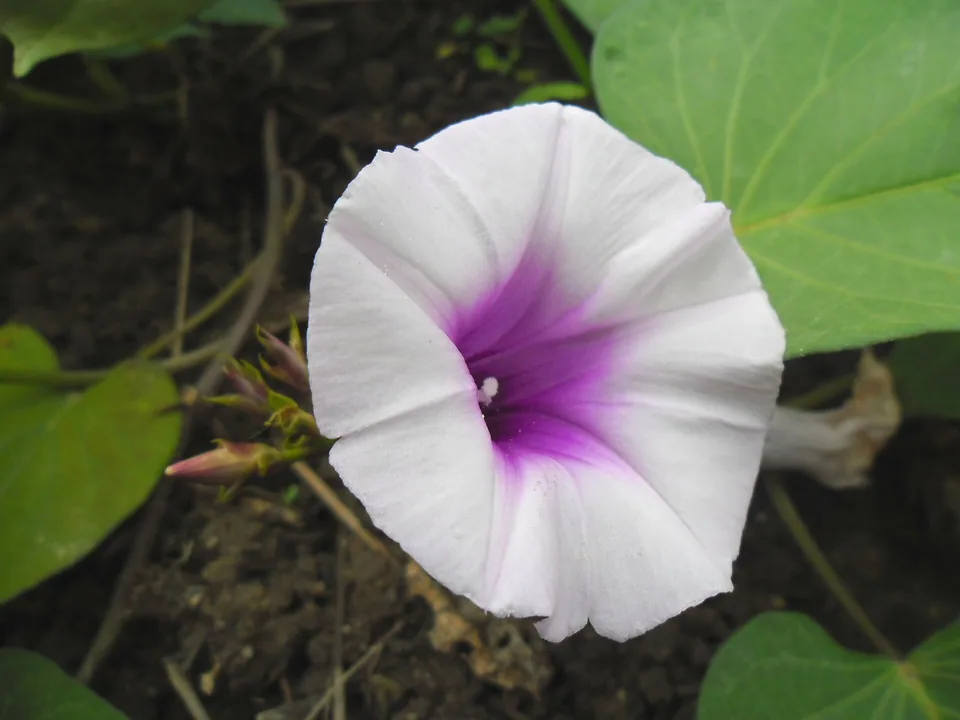


Cómo cultivar y cuidar Batata
Ipomoea batatas
Escrito por Emilio Marruso · última revisión
Tóxica para: Personas · Por qué
De un vistazo
El boniato es un cultivo generoso: se comen las raíces, las hojas y los tallos, y las hojas frescas quedan riquísimas en ensalada. Planta los brotes a pleno sol cuando la tierra supere los 18 °C, riega con regularidad mientras arraigan y cosecha 85–120 días después, antes de la primera helada.
- Sol
Sol pleno o semisombra
Qué dicen las fuentes (4)
Luz: Pleno sol a semisombra
Según NC State Extension: Plant in full sun or partial shade in loamy, well-draining soil that is high in organic matter.
— Ipomoea batatas (Edible Sweetpotato, Ornamental Sweetpotato, Sweetpotato, Sweet Potato Vine, Sweetpotato Vine) | North Carolina Extension Gardener Plant Toolbox [1] batata comestible (Extensión de la Universidad de Illinois): Sweet potatoes require full sun, well-drained loose fertile soil, and adequate soil moisture.
— Sweet potato (Ipomoea batatas)-Hort Answers - University of Illinois Extension [2] planta ornamental de batata (Extensión de Clemson): Sunlight: full sun to part shade
— How To Grow and Care for Ornamental Sweetpotato Vine (Ipomoea batatas) | Home & Garden Information Center [5] Plant in full sun or partial shade in loamy, well-draining soil that is high in organic matter.
— Ipomoea batatas (Edible Sweetpotato, Ornamental Sweetpotato, Sweetpotato, Sweet Potato Vine, Sweetpotato Vine) | North Carolina Extension Gardener Plant Toolbox [1] - Riego
2,5 cm de agua a la semana, con regularidad; deja de regar 3–4 semanas antes de la cosecha
Qué dicen las fuentes (5)
Riego: Riego uniforme, al menos 1 pulgada [2,5 cm] de lluvia o riego por semana; las plantas establecidas toleran clima relativamente seco
Sweetpotatoes need uniform watering with at least 1 inch of rainfall or irrigation water per week for normal growth.
— Sweetpotato | Home & Garden Information Center [8] Established sweet potato plants will tolerate relatively dry weather.
— Growing Sweet Potatoes in a Home Garden | University of Maryland Extension [6] Notas sobre el riego: Sensible a la sequía durante los primeros 50 a 60 días después de la siembra; no mantengas el suelo saturado (pudrición de raíz y división de raíz); no riegues durante las últimas tres a cuatro semanas antes de la cosecha
Sweet potato is sensitive to drought for the first 50 to 60 days after planting.
— Growing Sweet Potatoes in a Home Garden | University of Maryland Extension [6] Water deeply and regularly during dry periods, but don't keep the soil saturated since excessive water can cause root rot and splitting of the storage roots.
— Growing Sweet Potatoes in a Home Garden | University of Maryland Extension [6] Do not water during the last three to four weeks before harvest.
— Sweet potato (Ipomoea batatas)-Hort Answers - University of Illinois Extension [2] - Frío
Aguanta inviernos de hasta −6,7 °C (20 °F)
Rústica en inviernos normales · USDA 9a · RHS H4 · Z9
Qué dicen las fuentes (2)
Rusticidad, zona más fría: 9a [mínima invernal de −6,7 a −3,9 °C (de 20 a 25 °F)]
USDA Plant Hardiness Zone: 9a, 9b, 10a, 10b, 11a, 11b
— Ipomoea batatas (Edible Sweetpotato, Ornamental Sweetpotato, Sweetpotato, Sweet Potato Vine, Sweetpotato Vine) | North Carolina Extension Gardener Plant Toolbox [1] Rusticidad, zona más cálida: 11b [mínima invernal de 7,2 a 10 °C (de 45 a 50 °F)]
USDA Plant Hardiness Zone: 9a, 9b, 10a, 10b, 11a, 11b
— Ipomoea batatas (Edible Sweetpotato, Ornamental Sweetpotato, Sweetpotato, Sweet Potato Vine, Sweetpotato Vine) | North Carolina Extension Gardener Plant Toolbox [1] - Distancia
0,9–1,2 m entre hileras
Qué dicen las fuentes (3)
Distancia entre hileras: 91-122 cm (3 a 4 pies)
Set the plants 12 to 18 inches apart in ridges or rows that are 3 to 4 ft apart.
— Sweet potato (Ipomoea batatas)-Hort Answers - University of Illinois Extension [2] Plant slips in rows 36-48 inches apart, spaced 12 inches apart within the row.
— How to Grow Sweet Potatoes in Your Garden | USU [7] Plant the transplants (called slips) in rows 3 feet apart with 8 to 12 inches between plants in the row at a depth of 3 to 4 inches.
— Sweetpotato | Home & Garden Information Center [8] - Plantación
Bien pasada la última helada, con la tierra por encima de 18 °C; planta los brotes a 8–10 cm de hondo
Qué dicen las fuentes (7)
Plantación: Bien después de la última helada en primavera, cuando la temperatura del suelo esté por encima de 65 °F [18 °C]
Piedmont (Carolina del Sur), primavera: Piedmont | May 1-June 15 | Not recommended | Coastal | April 15-June 15
— Sweetpotato | Home & Garden Information Center [8] Costero (Carolina del Sur), primavera: Piedmont | May 1-June 15 | Not recommended | Coastal | April 15-June 15
— Sweetpotato | Home & Garden Information Center [8] Según University of Maryland Extension: Plant sprouted new shoots (called "slips") after the soil has warmed to 65°F.
— Growing Sweet Potatoes in a Home Garden | University of Maryland Extension [6] tubérculos de batata ornamental (Extensión Clemson): The tubers can be planted outside after the danger of frost has passed in spring.
— How To Grow and Care for Ornamental Sweetpotato Vine (Ipomoea batatas) | Home & Garden Information Center [5] The sweetpotato (Ipomoea batatas) is a warm-season crop that is not planted until well after the last chance of frost in the spring.
— Sweetpotato | Home & Garden Information Center [8] Slips are planted in the field after the danger of frost is over.
— How to Grow Sweet Potatoes in Your Garden | USU [7] Profundidad de siembra: 7.6-10 cm (3 a 4 pulgadas; profundidad a la que se plantan los esquejes)
Plant the transplants (called slips) in rows 3 feet apart with 8 to 12 inches between plants in the row at a depth of 3 to 4 inches.
— Sweetpotato | Home & Garden Information Center [8] - Abonado
Compost o abono antes de plantar y otra vez antes de que las matas cubran la hilera
Qué dicen las fuentes (10)
Cuándo: antes de plantar, luego un abono lateral antes de que las vides cubran la fila
abono lateral de nitrógeno: In addition to the fertilizer applied at planting, sweet potatoes should be side dressed with additional nitrogen fertilizer at ½ lb. (21-0-0) per 100 square feet in early July for optimum vine growth and tuber sizing.
— How to Grow Sweet Potatoes in Your Garden | USU [7] If a soil test is not taken, apply 5-10-10 fertilizer preplant at 30 pounds per 1,000 square feet and till into the soil.
— Sweetpotato | Home & Garden Information Center [8] Sidedress with 4 pounds of 5-10-10 per 100 feet of row before the vines cover the row.
— Sweetpotato | Home & Garden Information Center [8] Abonos naturales: compost incorporado antes de plantar, como una capa de materia orgánica bien compostada de no más de 2.54 cm [1 in] de profundidad
Fertilizer needs: Medium requirement for nutrients, either from soil organic matter or fertilizers. Incorporate compost prior to planting.
— Growing Sweet Potatoes in a Home Garden | University of Maryland Extension [6] If you fertilize with compost, apply no more than 1 inch of wellcomposted organic matter per 100 square feet of garden area.
— How to Grow Sweet Potatoes in Your Garden | USU [7] Abonos minerales: 5-10-10 incorporado antes de plantar a 146 g/m², luego un abono lateral de 5-10-10 a 59.6 g por metro de fila
al trasplantar: Water in transplants using a high phosphorus starter fertilizer according to label directions.
— Sweetpotato | Home & Garden Information Center [8] Aplicación lateral de nitrógeno a principios de julio: In addition to the fertilizer applied at planting, sweet potatoes should be side dressed with additional nitrogen fertilizer at ½ lb. (21-0-0) per 100 square feet in early July for optimum vine growth and tuber sizing.
— How to Grow Sweet Potatoes in Your Garden | USU [7] vid de batata ornamental: Fertilizer: usually not necessary due to the vigor of the plant
— How To Grow and Care for Ornamental Sweetpotato Vine (Ipomoea batatas) | Home & Garden Information Center [5] If a soil test is not taken, apply 5-10-10 fertilizer preplant at 30 pounds per 1,000 square feet and till into the soil.
— Sweetpotato | Home & Garden Information Center [8] Sidedress with 4 pounds of 5-10-10 per 100 feet of row before the vines cover the row.
— Sweetpotato | Home & Garden Information Center [8] - Cosecha
Cosecha 85–120 días después de plantar, antes de la helada; hojas y tallos también se comen
Qué dicen las fuentes (6)
Días hasta la madurez: 85-120 días después de la siembra
Sweet potatoes generally mature 85 to 120 days after planting.
— Growing Sweet Potatoes in a Home Garden | University of Maryland Extension [6] Sweetpotatoes should be ready to harvest about 90 to 120 days after planting.
— Sweetpotato | Home & Garden Information Center [8] Cómo cosechar: Cosecha antes de la primera helada, una vez que las raíces alcanzan el tamaño de consumo (un punto de referencia es cuando el 30 por ciento de las raíces son más grandes que 8.9 cm (3½ pulgadas) de diámetro); corta primero las enredaderas, luego afloja el suelo con un tenedor de jardín o una pala y levanta las raíces suavemente sin magullarlas; no frotes la piel ni laves las raíces antes de almacenarlas.
Harvest roots as soon as they reach eating size and before a frost. Digging out the roots is easier if you cut the vines off first.
— Growing Sweet Potatoes in a Home Garden | University of Maryland Extension [6] Harvest the sweetpotatoes when 30 percent of the roots are larger than 3½ inches in diameter.
— Sweetpotato | Home & Garden Information Center [8] Use a garden fork or spade to loosen the soil and gently lift up and expose the sweet potatoes.
— Growing Sweet Potatoes in a Home Garden | University of Maryland Extension [6] Don't rub the skin or wash roots prior to storing indoors.
— Growing Sweet Potatoes in a Home Garden | University of Maryland Extension [6] - Plagas
Pulgones, pulguillas, gusanos de alambre y podredumbre negra; no repitas el cultivo en el mismo sitio dos años seguidos
Qué dicen las fuentes (6)
Plagas: pulgones, escarabajos de Colorado, saltahojas de la papa, gusanos de alambre, escarabajos pulga, nematodos de la raíz, gusanos cortadores, trips
Insect pests: - Aphids - Colorado potato beetle - Potato leafhoppers - Wireworms - Flea beetle Nematode: - Root knot
— Sweet potato (Ipomoea batatas)-Hort Answers - University of Illinois Extension [2] However, home gardeners may experience a problem with wireworms and root-knot nematodes.
— Sweetpotato | Home & Garden Information Center [8] Cutworms feed near the soil surface and eat through the stem causing plants to fall over and die.
— How to Grow Sweet Potatoes in Your Garden | USU [7] Be sure to rotate crops if you are planting in the same area each year, as flea beetle and thrips populations can build up.
— Ipomoea batatas (Edible Sweetpotato, Ornamental Sweetpotato, Sweetpotato, Sweet Potato Vine, Sweetpotato Vine) | North Carolina Extension Gardener Plant Toolbox [1] Enfermedades: pudrición negra, pudrición del pie, marchitez por Fusarium, roya blanca, costra, pudriciones de almacenamiento
Diseases: - Black rot - Foot rot - Fusarium wilt - White rust - Scurf - Storage rots
— Sweet potato (Ipomoea batatas)-Hort Answers - University of Illinois Extension [2] Do not use transplants with spots of black rot on the lower stems.
— Sweetpotato | Home & Garden Information Center [8] - Atención
No metas nunca las raíces en la nevera: guárdalas en un sitio fresco, nunca por debajo de 10 °C
Qué dicen las fuentes (4)
Conservación: Cura las raíces primero (una semana a 29 °C (85 °F) y 90 por ciento de humedad, o unos 14 días en la habitación más cálida de la casa), luego guárdalas en un lugar fresco a 13-16 °C (55 a 60 °F) y 85-90 por ciento de humedad relativa; nunca las refrigeres ni las expongas a temperaturas por debajo de 10 °C (50 °F).
The optimal conditions for curing are to expose the roots to 85 °F and 90-percent humidity for one week.
— Sweetpotato | Home & Garden Information Center [8] place the sweetpotatoes in the warmest room in the house, usually the kitchen, for 14 days.
— Sweetpotato | Home & Garden Information Center [8] Roots store best at 55° to 60°F at 85% to 90% RH.
— Growing Sweet Potatoes in a Home Garden | University of Maryland Extension [6] Never expose them to temperatures below 50 °F and never refrigerate them.
— Sweetpotato | Home & Garden Information Center [8] - Multiplicación
Con brotes de la raíz, esquejes de tallo o trozos de raíz
Qué dicen las fuentes (2)
Propagación: Esquejes (brotes de la raíz), esquejes de vid, esquejes de raíz
Sweet potatoes are grown from slips, which are plant sprouts from the root. They can also be grown from vine cuttings.
— How to Grow Sweet Potatoes in Your Garden | USU [7] Propagation is through root cutting. It is susceptible to frost so it is considered an annual, but it can be propagated from tuber cuttings planted after the last frost.
— Ipomoea batatas (Edible Sweetpotato, Ornamental Sweetpotato, Sweetpotato, Sweet Potato Vine, Sweetpotato Vine) | North Carolina Extension Gardener Plant Toolbox [1] - Maceta
Crece también en maceta
Qué dicen las fuentes (1)
En maceta: Sí
Ornamental cultivars of sweetpotato vine are frequently used in mixed containers for their vibrant colors.
— Ipomoea batatas (Edible Sweetpotato, Ornamental Sweetpotato, Sweetpotato, Sweet Potato Vine, Sweetpotato Vine) | North Carolina Extension Gardener Plant Toolbox [1] - Seguridad
No es tóxico para gatos, perros ni caballos; la savia pegajosa puede irritar la piel
Resumen
La batata es una vid anual de estación cálida cultivada tanto por su follaje ornamental como por sus raíces comestibles. [1][6] Se planta como esquejes después de que pase el peligro de heladas y el suelo esté por encima de 65 F, y crece a pleno sol o semisombra. [8][1] Las raíces están listas aproximadamente 90 a 120 días después de la siembra y deben desenterrarse antes de las heladas. [8]
Citado en inglés, como en la fuente.
Cuidados
Las medidas entre corchetes son nuestra conversión al otro sistema de unidades; el texto citado no cambia.
Riego
Riego
Riego uniforme, al menos 1 pulgada [2,5 cm] de lluvia o riego por semana; las plantas establecidas toleran clima relativamente seco
Qué dicen las fuentes (2)
Sweetpotatoes need uniform watering with at least 1 inch of rainfall or irrigation water per week for normal growth.Established sweet potato plants will tolerate relatively dry weather.Notas sobre el riego
Sensible a la sequía durante los primeros 50 a 60 días después de la siembra; no mantengas el suelo saturado (pudrición de raíz y división de raíz); no riegues durante las últimas tres a cuatro semanas antes de la cosecha
Qué dicen las fuentes (3)
Sweet potato is sensitive to drought for the first 50 to 60 days after planting.Water deeply and regularly during dry periods, but don't keep the soil saturated since excessive water can cause root rot and splitting of the storage roots.Do not water during the last three to four weeks before harvest.Luz
Pleno sol a semisombra
Lo que dice cada fuente
Según NC State Extension: Pleno sol o semisombra
batata comestible (Extensión de la Universidad de Illinois): Pleno sol
planta ornamental de batata (Extensión de Clemson): Pleno sol a semisombra
Qué dicen las fuentes (4)
Según NC State Extension: Plant in full sun or partial shade in loamy, well-draining soil that is high in organic matter.batata comestible (Extensión de la Universidad de Illinois): Sweet potatoes require full sun, well-drained loose fertile soil, and adequate soil moisture.planta ornamental de batata (Extensión de Clemson): Sunlight: full sun to part shadePlant in full sun or partial shade in loamy, well-draining soil that is high in organic matter.Clima y frío
Rusticidad, zona más fría
9a [mínima invernal de −6,7 a −3,9 °C (de 20 a 25 °F)]
Qué dicen las fuentes (1)
USDA Plant Hardiness Zone:
9a, 9b, 10a, 10b, 11a, 11bRusticidad, zona más cálida
11b [mínima invernal de 7,2 a 10 °C (de 45 a 50 °F)]
Qué dicen las fuentes (1)
USDA Plant Hardiness Zone:
9a, 9b, 10a, 10b, 11a, 11bDónde cultivarla
En maceta
Sí
Qué dicen las fuentes (1)
Ornamental cultivars of sweetpotato vine are frequently used in mixed containers for their vibrant colors.Distancia de plantación
Las fuentes dan valores distintos según la región, la zona o las condiciones de cultivo.
Lo que dice cada fuente
Utah (Extensión de USU): 30.5 cm (12 pulgadas) dentro de la fila; filas separadas 91.4-121.9 cm (36-48 pulgadas)
Carolina del Sur (Extensión de Clemson): 20.3-30.5 cm (8-12 pulgadas) entre plantas en la fila; filas separadas 91.4 cm (3 pies)
Illinois (Extensión de la Universidad de Illinois): 30.5-45.7 cm (12-18 pulgadas) de separación en camellones o filas separadas 91.4-121.9 cm (3-4 pies)
Maryland (Extensión de la Universidad de Maryland): 30.5 cm (12 pulgadas) entre plantas en una fila; 101.6 cm (40 pulgadas) entre filas
Qué dicen las fuentes (5)
Utah (Extensión de USU): Plant slips in rows 36-48 inches apart, spaced 12 inches apart within the row.Carolina del Sur (Extensión de Clemson): Plant the transplants (called slips) in rows 3 feet apart with 8 to 12 inches between plants in the row at a depth of 3 to 4 inches.Illinois (Extensión de la Universidad de Illinois): Set the plants 12 to 18 inches apart in ridges or rows that are 3 to 4 ft apart.Maryland (Extensión de la Universidad de Maryland): Spacing: 12 inches between plants within a row, and 40 inches between rowsPlant slips in rows 36-48 inches apart, spaced 12 inches apart within the row.Propagación
Esquejes (brotes de la raíz), esquejes de vid, esquejes de raíz
Qué dicen las fuentes (2)
Sweet potatoes are grown from slips, which are plant sprouts from the root. They can also be grown from vine cuttings.Propagation is through root cutting. It is susceptible to frost so it is considered an annual, but it can be propagated from tuber cuttings planted after the last frost.Cultivo
La planta
Ciclo de vida
anual
Qué dicen las fuentes (2)
Sweetpotato is a vigorous-growing, annual ground cover or vine in the morning glory family (Convolvulaceae)Hardiness: Very tender warm-season annual. Frost will injure top growth; needs warm weather to grow.Familia
Convolvulaceae
Qué dicen las fuentes (1)
Sweetpotato is a vigorous-growing, annual ground cover or vine in the morning glory family (Convolvulaceae) and is native to Mexico, Central America and northern South America.Altura adulta
Siembra y crecimiento
Profundidad de siembra
7.6-10 cm (3 a 4 pulgadas; profundidad a la que se plantan los esquejes)
Qué dicen las fuentes (1)
Plant the transplants (called slips) in rows 3 feet apart with 8 to 12 inches between plants in the row at a depth of 3 to 4 inches.Distancia entre hileras
91-122 cm (3 a 4 pies)
Qué dicen las fuentes (3)
Set the plants 12 to 18 inches apart in ridges or rows that are 3 to 4 ft apart.Plant slips in rows 36-48 inches apart, spaced 12 inches apart within the row.Plant the transplants (called slips) in rows 3 feet apart with 8 to 12 inches between plants in the row at a depth of 3 to 4 inches.Días hasta la madurez
85-120 días después de la siembra
Cosecha y conservación
Cómo cosechar
Cosecha antes de la primera helada, una vez que las raíces alcanzan el tamaño de consumo (un punto de referencia es cuando el 30 por ciento de las raíces son más grandes que 8.9 cm (3½ pulgadas) de diámetro); corta primero las enredaderas, luego afloja el suelo con un tenedor de jardín o una pala y levanta las raíces suavemente sin magullarlas; no frotes la piel ni laves las raíces antes de almacenarlas.
Qué dicen las fuentes (4)
Harvest roots as soon as they reach eating size and before a frost. Digging out the roots is easier if you cut the vines off first.Harvest the sweetpotatoes when 30 percent of the roots are larger than 3½ inches in diameter.Use a garden fork or spade to loosen the soil and gently lift up and expose the sweet potatoes.Don't rub the skin or wash roots prior to storing indoors.Conservación
Cura las raíces primero (una semana a 29 °C (85 °F) y 90 por ciento de humedad, o unos 14 días en la habitación más cálida de la casa), luego guárdalas en un lugar fresco a 13-16 °C (55 a 60 °F) y 85-90 por ciento de humedad relativa; nunca las refrigeres ni las expongas a temperaturas por debajo de 10 °C (50 °F).
Qué dicen las fuentes (4)
The optimal conditions for curing are to expose the roots to 85 °F and 90-percent humidity for one week.place the sweetpotatoes in the warmest room in the house, usually the kitchen, for 14 days.Roots store best at 55° to 60°F at 85% to 90% RH.Never expose them to temperatures below 50 °F and never refrigerate them.Plagas y enfermedades
Plagas
pulgones, escarabajos de Colorado, saltahojas de la papa, gusanos de alambre, escarabajos pulga, nematodos de la raíz, gusanos cortadores, trips
Qué dicen las fuentes (4)
Insect pests: - Aphids - Colorado potato beetle - Potato leafhoppers - Wireworms - Flea beetle Nematode: - Root knotHowever, home gardeners may experience a problem with wireworms and root-knot nematodes.Cutworms feed near the soil surface and eat through the stem causing plants to fall over and die.Be sure to rotate crops if you are planting in the same area each year, as flea beetle and thrips populations can build up.Enfermedades
pudrición negra, pudrición del pie, marchitez por Fusarium, roya blanca, costra, pudriciones de almacenamiento
Qué dicen las fuentes (2)
Diseases: - Black rot - Foot rot - Fusarium wilt - White rust - Scurf - Storage rotsDo not use transplants with spots of black rot on the lower stems.Abonado
Cuándo
antes de plantar, luego un abono lateral antes de que las vides cubran la fila
Lo que dice cada fuente
abono lateral de nitrógeno: Principios de julio
Qué dicen las fuentes (3)
abono lateral de nitrógeno: In addition to the fertilizer applied at planting, sweet potatoes should be side dressed with additional nitrogen fertilizer at ½ lb. (21-0-0) per 100 square feet in early July for optimum vine growth and tuber sizing.If a soil test is not taken, apply 5-10-10 fertilizer preplant at 30 pounds per 1,000 square feet and till into the soil.Sidedress with 4 pounds of 5-10-10 per 100 feet of row before the vines cover the row.Frecuencia
Las fuentes dan valores distintos según la región, la zona o las condiciones de cultivo.
Lo que dice cada fuente
suelos ligeros y arenosos: abono lateral de nitrógeno una o dos veces durante la temporada de crecimiento, si es necesario
Qué dicen las fuentes (1)
suelos ligeros y arenosos: On light, sandy soils, side-dress with a nitrogen source once or twice during the growing season, if needed.Abonos naturales
compost incorporado antes de plantar, como una capa de materia orgánica bien compostada de no más de 2.54 cm [1 in] de profundidad
Qué dicen las fuentes (2)
Fertilizer needs: Medium requirement for nutrients, either from soil organic matter or fertilizers. Incorporate compost prior to planting.If you fertilize with compost, apply no more than 1 inch of wellcomposted organic matter per 100 square feet of garden area.Abonos minerales
5-10-10 incorporado antes de plantar a 146 g/m², luego un abono lateral de 5-10-10 a 59.6 g por metro de fila
Lo que dice cada fuente
al trasplantar: fertilizante inicial con alto fósforo, regado
Aplicación lateral de nitrógeno a principios de julio: 21-0-0 a 24.4 g/m²
vid de batata ornamental: Generalmente no es necesario, dada la vitalidad de la planta
Qué dicen las fuentes (5)
al trasplantar: Water in transplants using a high phosphorus starter fertilizer according to label directions.Aplicación lateral de nitrógeno a principios de julio: In addition to the fertilizer applied at planting, sweet potatoes should be side dressed with additional nitrogen fertilizer at ½ lb. (21-0-0) per 100 square feet in early July for optimum vine growth and tuber sizing.vid de batata ornamental: Fertilizer: usually not necessary due to the vigor of the plantIf a soil test is not taken, apply 5-10-10 fertilizer preplant at 30 pounds per 1,000 square feet and till into the soil.Sidedress with 4 pounds of 5-10-10 per 100 feet of row before the vines cover the row.Problemas
Podredumbre negra
Síntoma: Descomposición fúngica y pudrición de la raíz, con lesiones hundidas en esquejes jóvenes y raíces maduras.
Qué hacer: No uses trasplantes con manchas de podredumbre negra en los tallos inferiores; usa una rotación de dos años entre cultivos de boniato.
Qué dicen las fuentes (2)
Fungal diseases that cause decay and rotting of the root. Causes sunken lesions on young slips and mature roots.
— How to Grow Sweet Potatoes in Your Garden | USU [7] Disease problems typically are reduced by using a two-year rotation between sweetpotato crops. Do not use transplants with spots of black rot on the lower stems.
— Sweetpotato | Home & Garden Information Center [8] Partidura de raíces
Síntoma: Las raíces se agrietan o se parten al desenterrarlas.
Qué hacer: Evita lluvias intensas o riego excesivo en las 3 a 4 semanas antes de la cosecha.
Qué dicen las fuentes (1)
Heavy rains or over irrigation during the 3 to 4 weeks before harvest will cause the roots to split.
— How to Grow Sweet Potatoes in Your Garden | USU [7] Gusanos alambre y nematodos agalleros
Síntoma: Plagas del suelo que pueden afectar los cultivos de jardín doméstico.
Qué hacer: Rota con maíz el año siguiente y usa variedades resistentes a nematodos.
Qué dicen las fuentes (1)
However, home gardeners may experience a problem with wireworms and root-knot nematodes.
— Sweetpotato | Home & Garden Information Center [8]
Remedios
Cada remedio indica qué dicen las fuentes oficiales; los remedios tradicionales sin fuente oficial aparecen marcados. Los perjudiciales están para que sepas evitarlos.
Cuidar la planta
escarabajos de la pulga
tierra de diatomeas No verificado
Remedio tradicional, no verificado por una fuente oficial.
Cómo: Esparce tierra de diatomeas alrededor de las plántulas, cultiva con frecuencia para interrumpir el ciclo de vida y mantén limpio el jardín.
gorgojo de la batata
retirando los gorgojos a mano No verificado
Remedio tradicional, no verificado por una fuente oficial.
Cómo: Retira los gorgojos y destruye las plantas infestadas.
tierra de diatomeas No verificado
Remedio tradicional, no verificado por una fuente oficial.
Cómo: Espolvorea las plantas con tierra de diatomeas.
amontonando tierra alrededor de las plantas No verificado
Remedio tradicional, no verificado por una fuente oficial.
Cómo: Amontona tierra alrededor de las plantas para que los gorgojos no puedan llegar a las raíces.
gusanos de alambre
inundando el suelo No verificado
Remedio tradicional, no verificado por una fuente oficial.
Cómo: Revisa el suelo antes de plantar y riégalo si hay gusanos de alambre presentes.
pulgones
spray de jabón insecticida Funciona
Cómo: Aplica jabón insecticida.
encouraging natural predators like ladybugs, lacewings, and parasitic wasps, using reflective mulch, applying insecticidal soap, and planting companion plants that repel aphids like marigolds or catnip
— agrifarming.in [9] Qué dicen las pruebas For example, insecticidal soap is a safe, effective organic insecticide with minimal environmental impact.
— extension.psu.edu [10] plantación de caléndula o hierba gatera como compañeras No verificado
Remedio tradicional, no verificado por una fuente oficial.
Cómo: Planta plantas compañeras que repelan los pulgones, como caléndulas o hierba gatera.
moscas blancas
aspiradora de mano No verificado
Remedio tradicional, no verificado por una fuente oficial.
Cómo: Usa una aspiradora de mano para eliminar las plagas.
chorro de agua en el envés de las hojas No verificado
Remedio tradicional, no verificado por una fuente oficial.
Cómo: Rocía con agua el envés de las hojas por la mañana o por la tarde para desprender las plagas.
spray de jabón insecticida Funciona
Cómo: Rocía con jabón insecticida.
monitor adults with yellow sticky traps; spray with insecticidal soap; invite beneficial insects and hummingbirds with native plants
— almanac.com [11] Qué dicen las pruebas For example, insecticidal soap is a safe, effective organic insecticide with minimal environmental impact.
— extension.psu.edu [10] extracto de semilla de neem Funciona en parte
Cómo: El extracto de semilla de neem es tóxico para las ninfas jóvenes, inhibe el crecimiento de las ninfas mayores y reduce la puesta de huevos de los adultos.
Neem seed extract is not as acutely toxic as some of the synthetic pesticides, but it has the advantage of being toxic to young nymphs, inhibiting growth and development of older nymphs, and reducing oviposition by adults.
— content.ces.ncsu.edu [12] Qué dicen las pruebas Neem seed extract is not as acutely toxic as some of the synthetic pesticides, but it has the advantage of being toxic to young nymphs, inhibiting growth and development of older nymphs, and reducing oviposition by adults.
— content.ces.ncsu.edu [12]
Toxicidad
Según la fuente, citada textualmente. No es un consejo médico ni veterinario: si una persona o un animal pudo haber ingerido esta planta, contacta con un centro de toxicología o con un veterinario.
Animales
#non-toxic for cats #non-toxic for horses #non-toxic for dogs
[1]La fuente señala el riesgo para este animal pero no explica por qué.
Personas
Calendario
Plantación
Bien después de la última helada en primavera, cuando la temperatura del suelo esté por encima de 65 °F [18 °C]
Lo que dice cada fuente
Piedmont (Carolina del Sur), primavera: 1 de mayo a 15 de junio
Costero (Carolina del Sur), primavera: Del 15 de abril al 15 de junio
Según University of Maryland Extension: Después de que el suelo se haya calentado a 65°F [18 °C]
tubérculos de batata ornamental (Extensión Clemson): Al aire libre después de que haya pasado el peligro de las heladas en primavera
Qué dicen las fuentes (6)
Piedmont (Carolina del Sur), primavera: Piedmont | May 1-June 15 | Not recommended | Coastal | April 15-June 15Costero (Carolina del Sur), primavera: Piedmont | May 1-June 15 | Not recommended | Coastal | April 15-June 15Según University of Maryland Extension: Plant sprouted new shoots (called "slips") after the soil has warmed to 65°F.tubérculos de batata ornamental (Extensión Clemson): The tubers can be planted outside after the danger of frost has passed in spring.The sweetpotato (Ipomoea batatas) is a warm-season crop that is not planted until well after the last chance of frost in the spring.Slips are planted in the field after the danger of frost is over.Cosecha
Las fuentes dan valores distintos según la región, la zona o las condiciones de cultivo.
Lo que dice cada fuente
Carolina del Sur (Extensión de Clemson): Aproximadamente de 90 a 120 días después de la siembra
Maryland (Extensión de la Universidad de Maryland): De 85 a 120 días después de la siembra
Utah (Extensión de USU): Las raíces maduran en 4 a 5 meses
Illinois (Extensión de la Universidad de Illinois): En otoño antes de la primera helada
Qué dicen las fuentes (6)
Carolina del Sur (Extensión de Clemson): Sweetpotatoes should be ready to harvest about 90 to 120 days after planting.Maryland (Extensión de la Universidad de Maryland): Sweet potatoes generally mature 85 to 120 days after planting. Check the root size after 80 to 85 days because they don't stop growing and can start to split when overgrown.Utah (Extensión de USU): Plants can be damaged by temperatures below 50ºF. The roots mature in 4 to 5 months.Illinois (Extensión de la Universidad de Illinois): Harvest sweet potatoes in fall before the first frost using spading fork.Sweetpotatoes should be ready to harvest about 90 to 120 days after planting.Harvest before frost because cool soil temperatures can reduce the quality and storage capacity of the sweetpotatoes.Meses tal como los dan las fuentes, en su mayoría de Estados Unidos (hemisferio norte). En el hemisferio sur se desplazan unos seis meses.
Respecto a las heladas
Estimación menos precisa: no hay ninguna estación meteorológica a menos de 300 km.
Busca las fechas de heladas por código postal o ciudad
Plantación: hacia la última helada
Pull slips from bedded roots and plant outside after the danger of frost has passed.
— Growing Sweet Potatoes in a Home Garden | University of Maryland Extension [6]
Cuenta desde las fechas medias de las heladas de tu zona.
Comestibilidad
Según la fuente, citada textualmente. No comas una planta basándote solo en esta página: los errores de identificación pueden ser peligrosos.
Valores orientativos
Valores de una fuente secundaria, no comprobados palabra por palabra como el resto de esta página. Úselos como punto de partida.
- Horas de sol
- 8-10 horasValor orientativo, adáptalo a tu clima · Fuente secundaria
- Resiste la sequía
- SíValor orientativo, adáptalo a tu clima · Fuente secundaria
- pH del suelo
- 5.5-6.5Valor orientativo, adáptalo a tu clima · Fuente secundaria
- Nivel de cuidado
- MedioValor orientativo, adáptalo a tu clima · Fuente secundaria
- Crecimiento
- AltaValor orientativo, adáptalo a tu clima · Fuente secundaria
- Poda
- Marzo, abril, mayo, junio, julioValor orientativo, adáptalo a tu clima · Fuente secundaria
Plantas similares
- Beach Morning-glory Ipomoea imperati
- Gloria de la mañana Ipomoea purpurea
- Cundeamor Ipomoea quamoclit
- Quiebra-cajete Ipomoea alba
- Morning Glory Ipomoea sagittata
- Morning Glory Ipomoea tricolor
- Campanita morada Ipomoea indica
- Scarlet Creeper Ipomoea coccinea
Fuentes
Cada valor anterior se cita de estos documentos. Los enlaces llevan al editor original.
- Ipomoea batatas (Edible Sweetpotato, Ornamental Sweetpotato, Sweetpotato, Sweet Potato Vine, Sweetpotato Vine) | North Carolina Extension Gardener Plant Toolbox · plants.ces.ncsu.edu, consultado
- Sweet potato (Ipomoea batatas)-Hort Answers - University of Illinois Extension · web.extension.illinois.edu, consultado
- Ornamental Sweetpotato - Ipomoea batatas | North Carolina Extension Gardener Plant Toolbox · plants.ces.ncsu.edu, consultado
- Sweetpotato - Ipomoea batatas | North Carolina Extension Gardener Plant Toolbox · plants.ces.ncsu.edu, consultado
- How To Grow and Care for Ornamental Sweetpotato Vine (Ipomoea batatas) | Home & Garden Information Center · hgic.clemson.edu, consultado
- Growing Sweet Potatoes in a Home Garden | University of Maryland Extension · extension.umd.edu, consultado
- How to Grow Sweet Potatoes in Your Garden | USU · extension.usu.edu, consultado
- Sweetpotato | Home & Garden Information Center · hgic.clemson.edu, consultado
- agrifarming.in · agrifarming.in
- extension.psu.edu · extension.psu.edu
- almanac.com · almanac.com
- content.ces.ncsu.edu · content.ces.ncsu.edu
Escrito por Emilio Marruso · última revisión