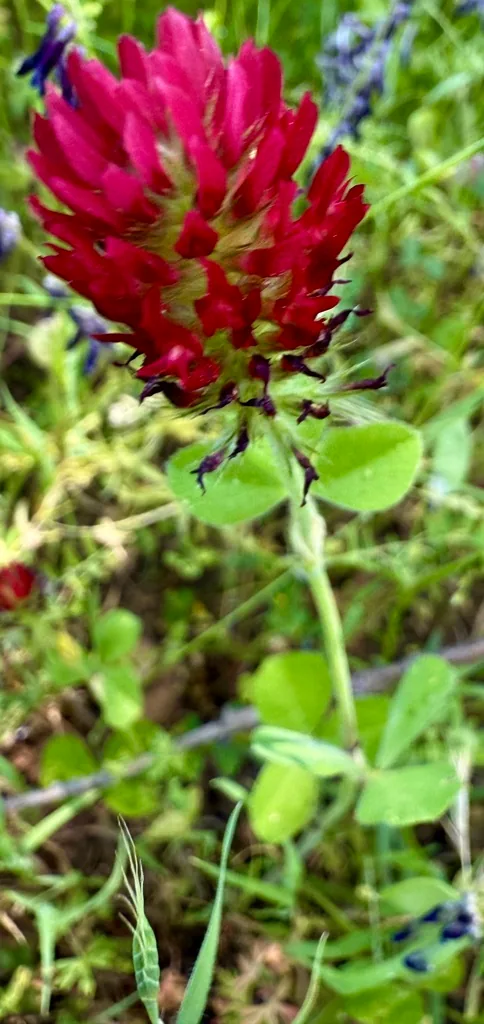
How to Grow and Care for Crimson Clover
Trifolium incarnatum
Written by Emilio Marruso · last checked
At a glance
Crimson clover is an easy annual you sow from seed in late summer or autumn, just 1/4 to 1/2 inch deep. Give it full sun and soil that never stays soggy, and it grows 1 to 3 feet tall. It makes excellent forage for deer, good shelter for quail, and a handy green manure, hay or pasture for your land.
- Sun
Full sun
What the sources say (1)
Light: Full sun
It is intolerant of soggy or salty conditions. It grows best in full sun.
— Trifolium incarnatum (Crimson Clover) | North Carolina Extension Gardener Plant Toolbox [1] - Water
Hates soggy soil: it needs ground that drains well
What the sources say (2)
Watering notes: Intolerant of soggy conditions; does not establish well in poorly-drained soils
It is intolerant of soggy or salty conditions. It grows best in full sun.
— Trifolium incarnatum (Crimson Clover) | North Carolina Extension Gardener Plant Toolbox [1] Crimson does not establish well in calcareous or poorly-drained soils.
— Crimson Clover (Trifolium incarnatum) | Mississippi State University Extension Service [2] - Cold
Survives winters down to −30 °F (−34.4 °C)
Very hardy · USDA 4a · RHS H7 · Z4
What the sources say (2)
Hardiness, coldest zone: 4a [winter low −34.4 to −31.7 °C (−30 to −25 °F)]
4a, 4b, 5a, 5b, 6a, 6b, 7a, 7b, 8a, 8b, 9a, 9b
— Trifolium incarnatum (Crimson Clover) | North Carolina Extension Gardener Plant Toolbox [1] Hardiness, warmest zone: 9b [winter low −3.9 to −1.1 °C (25 to 30 °F)]
4a, 4b, 5a, 5b, 6a, 6b, 7a, 7b, 8a, 8b, 9a, 9b
— Trifolium incarnatum (Crimson Clover) | North Carolina Extension Gardener Plant Toolbox [1] - Feeding
Phosphorus, potassium and lime in fall; no nitrogen after midsummer
What the sources say (2)
When: Phosphorus, potassium and lime in fall; extra nitrogen in late winter for clover and grass mixtures
Fall application of P, K, and lime should be done according to soil test recommendations. An additional application of 60 lb N/ac is usually made to crimson clover/grass mixtures in late winter.
— Crimson Clover (Trifolium incarnatum) | Mississippi State University Extension Service [2] Avoid: Nitrogen fertilizer after mid-summer
Once mature seed have been produced, the field can be grazed or cut for hay during summer but nitrogen fertilizer should not be applied after around mid-summer.
— Crimson Clover (Trifolium incarnatum) | Mississippi State University Extension Service [2] - Harvest
Use it for pasture, hay or green manure; deer love it
- Pests
Root-knot nematodes and clover weevils; crown and stem rot can thin it out
What the sources say (3)
Pests: root-knot nematodes, clover weevils
No major pests or diseases. It is susceptible to some root-knot nematodes.
— Trifolium incarnatum (Crimson Clover) | North Carolina Extension Gardener Plant Toolbox [1] Natural reseeding can be affected by clover weevils. Stand persistence can be affected by crown and stem rot.
— Crimson Clover (Trifolium incarnatum) | Mississippi State University Extension Service [2] Diseases: crown and stem rot
Natural reseeding can be affected by clover weevils. Stand persistence can be affected by crown and stem rot.
— Crimson Clover (Trifolium incarnatum) | Mississippi State University Extension Service [2] - Watch out
Grazing animals may bloat on lush clover: sow it with grasses
- Size
1 to 3 ft tall and wide
What the sources say (2)
Mature height: 30-91 cm (1 to 3 feet)
Dimensions: Height: 1 ft. 0 in. - 3 ft. 0 in. Width: 1 ft. 0 in. - 3 ft. 0 in.
— Trifolium incarnatum (Crimson Clover) | North Carolina Extension Gardener Plant Toolbox [1] Mature width: 30-91 cm (1 to 3 feet)
Dimensions: Height: 1 ft. 0 in. - 3 ft. 0 in. Width: 1 ft. 0 in. - 3 ft. 0 in.
— Trifolium incarnatum (Crimson Clover) | North Carolina Extension Gardener Plant Toolbox [1] - Propagation
Grows from seed
What the sources say (1)
Propagation: Seed
Late summer is the time to sow crimson red clover seeds (Trifolium incarnatum) for bloom in the spring.
— Crimson Red Clover | Home & Garden Information Center [4] - Sowing
Sow from late summer to autumn, 1/4 to 1/2 inch deep
What the sources say (7)
Sowing: Late autumn (North Carolina); late August to October (Mississippi); late summer, August (South Carolina)
North Carolina: It should be sown in place (drills or broadcast) in late autumn.
— Trifolium incarnatum (Crimson Clover) | North Carolina Extension Gardener Plant Toolbox [1] According to Mississippi State University Extension: It can be broadcast from late August to October at a rate of 20 to 30 lb/ac.
— Crimson Clover (Trifolium incarnatum) | Mississippi State University Extension Service [2] South Carolina: Late summer is the time to sow crimson red clover seeds (Trifolium incarnatum) for bloom in the spring.
— Crimson Red Clover | Home & Garden Information Center [4] It should be sown in place (drills or broadcast) in late autumn.
— Trifolium incarnatum (Crimson Clover) | North Carolina Extension Gardener Plant Toolbox [1] It can be broadcast from late August to October at a rate of 20 to 30 lb/ac.
— Crimson Clover (Trifolium incarnatum) | Mississippi State University Extension Service [2] Late summer is the time to sow crimson red clover seeds (Trifolium incarnatum) for bloom in the spring.
— Crimson Red Clover | Home & Garden Information Center [4] Sowing depth: 0.6-1.3 cm (1/4 to 1/2 inch)
Seeds should be placed at 1/4 to 1/2 inch depth.
— Crimson Clover (Trifolium incarnatum) | Mississippi State University Extension Service [2]
Overview
Crimson clover is a cool-season annual legume grown in North Carolina as a winter cover crop or winter forage. [1] As a nitrogen-fixing legume it can improve soil fertility. [1] Its small crimson flowers form very showy spikes that attract bees. [1]
This record is incomplete: the sources we read do not cover every field yet.
Not yet covered by our sources: Watering, Pruning
Crimson Clover care
How to water Crimson Clover
Watering
Not stated in the sources we read.
Watering notes
Intolerant of soggy conditions; does not establish well in poorly-drained soils
What the sources say (2)
It is intolerant of soggy or salty conditions. It grows best in full sun.Crimson does not establish well in calcareous or poorly-drained soils.How much light Crimson Clover needs
Full sun
What the sources say (1)
It is intolerant of soggy or salty conditions. It grows best in full sun.How much cold Crimson Clover can take
Hardiness, coldest zone
4a [winter low −34.4 to −31.7 °C (−30 to −25 °F)]
What the sources say (1)
4a, 4b, 5a, 5b, 6a, 6b, 7a, 7b, 8a, 8b, 9a, 9bHardiness, warmest zone
9b [winter low −3.9 to −1.1 °C (25 to 30 °F)]
What the sources say (1)
4a, 4b, 5a, 5b, 6a, 6b, 7a, 7b, 8a, 8b, 9a, 9bHow to propagate Crimson Clover
Seed
What the sources say (1)
Late summer is the time to sow crimson red clover seeds (Trifolium incarnatum) for bloom in the spring.How to grow Crimson Clover
The plant
Life cycle
annual
What the sources say (1)
Crimson clover is a cool-season annual, native to Europe and the Middle East.Family
Fabaceae
What the sources say (1)
It is a member of the bean family (Fabaceae).Mature height
30-91 cm (1 to 3 feet)
What the sources say (1)
Dimensions: Height: 1 ft. 0 in. - 3 ft. 0 in. Width: 1 ft. 0 in. - 3 ft. 0 in.Mature width
30-91 cm (1 to 3 feet)
What the sources say (1)
Dimensions: Height: 1 ft. 0 in. - 3 ft. 0 in. Width: 1 ft. 0 in. - 3 ft. 0 in.Sowing and growth
Sowing depth
0.6-1.3 cm (1/4 to 1/2 inch)
What the sources say (1)
Seeds should be placed at 1/4 to 1/2 inch depth.Pests and diseases
Pests
root-knot nematodes, clover weevils
What the sources say (2)
No major pests or diseases. It is susceptible to some root-knot nematodes.Natural reseeding can be affected by clover weevils. Stand persistence can be affected by crown and stem rot.Diseases
crown and stem rot
What the sources say (1)
Natural reseeding can be affected by clover weevils. Stand persistence can be affected by crown and stem rot.Fertilizing
When
Phosphorus, potassium and lime in fall; extra nitrogen in late winter for clover and grass mixtures
What the sources say (1)
Fall application of P, K, and lime should be done according to soil test recommendations. An additional application of 60 lb N/ac is usually made to crimson clover/grass mixtures in late winter.Mineral fertilizers
Phosphorus, potassium and lime according to soil test
What each source says
crimson clover and grass mixtures: 67.3 kg [148.4 lb] N/ha in late winter
What the sources say (2)
crimson clover and grass mixtures: An additional application of 60 lb N/ac is usually made to crimson clover/grass mixtures in late winter.Fall application of P, K, and lime should be done according to soil test recommendations. An additional application of 60 lb N/ac is usually made to crimson clover/grass mixtures in late winter.Micronutrients
Boron, 2.24 kg [4.9 lb] B/ha when reseeding is wanted, especially on sandy soil
What the sources say (1)
An additional application of 60 lb N/ac is usually made to crimson clover/grass mixtures in late winter. Application of about 2 lb B/ac may be required if reseeding is desired, especially if the clover is being grown on sandy soil.Avoid
Nitrogen fertilizer after mid-summer
What the sources say (1)
Once mature seed have been produced, the field can be grazed or cut for hay during summer but nitrogen fertilizer should not be applied after around mid-summer.Crimson Clover pests and problems
Root-knot nematodes
Symptom: Susceptible to some root-knot nematodes; no symptoms described.
What to do: No management given in the source.
What the sources say (1)
No major pests or diseases. It is susceptible to some root-knot nematodes.
— Trifolium incarnatum (Crimson Clover) | North Carolina Extension Gardener Plant Toolbox [1] Bloat in grazing animals
Symptom: Animals grazing crimson clover may bloat, less likely than with white clover or alfalfa.
What to do: Plant grasses with the clover, provide dry hay during lush growth, avoid turning hungry animals into lush pasture, and provide anti-bloat materials.
What the sources say (1)
It is also possible for animals grazing crimson clover to bloat, but the likelihood is much less than for white clover or alfalfa.
— Crimson Clover (Trifolium incarnatum) | Mississippi State University Extension Service [2] Clover weevils and crown and stem rot
Symptom: Natural reseeding can be affected by clover weevils; stand persistence can be affected by crown and stem rot.
What to do: No management given in the source.
What the sources say (1)
Natural reseeding can be affected by clover weevils. Stand persistence can be affected by crown and stem rot.
— Crimson Clover (Trifolium incarnatum) | Mississippi State University Extension Service [2]
Remedies
The sources we checked give no remedies for this plant.
Calendar
Sowing
Late autumn (North Carolina); late August to October (Mississippi); late summer, August (South Carolina)
What each source says
North Carolina: Late autumn
According to Mississippi State University Extension: Late August to October
South Carolina: Late summer (August)
What the sources say (6)
North Carolina: It should be sown in place (drills or broadcast) in late autumn.According to Mississippi State University Extension: It can be broadcast from late August to October at a rate of 20 to 30 lb/ac.South Carolina: Late summer is the time to sow crimson red clover seeds (Trifolium incarnatum) for bloom in the spring.It should be sown in place (drills or broadcast) in late autumn.It can be broadcast from late August to October at a rate of 20 to 30 lb/ac.Late summer is the time to sow crimson red clover seeds (Trifolium incarnatum) for bloom in the spring.Pruning
Not stated in the sources we read.
Months as given by the sources, which are mostly from the United States (northern hemisphere). In the southern hemisphere they shift by about six months.
Edibility
Reported by the source, quoted verbatim. Do not eat a plant on the basis of this page alone: identification mistakes can be dangerous.
Similar plants
- Buffalo Clover Trifolium reflexum
- Clover Trifolium repens
- Red Clover Trifolium pratense
- Hair-foot trefoil Trifolium arvense
- Lesser Trefoil Trifolium dubium
- Alsike Clover Trifolium hybridum
- Afghan Redbud Cercis griffithii
- Amur Maackia Maackia amurensis
Sources
Every value above is quoted from these documents. Links lead to the original publisher.
- Trifolium incarnatum (Crimson Clover) | North Carolina Extension Gardener Plant Toolbox · plants.ces.ncsu.edu, consulted
- Crimson Clover (Trifolium incarnatum) | Mississippi State University Extension Service · extension.msstate.edu, consulted
- Crimson Clover - Trifolium incarnatum | North Carolina Extension Gardener Plant Toolbox · plants.ces.ncsu.edu, consulted
- Crimson Red Clover | Home & Garden Information Center · hgic.clemson.edu, consulted
Written by Emilio Marruso · last checked