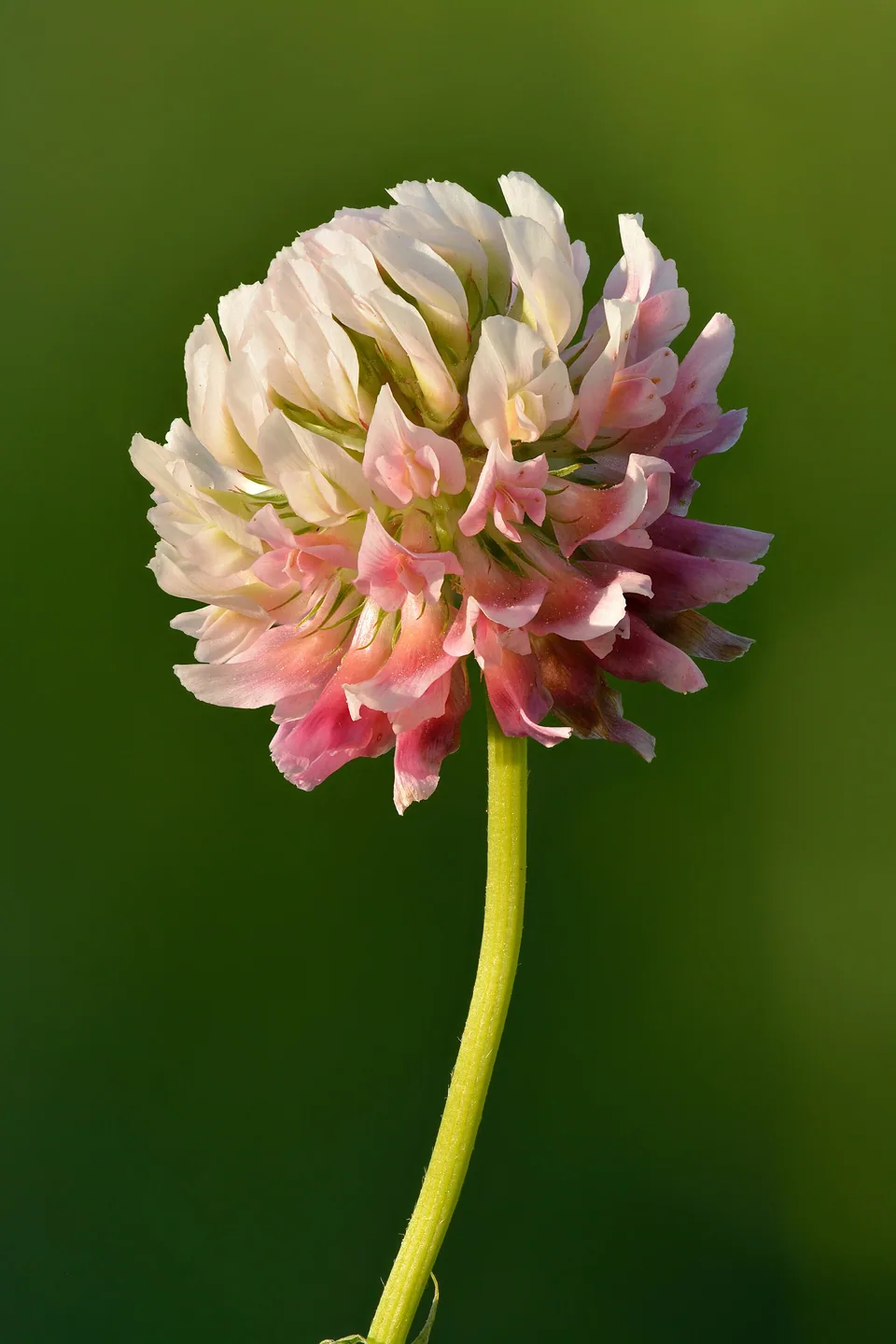
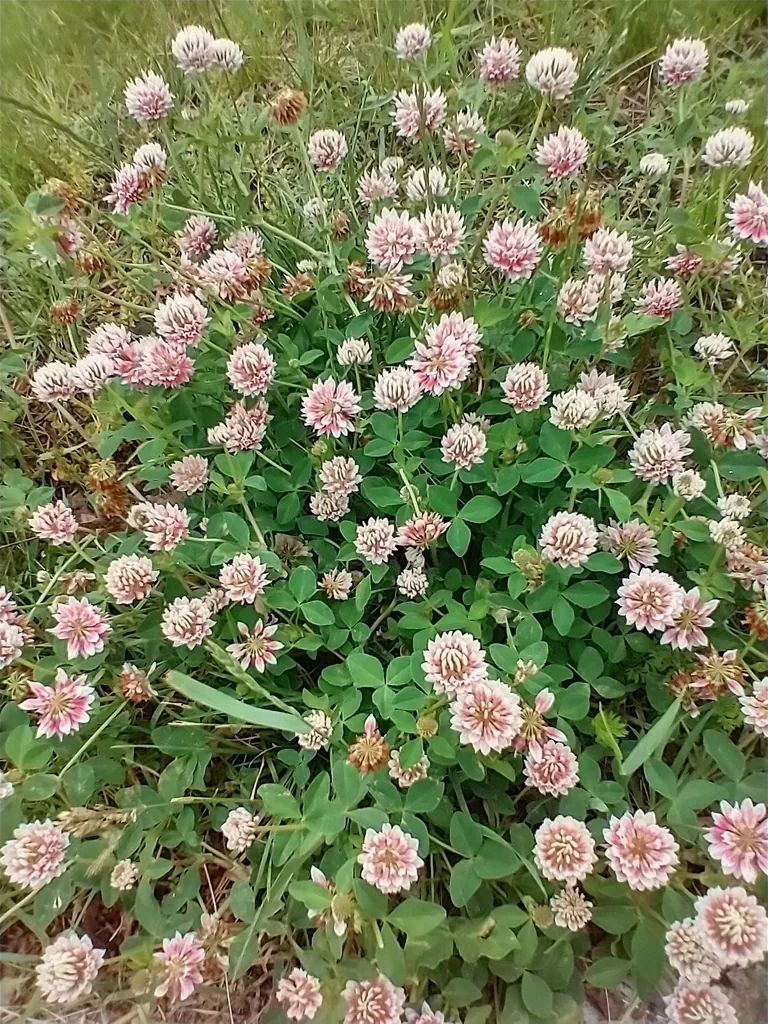

How to Grow and Care for Alsike Clover
Trifolium hybridum
Written by Emilio Marruso · last checked
Toxic to: Horses · Why
At a glance
This perennial clover loves cool, moist spots, just like the meadows and pastures where it grows wild. Give it full sun or partial shade and it will welcome butterflies, and even feed the caterpillars of the clouded sulphur. It needs no nitrogen fertilizer when the seed is properly inoculated, so it is a simple, generous plant to grow from seed.
- Sun
Full sun to partial shade
What the sources say (2)
Light: Full sun to partial shade
Light: Full sun (6 or more hours of direct sunlight a day) Partial Shade (Direct sunlight only part of the day, 2-6 hours)
— Trifolium hybridum (Alsike Clover) | North Carolina Extension Gardener Plant Toolbox [1] Light: Full sun (6 or more hours of direct sunlight a day) Partial Shade (Direct sunlight only part of the day, 2-6 hours)
— Alsike Clover - Trifolium hybridum | North Carolina Extension Gardener Plant Toolbox [2] - Water
Grows best in cool, moist conditions
What the sources say (1)
Watering notes: Cool and moist conditions give the best performance; natural habitat is moist meadows, pastures, abandoned fields and roadsides
Its natural habitat includes moist meadows, pastures, abandoned fields, and roadsides. Cool and moist conditions will provide the best performance.
— Trifolium hybridum (Alsike Clover) | North Carolina Extension Gardener Plant Toolbox [1] - Cold
Survives winters down to −20 °F (−28.9 °C)
Very hardy · USDA 5a · RHS H7 · Z5
What the sources say (4)
Hardiness, coldest zone: 5a [winter low −28.9 to −26.1 °C (−20 to −15 °F)]
USDA Plant Hardiness Zone: 5a, 5b, 6a, 6b, 7a, 7b, 8a, 8b, 9a, 9b
— Trifolium hybridum (Alsike Clover) | North Carolina Extension Gardener Plant Toolbox [1] USDA Plant Hardiness Zone: 5a, 5b, 6a, 6b, 7a, 7b, 8a, 8b, 9a, 9b
— Alsike Clover - Trifolium hybridum | North Carolina Extension Gardener Plant Toolbox [2] Hardiness, warmest zone: 9b [winter low −3.9 to −1.1 °C (25 to 30 °F)]
USDA Plant Hardiness Zone: 5a, 5b, 6a, 6b, 7a, 7b, 8a, 8b, 9a, 9b
— Trifolium hybridum (Alsike Clover) | North Carolina Extension Gardener Plant Toolbox [1] USDA Plant Hardiness Zone: 5a, 5b, 6a, 6b, 7a, 7b, 8a, 8b, 9a, 9b
— Alsike Clover - Trifolium hybridum | North Carolina Extension Gardener Plant Toolbox [2] - Feeding
No nitrogen needed if the seed is inoculated; yellow top leaves mean it lacks sulfur
What the sources say (2)
Avoid: Nitrogen fertilizer, not needed when the seed is properly inoculated
Clovers require no supplemental nitrogen (N) if they are inoculated properly.
— [3] Signs of deficiency: Sulfur deficiency: yellowing leaves near the tops of the plants
If the stand has yellowing leaves near the tops of plants, comparing a plant sample from the affected area with a sample taken from an area with normal tops may be diagnostic of an S deficiency.
— [3] - Watch out
Avoid regular mowing: it does poorly when cut often
- Propagation
Grows from seed
What the sources say (1)
Propagation: Seed
Recommended Propagation Strategy: Seed Country Or Region Of Origin:
— Trifolium hybridum (Alsike Clover) | North Carolina Extension Gardener Plant Toolbox [1] - Safety
Harmful to horses
Overview
Alsike clover is a perennial in the bean family, considered weedy but valuable to wildlife. [1] It is listed for full sun to partial shade and responds best to cool, moist conditions. [1]
Alsike Clover care
How to water Alsike Clover
Cool and moist conditions give the best performance; natural habitat is moist meadows, pastures, abandoned fields and roadsides
What the sources say (1)
Its natural habitat includes moist meadows, pastures, abandoned fields, and roadsides. Cool and moist conditions will provide the best performance.How much light Alsike Clover needs
Full sun to partial shade
What the sources say (2)
Light:
Full sun (6 or more hours of direct sunlight a day)
Partial Shade (Direct sunlight only part of the day, 2-6 hours)Light:
Full sun (6 or more hours of direct sunlight a day)
Partial Shade (Direct sunlight only part of the day, 2-6 hours)How much cold Alsike Clover can take
Hardiness, coldest zone
5a [winter low −28.9 to −26.1 °C (−20 to −15 °F)]
What the sources say (2)
USDA Plant Hardiness Zone:
5a, 5b, 6a, 6b, 7a, 7b, 8a, 8b, 9a, 9bUSDA Plant Hardiness Zone:
5a, 5b, 6a, 6b, 7a, 7b, 8a, 8b, 9a, 9bHardiness, warmest zone
9b [winter low −3.9 to −1.1 °C (25 to 30 °F)]
What the sources say (2)
USDA Plant Hardiness Zone:
5a, 5b, 6a, 6b, 7a, 7b, 8a, 8b, 9a, 9bUSDA Plant Hardiness Zone:
5a, 5b, 6a, 6b, 7a, 7b, 8a, 8b, 9a, 9bHow to propagate Alsike Clover
Seed
What the sources say (1)
Recommended Propagation Strategy:
Seed
Country Or Region Of Origin:How to grow Alsike Clover
The plant
Life cycle
perennial
What the sources say (1)
Genus:
Trifolium
Species:
hybridum
Family:
Fabaceae
Life Cycle:
PerennialFamily
Fabaceae (bean family)
What the sources say (1)
Trifolium hybridum is a flowering plant in the bean family.Fertilizing
When
The sources give different values depending on region, zone or growing conditions.
What each source says
field production: Potassium at seeding, then after each hay removal
What the sources say (1)
field production: If establishment soil test K levels are below 150 ppm, apply 60 pounds of K 2 O per acre at seeding. Thereafter, apply 50 pounds of K 2 O per ton of hay removed.How often
The sources give different values depending on region, zone or growing conditions.
What each source says
field production: After each hay harvest, in proportion to the hay removed
What the sources say (1)
field production: If establishment soil test K levels are below 150 ppm, apply 60 pounds of K 2 O per acre at seeding. Thereafter, apply 50 pounds of K 2 O per ton of hay removed.Mineral fertilizers
The sources give different values depending on region, zone or growing conditions.
What each source says
field production, soil test P below 10 ppm (Olsen): 67.3 kg [148.4 lb]/ha P₂O₅ at seeding
field production, soil test K below 150 ppm: 67.3 kg [148.4 lb]/ha K₂O at seeding, then 25 kg [55.1 lb] K₂O per tonne of hay removed
What the sources say (2)
field production, soil test P below 10 ppm (Olsen): Phosphorus (P) If establishment soil test P levels are below 10 parts per million (ppm) (Olsen test), apply 60 pounds of P 2 O 5 per acre at seeding.field production, soil test K below 150 ppm: If establishment soil test K levels are below 150 ppm, apply 60 pounds of K 2 O per acre at seeding. Thereafter, apply 50 pounds of K 2 O per ton of hay removed.Micronutrients
The sources give different values depending on region, zone or growing conditions.
What each source says
field production, sandy soils low in organic matter after a wet season: 11.2 kg [24.7 lb]/ha of sulfur as sulfate at establishment
What the sources say (1)
field production, sandy soils low in organic matter after a wet season: If the soil is particularly sandy, organic matter is low and seasonal rainfall has been high, application of 10 pounds of S per acre as a sulfate source of S may be beneficial at establishment.Avoid
Nitrogen fertilizer, not needed when the seed is properly inoculated
What the sources say (1)
Clovers require no supplemental nitrogen (N) if they are inoculated properly.Signs of deficiency
Sulfur deficiency: yellowing leaves near the tops of the plants
What the sources say (1)
If the stand has yellowing leaves near the tops of plants, comparing a plant sample from the affected area with a sample taken from an area with normal tops may be diagnostic of an S deficiency.Alsike Clover pests and problems
Mowing
Symptom: Does not perform well when regular mowing occurs
What to do: Avoid regular mowing
What the sources say (1)
Insects, Diseases, and Other Plant Problems: Does not perform well when regular mowing occurs. Weedy
— Trifolium hybridum (Alsike Clover) | North Carolina Extension Gardener Plant Toolbox [1]
Remedies
Each remedy shows what official sources say about it; traditional remedies without an official source are marked as such. Harmful ones are listed so you know to avoid them.
First aid
First aid: not a substitute for a doctor
contact dermatitis
rinse the skin with warm water and an emollient Official source, not independently tested
See a GP if you have persistent, recurrent or severe symptoms of contact dermatitis.
— nhs.uk [4] How: if you come into contact with an allergen or irritant, rinse the affected skin with warm water and an emollient as soon as possible
cleaning your skin – if you come into contact with an allergen or irritant, rinse the affected skin with warm water and an emollient as soon as possible
— nhs.uk [4]
Getting rid of it
weeds
physical removal Works
How: gently loosen the soil around the base with a spade or your fingers, then pluck the clover up, getting all of the roots
Get rid of small clumps as soon as you notice them by gently loosening the soil around the base with a spade or your fingers, then plucking the clover up. Be sure you get all of the roots.
— bobvila.com [5] What the evidence says If you do not wish to use a chemical herbicide, you can physically remove the clover (dig it out) and reseed the bare areas.
— ask.extension.org [6] smothering with plastic sheeting Works
How: place plastic sheeting or a garbage bag on top of the clover, securing the corners, for a few weeks; only on large patches
Place plastic sheeting (a garbage bag will do) on top of clover, securing the corners so it won’t blow away.
— bobvila.com [5] What the evidence says You can also place plastic over the clover patches to smother it.
— ask.extension.org [6] vinegar and dish soap spray Partly works
How: mix vinegar with a small amount of dish soap in a spray bottle and spot treat clover clumps
Mix vinegar with a small amount of dish soap, put the mixture in a spray bottle, and spot treat clover clumps.
— bobvila.com [5] What the evidence says There are many sources touting vinegar-based herbicides as “weed killers” but this must be horticultural grade vinegar (higher acidity) and they do not really kill the root.
— ask.extension.org [6]
Is Alsike Clover toxic to pets?
Reported by the source, quoted verbatim. This is not medical or veterinary advice: if a person or an animal may have eaten this plant, contact a poison control centre or a veterinarian.
#problem for horses #butterfly friendly #larval host plant #clouded sulphur butterfly #deer browsing plant
[1]The source flags the risk for this animal but does not explain why.
Similar plants
- Clover Trifolium repens
- Hair-foot trefoil Trifolium arvense
- Lesser Trefoil Trifolium dubium
- Red Clover Trifolium pratense
- Buffalo Clover Trifolium reflexum
- Crimson Clover Trifolium incarnatum
- Abraham Trachystemon orientalis
- Acacia longifolia Acacia longifolia
Sources
Every value above is quoted from these documents. Links lead to the original publisher.
- Trifolium hybridum (Alsike Clover) | North Carolina Extension Gardener Plant Toolbox · plants.ces.ncsu.edu, consulted
- Alsike Clover - Trifolium hybridum | North Carolina Extension Gardener Plant Toolbox · plants.ces.ncsu.edu, consulted
- ndsu.edu · ndsu.edu
- nhs.uk · nhs.uk
- bobvila.com · bobvila.com
- ask.extension.org · ask.extension.org
Written by Emilio Marruso · last checked