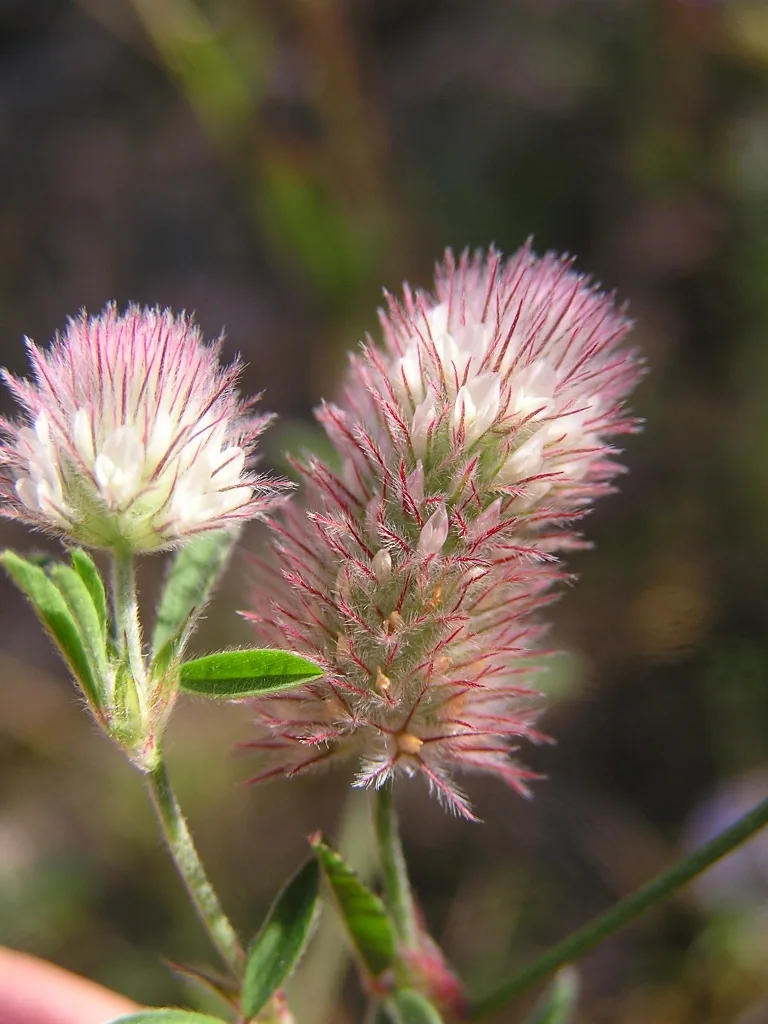


How to Grow and Care for Hair-foot trefoil
Trifolium arvense
Written by Emilio Marruso · last checked
Toxic to: Horses, Livestock · Why
At a glance
This clover is an easygoing annual or biennial, a carefree choice for tough spots, that shrugs off drought and dry soil. It grows happily in full sun or partial shade, and it starts easily from seed. Just keep an eye on it: it reseeds itself and can form large colonies in sandy, disturbed ground.
- Sun
Full sun to partial shade
What the sources say (1)
Light: Full sun to partial shade
Light: Full sun (6 or more hours of direct sunlight a day) Partial Shade (Direct sunlight only part of the day, 2-6 hours)
— Trifolium arvense (Hair-foot trefoil, Hare's-foot Clover, Oldfield Clover, Pussy clover, Rabbits-foot Clover, Stone Clover) | North Carolina Extension Gardener Plant Toolbox [1] - Water
Handles drought and dry soil well
What the sources say (1)
Watering notes: Drought tolerant; tolerates dry soil
Resistance To Challenges: Drought Dry Soil Heat Problems:
— Trifolium arvense (Hair-foot trefoil, Hare's-foot Clover, Oldfield Clover, Pussy clover, Rabbits-foot Clover, Stone Clover) | North Carolina Extension Gardener Plant Toolbox [1] - Cold
Survives winters down to −40 °F (−40 °C)
Very hardy · USDA 3a · RHS H7 · Z3
What the sources say (2)
Hardiness, coldest zone: 3a [winter low −40 to −37.2 °C (−40 to −35 °F)]
USDA Plant Hardiness Zone: 3a, 3b, 4a, 4b, 5a, 5b, 6a, 6b, 7a, 7b, 8a, 8b, 9a, 9b, 10a, 10b, 11a, 11b
— Trifolium arvense (Hair-foot trefoil, Hare's-foot Clover, Oldfield Clover, Pussy clover, Rabbits-foot Clover, Stone Clover) | North Carolina Extension Gardener Plant Toolbox [1] Hardiness, warmest zone: 11b [winter low 7.2 to 10 °C (45 to 50 °F)]
USDA Plant Hardiness Zone: 3a, 3b, 4a, 4b, 5a, 5b, 6a, 6b, 7a, 7b, 8a, 8b, 9a, 9b, 10a, 10b, 11a, 11b
— Trifolium arvense (Hair-foot trefoil, Hare's-foot Clover, Oldfield Clover, Pussy clover, Rabbits-foot Clover, Stone Clover) | North Carolina Extension Gardener Plant Toolbox [1] - Watch out
Reseeds itself and can spread into large patches on sandy, disturbed ground
- Propagation
Grows from seed
What the sources say (1)
Propagation: Seed
Recommended Propagation Strategy: Seed Country Or Region Of
— Trifolium arvense (Hair-foot trefoil, Hare's-foot Clover, Oldfield Clover, Pussy clover, Rabbits-foot Clover, Stone Clover) | North Carolina Extension Gardener Plant Toolbox [1] - Safety
Toxic to livestock and horses: can harm the liver and block the gut
Overview
Rabbit-foot clover reseeds itself and can become invasive in sandy disturbed areas. [1] It is reported as toxic to livestock, and horses and livestock can develop abdominal obstructions from eating it. [2][1]
Hair-foot trefoil care
How to water Hair-foot trefoil
Drought tolerant; tolerates dry soil
What the sources say (1)
Resistance To Challenges:
Drought
Dry Soil
Heat
Problems:How much light Hair-foot trefoil needs
Full sun to partial shade
What the sources say (1)
Light:
Full sun (6 or more hours of direct sunlight a day)
Partial Shade (Direct sunlight only part of the day, 2-6 hours)How much cold Hair-foot trefoil can take
Hardiness, coldest zone
3a [winter low −40 to −37.2 °C (−40 to −35 °F)]
What the sources say (1)
USDA Plant Hardiness Zone:
3a, 3b, 4a, 4b, 5a, 5b, 6a, 6b, 7a, 7b, 8a, 8b, 9a, 9b, 10a, 10b, 11a, 11bHardiness, warmest zone
11b [winter low 7.2 to 10 °C (45 to 50 °F)]
What the sources say (1)
USDA Plant Hardiness Zone:
3a, 3b, 4a, 4b, 5a, 5b, 6a, 6b, 7a, 7b, 8a, 8b, 9a, 9b, 10a, 10b, 11a, 11bHow to propagate Hair-foot trefoil
Seed
What the sources say (1)
Recommended Propagation Strategy:
Seed
Country Or Region OfHow to grow Hair-foot trefoil
The plant
Life cycle
annual, biennial
What the sources say (1)
Genus:
Trifolium
Species:
arvense
Family:
Fabaceae
Life Cycle:
Annual
Biennial
Recommended Propagation Strategy:Family
Fabaceae
What the sources say (1)
Genus:
Trifolium
Species:
arvense
Family:
Fabaceae
Life Cycle:
Annual
Biennial
Recommended Propagation Strategy:Hair-foot trefoil pests and problems
Invasive reseeding
Symptom: Reseeds itself and forms large colonies in sandy disturbed areas
What the sources say (1)
Wind-blown seeds can quickly germinate, allowing the plant to form large colonies.
— Trifolium arvense (Hair-foot trefoil, Hare's-foot Clover, Oldfield Clover, Pussy clover, Rabbits-foot Clover, Stone Clover) | North Carolina Extension Gardener Plant Toolbox [1]
Remedies
Each remedy shows what official sources say about it; traditional remedies without an official source are marked as such. Harmful ones are listed so you know to avoid them.
Getting rid of it
weeds
hand-pulling and hoeing Works
The hard seed coat also allows the seeds to survive longer in the soil than many other weed seeds; clover seeds can germinate over many years, making the control of these plants an ongoing effort.
— ipm.ucanr.edu [6] How: Annual clovers can be easily controlled by hand-pulling, hoeing, or cultivation.
Annual clovers can be easily controlled by hand-pulling, hoeing, or cultivation.
— ipm.ucanr.edu [6] What the evidence says Clovers are relatively easy to control in the home garden by hand-pulling, cultivation, and the application of mulch.
— ipm.ucanr.edu [6] thick organic mulch Works
Organic mulches need to be reapplied each year to maintain the 4-inch-thick layer because they decompose and the thickness of the mulch declines over time.
— ipm.ucanr.edu [6] How: Before seeds germinate, a 4-inch thick organic mulch (e.g., compost, wood chips, etc.) can prevent establishment of clovers.
Before seeds germinate, a 4-inch thick organic mulch (e.g., compost, wood chips, etc.) can prevent establishment of clovers.
— ipm.ucanr.edu [6] What the evidence says Mulches can be effective in excluding clovers and other weeds in landscapes.
— ipm.ucanr.edu [6] thick turf Partly works
How: Insuring a thick stand of grass can help exclude clovers in turf.
Insuring a thick stand of grass can help exclude clovers in turf.
— ipm.ucanr.edu [6] What the evidence says Insuring a thick stand of grass can help exclude clovers in turf.
— ipm.ucanr.edu [6]
Is Hair-foot trefoil toxic to pets?
Reported by the source, quoted verbatim. This is not medical or veterinary advice: if a person or an animal may have eaten this plant, contact a poison control centre or a veterinarian.
-toxic to livestock - liver damage - photosensitivity
[2]- Symptoms
- liver damage - photosensitivity -attracts pollinators Natural
[2]
Domestic livestock and horses can develop abdominal obstructions by consuming this plant.
[1]- Symptoms
Domestic livestock and horses can develop abdominal obstructions by consuming this plant.
[1]
Edibility
Reported by the source, quoted verbatim. Do not eat a plant on the basis of this page alone: identification mistakes can be dangerous.
Similar plants
- Clover Trifolium repens
- Lesser Trefoil Trifolium dubium
- Red Clover Trifolium pratense
- Buffalo Clover Trifolium reflexum
- Crimson Clover Trifolium incarnatum
- Alsike Clover Trifolium hybridum
- American Groundnut Apios americana
- American hogpeanut Amphicarpaea bracteata
Sources
Every value above is quoted from these documents. Links lead to the original publisher.
- Trifolium arvense (Hair-foot trefoil, Hare's-foot Clover, Oldfield Clover, Pussy clover, Rabbits-foot Clover, Stone Clover) | North Carolina Extension Gardener Plant Toolbox · plants.ces.ncsu.edu, consulted
- Rabbitfoot clover - Cooperative Extension: Maine Wild Blueberries - University of Maine Cooperative Extension · extension.umaine.edu, consulted
- Pussy clover - Trifolium arvense | North Carolina Extension Gardener Plant Toolbox · plants.ces.ncsu.edu, consulted
- Stone Clover - Trifolium arvense | North Carolina Extension Gardener Plant Toolbox · plants.ces.ncsu.edu, consulted
- Rabbits-foot Clover - Trifolium arvense | North Carolina Extension Gardener Plant Toolbox · plants.ces.ncsu.edu, consulted
- ipm.ucanr.edu · ipm.ucanr.edu
Written by Emilio Marruso · last checked