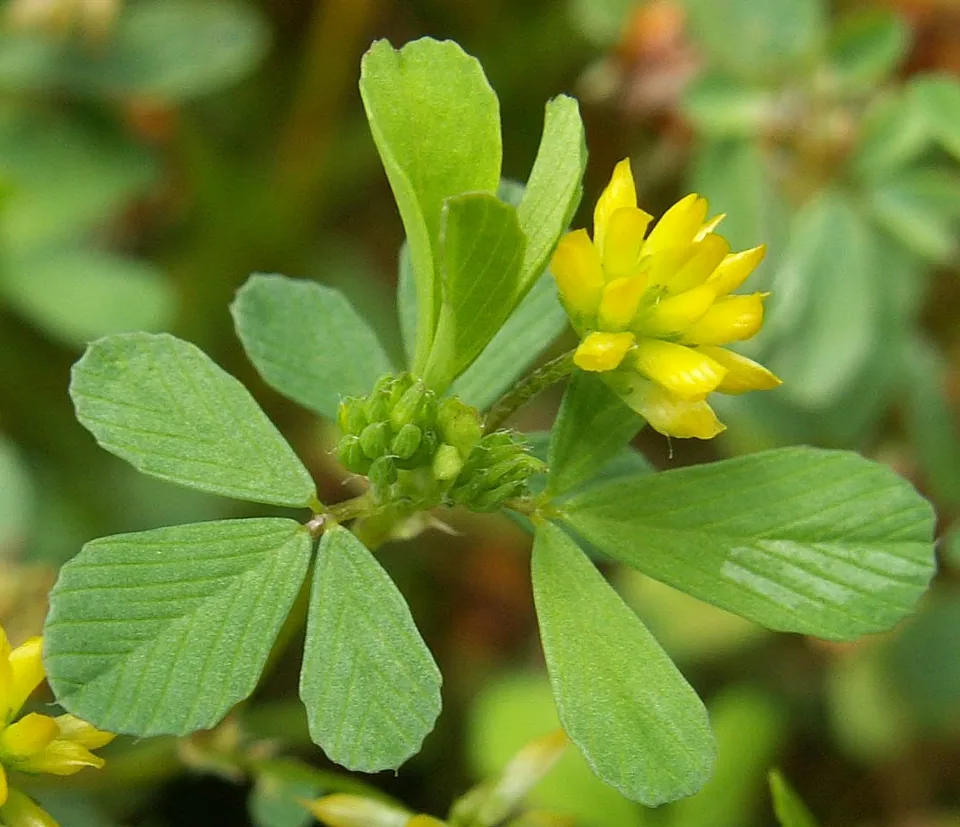


How to Grow and Care for Lesser Trefoil
Trifolium dubium
Written by Emilio Marruso · last checked
At a glance
This little clover is an easygoing annual that loves full sun, with 6 or more hours of direct light a day. Sow it in September and don't worry about poor ground: it puts up with acid, low-fertility soil and needs fertilizer only if a soil test calls for it. Just keep it away from camellias and gooseberries.
- Sun
Full sun: 6 or more hours of direct sunlight a day
What the sources say (1)
Light: Full sun (6 or more hours of direct sunlight a day)
Light: Full sun (6 or more hours of direct sunlight a day)
— Trifolium dubium (Lesser Hop Clover, Lesser Trefoil, Little Hop Clover, Suckling Clover, Yellow Shamrock, Yellow Suckling Clover) | North Carolina Extension Gardener Plant Toolbox [1] - Cold
Survives winters down to 10 °F (−12.2 °C)
Hardy in cold winters · USDA 8a · RHS H5 · Z8
What the sources say (2)
Hardiness, coldest zone: 8a [winter low −12.2 to −9.4 °C (10 to 15 °F)]
NC Region: Coastal USDA Plant Hardiness Zone: 8a, 8b, 9a, 9b
— Trifolium dubium (Lesser Hop Clover, Lesser Trefoil, Little Hop Clover, Suckling Clover, Yellow Shamrock, Yellow Suckling Clover) | North Carolina Extension Gardener Plant Toolbox [1] Hardiness, warmest zone: 9b [winter low −3.9 to −1.1 °C (25 to 30 °F)]
NC Region: Coastal USDA Plant Hardiness Zone: 8a, 8b, 9a, 9b
— Trifolium dubium (Lesser Hop Clover, Lesser Trefoil, Little Hop Clover, Suckling Clover, Yellow Shamrock, Yellow Suckling Clover) | North Carolina Extension Gardener Plant Toolbox [1] - Soil
Puts up with acid, poor soil
What the sources say (1)
Mineral fertilizers: Fertilizer only as a soil test indicates; tolerates acid soils with low fertility
Fertilization: Tolerant to acid soils with low fertility. Fertilizer applications should follow soil test recommendations.
— Small Hop Clover (Trifolium dubium) | Mississippi State University Extension Service [2] - Feeding
Feed only if a soil test says so
What the sources say (1)
Mineral fertilizers: Fertilizer only as a soil test indicates; tolerates acid soils with low fertility
Fertilization: Tolerant to acid soils with low fertility. Fertilizer applications should follow soil test recommendations.
— Small Hop Clover (Trifolium dubium) | Mississippi State University Extension Service [2] - Pests
Can carry mites: don't plant it near camellias or gooseberries
- Propagation
Grow new plants by dividing clumps or from seed
What the sources say (1)
Propagation: Division, seed
Life Cycle: Annual Recommended Propagation Strategy: Division Seed Country Or Region Of Origin: Macronesia, Europe
— Trifolium dubium (Lesser Hop Clover, Lesser Trefoil, Little Hop Clover, Suckling Clover, Yellow Shamrock, Yellow Suckling Clover) | North Carolina Extension Gardener Plant Toolbox [1] - Sowing
Sow in September
What the sources say (1)
Sowing: September
If enough seed is collected from existing stands it should be planted at a rate of 4 to 8 lbs/ac in September.
— Small Hop Clover (Trifolium dubium) | Mississippi State University Extension Service [2]
Overview
Trifolium dubium is an annual legume weed of disturbed sites, roadsides, meadows and lawns that tolerates foot traffic and mowing. [1] It needs full sun and cannot grow in shade. [1] It is propagated by division or seed. [1]
Lesser Trefoil care
How much light Lesser Trefoil needs
Full sun (6 or more hours of direct sunlight a day)
What the sources say (1)
Light:
Full sun (6 or more hours of direct sunlight a day)How much cold Lesser Trefoil can take
Hardiness, coldest zone
8a [winter low −12.2 to −9.4 °C (10 to 15 °F)]
What the sources say (1)
NC Region:
Coastal
USDA Plant Hardiness Zone:
8a, 8b, 9a, 9bHardiness, warmest zone
9b [winter low −3.9 to −1.1 °C (25 to 30 °F)]
What the sources say (1)
NC Region:
Coastal
USDA Plant Hardiness Zone:
8a, 8b, 9a, 9bHow to propagate Lesser Trefoil
Division, seed
What the sources say (1)
Life Cycle:
Annual
Recommended Propagation Strategy:
Division
Seed
Country Or Region Of Origin:
Macronesia, EuropeHow to grow Lesser Trefoil
The plant
Life cycle
annual
What the sources say (1)
Lesser Trefoil is an annual weed in the bean family found all over the world in disturbed sites, roadsides, meadows, and lawns.Family
Fabaceae
What the sources say (1)
Genus:
Trifolium
Species:
dubium
Family:
Fabaceae
Life Cycle:
AnnualFertilizing
Mineral fertilizers
Fertilizer only as a soil test indicates; tolerates acid soils with low fertility
What the sources say (1)
Fertilization: Tolerant to acid soils with low fertility. Fertilizer applications should follow soil test recommendations.Lesser Trefoil pests and problems
Mite host near camellias and gooseberries
Symptom: Fruit drop in gooseberries and premature budding on camellias.
What to do: Do not plant it near camellias or gooseberries.
What the sources say (1)
It should not be planted near camellias or gooseberries. It harbors a mite that may lead to fruit drop for the gooseberries and premature budding on your camellias.
— Trifolium dubium (Lesser Hop Clover, Lesser Trefoil, Little Hop Clover, Suckling Clover, Yellow Shamrock, Yellow Suckling Clover) | North Carolina Extension Gardener Plant Toolbox [1]
Remedies
Each remedy shows what official sources say about it; traditional remedies without an official source are marked as such. Harmful ones are listed so you know to avoid them.
Getting rid of it
lesser trefoil in lawn
hand weeding Not verified
Traditional remedy, not verified by an official source.
How: Be vigilant and hand weed as it appears.
raking upright before mowing Not verified
Traditional remedy, not verified by an official source.
How: Raking the weed into an upright position prior to mowing helps weaken and thin it out somewhat.
fertilizing the lawn Works
How: Keep the soil in good health with a balanced feed program to discourage the weed.
it is important to to keep the soil in good health with a balanced feed program to help discourage the weed.
— identifylawnweeds.blogspot.com [5] What the evidence says Fertilizing the grass will help it outcompete clover, which produces its own nitrogen.
— hortsense.cahnrs.wsu.edu [6]
Calendar
September
What the sources say (1)
If enough seed is collected from existing stands it should be planted at a rate of 4 to 8 lbs/ac in September.Months as given by the sources, which are mostly from the United States (northern hemisphere). In the southern hemisphere they shift by about six months.
Indicative values
Values from a secondary source, not checked word for word like the rest of this page. Use them as a starting point.
- Hours of sun
- 4-6 hoursIndicative value, adapt it to your climate · Secondary source
- Watering
- MinimalIndicative value, adapt it to your climate · Secondary source
- Drought tolerant
- yesIndicative value, adapt it to your climate · Secondary source
- Soil pH
- 6-7.5Indicative value, adapt it to your climate · Secondary source
- Care level
- MediumIndicative value, adapt it to your climate · Secondary source
- Growth rate
- HighIndicative value, adapt it to your climate · Secondary source
- Pruning
- March, April, May, June, July, August, September, May, June, July, August, March, April, May, June, July, August, SeptemberIndicative value, adapt it to your climate · Secondary source
Similar plants
- Clover Trifolium repens
- Hair-foot trefoil Trifolium arvense
- Red Clover Trifolium pratense
- Buffalo Clover Trifolium reflexum
- Crimson Clover Trifolium incarnatum
- Alsike Clover Trifolium hybridum
- American hogpeanut Amphicarpaea bracteata
- Bicolor Lespedeza Lespedeza bicolor
Sources
Every value above is quoted from these documents. Links lead to the original publisher.
- Trifolium dubium (Lesser Hop Clover, Lesser Trefoil, Little Hop Clover, Suckling Clover, Yellow Shamrock, Yellow Suckling Clover) | North Carolina Extension Gardener Plant Toolbox · plants.ces.ncsu.edu, consulted
- Small Hop Clover (Trifolium dubium) | Mississippi State University Extension Service · extension.msstate.edu, consulted
- Lesser Trefoil - Trifolium dubium | North Carolina Extension Gardener Plant Toolbox · plants.ces.ncsu.edu, consulted
- Growing Shamrocks Indoors | Yard and Garden · yardandgarden.extension.iastate.edu, consulted
- identifylawnweeds.blogspot.com · identifylawnweeds.blogspot.com
- hortsense.cahnrs.wsu.edu · hortsense.cahnrs.wsu.edu
Written by Emilio Marruso · last checked