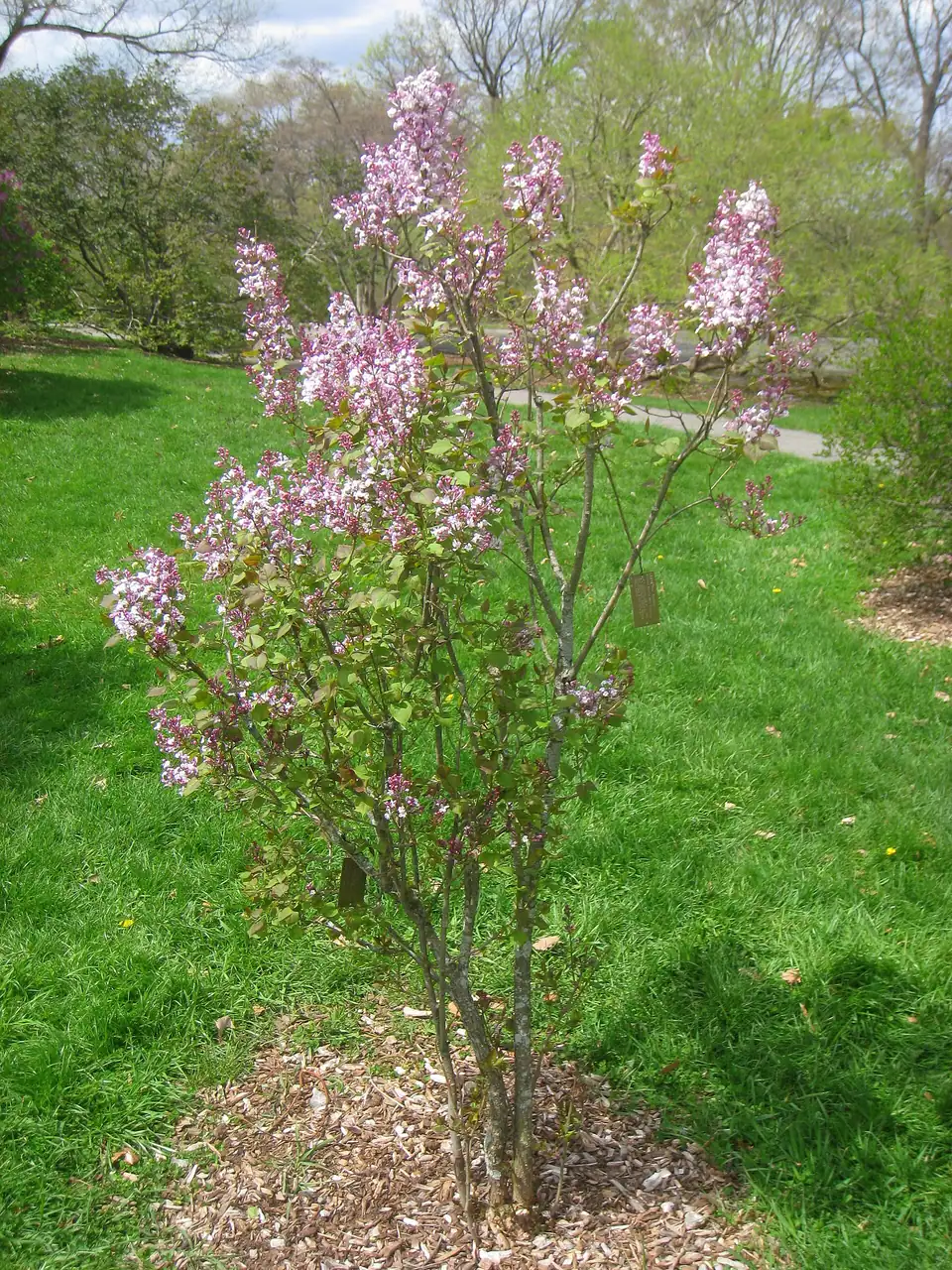


How to Grow and Care for Early Lilac
Syringa oblata
Written by Emilio Marruso · last checked
At a glance
This is the earliest-blooming lilac, a generous shrub that grows 8–12 ft tall and just as wide. Give it full sun or partial shade and moist, fertile, well-drained soil, and feed it only after flowering once it has settled in. It suits warmer areas best, where its early flower buds are safer from spring frost.
- Sun
Full sun to partial shade
What the sources say (1)
Light: Full sun to partial shade
Light: Full sun (6 or more hours of direct sunlight a day) Partial Shade (Direct sunlight only part of the day, 2-6 hours)
— Syringa oblata (Broadleaf Lilac, Early Lilac, Korean Lilac) | North Carolina Extension Gardener Plant Toolbox [1] - Water
Keep the soil moist, but make sure it drains well
What the sources say (1)
Watering notes: Moist, fertile, well-drained soil
Early lilac grows best in moist, fertile, well-drained soils where the pH hovers between slightly acidic and slightly alkaline.
— Syringa oblata (Broadleaf Lilac, Early Lilac, Korean Lilac) | North Carolina Extension Gardener Plant Toolbox [1] - Cold
Survives winters down to −30 °F (−34.4 °C)
Very hardy · USDA 4a · RHS H7 · Z4
What the sources say (2)
Hardiness, coldest zone: 4a [winter low −34.4 to −31.7 °C (−30 to −25 °F)]
USDA Plant Hardiness Zone: 4a, 4b, 5a, 5b, 6a, 6b, 7a, 7b
— Syringa oblata (Broadleaf Lilac, Early Lilac, Korean Lilac) | North Carolina Extension Gardener Plant Toolbox [1] Hardiness, warmest zone: 7b [winter low −15 to −12.2 °C (5 to 10 °F)]
USDA Plant Hardiness Zone: 4a, 4b, 5a, 5b, 6a, 6b, 7a, 7b
— Syringa oblata (Broadleaf Lilac, Early Lilac, Korean Lilac) | North Carolina Extension Gardener Plant Toolbox [1] - Soil
Fertile, well-drained soil, pH 6.0–8.0
What the sources say (3)
Watering notes: Moist, fertile, well-drained soil
Early lilac grows best in moist, fertile, well-drained soils where the pH hovers between slightly acidic and slightly alkaline.
— Syringa oblata (Broadleaf Lilac, Early Lilac, Korean Lilac) | North Carolina Extension Gardener Plant Toolbox [1] Soil pH, minimum: 6.0
Soil pH: Neutral (6.0-8.0) Soil Drainage: Good Drainage
— Syringa oblata (Broadleaf Lilac, Early Lilac, Korean Lilac) | North Carolina Extension Gardener Plant Toolbox [1] Soil pH, maximum: 8.0
Soil pH: Neutral (6.0-8.0) Soil Drainage: Good Drainage
— Syringa oblata (Broadleaf Lilac, Early Lilac, Korean Lilac) | North Carolina Extension Gardener Plant Toolbox [1] - Feeding
Feed after flowering, only once settled (2–3 years); too much nitrogen means leaves, not flowers
What the sources say (7)
When: After flowering, once the plant is established (2–3 years); not in the first year after planting
Once the lilac is established (2–3 years), fertilizers may be needed.
— [3] Apply the fertilizer at the base of the plant after flowering.
— [3] Avoid: Fertilizing in the first year after planting; overfertilizing; fertilizers with more than 20% nitrogen; high-nitrogen lawn fertilizers near the base
Do not fertilize newly planted shrubs or trees the first year after planting as they need to put their energy into establishing a healthy root system
— [3] Be careful not to overfertilize plants or to use fertiliz- ers containing more than 20% nitrogen.
— [3] Lawn fer- tilizers are often high in nitrogen; avoid using them around the base of your lilac.
— [3] Signs of excess: Excessive vegetative growth and lush green foliage at the expense of flower buds; in extreme cases the plant dies
Too much nitrogen can cause excessive vegetative growth at the expense of flower bud development; in extreme cases it can kill the plant.
— [3] Too much nitrogen (N) can lead to lush, green foliage at the expense of flower bud production.
— [3] - Pests
Aphids, caterpillars, borers and scale; powdery mildew and leaf spot, so give it good airflow
What the sources say (2)
Pests: aphids, caterpillars, borers, scale
Aphids, caterpillars, borers, and scale are insects that may damage this plant.
— Syringa oblata (Broadleaf Lilac, Early Lilac, Korean Lilac) | North Carolina Extension Gardener Plant Toolbox [1] Diseases: powdery mildew, leaf spot
Powdery mildew can be an issue on the foliage in late summer. Leaf spot may also appear.
— Syringa oblata (Broadleaf Lilac, Early Lilac, Korean Lilac) | North Carolina Extension Gardener Plant Toolbox [1] - Watch out
It blooms very early, so spring frost can damage the flower buds; warmer areas suit it better
- Size
8–12 ft tall and 8–12 ft wide
What the sources say (2)
Mature height: 244-366 cm (8-12 ft)
Height: 8 ft. 0 in. - 12 ft. 0 in. Width: 8 ft. 0 in. - 12 ft. 0 in.
— Syringa oblata (Broadleaf Lilac, Early Lilac, Korean Lilac) | North Carolina Extension Gardener Plant Toolbox [1] Mature width: 244-366 cm (8-12 ft)
Height: 8 ft. 0 in. - 12 ft. 0 in. Width: 8 ft. 0 in. - 12 ft. 0 in.
— Syringa oblata (Broadleaf Lilac, Early Lilac, Korean Lilac) | North Carolina Extension Gardener Plant Toolbox [1] - Propagation
By layering, seed or stem cuttings
What the sources say (1)
Propagation: Layering, seed, stem cutting
Recommended Propagation Strategy: Layering Seed Stem Cutting Country Or Region Of Origin:
— Syringa oblata (Broadleaf Lilac, Early Lilac, Korean Lilac) | North Carolina Extension Gardener Plant Toolbox [1]
Overview
Early lilac is a perennial shrub or tree in the olive family, native to China. [1] It grows best in moist, fertile, well-drained soils. [1] It is the earliest-blooming lilac, so flower buds are susceptible to frost injury in early spring. [1]
This record is incomplete: the sources we read do not cover every field yet.
Not yet covered by our sources: Watering, Pruning
Early Lilac care
How to water Early Lilac
Watering
Not stated in the sources we read.
Watering notes
Moist, fertile, well-drained soil
What the sources say (1)
Early lilac grows best in moist, fertile, well-drained soils where the pH hovers between slightly acidic and slightly alkaline.How much light Early Lilac needs
Full sun to partial shade
What the sources say (1)
Light:
Full sun (6 or more hours of direct sunlight a day)
Partial Shade (Direct sunlight only part of the day, 2-6 hours)How much cold Early Lilac can take
Hardiness, coldest zone
4a [winter low −34.4 to −31.7 °C (−30 to −25 °F)]
What the sources say (1)
USDA Plant Hardiness Zone:
4a, 4b, 5a, 5b, 6a, 6b, 7a, 7bHardiness, warmest zone
7b [winter low −15 to −12.2 °C (5 to 10 °F)]
What the sources say (1)
USDA Plant Hardiness Zone:
4a, 4b, 5a, 5b, 6a, 6b, 7a, 7bBest soil for Early Lilac
Soil pH, minimum
6.0
What the sources say (1)
Soil pH:
Neutral (6.0-8.0)
Soil Drainage:
Good DrainageSoil pH, maximum
8.0
What the sources say (1)
Soil pH:
Neutral (6.0-8.0)
Soil Drainage:
Good DrainageHow to propagate Early Lilac
Layering, seed, stem cutting
What the sources say (1)
Recommended Propagation Strategy:
Layering
Seed
Stem Cutting
Country Or Region Of Origin:How to grow Early Lilac
The plant
Life cycle
perennial
What the sources say (1)
Early lilac is a perennial shrub or tree in the olive family (Oleaceae).Family
Oleaceae
What the sources say (1)
Early lilac is a perennial shrub or tree in the olive family (Oleaceae).Mature height
244-366 cm (8-12 ft)
What the sources say (1)
Height: 8 ft. 0 in. - 12 ft. 0 in. Width: 8 ft. 0 in. - 12 ft. 0 in.Mature width
244-366 cm (8-12 ft)
What the sources say (1)
Height: 8 ft. 0 in. - 12 ft. 0 in. Width: 8 ft. 0 in. - 12 ft. 0 in.Pests and diseases
Pests
aphids, caterpillars, borers, scale
What the sources say (1)
Aphids, caterpillars, borers, and scale are insects that may damage this plant.Diseases
powdery mildew, leaf spot
What the sources say (1)
Powdery mildew can be an issue on the foliage in late summer. Leaf spot may also appear.Fertilizing
When
After flowering, once the plant is established (2–3 years); not in the first year after planting
Mineral fertilizers
Complete fertilizer such as 5-10-5 or 10-10-10, applied at the base of the plant at label rates, if a soil test shows low phosphorus or potassium
What the sources say (2)
If either nutrient is limited, a complete fertilizer containing nitrogen (N), phospho- rus (P) and potassium (K) can be used. A 5-10-5 or a 10-10-10 fertilizer is a good choice.Apply the fertilizer at the base of the plant after flowering. Always follow the application rates on the label.Avoid
Fertilizing in the first year after planting; overfertilizing; fertilizers with more than 20% nitrogen; high-nitrogen lawn fertilizers near the base
What the sources say (3)
Do not fertilize newly planted shrubs or trees the first year after planting as they need to put their energy into establishing a healthy root systemBe careful not to overfertilize plants or to use fertiliz- ers containing more than 20% nitrogen.Lawn fer- tilizers are often high in nitrogen; avoid using them around the base of your lilac.Signs of excess
Excessive vegetative growth and lush green foliage at the expense of flower buds; in extreme cases the plant dies
What the sources say (2)
Too much nitrogen can cause excessive vegetative growth at the expense of flower bud development; in extreme cases it can kill the plant.Too much nitrogen (N) can lead to lush, green foliage at the expense of flower bud production.Early Lilac pests and problems
Frost injury to flower buds
Symptom: Flower buds are susceptible to frost injury in early spring because it is the earliest-blooming lilac
What to do: Warmer areas suit it better; selections and hybrids deserve a try there
What the sources say (2)
This is the earliest-blooming lilac, but consequently, flower buds are susceptible to frost injury in early spring.
— Syringa oblata (Broadleaf Lilac, Early Lilac, Korean Lilac) | North Carolina Extension Gardener Plant Toolbox [1] As for Syringa oblata , Bir said it flowers too early to consistently avoid frost and freeze damage in the upper piedmont and mountains.
— In Search of Lilacs for the South - Extension Gardener | NC State Extension [2] Powdery mildew and leaf spot
Symptom: Powdery mildew can affect the foliage in late summer; leaf spot may also appear
What to do: Good air circulation is needed to prevent diseases
What the sources say (2)
Powdery mildew can be an issue on the foliage in late summer. Leaf spot may also appear.
— Syringa oblata (Broadleaf Lilac, Early Lilac, Korean Lilac) | North Carolina Extension Gardener Plant Toolbox [1] Good air circulation is needed to prevent diseases.
— Syringa oblata (Broadleaf Lilac, Early Lilac, Korean Lilac) | North Carolina Extension Gardener Plant Toolbox [1] Insect pests
Symptom: Aphids, caterpillars, borers, and scale may damage the plant
What the sources say (1)
Aphids, caterpillars, borers, and scale are insects that may damage this plant.
— Syringa oblata (Broadleaf Lilac, Early Lilac, Korean Lilac) | North Carolina Extension Gardener Plant Toolbox [1]
Remedies
Each remedy shows what official sources say about it; traditional remedies without an official source are marked as such. Harmful ones are listed so you know to avoid them.
Treating the plant
oystershell scale
horticultural oil Works
Consult the label for dosage rates and safety precautions.
— portal.ct.gov [4] How: A dormant application of horticultural oil will control overwintering scales; a summer application of ultrafine oil can also be helpful.
A dormant application of horticultural oil will control overwintering scales.
— portal.ct.gov [4] What the evidence says A dormant application of horticultural oil will control overwintering scales.
— portal.ct.gov [4] insecticidal soap Works
Consult the label for dosage rates and safety precautions.
— portal.ct.gov [4] How: Spray about June 15 to kill the young crawlers.
Spraying with malathion, ultrafine oil, or insecticidal soap, which are among the compounds registered for control of this pest in Connecticut, about June 15 kills the young crawlers.
— portal.ct.gov [4] What the evidence says Spraying with malathion, ultrafine oil, or insecticidal soap, which are among the compounds registered for control of this pest in Connecticut, about June 15 kills the young crawlers.
— portal.ct.gov [4]
lilac borer
beneficial nematodes Partly works
How: Applied to the bark of trunks and twigs to control larvae in their galleries.
Beneficial nematodes, Steinernema carpocapsae , can be applied to the bark of trunks and twigs to control larvae in their galleries.
— portal.ct.gov [4] What the evidence says Beneficial nematodes, Steinernema carpocapsae , can be applied to the bark of trunks and twigs to control larvae in their galleries.
— portal.ct.gov [4] pruning out the infected branch Partly works
How: Cut out the branch bored by the larva.
The larva will bore into the stems, leaving sawdust and sap near the bottom. Pruning out the infected branch will help with this.
— extension.psu.edu [5] What the evidence says The larva will bore into the stems, leaving sawdust and sap near the bottom. Pruning out the infected branch will help with this.
— extension.psu.edu [5]
bacterial blight
prune and burn affected parts Partly works
When pruning to remove infected shoots, be sure to disinfect shears between plants.
— purduelandscapereport.org [7] How: Remove affected parts as soon as they are noticed.
If your lilac is infected, prune and burn affected parts as soon as you notice them.
— extension.oregonstate.edu [6] What the evidence says If your lilac is infected, prune and burn affected parts as soon as you notice them.
— extension.oregonstate.edu [6]
powdery mildew
improvement of air flow around the plant Partly works
How: Improve air flow around the plant to reduce severity.
Severity of disease may be reduced by improvement of air flow around the plant.
— portal.ct.gov [4] What the evidence says Severity of disease may be reduced by improvement of air flow around the plant.
— portal.ct.gov [4]
Calendar
Pruning
Not stated in the sources we read.
Months as given by the sources, which are mostly from the United States (northern hemisphere). In the southern hemisphere they shift by about six months.
Indicative values
Values from a secondary source, not checked word for word like the rest of this page. Use them as a starting point.
- Hours of sun
- 6-8 hoursIndicative value, adapt it to your climate · Secondary source
- Watering
- AverageIndicative value, adapt it to your climate · Secondary source
- Drought tolerant
- yesIndicative value, adapt it to your climate · Secondary source
- Care level
- ModerateIndicative value, adapt it to your climate · Secondary source
- Growth rate
- LowIndicative value, adapt it to your climate · Secondary source
- Pruning
- February, March, AprilIndicative value, adapt it to your climate · Secondary source
Similar plants
- Late Lilac Syringa villosa
- Persian lilac Syringa persica
- Common Lilac Syringa vulgaris
- Japanese Tree Lilac Syringa reticulata
- Amur privet Ligustrum amurense
- Black ash Fraxinus nigra
- Blue Ash Fraxinus quadrangulata
- Chinese Fringetree Chionanthus retusus
Sources
Every value above is quoted from these documents. Links lead to the original publisher.
- Syringa oblata (Broadleaf Lilac, Early Lilac, Korean Lilac) | North Carolina Extension Gardener Plant Toolbox · plants.ces.ncsu.edu, consulted
- In Search of Lilacs for the South - Extension Gardener | NC State Extension · extensiongardener.ces.ncsu.edu, consulted
- hort.extension.wisc.edu · hort.extension.wisc.edu
- portal.ct.gov · portal.ct.gov
- extension.psu.edu · extension.psu.edu
- extension.oregonstate.edu · extension.oregonstate.edu
- purduelandscapereport.org · purduelandscapereport.org
Written by Emilio Marruso · last checked