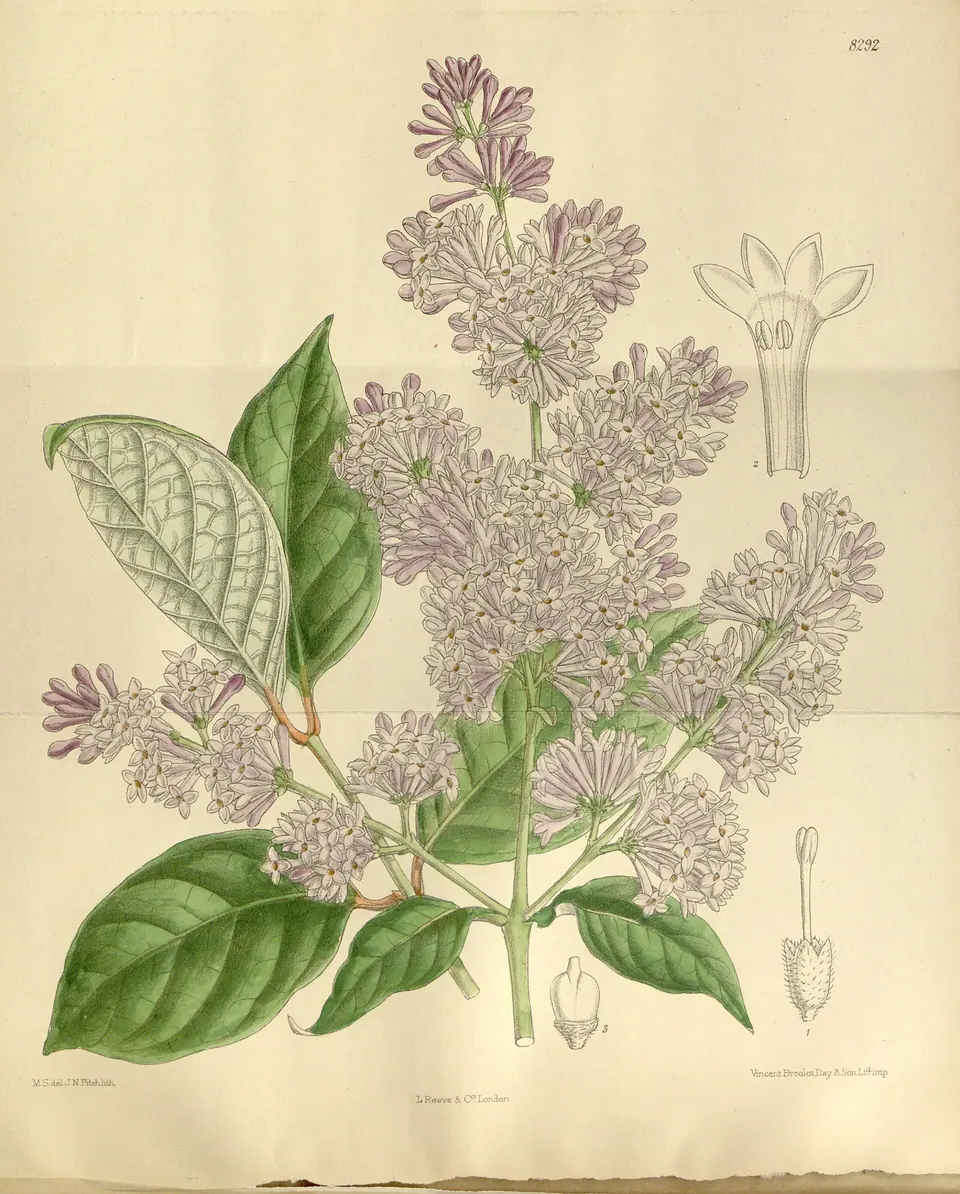


How to Grow and Care for Late Lilac
Syringa villosa
Written by Emilio Marruso · last checked
At a glance
This lilac is easygoing: it grows in full sun to partial shade and asks only for medium water in moist, well-drained soil. Be patient with feeding: skip the first year, then give it a little after flowering once it has settled in. Too much nitrogen means lush leaves instead of flower buds, so a light hand keeps the flowers coming.
- Sun
Full sun to partial shade
What the sources say (2)
Light: Full sun to partial shade
Full sun (6 or more hours of direct sunlight a day) Partial Shade (Direct sunlight only part of the day, 2-6 hours)
— Syringa villosa (Late Lilac) | North Carolina Extension Gardener Plant Toolbox [1] Full sun; moist, well-drained soils are best; tolerates alkaline soils.
— Late Lilac (Syringa villosa)-Hort Answers - University of Illinois Extension [3] - Water
Medium water; keep the soil moist, but never let water stand around the roots
What the sources say (3)
Watering: Medium water use
Water : Medium water use.
— Late Lilac | NDSU Agriculture [6] Watering notes: Moist, well-drained soil is best; less drought-tolerant than common lilac and does not tolerate standing water
Full sun; moist, well-drained soils are best; tolerates alkaline soils.
— Late Lilac (Syringa villosa)-Hort Answers - University of Illinois Extension [3] It is less drought-tolerant than the common lilac ( Syringa vulgaris ) and does not tolerate standing water.
— Syringa villosa (Late Lilac) | North Carolina Extension Gardener Plant Toolbox [1] - Soil
Moist, well-drained soil, pH up to 8.0
What the sources say (4)
Watering notes: Moist, well-drained soil is best; less drought-tolerant than common lilac and does not tolerate standing water
Full sun; moist, well-drained soils are best; tolerates alkaline soils.
— Late Lilac (Syringa villosa)-Hort Answers - University of Illinois Extension [3] It is less drought-tolerant than the common lilac ( Syringa vulgaris ) and does not tolerate standing water.
— Syringa villosa (Late Lilac) | North Carolina Extension Gardener Plant Toolbox [1] - Feeding
Feed after flowering from year 2–3, never the first year; too much nitrogen means fewer flowers
What the sources say (7)
When: After flowering, once the plant is established (2–3 years); not in the first year after planting
Once the lilac is established (2–3 years), fertilizers may be needed.
— [7] Apply the fertilizer at the base of the plant after flowering.
— [7] Avoid: Fertilizing in the first year after planting; overfertilizing; fertilizers with more than 20% nitrogen; high-nitrogen lawn fertilizers near the base
Do not fertilize newly planted shrubs or trees the first year after planting as they need to put their energy into establishing a healthy root system
— [7] Be careful not to overfertilize plants or to use fertiliz- ers containing more than 20% nitrogen.
— [7] Lawn fer- tilizers are often high in nitrogen; avoid using them around the base of your lilac.
— [7] Signs of excess: Excessive vegetative growth and lush green foliage at the expense of flower buds; in extreme cases the plant dies
Too much nitrogen can cause excessive vegetative growth at the expense of flower bud development; in extreme cases it can kill the plant.
— [7] Too much nitrogen (N) can lead to lush, green foliage at the expense of flower bud production.
— [7] - Pests
Scales, borers, leaf miners and caterpillars; leaf spots and blights. Good airflow helps
What the sources say (2)
Pests: scales, borers, leaf miners, caterpillars
It is somewhat resistant to mildew, scales, and borers but is susceptible to blights, leaf spots, wilt, and ringspot virus. Insect pests include scales, borers, leaf miners and caterpillars.
— Syringa villosa (Late Lilac) | North Carolina Extension Gardener Plant Toolbox [1] Diseases: blights, leaf spots, wilt, ringspot virus
It is somewhat resistant to mildew, scales, and borers but is susceptible to blights, leaf spots, wilt, and ringspot virus. Insect pests include scales, borers, leaf miners and caterpillars.
— Syringa villosa (Late Lilac) | North Carolina Extension Gardener Plant Toolbox [1] - Propagation
From seed or stem cuttings
What the sources say (1)
Propagation: Seed; stem cutting
Recommended Propagation Strategy: Seed Stem Cutting
— Syringa villosa (Late Lilac) | North Carolina Extension Gardener Plant Toolbox [1]
Overview
Late lilac is a deciduous shrub that grows 6 to 10 feet [1.8–3 m] tall and flowers later than common lilac. [5][1] It prefers moist, well-drained soil in full sun to partial shade and tolerates alkaline soils. [3] Powdery mildew, leaf spots, blights, borers and scale are common problems. [3]
This record is incomplete: the sources we read do not cover every field yet.
Not yet covered by our sources: Pruning
Late Lilac care
Measurements in square brackets are our conversion into the other unit system; the quoted text is unchanged.
How to water Late Lilac
Watering
Medium water use
What the sources say (1)
Water : Medium water use.Watering notes
Moist, well-drained soil is best; less drought-tolerant than common lilac and does not tolerate standing water
What the sources say (2)
Full sun; moist, well-drained soils are best; tolerates alkaline soils.It is less drought-tolerant than the common lilac ( Syringa vulgaris ) and does not tolerate standing water.How much light Late Lilac needs
Full sun to partial shade
What the sources say (2)
Full sun (6 or more hours of direct sunlight a day)
Partial Shade (Direct sunlight only part of the day, 2-6 hours)Full sun; moist, well-drained soils are best; tolerates alkaline soils.How much cold Late Lilac can take
Hardiness, coldest zone
The sources give different values depending on region, zone or growing conditions.
What each source says
According to NC State Extension: 3a [winter low −40 to −37.2 °C (−40 to −35 °F)]
According to NDSU Extension: 2 [winter low −45.6 to −40 °C (−50 to −40 °F)]
Hardiness, warmest zone
7b [winter low −15 to −12.2 °C (5 to 10 °F)]
What the sources say (1)
USDA Plant Hardiness Zone:
3a, 3b, 4a, 4b, 5a, 5b, 6a, 6b, 7a, 7bBest soil for Late Lilac
Soil pH, minimum
The sources give different values depending on region, zone or growing conditions.
What each source says
According to NC State Extension (testo): 5.5
According to NC State Extension (tabella): 6.0
According to Cornell Woody Plants: 5.0
What the sources say (3)
According to NC State Extension (testo): prefers a soil pH - 5.5 to 8.0According to NC State Extension (tabella): Neutral (6.0-8.0)According to Cornell Woody Plants: Can tolerate acid to alkaline soil (pH 5.0 to 8.0)How to propagate Late Lilac
Seed; stem cutting
What the sources say (1)
Recommended Propagation Strategy:
Seed
Stem CuttingHow to grow Late Lilac
The plant
Life cycle
perennial
What the sources say (1)
The late lilac is a perennial, deciduous shrub in the olive family (Oleaceae). It is native to the Russian Far East, northern China and the Korean peninsula.Family
Oleaceae
What the sources say (1)
The late lilac is a perennial, deciduous shrub in the olive family (Oleaceae). It is native to the Russian Far East, northern China and the Korean peninsula.Mature height
Pests and diseases
Pests
scales, borers, leaf miners, caterpillars
What the sources say (1)
It is somewhat resistant to mildew, scales, and borers but is susceptible to blights, leaf spots, wilt, and ringspot virus. Insect pests include scales, borers, leaf miners and caterpillars.Diseases
blights, leaf spots, wilt, ringspot virus
What the sources say (1)
It is somewhat resistant to mildew, scales, and borers but is susceptible to blights, leaf spots, wilt, and ringspot virus. Insect pests include scales, borers, leaf miners and caterpillars.Fertilizing
When
After flowering, once the plant is established (2–3 years); not in the first year after planting
Mineral fertilizers
Complete fertilizer such as 5-10-5 or 10-10-10, applied at the base of the plant at label rates, if a soil test shows low phosphorus or potassium
What the sources say (2)
If either nutrient is limited, a complete fertilizer containing nitrogen (N), phospho- rus (P) and potassium (K) can be used. A 5-10-5 or a 10-10-10 fertilizer is a good choice.Apply the fertilizer at the base of the plant after flowering. Always follow the application rates on the label.Avoid
Fertilizing in the first year after planting; overfertilizing; fertilizers with more than 20% nitrogen; high-nitrogen lawn fertilizers near the base
What the sources say (3)
Do not fertilize newly planted shrubs or trees the first year after planting as they need to put their energy into establishing a healthy root systemBe careful not to overfertilize plants or to use fertiliz- ers containing more than 20% nitrogen.Lawn fer- tilizers are often high in nitrogen; avoid using them around the base of your lilac.Signs of excess
Excessive vegetative growth and lush green foliage at the expense of flower buds; in extreme cases the plant dies
What the sources say (2)
Too much nitrogen can cause excessive vegetative growth at the expense of flower bud development; in extreme cases it can kill the plant.Too much nitrogen (N) can lead to lush, green foliage at the expense of flower bud production.Late Lilac pests and problems
Fungal and insect problems
Symptom: Mildew, blights, leaf spots, wilt, ringspot virus; scales, borers, leaf miners and caterpillars
What to do: Somewhat resistant to mildew, scales and borers per the source; good air circulation is recommended
What the sources say (1)
It is somewhat resistant to mildew, scales, and borers but is susceptible to blights, leaf spots, wilt, and ringspot virus.
— Syringa villosa (Late Lilac) | North Carolina Extension Gardener Plant Toolbox [1]
Remedies
Each remedy shows what official sources say about it; traditional remedies without an official source are marked as such. Harmful ones are listed so you know to avoid them.
Treating the plant
oystershell scale
insecticidal soap Works
How: Spray insecticidal soap about June 15 to kill the young crawlers.
Spraying with malathion, ultrafine oil, or insecticidal soap, which are among the compounds registered for control of this pest in Connecticut, about June 15 kills the young crawlers.
— portal.ct.gov [8] What the evidence says The best way to control oystershell scale is to apply an insecticide when the crawlers are present. Effective insecticides include: - insecticidal soap - horticultural oil
— yardandgarden.extension.iastate.edu [9] horticultural oil Works
How: Apply horticultural oil at the dormant stage against overwintering scales; a summer application of ultrafine oil can also help.
A dormant application of horticultural oil will control overwintering scales. Summer application of ultrafine oil can also be helpful.
— portal.ct.gov [8] What the evidence says The best way to control oystershell scale is to apply an insecticide when the crawlers are present. Effective insecticides include: - insecticidal soap - horticultural oil
— yardandgarden.extension.iastate.edu [9]
bacterial blight
plastic hoop houses Works
How: In spring, protect the plants from rain and frost with plastic hoop houses or similar structures.
In spring, protect from rain and frost with plastic hoop houses or similar structures. This treatment has been as good as the best chemical method.
— pnwhandbooks.org [10] What the evidence says In spring, protect from rain and frost with plastic hoop houses or similar structures. This treatment has been as good as the best chemical method.
— pnwhandbooks.org [10] prune out and burn all affected tissues Official source, not independently tested
How: Keep plants well spaced, prune for air circulation and prune out and burn all affected tissues immediately.
Maintain adequate spacing between plants and prune to provide good air circulation within the canopy. - Prune out and burn all affected tissues immediately.
— pnwhandbooks.org [10]
lilac borer
beneficial nematodes Official source, not independently tested
How: Apply beneficial nematodes (Steinernema carpocapsae) to the bark of trunks and twigs to control larvae in their galleries.
Beneficial nematodes, Steinernema carpocapsae , can be applied to the bark of trunks and twigs to control larvae in their galleries.
— portal.ct.gov [8] do not prune when adults are present Official source, not independently tested
How: Avoid pruning while the adults are present, as they are drawn to wounds as egg laying sites.
For cultural control, do not prune when adults are present as they are drawn to wounds as egg laying sites.
— portal.ct.gov [8]
powdery mildew
space plants or prune branches for good air circulation Official source, not independently tested
How: Space plants or prune branches for good air circulation and do not plant in shade.
Space plants or prune branches for good air circulation. - Do not plant in shade.
— pnwhandbooks.org [11]
Calendar
Pruning
Not stated in the sources we read.
Months as given by the sources, which are mostly from the United States (northern hemisphere). In the southern hemisphere they shift by about six months.
Indicative values
Values from a secondary source, not checked word for word like the rest of this page. Use them as a starting point.
- Hours of sun
- 6-8 hoursIndicative value, adapt it to your climate · Secondary source
- Drought tolerant
- yesIndicative value, adapt it to your climate · Secondary source
- Care level
- MediumIndicative value, adapt it to your climate · Secondary source
- Growth rate
- LowIndicative value, adapt it to your climate · Secondary source
- Pruning
- February, March, April, MayIndicative value, adapt it to your climate · Secondary source
Similar plants
- Early Lilac Syringa oblata
- Persian lilac Syringa persica
- Common Lilac Syringa vulgaris
- Japanese Tree Lilac Syringa reticulata
- Amur privet Ligustrum amurense
- Black ash Fraxinus nigra
- Blue Ash Fraxinus quadrangulata
- Chinese Fringetree Chionanthus retusus
Sources
Every value above is quoted from these documents. Links lead to the original publisher.
- Syringa villosa (Late Lilac) | North Carolina Extension Gardener Plant Toolbox · plants.ces.ncsu.edu, consulted
- Late Lilac (Syringa villosa) - Selecting Shrubs for Your Home - University of Illinois Extension · web.extension.illinois.edu, consulted
- Late Lilac (Syringa villosa)-Hort Answers - University of Illinois Extension · web.extension.illinois.edu, consulted
- Woody Plants Database · woodyplants.cals.cornell.edu, consulted
- Lilacs Species for Iowa Gardens | Yard and Garden · yardandgarden.extension.iastate.edu, consulted
- Late Lilac | NDSU Agriculture · ndsu.edu, consulted
- hort.extension.wisc.edu · hort.extension.wisc.edu
- portal.ct.gov · portal.ct.gov
- yardandgarden.extension.iastate.edu · yardandgarden.extension.iastate.edu
- pnwhandbooks.org · pnwhandbooks.org
- pnwhandbooks.org · pnwhandbooks.org
Written by Emilio Marruso · last checked