
How to Grow and Care for Parsley
Petroselinum crispum
Written by Emilio Marruso · last checked
Toxic to: Cats, Dogs, Horses, Birds, People · Why
At a glance
Parsley is a generous herb: it grows in full sun or partial shade, in the garden, in a pot or even indoors. Once the plant reaches 8 inches tall, snip the outer stalks whenever you need them for flavor and garnish. Keep the soil evenly moist, pinch off the flower buds, and it keeps giving leaves all season.
- Sun
Full sun to partial shade; light afternoon shade helps in hot summers
What the sources say (5)
Light: Full sun to partial shade
Parsley prefers consistently moist, well-drained rich soil in full sun or light shade.
— Petroselinum crispum (Curly-leaved Parsley, Italian Parsley, Parsley) | North Carolina Extension Gardener Plant Toolbox [1] Growing conditions: Full sun to partial shade with well-draining soil.
— Spice Up Your Life: A Beginners Guide to Growing Parsley - UF/IFAS Extension Pasco County [5] Heat: In the hottest summer months it may bolt and go to seed, ending its productive life; intense afternoon sun can make it wilt and scorch, so light afternoon shade helps; flat-leaf Italian and 'Moss Curled' are suited to hot climates.
In the hottest months of summer, parsley may bolt and go to seed, when you see the plant do this, it is a sign that the plant is at the end of its productive life cycle.
— Spice Up Your Life: A Beginners Guide to Growing Parsley - UF/IFAS Extension Pasco County [5] Parsley enjoys sunlight, but protection from Florida’s intense afternoon sun can prevent the plant from wilting and scorching.
— Spice Up Your Life: A Beginners Guide to Growing Parsley - UF/IFAS Extension Pasco County [5] Choose parsley varieties that can thrive in hot climates, such as Italian flat-leaf parsley or Moss Curled parsley.
— Spice Up Your Life: A Beginners Guide to Growing Parsley - UF/IFAS Extension Pasco County [5] - Water
Keep the soil evenly moist but never soggy; mulch, and water the soil, not the leaves
What the sources say (5)
Watering: Consistently moist, well-drained soil; keep the soil consistently moist but not waterlogged
Parsley prefers consistently moist, well-drained rich soil in full sun or light shade.
— Petroselinum crispum (Curly-leaved Parsley, Italian Parsley, Parsley) | North Carolina Extension Gardener Plant Toolbox [1] ensure parsley receives regular watering, aiming to keep the soil consistently moist but not waterlogged.
— Spice Up Your Life: A Beginners Guide to Growing Parsley - UF/IFAS Extension Pasco County [5] Watering notes: Mulch to retain soil moisture; avoid overwatering and overhead watering; container plants must be kept well watered
Apply mulch around parsley plants to retain moisture in the soil and regulate soil temperature, especially during dry spells and heatwaves.
— Spice Up Your Life: A Beginners Guide to Growing Parsley - UF/IFAS Extension Pasco County [5] Avoid overwatering and ensure proper drainage around parsley plants.
— Spice Up Your Life: A Beginners Guide to Growing Parsley - UF/IFAS Extension Pasco County [5] It can also be grown as a container plant during the summer but be sure to keep it well watered.
— Petroselinum crispum, Parsley [3] - Cold
Survives winters down to −20 °F (−28.9 °C)
Very hardy · USDA 5 · RHS H7 · Z5
What the sources say (2)
Hardiness, coldest zone: 5 [winter low −28.9 to −23.3 °C (−20 to −10 °F)]
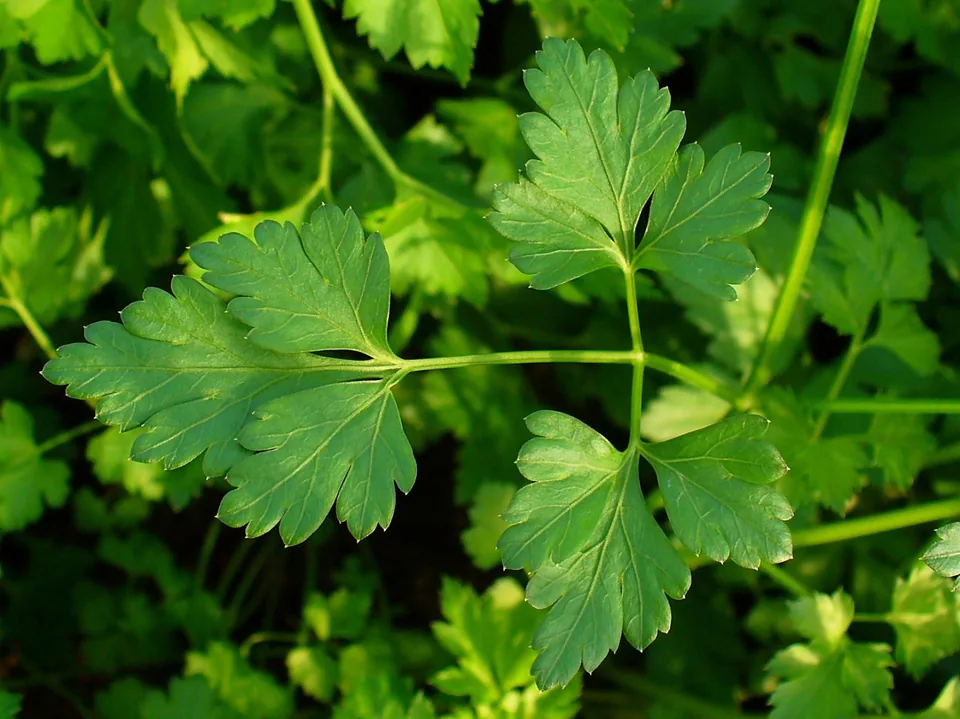
Italian flat-leaf parsley is the most popular variety, known for its flat, deeply serrated leaves and robust flavor. - USDA Hardiness Zone: 5 to 9.
— Spice Up Your Life: A Beginners Guide to Growing Parsley - UF/IFAS Extension Pasco County [5] Hardiness, warmest zone: 9 [winter low −6.7 to −1.1 °C (20 to 30 °F)]
Italian flat-leaf parsley is the most popular variety, known for its flat, deeply serrated leaves and robust flavor. - USDA Hardiness Zone: 5 to 9.
— Spice Up Your Life: A Beginners Guide to Growing Parsley - UF/IFAS Extension Pasco County [5] - Soil
Well-drained, slightly acidic soil, pH 5.5–6.7
What the sources say (4)
Watering: Consistently moist, well-drained soil; keep the soil consistently moist but not waterlogged
Parsley prefers consistently moist, well-drained rich soil in full sun or light shade.
— Petroselinum crispum (Curly-leaved Parsley, Italian Parsley, Parsley) | North Carolina Extension Gardener Plant Toolbox [1] ensure parsley receives regular watering, aiming to keep the soil consistently moist but not waterlogged.
— Spice Up Your Life: A Beginners Guide to Growing Parsley - UF/IFAS Extension Pasco County [5] Soil pH, minimum: 5.5
Parsley has an optimal pH range of 5.5 to 6.7.
— Spice Up Your Life: A Beginners Guide to Growing Parsley - UF/IFAS Extension Pasco County [5] Soil pH, maximum: 6.7
Parsley has an optimal pH range of 5.5 to 6.7.
— Spice Up Your Life: A Beginners Guide to Growing Parsley - UF/IFAS Extension Pasco County [5] - Spacing
6–12 in between plants
What the sources say (7)
Spacing: 15.2-30.5 cm (6-12 in)
According to NC State Extension Plant Toolbox (seedlings): Plant seedlings after the spring frost 8-12” apart.
— Petroselinum crispum (Curly-leaved Parsley, Italian Parsley, Parsley) | North Carolina Extension Gardener Plant Toolbox [1] According to University of Wisconsin Extension: Place the plants 6 to 12 inches apart in relatively fertile soil
— Parsley, Petroselinum crispum – Wisconsin Horticulture [2] Florida (thinned seedlings): Sow the seeds shallowly and thin seedlings to 6 inches apart.
— Parsley – Gardening Solutions [7] Place the plants 6 to 12 inches apart in relatively fertile soil (more so than for other herbs which typically are best grown in unfertile soils).
— Parsley, Petroselinum crispum – Wisconsin Horticulture [2] Between plants: 15-30 cm [6–12 in] between plants.
seedlings transplanted after spring frost: Plant seedlings after the spring frost 8-12” apart.
— Petroselinum crispum (Curly-leaved Parsley, Italian Parsley, Parsley) | North Carolina Extension Gardener Plant Toolbox [1] direct sown, Florida: Sow the seeds shallowly and thin seedlings to 6 inches apart.
— Parsley – Gardening Solutions [7] Place the plants 6 to 12 inches apart in relatively fertile soil (more so than for other herbs which typically are best grown in unfertile soils).
— Parsley, Petroselinum crispum – Wisconsin Horticulture [2] - Planting
Plant out in spring, around the time of the last frost; in warm climates, in fall
What the sources say (6)
Planting: Spring, around the time of the last spring freeze; in Florida, the cooler months of fall and winter
Arkansas: Parsley is usually started from transplants planted out around the time of the last freeze in the spring.
— Petroselinum crispum, Parsley [3] According to NC State Extension Plant Toolbox: Plant seedlings after the spring frost 8-12” apart.
— Petroselinum crispum (Curly-leaved Parsley, Italian Parsley, Parsley) | North Carolina Extension Gardener Plant Toolbox [1] Florida: plant parsley outdoors in the fall or early spring to take advantage of the cooler temperatures.
— Spice Up Your Life: A Beginners Guide to Growing Parsley - UF/IFAS Extension Pasco County [5] Florida (fonte: UF/IFAS Gardening Solutions): Planted in the fall, parsley will thrive during winter and then flower, produce seeds and die in late spring.
— Parsley – Gardening Solutions [7] Parsley is usually started from transplants planted out around the time of the last freeze in the spring.
— Petroselinum crispum, Parsley [3] Here in Florida, the time to plant parsley is during the cooler months of fall and winter.
— Parsley – Gardening Solutions [7] - Feeding
Mix compost into the soil before planting, then use a balanced fertilizer during the season
What the sources say (4)
When: Before planting or transplanting, then during the growing season
Before planting or transplanting parsley, amend the soil with compost and fertilizer to provide essential nutrients. Parsley thrives in nutrient rich soil.
— Spice Up Your Life: A Beginners Guide to Growing Parsley - UF/IFAS Extension Pasco County [5] Outdoor parsley should be fertilized twice during the growing season and more often if indoors.
— Petroselinum crispum (Curly-leaved Parsley, Italian Parsley, Parsley) | North Carolina Extension Gardener Plant Toolbox [1] Natural fertilizers: Compost worked into the soil before planting or transplanting
Before planting or transplanting parsley, amend the soil with compost and fertilizer to provide essential nutrients. Parsley thrives in nutrient rich soil.
— Spice Up Your Life: A Beginners Guide to Growing Parsley - UF/IFAS Extension Pasco County [5] Mineral fertilizers: Balanced fertilizer, chosen on the basis of a soil test, at label rate
Follow the recommendations from your soil test to determine the appropriate fertilizer for your garden. Parsley will benefit from a balanced fertilizer. For dosage, follow the directions on the product label.
— Spice Up Your Life: A Beginners Guide to Growing Parsley - UF/IFAS Extension Pasco County [5] - Pruning
If you grow it for the kitchen, pinch off flower buds as soon as they appear
What the sources say (1)
Pruning: Pinch off flower buds as soon as they appear when grown for culinary use
But for culinary purposes, it is best to pinch off the flower buds as soon as soon as they appear.
— Spice Up Your Life: A Beginners Guide to Growing Parsley - UF/IFAS Extension Pasco County [5] - Harvest
From 8 in tall, snip the outer stalks first; never cut more than one-third at a time
What the sources say (5)
Harvest: At any time during the season once sufficient growth has been made; when about 8 inches [20 cm] in height
Leaves can be harvested at any time during the season as soon as sufficient growth has been made.
— Parsley, Petroselinum crispum – Wisconsin Horticulture [2] Parsley can be harvested when they are approximately 8 inches in height.
— Petroselinum crispum (Curly-leaved Parsley, Italian Parsley, Parsley) | North Carolina Extension Gardener Plant Toolbox [1] How to harvest: Pinch off or snip sprigs as needed (outer stalks first) once the plant has made sufficient growth, about 20 cm (8 in) tall; cut the whole plant for larger quantities or at the end of the season. Leave 2-4 leaves on the plant and cut no more than one-third at a time.
Leaves can be harvested at any time during the season as soon as sufficient growth has been made. Pinch off sprigs as needed, or cut the entire plant if larger quantities are needed or at the end of the season.
— Parsley, Petroselinum crispum – Wisconsin Horticulture [2] For continuous growth, snip the outside stalks when harvesting. Parsley can be harvested when they are approximately 8 inches in height.
— Petroselinum crispum (Curly-leaved Parsley, Italian Parsley, Parsley) | North Carolina Extension Gardener Plant Toolbox [1] To harvest parsley, use clean scissors or shears to clip the stems, leaving 2-4 leaves on the plant to continue growth. Avoid cutting more than one-third of the plant at a time to ensure continued growth.
— Spice Up Your Life: A Beginners Guide to Growing Parsley - UF/IFAS Extension Pasco County [5] - Pests
Aphids, caterpillars and flea beetles; leaf spot, and root rot in soggy soil
What the sources say (6)
Pests: aphids, caterpillars (black swallowtail), carrot weevil, flea beetles, leafhoppers, tarnished plant bugs
Septoria leaf spot and stem rot. Carrot weevil, flea beetles, leafhoppers and tarnished plant bugs.
— Petroselinum crispum (Curly-leaved Parsley, Italian Parsley, Parsley) | North Carolina Extension Gardener Plant Toolbox [1] Aphids are the most common and often are controlled by naturally occurring predators or parasites.
— Parsley, Petroselinum crispum – Wisconsin Horticulture [2] While parsley is relatively pest-free, it can be susceptible to certain insects like aphids, caterpillars, and leafhoppers.
— Spice Up Your Life: A Beginners Guide to Growing Parsley - UF/IFAS Extension Pasco County [5] Diseases: Septoria leaf spot, stem rot, root rot, powdery mildew
Septoria leaf spot and stem rot. Carrot weevil, flea beetles, leafhoppers and tarnished plant bugs.
— Petroselinum crispum (Curly-leaved Parsley, Italian Parsley, Parsley) | North Carolina Extension Gardener Plant Toolbox [1] Septoria leaf spot, caused by the fungus Septoria apiicola , is the most common disease of parsley.
— Parsley, Petroselinum crispum – Wisconsin Horticulture [2] Parsley is also vulnerable to fungal diseases like powdery mildew and root rot, especially in the humid conditions in Florida.
— Spice Up Your Life: A Beginners Guide to Growing Parsley - UF/IFAS Extension Pasco County [5] - Watch out
In the hottest months it may go to seed and stop producing
What the sources say (3)
Heat: In the hottest summer months it may bolt and go to seed, ending its productive life; intense afternoon sun can make it wilt and scorch, so light afternoon shade helps; flat-leaf Italian and 'Moss Curled' are suited to hot climates.
In the hottest months of summer, parsley may bolt and go to seed, when you see the plant do this, it is a sign that the plant is at the end of its productive life cycle.
— Spice Up Your Life: A Beginners Guide to Growing Parsley - UF/IFAS Extension Pasco County [5] Parsley enjoys sunlight, but protection from Florida’s intense afternoon sun can prevent the plant from wilting and scorching.
— Spice Up Your Life: A Beginners Guide to Growing Parsley - UF/IFAS Extension Pasco County [5] Choose parsley varieties that can thrive in hot climates, such as Italian flat-leaf parsley or Moss Curled parsley.
— Spice Up Your Life: A Beginners Guide to Growing Parsley - UF/IFAS Extension Pasco County [5] - Size
1 ft tall the first year, 2–3 ft the second
What the sources say (1)
Mature height: first year about 30 cm (1 ft); second year 61-91 cm (2-3 ft)
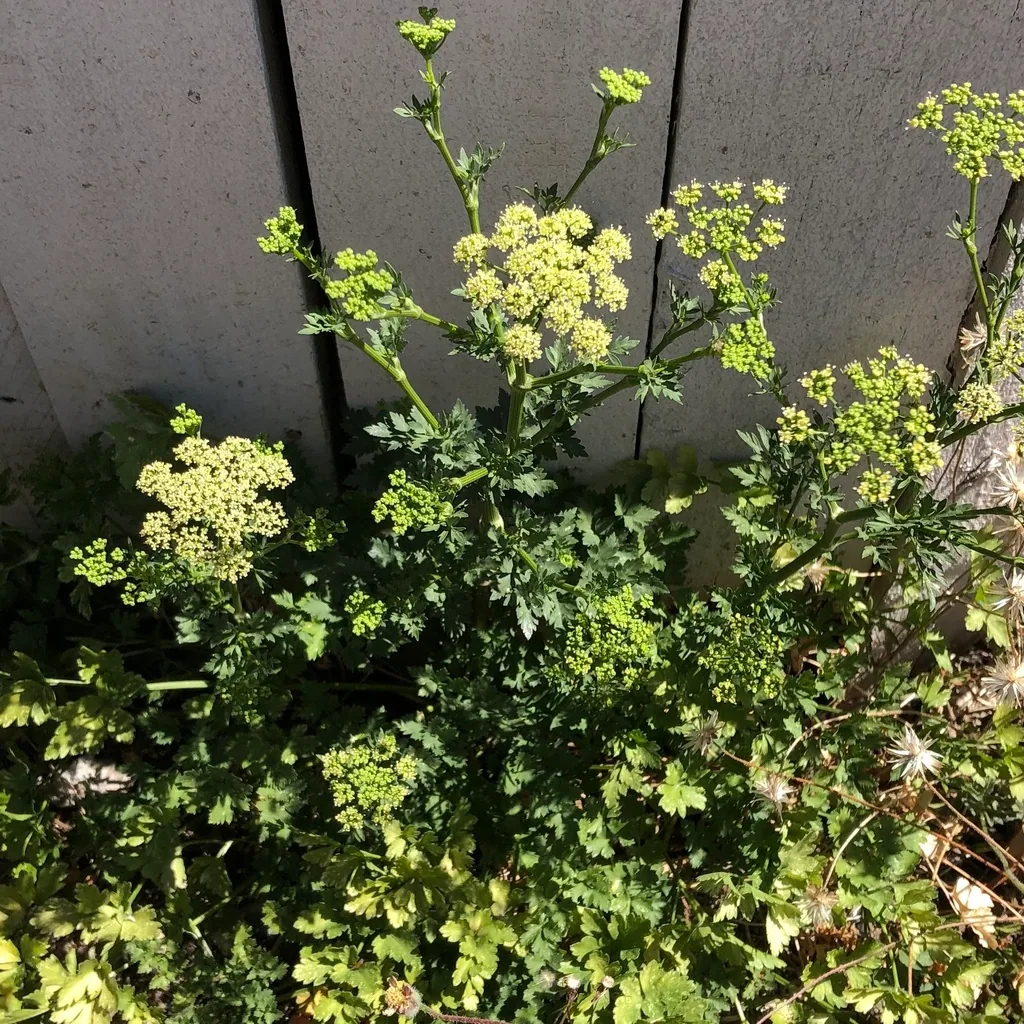
They grow about a foot tall the first year. They grow 2-3 feet and produce a greenish-yellow flower and seeds the second year.
— Petroselinum crispum (Curly-leaved Parsley, Italian Parsley, Parsley) | North Carolina Extension Gardener Plant Toolbox [1] - Propagation
Seed or transplants; it has a taproot, so disturb the roots as little as possible
What the sources say (4)
Propagation: Seed; transplants
Life Cycle: Biennial Recommended Propagation Strategy: Seed Country Or Region Of Origin: Europe
— Petroselinum crispum (Curly-leaved Parsley, Italian Parsley, Parsley) | North Carolina Extension Gardener Plant Toolbox [1] Parsley can be grown from seed or purchased as transplants in the spring.
— Parsley, Petroselinum crispum – Wisconsin Horticulture [2] Root system: Taproot; the plant does not move easily, so disturb the taproot as little as possible when transplanting.
Parsley is not easily moved, so try to disturb the taproot as little as possible when transplanting.
— Parsley, Petroselinum crispum – Wisconsin Horticulture [2] When transplanting parsley take extra care not to damage the taproot.
— Parsley | Herbs | Illinois Extension | Illinois [4] - Sowing
Soak seeds overnight; sow indoors 8–10 weeks before the last frost; they are slow to sprout
What the sources say (9)
Sowing: Indoors 8 to 10 weeks before last spring frost; outdoors in spring once the soil has warmed
According to NC State Extension Plant Toolbox: You can start seeds indoors before the spring frost or outdoors after the spring frost or midsummer.
— Petroselinum crispum (Curly-leaved Parsley, Italian Parsley, Parsley) | North Carolina Extension Gardener Plant Toolbox [1] According to University of Wisconsin Extension: Start seeds indoors 8 to 10 weeks before last spring frost.
— Parsley, Petroselinum crispum – Wisconsin Horticulture [2] According to University of Illinois Extension: Parsley is grown from seed planted in the spring.
— Parsley | Herbs | Illinois Extension | Illinois [4] Parsley can be grown from seed or purchased as transplants in the spring. Start seeds indoors 8 to 10 weeks before last spring frost.
— Parsley, Petroselinum crispum – Wisconsin Horticulture [2] Alternatively, seeds can be sown directly outdoors in spring once the soil has warmed.
— Parsley, Petroselinum crispum – Wisconsin Horticulture [2] Scarification: Seeds are slow to germinate: soak them in water overnight before sowing.
Because it is slow to germinate, it is suggested to soak the seeds in water overnight prior to planting.
— Parsley | Herbs | Illinois Extension | Illinois [4] Germination: Slow and erratic, with low germination rates even in optimum conditions; seeds take 7 to 12 days and up to several weeks in cool, wet soil; keep them evenly moist.
Like other members of the parsley family, seeds typically have an erratic and low germination rate even under optimum conditions.
— Parsley, Petroselinum crispum – Wisconsin Horticulture [2] The seeds can be tricky, taking 7 to 12 days to germinate.
— Parsley – Gardening Solutions [7] Keep the seeds evenly moist; they make take several weeks to germinate, especially in cool, wet soils.
— Parsley, Petroselinum crispum – Wisconsin Horticulture [2] - Containers
Grows in containers and indoors; keep potted plants well watered
What the sources say (6)
In containers: Yes
Soil conditions: well-drained soil, high in organic matter. - Grows well in a container.
— Parsley | Cooperative Extension | University of Delaware [6] You don’t need much space to grow parsley; it grows well in containers.
— Parsley – Gardening Solutions [7] Indoors: Yes
Parsley can also be grown indoors year round or over the winter for a supply of fresh leaves .
— Parsley, Petroselinum crispum – Wisconsin Horticulture [2] Watering notes: Mulch to retain soil moisture; avoid overwatering and overhead watering; container plants must be kept well watered
Apply mulch around parsley plants to retain moisture in the soil and regulate soil temperature, especially during dry spells and heatwaves.
— Spice Up Your Life: A Beginners Guide to Growing Parsley - UF/IFAS Extension Pasco County [5] Avoid overwatering and ensure proper drainage around parsley plants.
— Spice Up Your Life: A Beginners Guide to Growing Parsley - UF/IFAS Extension Pasco County [5] It can also be grown as a container plant during the summer but be sure to keep it well watered.
— Petroselinum crispum, Parsley [3] - Safety
A problem for cats, dogs and horses; the seeds are poisonous to birds
Overview
Parsley is a hardy biennial in the carrot family, usually grown as an annual for its leaves. [1] It prefers consistently moist, well-drained rich soil in full sun or light shade. [1] It can be grown in containers and, over winter, indoors in bright light. [2]
Parsley care
Measurements in square brackets are our conversion into the other unit system; the quoted text is unchanged.
How to water Parsley
Watering
Consistently moist, well-drained soil; keep the soil consistently moist but not waterlogged
What the sources say (2)
Parsley prefers consistently moist, well-drained rich soil in full sun or light shade.ensure parsley receives regular watering, aiming to keep the soil consistently moist but not waterlogged.Watering notes
Mulch to retain soil moisture; avoid overwatering and overhead watering; container plants must be kept well watered
What the sources say (3)
Apply mulch around parsley plants to retain moisture in the soil and regulate soil temperature, especially during dry spells and heatwaves.Avoid overwatering and ensure proper drainage around parsley plants.It can also be grown as a container plant during the summer but be sure to
keep it well watered.How much light Parsley needs
Full sun to partial shade
What the sources say (2)
Parsley prefers consistently moist, well-drained rich soil in full sun or light shade.Growing conditions: Full sun to partial shade with well-draining soil.How much cold Parsley can take
Hardiness, coldest zone
5 [winter low −28.9 to −23.3 °C (−20 to −10 °F)]
What the sources say (1)
Italian flat-leaf parsley is the most popular variety, known for its flat, deeply serrated leaves and robust flavor.
- USDA Hardiness Zone: 5 to 9.Hardiness, warmest zone
9 [winter low −6.7 to −1.1 °C (20 to 30 °F)]
What the sources say (1)
Italian flat-leaf parsley is the most popular variety, known for its flat, deeply serrated leaves and robust flavor.
- USDA Hardiness Zone: 5 to 9.Best soil for Parsley
Soil pH, minimum
5.5
What the sources say (1)
Parsley has an optimal pH range of 5.5 to 6.7.Soil pH, maximum
6.7
What the sources say (1)
Parsley has an optimal pH range of 5.5 to 6.7.Where to grow Parsley
Indoors
Yes
What the sources say (1)
Parsley can also be grown indoors year round or over the winter for a supply of fresh leaves .In containers
Yes
Spacing
15.2-30.5 cm (6-12 in)
What each source says
According to NC State Extension Plant Toolbox (seedlings): 20.3-30.5 cm (8-12 in) apart
According to University of Wisconsin Extension: 15.2-30.5 cm (6-12 in) apart
Florida (thinned seedlings): 15.2 cm (6 in) apart
What the sources say (4)
According to NC State Extension Plant Toolbox (seedlings): Plant seedlings after the spring frost 8-12” apart.According to University of Wisconsin Extension: Place the plants 6 to 12 inches apart in relatively fertile soilFlorida (thinned seedlings): Sow the seeds shallowly and thin seedlings to 6 inches apart.Place the plants 6 to 12 inches apart in relatively fertile soil (more so than for other herbs which typically are best grown in unfertile soils).How to propagate Parsley
Seed; transplants
What the sources say (2)
Life Cycle:
Biennial
Recommended Propagation Strategy:
Seed
Country Or Region Of Origin:
EuropeParsley can be grown from seed or purchased as transplants in the spring.How to grow Parsley
The plant
Life cycle
biennial
What the sources say (3)
Parsley is a hardy biennial that is usually grown as an annual in the carrot family (Apiaceae).Parsley, Petroselinum crispum , is a hardy biennial in the carrot family (Apiaceae or Umbelliferae)Parsley is a hardy, biennial that is grown and treated like an annual.Family
Apiaceae (carrot family)
What the sources say (2)
Parsley is a hardy biennial that is usually grown as an annual in the carrot family (Apiaceae).Parsley, Petroselinum crispum , is a hardy biennial in the carrot family (Apiaceae or Umbelliferae)Mature height
first year about 30 cm (1 ft); second year 61-91 cm (2-3 ft)
What the sources say (1)
They grow about a foot tall the first year. They grow 2-3 feet and produce a greenish-yellow flower and seeds the second year.Mature width
20-30 cm (8 in - 1 ft)
What the sources say (1)
Width: 0 ft. 8 in. - 1 ft. 0 in.Sowing and growth
Harvest and storage
How to harvest
Pinch off or snip sprigs as needed (outer stalks first) once the plant has made sufficient growth, about 20 cm (8 in) tall; cut the whole plant for larger quantities or at the end of the season. Leave 2-4 leaves on the plant and cut no more than one-third at a time.
What the sources say (3)
Leaves can be harvested at any time during the season as soon as sufficient growth has been made. Pinch off sprigs as needed, or cut the entire plant if larger quantities are needed or at the end of the season.For continuous growth, snip the outside stalks when harvesting. Parsley can be harvested when they are approximately 8 inches in height.To harvest parsley, use clean scissors or shears to clip the stems, leaving 2-4 leaves on the plant to continue growth. Avoid cutting more than one-third of the plant at a time to ensure continued growth.Storage
Wash the leaves, drip dry, place in a plastic bag in the refrigerator; can also be frozen or dried.
What the sources say (2)
Fresh parsley is best stored after washing the leaves, drip drying and then placing them in a plastic bag and stored in the refrigerator. Parsley can also be frozen for later use.Leaves are most often used fresh but both the leaves and roots retain their flavor when dried .Pests and diseases
Pests
aphids, caterpillars (black swallowtail), carrot weevil, flea beetles, leafhoppers, tarnished plant bugs
What the sources say (3)
Septoria leaf spot and stem rot. Carrot weevil, flea beetles, leafhoppers and tarnished plant bugs.Aphids are the most common and often are controlled by naturally occurring predators or parasites.While parsley is relatively pest-free, it can be susceptible to certain insects like aphids, caterpillars, and leafhoppers.Diseases
Septoria leaf spot, stem rot, root rot, powdery mildew
What the sources say (3)
Septoria leaf spot and stem rot. Carrot weevil, flea beetles, leafhoppers and tarnished plant bugs.Septoria leaf spot, caused by the fungus Septoria apiicola , is the most common disease of parsley.Parsley is also vulnerable to fungal diseases like powdery mildew and root rot, especially in the humid conditions in Florida.Fertilizing
When
Before planting or transplanting, then during the growing season
What the sources say (2)
Before planting or transplanting parsley, amend the soil with compost and fertilizer to provide essential nutrients. Parsley thrives in nutrient rich soil.Outdoor parsley should be fertilized twice during the growing season and more often if indoors.How often
The sources give different values depending on region, zone or growing conditions.
What each source says
in the ground: Twice during the growing season
indoors: More often than outdoors, regularly
What the sources say (2)
in the ground: Outdoor parsley should be fertilized twice during the growing season and more often if indoors.indoors: Outdoor parsley should be fertilized twice during the growing season and more often if indoors.Natural fertilizers
Compost worked into the soil before planting or transplanting
What the sources say (1)
Before planting or transplanting parsley, amend the soil with compost and fertilizer to provide essential nutrients. Parsley thrives in nutrient rich soil.Mineral fertilizers
Balanced fertilizer, chosen on the basis of a soil test, at label rate
What the sources say (1)
Follow the recommendations from your soil test to determine the appropriate fertilizer for your garden. Parsley will benefit from a balanced fertilizer. For dosage, follow the directions on the product label.Spacing
Between plants
15-30 cm [6–12 in] between plants.
What each source says
seedlings transplanted after spring frost: 20-30 cm [8–12 in] apart
direct sown, Florida: Thin seedlings to 15 cm [5.9 in] apart
What the sources say (3)
seedlings transplanted after spring frost: Plant seedlings after the spring frost 8-12” apart.direct sown, Florida: Sow the seeds shallowly and thin seedlings to 6 inches apart.Place the plants 6 to 12 inches apart in relatively fertile soil (more so than for other herbs which typically are best grown in unfertile soils).Roots
Root system
Taproot; the plant does not move easily, so disturb the taproot as little as possible when transplanting.
What the sources say (2)
Parsley is not easily moved, so try to disturb the taproot as little as possible when transplanting.When transplanting parsley take extra care not to damage the taproot.Propagation
Germination
Slow and erratic, with low germination rates even in optimum conditions; seeds take 7 to 12 days and up to several weeks in cool, wet soil; keep them evenly moist.
What the sources say (3)
Like other members of the parsley family, seeds typically have an erratic and low germination rate even under optimum conditions.The seeds can be tricky, taking 7 to 12 days to germinate.Keep the seeds evenly moist; they make take several weeks to germinate, especially in cool, wet soils.Scarification
Seeds are slow to germinate: soak them in water overnight before sowing.
What the sources say (1)
Because it is slow to germinate, it is suggested to soak the seeds in water overnight prior to planting.After harvest
Storage
Wash the leaves, drip-dry and keep them in a plastic bag in the refrigerator; for longer storage cover them with moist paper towels in the fridge; leaves can also be frozen or dried.
What the sources say (3)
Fresh parsley is best stored after washing the leaves, drip drying and then placing them in a plastic bag and stored in the refrigerator.For a longer storage period, cover the leaves (I use moist paper towels) and store them in the fridge.You can also freeze the cuttings or dry them to make your own seasoning!Heat and drought
Heat
In the hottest summer months it may bolt and go to seed, ending its productive life; intense afternoon sun can make it wilt and scorch, so light afternoon shade helps; flat-leaf Italian and 'Moss Curled' are suited to hot climates.
What the sources say (3)
In the hottest months of summer, parsley may bolt and go to seed, when you see the plant do this, it is a sign that the plant is at the end of its productive life cycle.Parsley enjoys sunlight, but protection from Florida’s intense afternoon sun can prevent the plant from wilting and scorching.Choose parsley varieties that can thrive in hot climates, such as Italian flat-leaf parsley or Moss Curled parsley.Parsley pests and problems
Septoria leaf spot
Symptom: The most common disease of parsley; can be seed borne.
What to do: Purchase quality seed.
What the sources say (1)
Septoria leaf spot, caused by the fungus Septoria apiicola , is the most common disease of parsley.
— Parsley, Petroselinum crispum – Wisconsin Horticulture [2] Aphids
Symptom: Small insects cluster on the undersides of leaves, causing wilting, distorted growth and honeydew.
What to do: Use a strong jet of water; insecticidal soap or neem oil will help control their numbers.
What the sources say (1)
Aphids: These small, soft-bodied insects can cluster on the undersides of parsley leaves, sucking sap and causing wilting.
— Spice Up Your Life: A Beginners Guide to Growing Parsley - UF/IFAS Extension Pasco County [5] Root rot
Symptom: Roots rot in excessively wet conditions.
What to do: Avoid overwatering and ensure proper drainage; remove affected plants.
What the sources say (1)
Root rot is exactly what it sounds like. When plants grow in excessively wet conditions, the roots don’t have enough air, and they begin to rot.
— Spice Up Your Life: A Beginners Guide to Growing Parsley - UF/IFAS Extension Pasco County [5]
Remedies
Each remedy shows what official sources say about it; traditional remedies without an official source are marked as such. Harmful ones are listed so you know to avoid them.
Treating the plant
aphids
strong jet of water Works
How: Use a strong jet of water to dislodge aphids from the plant; hosing off the plants can keep aphid populations at tolerable levels.
Use a strong jet of water to dislodge aphids from the plant.
— Spice Up Your Life: A Beginners Guide to Growing Parsley - UF/IFAS Extension Pasco County [5] What the evidence says Use a strong jet of water to dislodge aphids from the plant.
— Spice Up Your Life: A Beginners Guide to Growing Parsley - UF/IFAS Extension Pasco County [5] insecticidal soap spray Works
Always follow the label instructions on the product to prevent plant injury.
— Spice Up Your Life: A Beginners Guide to Growing Parsley - UF/IFAS Extension Pasco County [5] For example, spraying home remedies that contain dish detergent on plants on a sunny day can injure the plant, essentially burning it.
— extension.psu.edu [9] How: Spray insecticidal soap on the aphids.
Spraying insecticidal soap or neem oil will help control their numbers.
— Spice Up Your Life: A Beginners Guide to Growing Parsley - UF/IFAS Extension Pasco County [5] What the evidence says For example, insecticidal soap is a safe, effective organic insecticide with minimal environmental impact.
— extension.psu.edu [8] neem oil spray Partly works
Always follow the label instructions on the product to prevent plant injury.
— Spice Up Your Life: A Beginners Guide to Growing Parsley - UF/IFAS Extension Pasco County [5] Despite these being biological pesticides, it is important to read the directions on the label and wear safety equipment.
— extension.illinois.edu [10] How: Spray neem oil on the aphids.
Spraying insecticidal soap or neem oil will help control their numbers.
— Spice Up Your Life: A Beginners Guide to Growing Parsley - UF/IFAS Extension Pasco County [5] What the evidence says Neem oil is found in the seeds of the neem tree. The active component found in this biological pesticide reduces insect feeding, interferes with hormones -- making it hard to grow or lay eggs -- and acts as a repellent.
— extension.illinois.edu [10] lady bugs as natural predators Partly works
How: Look for beneficial insects like lady bugs that feed on aphids; naturally occurring predators or parasites often control aphids.
Look for beneficial insects like lady bugs that feed on aphids helping to keep them under control
— extension.umd.edu [11] What the evidence says Look for beneficial insects like lady bugs that feed on aphids helping to keep them under control
— extension.umd.edu [11] pruning out infested shoots Official source, not independently tested
How: If the aphid population is limited to just a few leaves or shoots, prune the infestation out.
If aphid population is limited to just a few leaves or shoots then the infestation can be pruned out to provide control
— plantvillage.psu.edu [12]
caterpillars
handpick caterpillars Works
How: Handpick caterpillars from the plants and relocate them, or dispatch them in a bucket of soapy water; they can also be moved to other carrot family host plants.
Handpick caterpillars from the plants and relocate them or dispatch them in a bucket of soapy water.
— Spice Up Your Life: A Beginners Guide to Growing Parsley - UF/IFAS Extension Pasco County [5] What the evidence says Handpick caterpillars from the plants and relocate them or dispatch them in a bucket of soapy water.
— Spice Up Your Life: A Beginners Guide to Growing Parsley - UF/IFAS Extension Pasco County [5]
root-rot
avoid overwatering and improve drainage Official source, not independently tested
How: Avoid overwatering and ensure proper drainage; a plant with root rot cannot be saved, so remove the affected plants and improve soil drainage for the others.
Avoid overwatering and ensure proper drainage around parsley plants.
— Spice Up Your Life: A Beginners Guide to Growing Parsley - UF/IFAS Extension Pasco County [5]
powdery-mildew
spacing plants for air circulation Official source, not independently tested
How: Space plants out and grow them in a pot or raised bed with well-draining soil to improve air circulation.
To prevent the disease, space your plants out and grow them in a pot or raised bed with well-draining soil to improve air circulation.
— Spice Up Your Life: A Beginners Guide to Growing Parsley - UF/IFAS Extension Pasco County [5]
septoria-leaf-spot
crop rotation Not verified
Traditional remedy, not verified by an official source.
How: Practice crop rotation to prevent soil borne pathogens from infesting successive crops.
morning drip-line watering Not verified
Traditional remedy, not verified by an official source.
How: Use a drip line to water plants and irrigate in the morning so there is plenty of time for the parsley to dry.
discarding infected plants Not verified
Traditional remedy, not verified by an official source.
How: Throw away or burn infected parsley plants; do not keep them over the winter in the garden or throw them on the compost pile.
slow germination
soaking seeds overnight Works
How: Soak the seeds in water overnight before sowing.
Soaking the seeds overnight helps to enhance germination .
— Parsley, Petroselinum crispum – Wisconsin Horticulture [2] What the evidence says Soaking the seeds overnight helps to enhance germination .
— Parsley, Petroselinum crispum – Wisconsin Horticulture [2] freezing the seed packet Not verified
Traditional remedy, not verified by an official source.
How: Freeze the packet of seeds to break winter dormancy before sowing thinly.
Is Parsley toxic to pets?
Reported by the source, quoted verbatim. This is not medical or veterinary advice: if a person or an animal may have eaten this plant, contact a poison control centre or a veterinarian.
Animals
The small, ridged seeds are formed in the second year from July to September. The fruit and seeds are poisonous to birds.
[1]- Poisonous parts
The fruit and seeds are poisonous to birds.
[1]
Problems: Problem for Cats Problem for Dogs Problem for Horses
[1]The source flags the risk for this animal but does not explain why.
People
Poison Symptoms: Photosensitization (sunburn, dermatitis), large amounts are needed to cause this effect
[1]
Calendar
Sowing
Indoors 8 to 10 weeks before last spring frost; outdoors in spring once the soil has warmed
What each source says
According to NC State Extension Plant Toolbox: Indoors before the spring frost, or outdoors after the spring frost or in midsummer
According to University of Wisconsin Extension: Indoors 8 to 10 weeks before the last spring frost; outdoors in spring once the soil has warmed
According to University of Illinois Extension: In the spring
What the sources say (5)
According to NC State Extension Plant Toolbox: You can start seeds indoors before the spring frost or outdoors after the spring frost or midsummer.According to University of Wisconsin Extension: Start seeds indoors 8 to 10 weeks before last spring frost.According to University of Illinois Extension: Parsley is grown from seed planted in the spring.Parsley can be grown from seed or purchased as transplants in the spring. Start seeds indoors 8 to 10 weeks before last spring frost.Alternatively, seeds can be sown directly outdoors in spring once the soil has warmed.Planting
Spring, around the time of the last spring freeze; in Florida, the cooler months of fall and winter
What each source says
Arkansas: Transplants planted out around the time of the last freeze in the spring
According to NC State Extension Plant Toolbox: Seedlings after the spring frost
Florida: Fall or early spring
Florida (fonte: UF/IFAS Gardening Solutions): Fall
What the sources say (6)
Arkansas: Parsley is usually started from transplants planted out around the time of the last freeze in the spring.According to NC State Extension Plant Toolbox: Plant seedlings after the spring frost 8-12” apart.Florida: plant parsley outdoors in the fall or early spring to take advantage of the cooler temperatures.Florida (fonte: UF/IFAS Gardening Solutions): Planted in the fall, parsley will thrive during winter and then flower, produce seeds and die in late spring.Parsley is usually started from transplants planted out around the time of the last
freeze in the spring.Here in Florida, the time to plant parsley is during the cooler months of fall and winter.Harvest
At any time during the season once sufficient growth has been made; when about 8 inches [20 cm] in height
What the sources say (2)
Leaves can be harvested at any time during the season as soon as sufficient growth has been made.Parsley can be harvested when they are approximately 8 inches in height.Pruning
Pinch off flower buds as soon as they appear when grown for culinary use
What the sources say (1)
But for culinary purposes, it is best to pinch off the flower buds as soon as soon as they appear.Months as given by the sources, which are mostly from the United States (northern hemisphere). In the southern hemisphere they shift by about six months.
Relative to frost
Less precise estimate: there is no weather station within 300 km.
Find frost dates by ZIP code or city
Sow indoors: 8 to 10 weeks before the last frost
Start seeds indoors 8 to 10 weeks before last spring frost.
— Parsley, Petroselinum crispum – Wisconsin Horticulture [2] Transplant: around the last frost
Parsley is usually started from transplants planted out around the time of the last freeze in the spring.
— Petroselinum crispum, Parsley [3]
Count from the average frost dates where you live.
Edibility
Reported by the source, quoted verbatim. Do not eat a plant on the basis of this page alone: identification mistakes can be dangerous.
Edibility: Leaves as flavoring and garnish Dimensions: Height: 0 ft. 8 in. - 3 ft. 0 in.
[1]The greenish-yellow flowers grow in compound umbels the second year. The flowers are edible.
[1]Uses: The roots can be cooked or eaten raw, like carrots or parsnips, while the leaves can be used in the same way as other parsley varieties.
[5]
Indicative values
Values from a secondary source, not checked word for word like the rest of this page. Use them as a starting point.
- Hours of sun
- 6-8 hoursIndicative value, adapt it to your climate · Secondary source
- Soil
- Well-drainedIndicative value, adapt it to your climate · Secondary source
- Care level
- MediumIndicative value, adapt it to your climate · Secondary source
- Growth rate
- HighIndicative value, adapt it to your climate · Secondary source
Similar plants
- Abies grandis Abies grandis
- Abraham Trachystemon orientalis
- Abyssinian banana Ensete ventricosum
- Acacia longifolia Acacia longifolia
- Acanthus hungaricus Acanthus hungaricus
- Achlys triphylla Achlys triphylla
- Adam's Needle Yucca flaccida
- Adriatic lizard orchid Himantoglossum adriaticum
Sources
Every value above is quoted from these documents. Links lead to the original publisher.
- Petroselinum crispum (Curly-leaved Parsley, Italian Parsley, Parsley) | North Carolina Extension Gardener Plant Toolbox · plants.ces.ncsu.edu, consulted
- Parsley, Petroselinum crispum – Wisconsin Horticulture · hort.extension.wisc.edu, consulted
- Petroselinum crispum, Parsley · uaex.uada.edu, consulted
- Parsley | Herbs | Illinois Extension | Illinois · extension.illinois.edu, consulted
- Spice Up Your Life: A Beginners Guide to Growing Parsley - UF/IFAS Extension Pasco County · blogs.ifas.ufl.edu, consulted
- Parsley | Cooperative Extension | University of Delaware · udel.edu, consulted
- Parsley – Gardening Solutions · gardeningsolutions.ifas.ufl.edu, consulted
- extension.psu.edu · extension.psu.edu
- extension.psu.edu · extension.psu.edu
- extension.illinois.edu · extension.illinois.edu
- extension.umd.edu · extension.umd.edu
- plantvillage.psu.edu · plantvillage.psu.edu
Written by Emilio Marruso · last checked