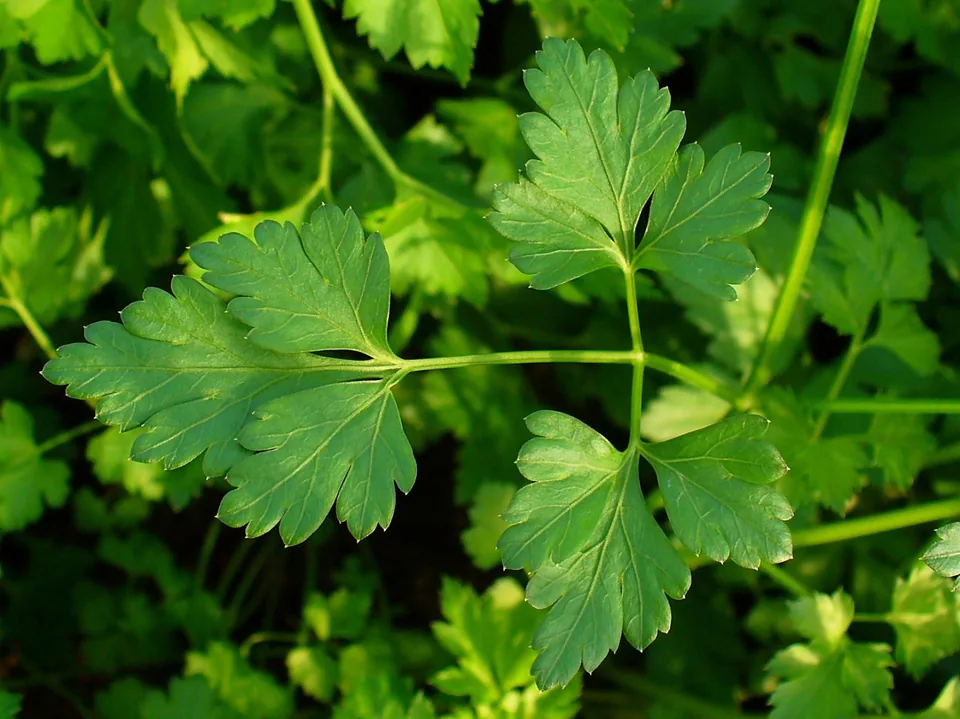
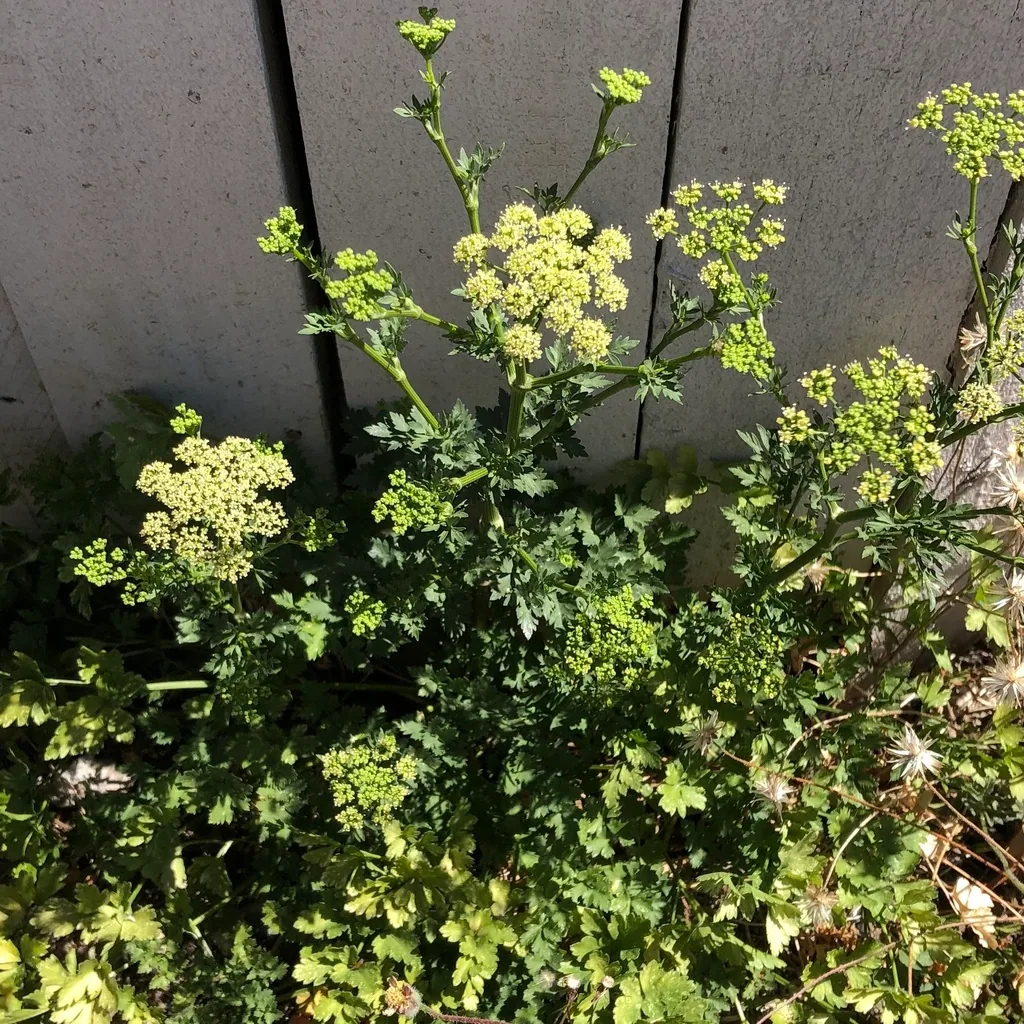

Cómo cultivar y cuidar Perejil
Petroselinum crispum
Escrito por Emilio Marruso · última revisión
Tóxica para: Gatos, Perros, Caballos, Aves, Personas · Por qué
De un vistazo
El perejil es una aromática generosa: crece a pleno sol o en semisombra, en el huerto, en maceta e incluso en interior. Cuando alcance 20 cm de alto, corta los tallos exteriores cada vez que los necesites para dar sabor y decorar tus platos. Mantén la tierra húmeda de forma constante, quita los botones florales y te dará hojas toda la temporada.
- Sol
Sol pleno o semisombra; en verano caluroso agradece algo de sombra por la tarde
Qué dicen las fuentes (5)
Luz: Pleno sol a semisombra
Parsley prefers consistently moist, well-drained rich soil in full sun or light shade.
— Petroselinum crispum (Curly-leaved Parsley, Italian Parsley, Parsley) | North Carolina Extension Gardener Plant Toolbox [1] Growing conditions: Full sun to partial shade with well-draining soil.
— Spice Up Your Life: A Beginners Guide to Growing Parsley - UF/IFAS Extension Pasco County [5] Calor: En los meses más calurosos del verano puede espigarse y producir semillas, terminando su vida productiva; el sol intenso de la tarde puede hacer que se marchite y se queme, así que la semisombra ligera por la tarde ayuda; la italiana de hoja plana y 'Moss Curled' son adecuadas para climas cálidos.
In the hottest months of summer, parsley may bolt and go to seed, when you see the plant do this, it is a sign that the plant is at the end of its productive life cycle.
— Spice Up Your Life: A Beginners Guide to Growing Parsley - UF/IFAS Extension Pasco County [5] Parsley enjoys sunlight, but protection from Florida’s intense afternoon sun can prevent the plant from wilting and scorching.
— Spice Up Your Life: A Beginners Guide to Growing Parsley - UF/IFAS Extension Pasco County [5] Choose parsley varieties that can thrive in hot climates, such as Italian flat-leaf parsley or Moss Curled parsley.
— Spice Up Your Life: A Beginners Guide to Growing Parsley - UF/IFAS Extension Pasco County [5] - Riego
Tierra siempre húmeda pero nunca encharcada; acolcha y riega la tierra, no las hojas
Qué dicen las fuentes (5)
Riego: Tierra constantemente húmeda y bien drenada; mantén la tierra constantemente húmeda pero no encharcada.
Parsley prefers consistently moist, well-drained rich soil in full sun or light shade.
— Petroselinum crispum (Curly-leaved Parsley, Italian Parsley, Parsley) | North Carolina Extension Gardener Plant Toolbox [1] ensure parsley receives regular watering, aiming to keep the soil consistently moist but not waterlogged.
— Spice Up Your Life: A Beginners Guide to Growing Parsley - UF/IFAS Extension Pasco County [5] Notas sobre el riego: Cubre con mantillo para retener la humedad del suelo; evita el riego excesivo y el riego por aspersión; las plantas en contenedores deben mantenerse bien regadas.
Apply mulch around parsley plants to retain moisture in the soil and regulate soil temperature, especially during dry spells and heatwaves.
— Spice Up Your Life: A Beginners Guide to Growing Parsley - UF/IFAS Extension Pasco County [5] Avoid overwatering and ensure proper drainage around parsley plants.
— Spice Up Your Life: A Beginners Guide to Growing Parsley - UF/IFAS Extension Pasco County [5] It can also be grown as a container plant during the summer but be sure to keep it well watered.
— Petroselinum crispum, Parsley [3] - Frío
Aguanta inviernos de hasta −28,9 °C (−20 °F)
Muy rústica · USDA 5 · RHS H7 · Z5
Qué dicen las fuentes (2)
Rusticidad, zona más fría: 5 [mínima invernal de −28,9 a −23,3 °C (de −20 a −10 °F)]
Italian flat-leaf parsley is the most popular variety, known for its flat, deeply serrated leaves and robust flavor. - USDA Hardiness Zone: 5 to 9.
— Spice Up Your Life: A Beginners Guide to Growing Parsley - UF/IFAS Extension Pasco County [5] Rusticidad, zona más cálida: 9 [mínima invernal de −6,7 a −1,1 °C (de 20 a 30 °F)]
Italian flat-leaf parsley is the most popular variety, known for its flat, deeply serrated leaves and robust flavor. - USDA Hardiness Zone: 5 to 9.
— Spice Up Your Life: A Beginners Guide to Growing Parsley - UF/IFAS Extension Pasco County [5] - Suelo
Suelo bien drenado y ligeramente ácido, pH 5,5–6,7
Qué dicen las fuentes (4)
Riego: Tierra constantemente húmeda y bien drenada; mantén la tierra constantemente húmeda pero no encharcada.
Parsley prefers consistently moist, well-drained rich soil in full sun or light shade.
— Petroselinum crispum (Curly-leaved Parsley, Italian Parsley, Parsley) | North Carolina Extension Gardener Plant Toolbox [1] ensure parsley receives regular watering, aiming to keep the soil consistently moist but not waterlogged.
— Spice Up Your Life: A Beginners Guide to Growing Parsley - UF/IFAS Extension Pasco County [5] pH del suelo, mínimo: 5.5
Parsley has an optimal pH range of 5.5 to 6.7.
— Spice Up Your Life: A Beginners Guide to Growing Parsley - UF/IFAS Extension Pasco County [5] pH del suelo, máximo: 6.7
Parsley has an optimal pH range of 5.5 to 6.7.
— Spice Up Your Life: A Beginners Guide to Growing Parsley - UF/IFAS Extension Pasco County [5] - Distancia
15–30 cm entre plantas
Qué dicen las fuentes (7)
Distancia de plantación: 15.2-30.5 cm (6-12 pulgadas)
Según NC State Extension Plant Toolbox (seedlings): Plant seedlings after the spring frost 8-12” apart.
— Petroselinum crispum (Curly-leaved Parsley, Italian Parsley, Parsley) | North Carolina Extension Gardener Plant Toolbox [1] Según University of Wisconsin Extension: Place the plants 6 to 12 inches apart in relatively fertile soil
— Parsley, Petroselinum crispum – Wisconsin Horticulture [2] Florida (plántulas aclaradas): Sow the seeds shallowly and thin seedlings to 6 inches apart.
— Parsley – Gardening Solutions [7] Place the plants 6 to 12 inches apart in relatively fertile soil (more so than for other herbs which typically are best grown in unfertile soils).
— Parsley, Petroselinum crispum – Wisconsin Horticulture [2] Entre plantas: 15-30 cm [6–12 in] entre plantas.
plántulas trasplantadas después de las heladas de primavera: Plant seedlings after the spring frost 8-12” apart.
— Petroselinum crispum (Curly-leaved Parsley, Italian Parsley, Parsley) | North Carolina Extension Gardener Plant Toolbox [1] siembra directa, Florida: Sow the seeds shallowly and thin seedlings to 6 inches apart.
— Parsley – Gardening Solutions [7] Place the plants 6 to 12 inches apart in relatively fertile soil (more so than for other herbs which typically are best grown in unfertile soils).
— Parsley, Petroselinum crispum – Wisconsin Horticulture [2] - Plantación
Trasplanta en primavera, hacia la época de las últimas heladas; en climas cálidos, en otoño
Qué dicen las fuentes (6)
Plantación: En primavera, alrededor de la última helada de primavera; en Florida, los meses más frescos de otoño e invierno
Arkansas: Parsley is usually started from transplants planted out around the time of the last freeze in the spring.
— Petroselinum crispum, Parsley [3] Según NC State Extension Plant Toolbox: Plant seedlings after the spring frost 8-12” apart.
— Petroselinum crispum (Curly-leaved Parsley, Italian Parsley, Parsley) | North Carolina Extension Gardener Plant Toolbox [1] Florida: plant parsley outdoors in the fall or early spring to take advantage of the cooler temperatures.
— Spice Up Your Life: A Beginners Guide to Growing Parsley - UF/IFAS Extension Pasco County [5] Florida (fuente: UF/IFAS Gardening Solutions): Planted in the fall, parsley will thrive during winter and then flower, produce seeds and die in late spring.
— Parsley – Gardening Solutions [7] Parsley is usually started from transplants planted out around the time of the last freeze in the spring.
— Petroselinum crispum, Parsley [3] Here in Florida, the time to plant parsley is during the cooler months of fall and winter.
— Parsley – Gardening Solutions [7] - Abonado
Mezcla compost en la tierra antes de plantar y usa un abono equilibrado durante la temporada
Qué dicen las fuentes (4)
Cuándo: Antes de plantar o trasplantar, y luego durante la temporada de crecimiento
Before planting or transplanting parsley, amend the soil with compost and fertilizer to provide essential nutrients. Parsley thrives in nutrient rich soil.
— Spice Up Your Life: A Beginners Guide to Growing Parsley - UF/IFAS Extension Pasco County [5] Outdoor parsley should be fertilized twice during the growing season and more often if indoors.
— Petroselinum crispum (Curly-leaved Parsley, Italian Parsley, Parsley) | North Carolina Extension Gardener Plant Toolbox [1] Abonos naturales: Compost incorporado al suelo antes de plantar o trasplantar
Before planting or transplanting parsley, amend the soil with compost and fertilizer to provide essential nutrients. Parsley thrives in nutrient rich soil.
— Spice Up Your Life: A Beginners Guide to Growing Parsley - UF/IFAS Extension Pasco County [5] Abonos minerales: Fertilizante equilibrado, elegido según un análisis del suelo, a la dosis indicada
Follow the recommendations from your soil test to determine the appropriate fertilizer for your garden. Parsley will benefit from a balanced fertilizer. For dosage, follow the directions on the product label.
— Spice Up Your Life: A Beginners Guide to Growing Parsley - UF/IFAS Extension Pasco County [5] - Poda
Si lo cultivas para la cocina, quita los botones florales en cuanto aparezcan
Qué dicen las fuentes (1)
Poda: Quita los botones florales tan pronto como aparezcan cuando se cultiva para uso culinario
But for culinary purposes, it is best to pinch off the flower buds as soon as soon as they appear.
— Spice Up Your Life: A Beginners Guide to Growing Parsley - UF/IFAS Extension Pasco County [5] - Cosecha
Desde los 20 cm, corta primero los tallos exteriores y nunca más de un tercio a la vez
Qué dicen las fuentes (5)
Cosecha: En cualquier momento durante la temporada una vez que haya suficiente crecimiento; cuando tenga aproximadamente 8 pulgadas [20 cm] de altura
Leaves can be harvested at any time during the season as soon as sufficient growth has been made.
— Parsley, Petroselinum crispum – Wisconsin Horticulture [2] Parsley can be harvested when they are approximately 8 inches in height.
— Petroselinum crispum (Curly-leaved Parsley, Italian Parsley, Parsley) | North Carolina Extension Gardener Plant Toolbox [1] Cómo cosechar: Pellizca o corta los brotes según sea necesario (primero los tallos exteriores) una vez que la planta haya crecido lo suficiente, unos 20 cm (8 pulgadas) de alto; corta la planta entera para cantidades mayores o al final de la temporada. Deja 2-4 hojas en la planta y corta no más de un tercio a la vez.
Leaves can be harvested at any time during the season as soon as sufficient growth has been made. Pinch off sprigs as needed, or cut the entire plant if larger quantities are needed or at the end of the season.
— Parsley, Petroselinum crispum – Wisconsin Horticulture [2] For continuous growth, snip the outside stalks when harvesting. Parsley can be harvested when they are approximately 8 inches in height.
— Petroselinum crispum (Curly-leaved Parsley, Italian Parsley, Parsley) | North Carolina Extension Gardener Plant Toolbox [1] To harvest parsley, use clean scissors or shears to clip the stems, leaving 2-4 leaves on the plant to continue growth. Avoid cutting more than one-third of the plant at a time to ensure continued growth.
— Spice Up Your Life: A Beginners Guide to Growing Parsley - UF/IFAS Extension Pasco County [5] - Plagas
Pulgones, orugas y pulguillas; septoriosis, y podredumbre de raíz si hay encharcamiento
Qué dicen las fuentes (6)
Plagas: pulgones, orugas (mariposa cola de golondrina negra), gorgojo de la zanahoria, escarabajos pulga, chicharritas, chinches de las plantas
Septoria leaf spot and stem rot. Carrot weevil, flea beetles, leafhoppers and tarnished plant bugs.
— Petroselinum crispum (Curly-leaved Parsley, Italian Parsley, Parsley) | North Carolina Extension Gardener Plant Toolbox [1] Aphids are the most common and often are controlled by naturally occurring predators or parasites.
— Parsley, Petroselinum crispum – Wisconsin Horticulture [2] While parsley is relatively pest-free, it can be susceptible to certain insects like aphids, caterpillars, and leafhoppers.
— Spice Up Your Life: A Beginners Guide to Growing Parsley - UF/IFAS Extension Pasco County [5] Enfermedades: mancha foliar por Septoria, pudrición del tallo, pudrición de la raíz, oídio
Septoria leaf spot and stem rot. Carrot weevil, flea beetles, leafhoppers and tarnished plant bugs.
— Petroselinum crispum (Curly-leaved Parsley, Italian Parsley, Parsley) | North Carolina Extension Gardener Plant Toolbox [1] Septoria leaf spot, caused by the fungus Septoria apiicola , is the most common disease of parsley.
— Parsley, Petroselinum crispum – Wisconsin Horticulture [2] Parsley is also vulnerable to fungal diseases like powdery mildew and root rot, especially in the humid conditions in Florida.
— Spice Up Your Life: A Beginners Guide to Growing Parsley - UF/IFAS Extension Pasco County [5] - Atención
En los meses más calurosos puede espigarse y dejar de producir
Qué dicen las fuentes (3)
Calor: En los meses más calurosos del verano puede espigarse y producir semillas, terminando su vida productiva; el sol intenso de la tarde puede hacer que se marchite y se queme, así que la semisombra ligera por la tarde ayuda; la italiana de hoja plana y 'Moss Curled' son adecuadas para climas cálidos.
In the hottest months of summer, parsley may bolt and go to seed, when you see the plant do this, it is a sign that the plant is at the end of its productive life cycle.
— Spice Up Your Life: A Beginners Guide to Growing Parsley - UF/IFAS Extension Pasco County [5] Parsley enjoys sunlight, but protection from Florida’s intense afternoon sun can prevent the plant from wilting and scorching.
— Spice Up Your Life: A Beginners Guide to Growing Parsley - UF/IFAS Extension Pasco County [5] Choose parsley varieties that can thrive in hot climates, such as Italian flat-leaf parsley or Moss Curled parsley.
— Spice Up Your Life: A Beginners Guide to Growing Parsley - UF/IFAS Extension Pasco County [5] - Tamaño
30 cm de alto el primer año, 60–90 cm el segundo
Qué dicen las fuentes (1)
Altura adulta: primer año unos 30 cm (1 pie); segundo año 61-91 cm (2-3 pies)
They grow about a foot tall the first year. They grow 2-3 feet and produce a greenish-yellow flower and seeds the second year.
— Petroselinum crispum (Curly-leaved Parsley, Italian Parsley, Parsley) | North Carolina Extension Gardener Plant Toolbox [1] - Multiplicación
Por semilla o plantel; tiene raíz pivotante, así que mueve las raíces lo menos posible
Qué dicen las fuentes (4)
Propagación: Semilla; trasplantes
Life Cycle: Biennial Recommended Propagation Strategy: Seed Country Or Region Of Origin: Europe
— Petroselinum crispum (Curly-leaved Parsley, Italian Parsley, Parsley) | North Carolina Extension Gardener Plant Toolbox [1] Parsley can be grown from seed or purchased as transplants in the spring.
— Parsley, Petroselinum crispum – Wisconsin Horticulture [2] Sistema radicular: Raíz pivotante; la planta no se trasplanta fácilmente, así que altera la raíz pivotante lo menos posible al trasplantar.
Parsley is not easily moved, so try to disturb the taproot as little as possible when transplanting.
— Parsley, Petroselinum crispum – Wisconsin Horticulture [2] When transplanting parsley take extra care not to damage the taproot.
— Parsley | Herbs | Illinois Extension | Illinois [4] - Siembra
Remoja las semillas una noche; siembra en interior 8–10 semanas antes de la última helada; tardan en nacer
Qué dicen las fuentes (9)
Siembra: En interiores de 8 a 10 semanas antes de la última helada de primavera; al aire libre en primavera una vez que el suelo se haya calentado
Según NC State Extension Plant Toolbox: You can start seeds indoors before the spring frost or outdoors after the spring frost or midsummer.
— Petroselinum crispum (Curly-leaved Parsley, Italian Parsley, Parsley) | North Carolina Extension Gardener Plant Toolbox [1] Según University of Wisconsin Extension: Start seeds indoors 8 to 10 weeks before last spring frost.
— Parsley, Petroselinum crispum – Wisconsin Horticulture [2] Según University of Illinois Extension: Parsley is grown from seed planted in the spring.
— Parsley | Herbs | Illinois Extension | Illinois [4] Parsley can be grown from seed or purchased as transplants in the spring. Start seeds indoors 8 to 10 weeks before last spring frost.
— Parsley, Petroselinum crispum – Wisconsin Horticulture [2] Alternatively, seeds can be sown directly outdoors in spring once the soil has warmed.
— Parsley, Petroselinum crispum – Wisconsin Horticulture [2] Escarificación: Las semillas tardan en germinar: remójalas en agua toda la noche antes de sembrar.
Because it is slow to germinate, it is suggested to soak the seeds in water overnight prior to planting.
— Parsley | Herbs | Illinois Extension | Illinois [4] Germinación: Lenta y errática, con bajas tasas de germinación incluso en condiciones óptimas; las semillas tardan de 7 a 12 días y hasta varias semanas en suelo frío y húmedo; mantenlas uniformemente húmedas.
Like other members of the parsley family, seeds typically have an erratic and low germination rate even under optimum conditions.
— Parsley, Petroselinum crispum – Wisconsin Horticulture [2] The seeds can be tricky, taking 7 to 12 days to germinate.
— Parsley – Gardening Solutions [7] Keep the seeds evenly moist; they make take several weeks to germinate, especially in cool, wet soils.
— Parsley, Petroselinum crispum – Wisconsin Horticulture [2] - Maceta
Crece en maceta y en interior; riega bien las plantas en maceta
Qué dicen las fuentes (6)
En maceta: Sí
Soil conditions: well-drained soil, high in organic matter. - Grows well in a container.
— Parsley | Cooperative Extension | University of Delaware [6] You don’t need much space to grow parsley; it grows well in containers.
— Parsley – Gardening Solutions [7] En interior: Sí
Parsley can also be grown indoors year round or over the winter for a supply of fresh leaves .
— Parsley, Petroselinum crispum – Wisconsin Horticulture [2] Notas sobre el riego: Cubre con mantillo para retener la humedad del suelo; evita el riego excesivo y el riego por aspersión; las plantas en contenedores deben mantenerse bien regadas.
Apply mulch around parsley plants to retain moisture in the soil and regulate soil temperature, especially during dry spells and heatwaves.
— Spice Up Your Life: A Beginners Guide to Growing Parsley - UF/IFAS Extension Pasco County [5] Avoid overwatering and ensure proper drainage around parsley plants.
— Spice Up Your Life: A Beginners Guide to Growing Parsley - UF/IFAS Extension Pasco County [5] It can also be grown as a container plant during the summer but be sure to keep it well watered.
— Petroselinum crispum, Parsley [3] - Seguridad
Es un problema para gatos, perros y caballos; las semillas son tóxicas para las aves
Resumen
El perejil es una bienal resistente de la familia de las zanahorias, que generalmente se cultiva como anual por sus hojas. [1] Prefiere suelo rico, bien drenado y constantemente húmedo, a pleno sol o con sombra ligera. [1] Se puede cultivar en contenedores y, durante el invierno, en interiores con luz brillante. [2]
Citado en inglés, como en la fuente.
Cuidados
Las medidas entre corchetes son nuestra conversión al otro sistema de unidades; el texto citado no cambia.
Riego
Riego
Tierra constantemente húmeda y bien drenada; mantén la tierra constantemente húmeda pero no encharcada.
Qué dicen las fuentes (2)
Parsley prefers consistently moist, well-drained rich soil in full sun or light shade.ensure parsley receives regular watering, aiming to keep the soil consistently moist but not waterlogged.Notas sobre el riego
Cubre con mantillo para retener la humedad del suelo; evita el riego excesivo y el riego por aspersión; las plantas en contenedores deben mantenerse bien regadas.
Qué dicen las fuentes (3)
Apply mulch around parsley plants to retain moisture in the soil and regulate soil temperature, especially during dry spells and heatwaves.Avoid overwatering and ensure proper drainage around parsley plants.It can also be grown as a container plant during the summer but be sure to
keep it well watered.Luz
Pleno sol a semisombra
Qué dicen las fuentes (2)
Parsley prefers consistently moist, well-drained rich soil in full sun or light shade.Growing conditions: Full sun to partial shade with well-draining soil.Clima y frío
Rusticidad, zona más fría
5 [mínima invernal de −28,9 a −23,3 °C (de −20 a −10 °F)]
Qué dicen las fuentes (1)
Italian flat-leaf parsley is the most popular variety, known for its flat, deeply serrated leaves and robust flavor.
- USDA Hardiness Zone: 5 to 9.Rusticidad, zona más cálida
9 [mínima invernal de −6,7 a −1,1 °C (de 20 a 30 °F)]
Qué dicen las fuentes (1)
Italian flat-leaf parsley is the most popular variety, known for its flat, deeply serrated leaves and robust flavor.
- USDA Hardiness Zone: 5 to 9.Suelo
pH del suelo, mínimo
5.5
Qué dicen las fuentes (1)
Parsley has an optimal pH range of 5.5 to 6.7.pH del suelo, máximo
6.7
Qué dicen las fuentes (1)
Parsley has an optimal pH range of 5.5 to 6.7.Dónde cultivarla
En interior
Sí
Qué dicen las fuentes (1)
Parsley can also be grown indoors year round or over the winter for a supply of fresh leaves .En maceta
Sí
Distancia de plantación
15.2-30.5 cm (6-12 pulgadas)
Lo que dice cada fuente
Según NC State Extension Plant Toolbox (seedlings): 20.3-30.5 cm (8-12 pulgadas) entre plantas
Según University of Wisconsin Extension: 15.2-30.5 cm (6-12 pulgadas) de separación
Florida (plántulas aclaradas): 15.2 cm (6 pulgadas) de separación
Qué dicen las fuentes (4)
Según NC State Extension Plant Toolbox (seedlings): Plant seedlings after the spring frost 8-12” apart.Según University of Wisconsin Extension: Place the plants 6 to 12 inches apart in relatively fertile soilFlorida (plántulas aclaradas): Sow the seeds shallowly and thin seedlings to 6 inches apart.Place the plants 6 to 12 inches apart in relatively fertile soil (more so than for other herbs which typically are best grown in unfertile soils).Propagación
Semilla; trasplantes
Qué dicen las fuentes (2)
Life Cycle:
Biennial
Recommended Propagation Strategy:
Seed
Country Or Region Of Origin:
EuropeParsley can be grown from seed or purchased as transplants in the spring.Cultivo
La planta
Ciclo de vida
bienal
Qué dicen las fuentes (3)
Parsley is a hardy biennial that is usually grown as an annual in the carrot family (Apiaceae).Parsley, Petroselinum crispum , is a hardy biennial in the carrot family (Apiaceae or Umbelliferae)Parsley is a hardy, biennial that is grown and treated like an annual.Familia
Apiaceae (familia de la zanahoria)
Qué dicen las fuentes (2)
Parsley is a hardy biennial that is usually grown as an annual in the carrot family (Apiaceae).Parsley, Petroselinum crispum , is a hardy biennial in the carrot family (Apiaceae or Umbelliferae)Altura adulta
primer año unos 30 cm (1 pie); segundo año 61-91 cm (2-3 pies)
Qué dicen las fuentes (1)
They grow about a foot tall the first year. They grow 2-3 feet and produce a greenish-yellow flower and seeds the second year.Anchura adulta
20-30 cm (8 pulgadas - 1 pie)
Qué dicen las fuentes (1)
Width: 0 ft. 8 in. - 1 ft. 0 in.Siembra y crecimiento
Cosecha y conservación
Cómo cosechar
Pellizca o corta los brotes según sea necesario (primero los tallos exteriores) una vez que la planta haya crecido lo suficiente, unos 20 cm (8 pulgadas) de alto; corta la planta entera para cantidades mayores o al final de la temporada. Deja 2-4 hojas en la planta y corta no más de un tercio a la vez.
Qué dicen las fuentes (3)
Leaves can be harvested at any time during the season as soon as sufficient growth has been made. Pinch off sprigs as needed, or cut the entire plant if larger quantities are needed or at the end of the season.For continuous growth, snip the outside stalks when harvesting. Parsley can be harvested when they are approximately 8 inches in height.To harvest parsley, use clean scissors or shears to clip the stems, leaving 2-4 leaves on the plant to continue growth. Avoid cutting more than one-third of the plant at a time to ensure continued growth.Conservación
Lava las hojas, deja que escurran, colócalas en una bolsa de plástico en el refrigerador; también se pueden congelar o secar.
Qué dicen las fuentes (2)
Fresh parsley is best stored after washing the leaves, drip drying and then placing them in a plastic bag and stored in the refrigerator. Parsley can also be frozen for later use.Leaves are most often used fresh but both the leaves and roots retain their flavor when dried .Plagas y enfermedades
Plagas
pulgones, orugas (mariposa cola de golondrina negra), gorgojo de la zanahoria, escarabajos pulga, chicharritas, chinches de las plantas
Qué dicen las fuentes (3)
Septoria leaf spot and stem rot. Carrot weevil, flea beetles, leafhoppers and tarnished plant bugs.Aphids are the most common and often are controlled by naturally occurring predators or parasites.While parsley is relatively pest-free, it can be susceptible to certain insects like aphids, caterpillars, and leafhoppers.Enfermedades
mancha foliar por Septoria, pudrición del tallo, pudrición de la raíz, oídio
Qué dicen las fuentes (3)
Septoria leaf spot and stem rot. Carrot weevil, flea beetles, leafhoppers and tarnished plant bugs.Septoria leaf spot, caused by the fungus Septoria apiicola , is the most common disease of parsley.Parsley is also vulnerable to fungal diseases like powdery mildew and root rot, especially in the humid conditions in Florida.Abonado
Cuándo
Antes de plantar o trasplantar, y luego durante la temporada de crecimiento
Qué dicen las fuentes (2)
Before planting or transplanting parsley, amend the soil with compost and fertilizer to provide essential nutrients. Parsley thrives in nutrient rich soil.Outdoor parsley should be fertilized twice during the growing season and more often if indoors.Frecuencia
Las fuentes dan valores distintos según la región, la zona o las condiciones de cultivo.
Lo que dice cada fuente
En el suelo: Dos veces durante la temporada de crecimiento
en interiores: Más a menudo que al aire libre, regularmente
Qué dicen las fuentes (2)
En el suelo: Outdoor parsley should be fertilized twice during the growing season and more often if indoors.en interiores: Outdoor parsley should be fertilized twice during the growing season and more often if indoors.Abonos naturales
Compost incorporado al suelo antes de plantar o trasplantar
Qué dicen las fuentes (1)
Before planting or transplanting parsley, amend the soil with compost and fertilizer to provide essential nutrients. Parsley thrives in nutrient rich soil.Abonos minerales
Fertilizante equilibrado, elegido según un análisis del suelo, a la dosis indicada
Qué dicen las fuentes (1)
Follow the recommendations from your soil test to determine the appropriate fertilizer for your garden. Parsley will benefit from a balanced fertilizer. For dosage, follow the directions on the product label.Distancias
Entre plantas
15-30 cm [6–12 in] entre plantas.
Lo que dice cada fuente
plántulas trasplantadas después de las heladas de primavera: 20-30 cm [8–12 in] de separación
siembra directa, Florida: Aclara las plántulas a 15 cm [5,9 in] de separación
Qué dicen las fuentes (3)
plántulas trasplantadas después de las heladas de primavera: Plant seedlings after the spring frost 8-12” apart.siembra directa, Florida: Sow the seeds shallowly and thin seedlings to 6 inches apart.Place the plants 6 to 12 inches apart in relatively fertile soil (more so than for other herbs which typically are best grown in unfertile soils).Raíces
Sistema radicular
Raíz pivotante; la planta no se trasplanta fácilmente, así que altera la raíz pivotante lo menos posible al trasplantar.
Qué dicen las fuentes (2)
Parsley is not easily moved, so try to disturb the taproot as little as possible when transplanting.When transplanting parsley take extra care not to damage the taproot.Propagación
Germinación
Lenta y errática, con bajas tasas de germinación incluso en condiciones óptimas; las semillas tardan de 7 a 12 días y hasta varias semanas en suelo frío y húmedo; mantenlas uniformemente húmedas.
Qué dicen las fuentes (3)
Like other members of the parsley family, seeds typically have an erratic and low germination rate even under optimum conditions.The seeds can be tricky, taking 7 to 12 days to germinate.Keep the seeds evenly moist; they make take several weeks to germinate, especially in cool, wet soils.Escarificación
Las semillas tardan en germinar: remójalas en agua toda la noche antes de sembrar.
Qué dicen las fuentes (1)
Because it is slow to germinate, it is suggested to soak the seeds in water overnight prior to planting.Tras la cosecha
Conservación
Lava las hojas, déjalas escurrir y guárdalas en una bolsa de plástico en el refrigerador; para almacenarlas por más tiempo, cúbrelas con toallas de papel húmedas en el refrigerador; las hojas también se pueden congelar o secar.
Qué dicen las fuentes (3)
Fresh parsley is best stored after washing the leaves, drip drying and then placing them in a plastic bag and stored in the refrigerator.For a longer storage period, cover the leaves (I use moist paper towels) and store them in the fridge.You can also freeze the cuttings or dry them to make your own seasoning!Calor y sequía
Calor
En los meses más calurosos del verano puede espigarse y producir semillas, terminando su vida productiva; el sol intenso de la tarde puede hacer que se marchite y se queme, así que la semisombra ligera por la tarde ayuda; la italiana de hoja plana y 'Moss Curled' son adecuadas para climas cálidos.
Qué dicen las fuentes (3)
In the hottest months of summer, parsley may bolt and go to seed, when you see the plant do this, it is a sign that the plant is at the end of its productive life cycle.Parsley enjoys sunlight, but protection from Florida’s intense afternoon sun can prevent the plant from wilting and scorching.Choose parsley varieties that can thrive in hot climates, such as Italian flat-leaf parsley or Moss Curled parsley.Problemas
Mancha foliar por Septoria
Síntoma: La enfermedad más común del perejil; puede transmitirse por semilla.
Qué hacer: Compra semilla de calidad.
Qué dicen las fuentes (1)
Septoria leaf spot, caused by the fungus Septoria apiicola , is the most common disease of parsley.
— Parsley, Petroselinum crispum – Wisconsin Horticulture [2] Pulgones
Síntoma: Pequeños insectos se agrupan en el envés de las hojas, causando marchitez, crecimiento distorsionado y melaza.
Qué hacer: Usa un chorro fuerte de agua; el jabón insecticida o el aceite de neem ayudarán a controlar su número.
Qué dicen las fuentes (1)
Aphids: These small, soft-bodied insects can cluster on the undersides of parsley leaves, sucking sap and causing wilting.
— Spice Up Your Life: A Beginners Guide to Growing Parsley - UF/IFAS Extension Pasco County [5] Podredumbre de la raíz
Síntoma: Las raíces se pudren en condiciones excesivamente húmedas.
Qué hacer: Evita el riego excesivo y asegura un drenaje adecuado; retira las plantas afectadas.
Qué dicen las fuentes (1)
Root rot is exactly what it sounds like. When plants grow in excessively wet conditions, the roots don’t have enough air, and they begin to rot.
— Spice Up Your Life: A Beginners Guide to Growing Parsley - UF/IFAS Extension Pasco County [5]
Remedios
Cada remedio indica qué dicen las fuentes oficiales; los remedios tradicionales sin fuente oficial aparecen marcados. Los perjudiciales están para que sepas evitarlos.
Cuidar la planta
pulgones
fuerte chorro de agua Funciona
Cómo: Usa un chorro fuerte de agua para desprender los pulgones de la planta; el lavado de las plantas con la manguera puede mantener las poblaciones de pulgones en niveles tolerables.
Use a strong jet of water to dislodge aphids from the plant.
— Spice Up Your Life: A Beginners Guide to Growing Parsley - UF/IFAS Extension Pasco County [5] Qué dicen las pruebas Use a strong jet of water to dislodge aphids from the plant.
— Spice Up Your Life: A Beginners Guide to Growing Parsley - UF/IFAS Extension Pasco County [5] spray de jabón insecticida Funciona
Always follow the label instructions on the product to prevent plant injury.
— Spice Up Your Life: A Beginners Guide to Growing Parsley - UF/IFAS Extension Pasco County [5] For example, spraying home remedies that contain dish detergent on plants on a sunny day can injure the plant, essentially burning it.
— extension.psu.edu [9] Cómo: Rocía jabón insecticida sobre los pulgones.
Spraying insecticidal soap or neem oil will help control their numbers.
— Spice Up Your Life: A Beginners Guide to Growing Parsley - UF/IFAS Extension Pasco County [5] Qué dicen las pruebas For example, insecticidal soap is a safe, effective organic insecticide with minimal environmental impact.
— extension.psu.edu [8] spray de aceite de neem Funciona en parte
Always follow the label instructions on the product to prevent plant injury.
— Spice Up Your Life: A Beginners Guide to Growing Parsley - UF/IFAS Extension Pasco County [5] Despite these being biological pesticides, it is important to read the directions on the label and wear safety equipment.
— extension.illinois.edu [10] Cómo: Rocía aceite de neem sobre los pulgones.
Spraying insecticidal soap or neem oil will help control their numbers.
— Spice Up Your Life: A Beginners Guide to Growing Parsley - UF/IFAS Extension Pasco County [5] Qué dicen las pruebas Neem oil is found in the seeds of the neem tree. The active component found in this biological pesticide reduces insect feeding, interferes with hormones -- making it hard to grow or lay eggs -- and acts as a repellent.
— extension.illinois.edu [10] mariquitas como depredadores naturales Funciona en parte
Cómo: Busca insectos benéficos como las mariquitas que se alimentan de pulgones; los depredadores o parásitos naturales a menudo controlan los pulgones.
Look for beneficial insects like lady bugs that feed on aphids helping to keep them under control
— extension.umd.edu [11] Qué dicen las pruebas Look for beneficial insects like lady bugs that feed on aphids helping to keep them under control
— extension.umd.edu [11] Poda los brotes infestados. Fuente oficial, sin prueba independiente
Cómo: Si la población de pulgones se limita a unas pocas hojas o brotes, poda la infestación.
If aphid population is limited to just a few leaves or shoots then the infestation can be pruned out to provide control
— plantvillage.psu.edu [12]
orugas
Recoge las orugas a mano. Funciona
Cómo: Recoge las orugas de las plantas a mano y reubícalas, o deshazte de ellas en un balde con agua jabonosa; también se pueden trasladar a otras plantas hospedantes de la familia de las zanahorias.
Handpick caterpillars from the plants and relocate them or dispatch them in a bucket of soapy water.
— Spice Up Your Life: A Beginners Guide to Growing Parsley - UF/IFAS Extension Pasco County [5] Qué dicen las pruebas Handpick caterpillars from the plants and relocate them or dispatch them in a bucket of soapy water.
— Spice Up Your Life: A Beginners Guide to Growing Parsley - UF/IFAS Extension Pasco County [5]
pudrición de raíz
Evita el riego excesivo y mejora el drenaje Fuente oficial, sin prueba independiente
Cómo: Evita el riego excesivo y asegura un drenaje adecuado; una planta con pudrición de raíz no se puede salvar, así que retira las plantas afectadas y mejora el drenaje del suelo para las demás.
Avoid overwatering and ensure proper drainage around parsley plants.
— Spice Up Your Life: A Beginners Guide to Growing Parsley - UF/IFAS Extension Pasco County [5]
oídio
Espacia las plantas para la circulación del aire. Fuente oficial, sin prueba independiente
Cómo: Separa las plantas y cultívalas en una maceta o cama elevada con suelo de buen drenaje para mejorar la circulación del aire.
To prevent the disease, space your plants out and grow them in a pot or raised bed with well-draining soil to improve air circulation.
— Spice Up Your Life: A Beginners Guide to Growing Parsley - UF/IFAS Extension Pasco County [5]
mancha foliar por septoria
rotación de cultivos No verificado
Remedio tradicional, no verificado por una fuente oficial.
Cómo: Practica la rotación de cultivos para prevenir que los patógenos del suelo infesten los cultivos sucesivos.
riego por goteo matutino No verificado
Remedio tradicional, no verificado por una fuente oficial.
Cómo: Usa una línea de goteo para regar las plantas y riega por la mañana para que haya tiempo suficiente para que el perejil se seque.
desechando las plantas infectadas No verificado
Remedio tradicional, no verificado por una fuente oficial.
Cómo: Tira o quema las plantas de perejil infectadas; no las guardes durante el invierno en el jardín ni las eches al montón de compost.
germinación lenta
Remoja las semillas durante la noche. Funciona
Cómo: Remoja las semillas en agua durante la noche antes de sembrar.
Soaking the seeds overnight helps to enhance germination .
— Parsley, Petroselinum crispum – Wisconsin Horticulture [2] Qué dicen las pruebas Soaking the seeds overnight helps to enhance germination .
— Parsley, Petroselinum crispum – Wisconsin Horticulture [2] Congela el paquete de semillas. No verificado
Remedio tradicional, no verificado por una fuente oficial.
Cómo: Congela el paquete de semillas para romper el letargo invernal antes de sembrar en dispersión fina.
Venenosa para los animales
Según la fuente, citada textualmente. No es un consejo médico ni veterinario: si una persona o un animal pudo haber ingerido esta planta, contacta con un centro de toxicología o con un veterinario.
Animales
The small, ridged seeds are formed in the second year from July to September. The fruit and seeds are poisonous to birds.
[1]- Partes venenosas
The fruit and seeds are poisonous to birds.
[1]
Problems: Problem for Cats Problem for Dogs Problem for Horses
[1]La fuente señala el riesgo para este animal pero no explica por qué.
Personas
Poison Symptoms: Photosensitization (sunburn, dermatitis), large amounts are needed to cause this effect
[1]
Calendario
Siembra
En interiores de 8 a 10 semanas antes de la última helada de primavera; al aire libre en primavera una vez que el suelo se haya calentado
Lo que dice cada fuente
Según NC State Extension Plant Toolbox: En interiores antes de la helada de primavera, o al aire libre después de la helada de primavera o a mediados del verano
Según University of Wisconsin Extension: En interiores de 8 a 10 semanas antes de la última helada de primavera; al aire libre en primavera una vez que el suelo se haya calentado
Según University of Illinois Extension: En la primavera
Qué dicen las fuentes (5)
Según NC State Extension Plant Toolbox: You can start seeds indoors before the spring frost or outdoors after the spring frost or midsummer.Según University of Wisconsin Extension: Start seeds indoors 8 to 10 weeks before last spring frost.Según University of Illinois Extension: Parsley is grown from seed planted in the spring.Parsley can be grown from seed or purchased as transplants in the spring. Start seeds indoors 8 to 10 weeks before last spring frost.Alternatively, seeds can be sown directly outdoors in spring once the soil has warmed.Plantación
En primavera, alrededor de la última helada de primavera; en Florida, los meses más frescos de otoño e invierno
Lo que dice cada fuente
Arkansas: Trasplantes plantados alrededor de la última helada en primavera
Según NC State Extension Plant Toolbox: Plántulas después de la helada de primavera
Florida: Otoño o principios de primavera
Florida (fuente: UF/IFAS Gardening Solutions): Otoño
Qué dicen las fuentes (6)
Arkansas: Parsley is usually started from transplants planted out around the time of the last freeze in the spring.Según NC State Extension Plant Toolbox: Plant seedlings after the spring frost 8-12” apart.Florida: plant parsley outdoors in the fall or early spring to take advantage of the cooler temperatures.Florida (fuente: UF/IFAS Gardening Solutions): Planted in the fall, parsley will thrive during winter and then flower, produce seeds and die in late spring.Parsley is usually started from transplants planted out around the time of the last
freeze in the spring.Here in Florida, the time to plant parsley is during the cooler months of fall and winter.Cosecha
En cualquier momento durante la temporada una vez que haya suficiente crecimiento; cuando tenga aproximadamente 8 pulgadas [20 cm] de altura
Qué dicen las fuentes (2)
Leaves can be harvested at any time during the season as soon as sufficient growth has been made.Parsley can be harvested when they are approximately 8 inches in height.Poda
Quita los botones florales tan pronto como aparezcan cuando se cultiva para uso culinario
Qué dicen las fuentes (1)
But for culinary purposes, it is best to pinch off the flower buds as soon as soon as they appear.Meses tal como los dan las fuentes, en su mayoría de Estados Unidos (hemisferio norte). En el hemisferio sur se desplazan unos seis meses.
Respecto a las heladas
Estimación menos precisa: no hay ninguna estación meteorológica a menos de 300 km.
Busca las fechas de heladas por código postal o ciudad
Siembra en interior: de 8 a 10 semanas antes de la última helada
Start seeds indoors 8 to 10 weeks before last spring frost.
— Parsley, Petroselinum crispum – Wisconsin Horticulture [2] Trasplante: hacia la última helada
Parsley is usually started from transplants planted out around the time of the last freeze in the spring.
— Petroselinum crispum, Parsley [3]
Cuenta desde las fechas medias de las heladas de tu zona.
Comestibilidad
Según la fuente, citada textualmente. No comas una planta basándote solo en esta página: los errores de identificación pueden ser peligrosos.
Edibility: Leaves as flavoring and garnish Dimensions: Height: 0 ft. 8 in. - 3 ft. 0 in.
[1]The greenish-yellow flowers grow in compound umbels the second year. The flowers are edible.
[1]Uses: The roots can be cooked or eaten raw, like carrots or parsnips, while the leaves can be used in the same way as other parsley varieties.
[5]
Valores orientativos
Valores de una fuente secundaria, no comprobados palabra por palabra como el resto de esta página. Úselos como punto de partida.
- Horas de sol
- 6-8 horasValor orientativo, adáptalo a tu clima · Fuente secundaria
- Suelo
- Bien drenadoValor orientativo, adáptalo a tu clima · Fuente secundaria
- Nivel de cuidado
- MedioValor orientativo, adáptalo a tu clima · Fuente secundaria
- Crecimiento
- AltaValor orientativo, adáptalo a tu clima · Fuente secundaria
Plantas similares
- Abeto de Vancuver Abies grandis
- Abraham Trachystemon orientalis
- Bananero de Etiopía Ensete ventricosum
- Acacia longifolia Acacia longifolia
- Acanthus hungaricus Acanthus hungaricus
- Achlys triphylla Achlys triphylla
- Palma de aguja Yucca flaccida
- Adriatic lizard orchid Himantoglossum adriaticum
Fuentes
Cada valor anterior se cita de estos documentos. Los enlaces llevan al editor original.
- Petroselinum crispum (Curly-leaved Parsley, Italian Parsley, Parsley) | North Carolina Extension Gardener Plant Toolbox · plants.ces.ncsu.edu, consultado
- Parsley, Petroselinum crispum – Wisconsin Horticulture · hort.extension.wisc.edu, consultado
- Petroselinum crispum, Parsley · uaex.uada.edu, consultado
- Parsley | Herbs | Illinois Extension | Illinois · extension.illinois.edu, consultado
- Spice Up Your Life: A Beginners Guide to Growing Parsley - UF/IFAS Extension Pasco County · blogs.ifas.ufl.edu, consultado
- Parsley | Cooperative Extension | University of Delaware · udel.edu, consultado
- Parsley – Gardening Solutions · gardeningsolutions.ifas.ufl.edu, consultado
- extension.psu.edu · extension.psu.edu
- extension.psu.edu · extension.psu.edu
- extension.illinois.edu · extension.illinois.edu
- extension.umd.edu · extension.umd.edu
- plantvillage.psu.edu · plantvillage.psu.edu
Escrito por Emilio Marruso · última revisión