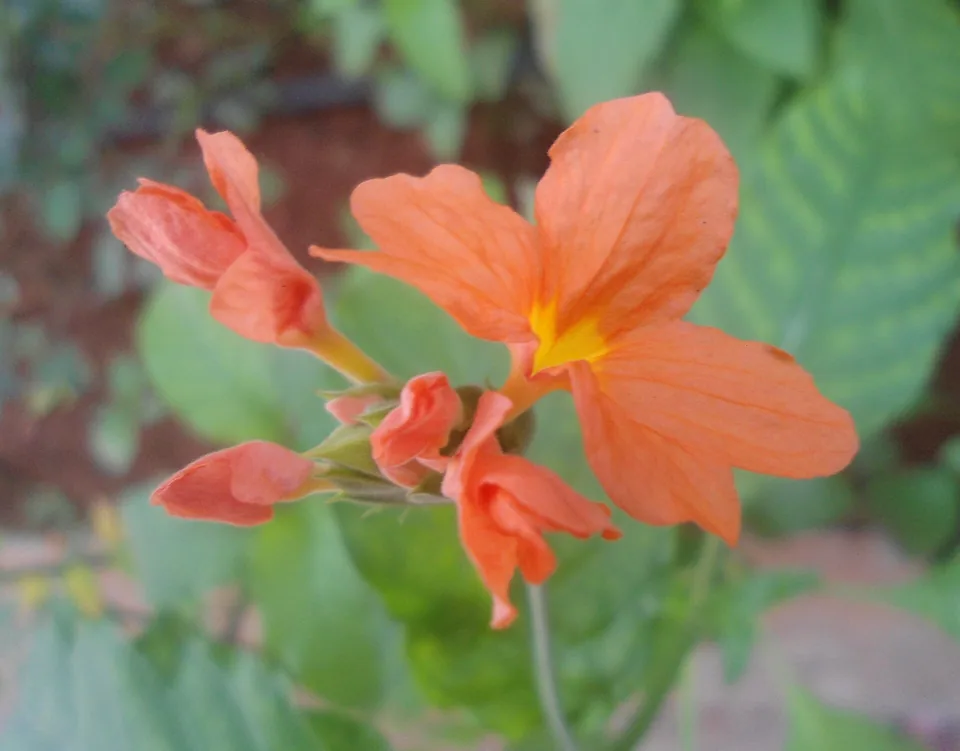


How to Grow and Care for Crossandra
Crossandra infundibuliformis
Written by Emilio Marruso · last checked
At a glance
Crossandra is a perennial that happily grows indoors or in a pot, and trimming the stems after the flowers fade keeps it tidy before seeds form. Give it good light without direct sun, keep the soil moist with warm water, and feed it all year round. In good light it keeps on flowering; only low light puts a halt to the blooms.
- Sun
Good light but no direct sun; low light stops the flowers
- Water
Keep the soil moist, never soggy or dry; use warm water, as cold water shocks the roots
What the sources say (3)
Watering: Keep soil moist, not soggy; never allow it to dry out
The soil should be kept moist, not soggy, at all times and never allowed to dry out.
— Crossandra – Gardening Solutions [3] as well as well-drained organic soil – keep the soil moist, but never soggy.
— Shades of orange – the crossandra - UF/IFAS Extension Charlotte County [4] Watering notes: Use warm water; cold water can shock the roots
Use warm water when watering this plant. Cold water can shock the roots, causing the plant to die.
— Crossandra infundibuliformis (Crossandra, Firecracker Flower) | North Carolina Extension Gardener Plant Toolbox [1] - Cold
Below 55 °F (13 °C) it can lose its leaves
- Soil
Soil with a pH of 6.0 or lower
What the sources say (1)
Soil pH, maximum: 6.0
Soil pH: Acid (<6.0) Soil Drainage: Good Drainage Moist
— Crossandra infundibuliformis (Crossandra, Firecracker Flower) | North Carolina Extension Gardener Plant Toolbox [1] - Feeding
Balanced fertilizer monthly in spring and summer, every 8 weeks in fall and winter
What the sources say (3)
When: Year-round: more often in spring and summer, less in fall and winter
A balanced fertilizer should be applied every month during the spring and summer, and then every eight weeks in the fall and winter.
— Crossandra – Gardening Solutions [3] How often: Monthly in spring and summer; every 8 weeks in fall and winter
A balanced fertilizer should be applied every month during the spring and summer, and then every eight weeks in the fall and winter.
— Crossandra – Gardening Solutions [3] Mineral fertilizers: Balanced fertilizer
A balanced fertilizer should be applied every month during the spring and summer, and then every eight weeks in the fall and winter.
— Crossandra – Gardening Solutions [3] - Pruning
Trim the stems back after the flowers fade, before seeds form
What the sources say (2)
Pruning: Trim stems back after the flowers fade, before seeds form
This is easily avoided by trimming back stems after the flowers fade.
— Crossandra – Gardening Solutions [3] To prevent the seed pods from 'exploding', cut the stems back before the seeds form.
— Crossandra infundibuliformis (Crossandra, Firecracker Flower) | North Carolina Extension Gardener Plant Toolbox [1] - Pests
Mealybugs, whiteflies, aphids and mites; check the leaves often
What the sources say (2)
Pests: mealybugs, whitefly, aphids, mites
mealybugs, whitefly, aphids and mites are occasional visitors
— Crossandra infundibuliformis (Crossandra, Firecracker Flower) | North Carolina Extension Gardener Plant Toolbox [1] Check leaves regularly for spider mites and whitefly
— Crossandra – Gardening Solutions [3] - Watch out
Dry seed pods can burst open in damp weather or rain
- Size
1–3 ft tall and 1–2 ft wide
What the sources say (3)
Mature height: 30-91 cm (1-3 ft)
Height: 1 ft. 0 in. - 3 ft. 0 in.
— Crossandra infundibuliformis (Crossandra, Firecracker Flower) | North Carolina Extension Gardener Plant Toolbox [1] will grow up to 3 feet tall
— Crossandra – Gardening Solutions [3] Mature width: 30-61 cm (1-2 ft)
Width: 1 ft. 0 in. - 2 ft. 0 in.
— Crossandra infundibuliformis (Crossandra, Firecracker Flower) | North Carolina Extension Gardener Plant Toolbox [1] - Propagation
From stem cuttings or seed
What the sources say (2)
Propagation: Stem cuttings, seed
Propagation can be accomplished through stem cuttings. It's best to take your cuttings early in the growing season
— Crossandra infundibuliformis (Crossandra, Firecracker Flower) | North Carolina Extension Gardener Plant Toolbox [1] crossandra can best be grown from rooted cuttings or from seeds.
— Shades of orange – the crossandra - UF/IFAS Extension Charlotte County [4] - Containers
Grows well in pots and as a houseplant
Overview
Crossandra infundibuliformis can be grown outdoors in tropical conditions, while in temperate regions it is mostly cultivated as a houseplant or an outdoor annual. [1] It thrives in warm, humid environments, with soil kept moist but not soggy. [3] It can be propagated by stem cuttings. [1]
Crossandra care
How to water Crossandra
Watering
Keep soil moist, not soggy; never allow it to dry out
Watering notes
Use warm water; cold water can shock the roots
What the sources say (1)
Use warm water when watering this plant. Cold water can shock the roots, causing the plant to die.How much light Crossandra needs
The sources give different values depending on region, zone or growing conditions.
What each source says
According to NC State Extension (condizioni colturali): Dappled sunlight, full sun or partial shade
indoors (NC State Extension): Bright indirect light
According to UF/IFAS Gardening Solutions: Up to four hours of direct sun per day; also partially shaded areas
Florida (UF/IFAS Charlotte County): Up to four hours of full sun, some shade the rest of the day
According to Texas A&M AgriLife (greenhouse production): Medium light during active growth; some direct sunlight during winter
What the sources say (5)
According to NC State Extension (condizioni colturali): Light:
Dappled Sunlight (Shade through upper canopy all day)
Full sun (6 or more hours of direct sunlight a day)
Partial Shade (Direct sunlight only part of the day, 2-6 hours)indoors (NC State Extension): They need bright indirect light, warm indoor air temperatures, and high humidity to perform well.According to UF/IFAS Gardening Solutions: While it can tolerate up to four hours of direct sun per day, this shrub can also be grown in partially shaded areas.Florida (UF/IFAS Charlotte County): Crossandra can take up to four hours of full sun but will benefit from some shade the rest of the day.According to Texas A&M AgriLife (greenhouse production): Light: Medium light during active growth period; some direct sunlight during winterHow much cold Crossandra can take
Hardiness, coldest zone
The sources give different values depending on region, zone or growing conditions.
What each source says
According to NC State Extension: 10a [winter low −1.1 to 1.7 °C (30 to 35 °F)]
According to UF/IFAS Gardening Solutions: 9 [winter low −6.7 to −1.1 °C (20 to 30 °F)]
What the sources say (3)
According to NC State Extension: USDA Plant Hardiness Zone:
10a, 10b, 11a, 11bAccording to UF/IFAS Gardening Solutions: Crossandra loves heat and does best in hardiness zones 9-11.USDA Plant Hardiness Zone:
10a, 10b, 11a, 11bHardiness, warmest zone
The sources give different values depending on region, zone or growing conditions.
What each source says
According to NC State Extension: 11b [winter low 7.2 to 10 °C (45 to 50 °F)]
According to UF/IFAS Gardening Solutions: 11 [winter low 4.4 to 10 °C (40 to 50 °F)]
What the sources say (3)
According to NC State Extension: USDA Plant Hardiness Zone:
10a, 10b, 11a, 11bAccording to UF/IFAS Gardening Solutions: Crossandra loves heat and does best in hardiness zones 9-11.USDA Plant Hardiness Zone:
10a, 10b, 11a, 11bBest soil for Crossandra
6.0
What the sources say (1)
Soil pH:
Acid (<6.0)
Soil Drainage:
Good Drainage
MoistWhere to grow Crossandra
Indoors
Yes
What the sources say (1)
make wonderful flowering houseplants if given adequate light and moisture.In containers
Yes
What the sources say (1)
but should be used as container or annual plants otherwise.How to propagate Crossandra
Stem cuttings, seed
What the sources say (2)
Propagation can be accomplished through stem cuttings. It's best to take your cuttings early in the growing seasoncrossandra can best be grown from rooted cuttings or from seeds.How to grow Crossandra
The plant
Life cycle
perennial (grown as an annual or houseplant in temperate regions)
What the sources say (2)
This tropical perennial will grow up to 3 feet tallin temperate regions it is mostly cultivated as a houseplant or an outdoor annualFamily
Acanthaceae
What the sources say (1)
Family:
AcanthaceaeMature height
30-91 cm (1-3 ft)
Mature width
30-61 cm (1-2 ft)
What the sources say (1)
Width: 1 ft. 0 in. - 2 ft. 0 in.Pests and diseases
Pests
mealybugs, whitefly, aphids, mites
Fertilizing
When
Year-round: more often in spring and summer, less in fall and winter
What the sources say (1)
A balanced fertilizer should be applied every month during the spring and summer, and then every eight weeks in the fall and winter.How often
Monthly in spring and summer; every 8 weeks in fall and winter
What the sources say (1)
A balanced fertilizer should be applied every month during the spring and summer, and then every eight weeks in the fall and winter.Mineral fertilizers
Balanced fertilizer
What the sources say (1)
A balanced fertilizer should be applied every month during the spring and summer, and then every eight weeks in the fall and winter.Crossandra pests and problems
Exploding seed pods
Symptom: Seed pods found after the flower has dried tend to explode near high humidity or rainfall
What to do: Cut the stems back before the seeds form
What the sources say (2)
To prevent the seed pods from 'exploding', cut the stems back before the seeds form.
— Crossandra infundibuliformis (Crossandra, Firecracker Flower) | North Carolina Extension Gardener Plant Toolbox [1] tend to "explode" when near high humidity or rainfall.
— Crossandra infundibuliformis (Crossandra, Firecracker Flower) | North Carolina Extension Gardener Plant Toolbox [1] Leaf loss in cool temperatures
Symptom: Cooler temperatures below 55 F can cause the plant to lose its leaves
What to do: Not stated in the sources
What the sources say (1)
Cooler temperatures below 55 F can cause the plant to lose its leaves.
— Crossandra infundibuliformis (Crossandra, Firecracker Flower) | North Carolina Extension Gardener Plant Toolbox [1] Low light
Symptom: Low lighting conditions will put a halt on flowering
What to do: Protect from direct sunlight but avoid low lighting
What the sources say (1)
Protect from direct sunlight, but keep in mind that low lighting conditions will put a halt on flowering.
— Crossandra infundibuliformis (Crossandra, Firecracker Flower) | North Carolina Extension Gardener Plant Toolbox [1] Occasional insect visitors
Symptom: Mealybugs, whitefly, aphids and mites are occasional visitors
What to do: Check leaves regularly for spider mites and whitefly
Remedies
Each remedy shows what official sources say about it; traditional remedies without an official source are marked as such. Harmful ones are listed so you know to avoid them.
Treating the plant
mealybugs
rubbing alcohol cotton swab Partly works
Make sure to test the soap and alcohol mixtures on a small portion of the plant prior to full application because some plants may be sensitive to soap or alcohol.
— planttalk.colostate.edu [8] How: Notice them quickly and kill mealybugs by hand with a cotton swab dipped in alcohol; check plants weekly.
Mealybugs can be managed by noticing them quickly and killing them by hand with a cotton swab dipped in alcohol
— yardandgarden.extension.iastate.edu [7] What the evidence says killing them by hand with a cotton swab dipped in alcohol or with an insecticide (including soap-based products) labeled for mealybug control on your specific houseplant. You can also use both methods as neither will kill 100% of mealybugs.
— yardandgarden.extension.iastate.edu [7] diluted rubbing alcohol spray Works
Make sure to test the soap and alcohol mixtures on a small portion of the plant prior to full application because some plants may be sensitive to soap or alcohol.
— planttalk.colostate.edu [8] How: For heavy infestations, spray a mixture of 10 percent rubbing alcohol and 90 percent water directly onto the insects; repeat every week until the bugs are gone.
For heavy infestations, spray a mixture of 10 percent rubbing alcohol and 90 percent water directly onto the insects.
— planttalk.colostate.edu [8] What the evidence says These pests may also be controlled with insecticidal soap. For heavy infestations, spray a mixture of 10 percent rubbing alcohol and 90 percent water directly onto the insects.
— planttalk.colostate.edu [8]
Calendar
Pruning
Trim stems back after the flowers fade, before seeds form
What the sources say (2)
This is easily avoided by trimming back stems after the flowers fade.To prevent the seed pods from 'exploding', cut the stems back before the seeds form.Months as given by the sources, which are mostly from the United States (northern hemisphere). In the southern hemisphere they shift by about six months.
Indicative values
Values from a secondary source, not checked word for word like the rest of this page. Use them as a starting point.
- Growth rate
- HighIndicative value, adapt it to your climate · Secondary source
Similar plants
- American Water-willow Dianthera americana
- Bear's Breeches Acanthus mollis
- Bear's Breeches Acanthus spinosus
- Bengal clock vine Thunbergia grandiflora
- Black-eyed Susan Vine Thunbergia alata
- Caricature-plant Graptophyllum pictum
- Carolina Wild-petunia Ruellia caroliniensis
- Dicliptera Dicliptera squarrosa
Sources
Every value above is quoted from these documents. Links lead to the original publisher.
- Crossandra infundibuliformis (Crossandra, Firecracker Flower) | North Carolina Extension Gardener Plant Toolbox · plants.ces.ncsu.edu, consulted
- Crossandra - Crossandra infundibuliformis | North Carolina Extension Gardener Plant Toolbox · plants.ces.ncsu.edu, consulted
- Crossandra – Gardening Solutions · gardeningsolutions.ifas.ufl.edu, consulted
- Shades of orange – the crossandra - UF/IFAS Extension Charlotte County · blogs.ifas.ufl.edu, consulted
- Crossandra - Ornamental Production Ornamental Production · aggie-horticulture.tamu.edu, consulted
- Crossandra revisited - UF/IFAS Extension Charlotte County · blogs.ifas.ufl.edu, consulted
- yardandgarden.extension.iastate.edu · yardandgarden.extension.iastate.edu
- planttalk.colostate.edu · planttalk.colostate.edu
Written by Emilio Marruso · last checked