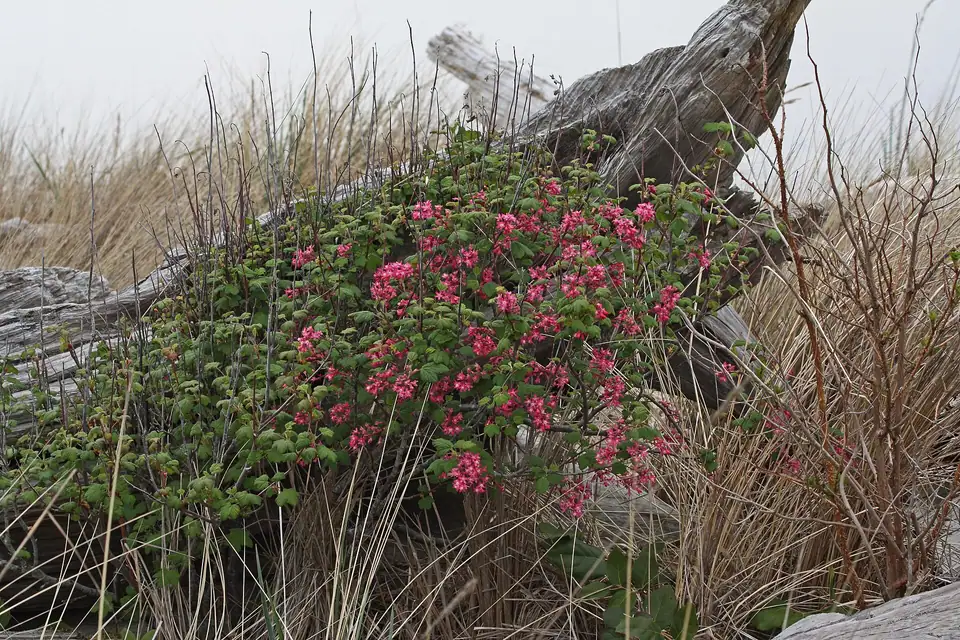


How to Grow and Care for Flowering Currant
Ribes sanguineum
Written by Emilio Marruso · last checked
At a glance
Flowering currant is an easygoing shrub for beginners: give it full sun and well-drained soil, and once settled it shrugs off dry spells. It grows 5 to 12 feet tall and wide, needs only a trim after flowering, and in summer its fruits are a treat for the birds. You can even start new plants from cuttings, seed or layering.
- Sun
Full sun; it takes shade but blooms less
What the sources say (1)
Light: Full sun; tolerates shade but blooms less well
Plant in the full sun, in well-drained soil. It will tolerate shade, but it will not bloom as well. Once established it will tolerate drought.
— Ribes sanguineum (Blood Currant, Flowering Currant, Pink-flowered Currant, Pink Winter Currant, Redflower Currant, Red Flowering Currant) | North Carolina Extension Gardener Plant Toolbox [1] - Water
Handles dry spells once it is settled in
What the sources say (1)
Watering: Tolerates drought once established
Plant in the full sun, in well-drained soil. It will tolerate shade, but it will not bloom as well. Once established it will tolerate drought.
— Ribes sanguineum (Blood Currant, Flowering Currant, Pink-flowered Currant, Pink Winter Currant, Redflower Currant, Red Flowering Currant) | North Carolina Extension Gardener Plant Toolbox [1] - Cold
Survives winters down to −10 °F (−23.3 °C)
Very hardy · USDA 6a · RHS H7 · Z6
What the sources say (2)
Hardiness, coldest zone: 6a [winter low −23.3 to −20.6 °C (−10 to −5 °F)]
NC Region: Mountains Piedmont USDA Plant Hardiness Zone: 6a, 6b, 7a, 7b, 8a, 8b
— Ribes sanguineum (Blood Currant, Flowering Currant, Pink-flowered Currant, Pink Winter Currant, Redflower Currant, Red Flowering Currant) | North Carolina Extension Gardener Plant Toolbox [1] Hardiness, warmest zone: 8b [winter low −9.4 to −6.7 °C (15 to 20 °F)]
NC Region: Mountains Piedmont USDA Plant Hardiness Zone: 6a, 6b, 7a, 7b, 8a, 8b
— Ribes sanguineum (Blood Currant, Flowering Currant, Pink-flowered Currant, Pink Winter Currant, Redflower Currant, Red Flowering Currant) | North Carolina Extension Gardener Plant Toolbox [1] - Soil
Plant in soil that drains well
What the sources say (1)
Watering notes: Plant in well-drained soil
Plant in the full sun, in well-drained soil. It will tolerate shade, but it will not bloom as well. Once established it will tolerate drought.
— Ribes sanguineum (Blood Currant, Flowering Currant, Pink-flowered Currant, Pink Winter Currant, Redflower Currant, Red Flowering Currant) | North Carolina Extension Gardener Plant Toolbox [1] - Pruning
Prune right after it finishes flowering
What the sources say (1)
Pruning: After flowering
This plant can become rangy and may require pruning which is best done after flowering.
— Ribes sanguineum (Blood Currant, Flowering Currant, Pink-flowered Currant, Pink Winter Currant, Redflower Currant, Red Flowering Currant) | North Carolina Extension Gardener Plant Toolbox [1] - Harvest
Fruits come in summer; they are edible but best left for the birds
What the sources say (1)
Harvest: Summer
Fruit Value To Gardener: Edible Display/Harvest Time: Summer
— Ribes sanguineum (Blood Currant, Flowering Currant, Pink-flowered Currant, Pink Winter Currant, Redflower Currant, Red Flowering Currant) | North Carolina Extension Gardener Plant Toolbox [1] - Pests
Watch for currant borers and oak root fungus
What the sources say (3)
Pests: currant borer
They are susceptible to currant borer and oak root fungus.
— Ribes sanguineum (Blood Currant, Flowering Currant, Pink-flowered Currant, Pink Winter Currant, Redflower Currant, Red Flowering Currant) | North Carolina Extension Gardener Plant Toolbox [1] Diseases: oak root fungus, white pine blister rust (female plants are an alternative host)
They are susceptible to currant borer and oak root fungus.
— Ribes sanguineum (Blood Currant, Flowering Currant, Pink-flowered Currant, Pink Winter Currant, Redflower Currant, Red Flowering Currant) | North Carolina Extension Gardener Plant Toolbox [1] Female plants are an alternative host for white pine blister rust. SECTION .0400 -WHITE PINE BLISTER RUST02 NCAC 48A .0401CURRANT AND GOOSEBERRY PLANTS
— Ribes sanguineum (Blood Currant, Flowering Currant, Pink-flowered Currant, Pink Winter Currant, Redflower Currant, Red Flowering Currant) | North Carolina Extension Gardener Plant Toolbox [1] - Watch out
Female plants can host white pine blister rust, a disease of pines
What the sources say (2)
Diseases: oak root fungus, white pine blister rust (female plants are an alternative host)
They are susceptible to currant borer and oak root fungus.
— Ribes sanguineum (Blood Currant, Flowering Currant, Pink-flowered Currant, Pink Winter Currant, Redflower Currant, Red Flowering Currant) | North Carolina Extension Gardener Plant Toolbox [1] Female plants are an alternative host for white pine blister rust. SECTION .0400 -WHITE PINE BLISTER RUST02 NCAC 48A .0401CURRANT AND GOOSEBERRY PLANTS
— Ribes sanguineum (Blood Currant, Flowering Currant, Pink-flowered Currant, Pink Winter Currant, Redflower Currant, Red Flowering Currant) | North Carolina Extension Gardener Plant Toolbox [1] - Size
5 to 12 ft tall and just as wide
What the sources say (2)
Mature height: 152-366 cm (5-12 ft)
Dimensions: Height: 5 ft. 0 in. - 12 ft. 0 in. Width: 5 ft. 0 in. - 12 ft. 0 in.
— Ribes sanguineum (Blood Currant, Flowering Currant, Pink-flowered Currant, Pink Winter Currant, Redflower Currant, Red Flowering Currant) | North Carolina Extension Gardener Plant Toolbox [1] Mature width: 152-366 cm (5-12 ft)
Dimensions: Height: 5 ft. 0 in. - 12 ft. 0 in. Width: 5 ft. 0 in. - 12 ft. 0 in.
— Ribes sanguineum (Blood Currant, Flowering Currant, Pink-flowered Currant, Pink Winter Currant, Redflower Currant, Red Flowering Currant) | North Carolina Extension Gardener Plant Toolbox [1] - Propagation
Start new plants from stem cuttings, seed or layering
What the sources say (1)
Propagation: Layering, seed, stem cutting
Life Cycle: Woody Recommended Propagation Strategy: Layering Seed Stem Cutting
— Ribes sanguineum (Blood Currant, Flowering Currant, Pink-flowered Currant, Pink Winter Currant, Redflower Currant, Red Flowering Currant) | North Carolina Extension Gardener Plant Toolbox [1]
Overview
Red flowering currant is a medium-sized deciduous shrub grown mainly for its early showy spring flowers. [1] It is grown in full sun in well-drained soil and tolerates drought once established. [1]
Flowering Currant care
How to water Flowering Currant
Watering
Tolerates drought once established
What the sources say (1)
Plant in the full sun, in well-drained soil. It will tolerate shade, but it will not bloom as well. Once established it will tolerate drought.Watering notes
Plant in well-drained soil
What the sources say (1)
Plant in the full sun, in well-drained soil. It will tolerate shade, but it will not bloom as well. Once established it will tolerate drought.How much light Flowering Currant needs
Full sun; tolerates shade but blooms less well
What the sources say (1)
Plant in the full sun, in well-drained soil. It will tolerate shade, but it will not bloom as well. Once established it will tolerate drought.How much cold Flowering Currant can take
Hardiness, coldest zone
6a [winter low −23.3 to −20.6 °C (−10 to −5 °F)]
What the sources say (1)
NC Region:
Mountains
Piedmont
USDA Plant Hardiness Zone:
6a, 6b, 7a, 7b, 8a, 8bHardiness, warmest zone
8b [winter low −9.4 to −6.7 °C (15 to 20 °F)]
What the sources say (1)
NC Region:
Mountains
Piedmont
USDA Plant Hardiness Zone:
6a, 6b, 7a, 7b, 8a, 8bHow to propagate Flowering Currant
Layering, seed, stem cutting
What the sources say (1)
Life Cycle:
Woody
Recommended Propagation Strategy:
Layering
Seed
Stem CuttingHow to grow Flowering Currant
The plant
Family
Grossulariaceae
What the sources say (1)
Red Flowering Currant is a medium-sized, deciduous, and multi-stemmed shrub in the Grossulariaceae or currant familyMature height
152-366 cm (5-12 ft)
What the sources say (1)
Dimensions:
Height: 5 ft. 0 in. - 12 ft. 0 in.
Width: 5 ft. 0 in. - 12 ft. 0 in.Mature width
152-366 cm (5-12 ft)
What the sources say (1)
Dimensions:
Height: 5 ft. 0 in. - 12 ft. 0 in.
Width: 5 ft. 0 in. - 12 ft. 0 in.Pests and diseases
Pests
currant borer
What the sources say (1)
They are susceptible to currant borer and oak root fungus.Diseases
oak root fungus, white pine blister rust (female plants are an alternative host)
What the sources say (2)
They are susceptible to currant borer and oak root fungus.Female plants are an alternative host for white pine blister rust.
SECTION .0400 -WHITE PINE BLISTER RUST02 NCAC 48A .0401CURRANT AND GOOSEBERRY PLANTSFlowering Currant pests and problems
Currant borer and oak root fungus
Symptom: Not described in the source.
What to do: Not described in the source.
What the sources say (1)
They are susceptible to currant borer and oak root fungus.
— Ribes sanguineum (Blood Currant, Flowering Currant, Pink-flowered Currant, Pink Winter Currant, Redflower Currant, Red Flowering Currant) | North Carolina Extension Gardener Plant Toolbox [1] White pine blister rust
Symptom: Female plants are an alternative host; all Ribes are prohibited in North Carolina.
What to do: Not described in the source.
What the sources say (1)
Female plants are an alternative host for white pine blister rust.
— Ribes sanguineum (Blood Currant, Flowering Currant, Pink-flowered Currant, Pink Winter Currant, Redflower Currant, Red Flowering Currant) | North Carolina Extension Gardener Plant Toolbox [1]
Remedies
Each remedy shows what official sources say about it; traditional remedies without an official source are marked as such. Harmful ones are listed so you know to avoid them.
Treating the plant
aphids
strong stream of water Official source, not independently tested
How: Wash aphid from plants with a strong stream of water.
Home gardeners: Wash aphid from plants with a strong stream of water.
— pnwhandbooks.org [3] soapy water spray Not verified
Traditional remedy, not verified by an official source.
How: Spray horticultural soap or a mild solution of washing up detergent.
powdery mildew
pruning out diseased material Official source, not independently tested
How: Prune out and destroy diseased plant material; do not compost it.
Prune out and destroy/discard (do not compost) diseased plant materials.
— hortsense.cahnrs.wsu.edu [4]
leaf spot
raking up fallen leaves Not verified
Traditional remedy, not verified by an official source.
How: Rake up leaves as they fall.
Calendar
Harvest
Summer
What the sources say (1)
Fruit Value To Gardener:
Edible
Display/Harvest Time:
SummerPruning
After flowering
What the sources say (1)
This plant can become rangy and may require pruning which is best done after flowering.Months as given by the sources, which are mostly from the United States (northern hemisphere). In the southern hemisphere they shift by about six months.
Edibility
Reported by the source, quoted verbatim. Do not eat a plant on the basis of this page alone: identification mistakes can be dangerous.
Indicative values
Values from a secondary source, not checked word for word like the rest of this page. Use them as a starting point.
- Life cycle
- PerennialIndicative value, adapt it to your climate · Secondary source
- Hours of sun
- 7-10 hoursIndicative value, adapt it to your climate · Secondary source
- Soil
- Sandy, Loamy, Clay, RockyIndicative value, adapt it to your climate · Secondary source
- Soil pH
- 5.5-7Indicative value, adapt it to your climate · Secondary source
- Care level
- MediumIndicative value, adapt it to your climate · Secondary source
- Growth rate
- ModerateIndicative value, adapt it to your climate · Secondary source
Similar plants
- Alpine Currant Ribes alpinum
- Ribes nidigrolaria Ribes nidigrolaria
- Redcurrant Ribes rubrum
- Gooseberry Ribes uva-crispa
- Golden currant Ribes aureum
- European black currant Ribes nigrum
- Abies grandis Abies grandis
- Abraham Trachystemon orientalis
Sources
Every value above is quoted from these documents. Links lead to the original publisher.
- Ribes sanguineum (Blood Currant, Flowering Currant, Pink-flowered Currant, Pink Winter Currant, Redflower Currant, Red Flowering Currant) | North Carolina Extension Gardener Plant Toolbox · plants.ces.ncsu.edu, consulted
- Red Flowering Currant - Ribes sanguineum | North Carolina Extension Gardener Plant Toolbox · plants.ces.ncsu.edu, consulted
- pnwhandbooks.org · pnwhandbooks.org
- hortsense.cahnrs.wsu.edu · hortsense.cahnrs.wsu.edu
Written by Emilio Marruso · last checked