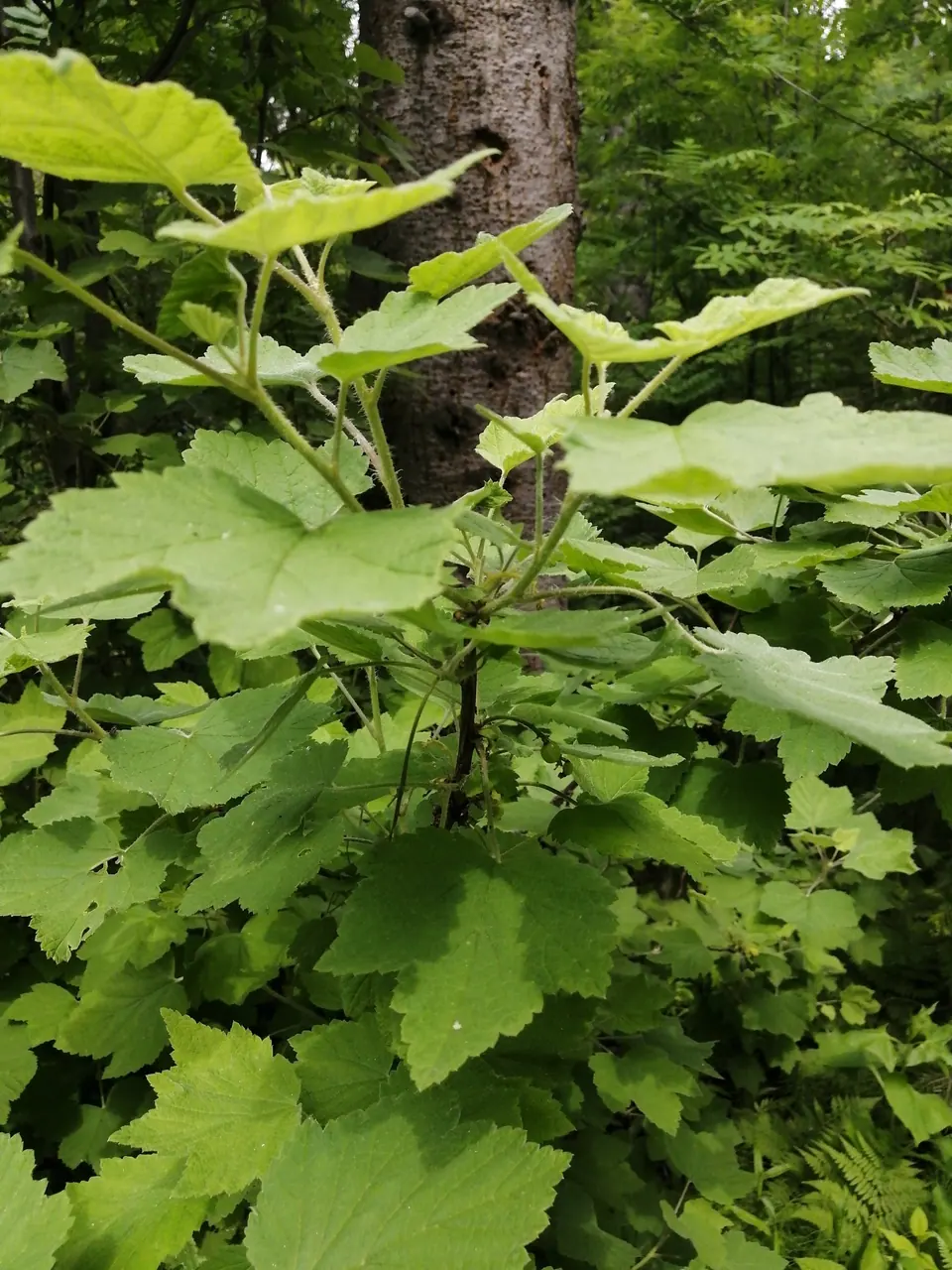
How to Grow and Care for Ribes nidigrolaria
Ribes nidigrolaria
Written by Emilio Marruso · last checked
At a glance
Jostaberry makes excellent preserves, which some say beat both red currants and gooseberries. Give it full sun, or a little partial shade, and steady watering for the biggest berries and the best harvest. Pick the fruit when it turns reddish-black to black and feels soft; a yearly feeding and a prune in late winter keep the bush going strong.
- Sun
Full sun; it also handles partial shade
What the sources say (1)
Light: Full sun; tolerates partial shade
Currants, gooseberries and jostaberries grow best in full sunlight but do tolerate partial shade.
— Currants, Gooseberries, and Jostaberries | Colorado State University Extension [1] - Water
Water well for bigger berries; water less after harvest, with a last watering in November
What the sources say (2)
Watering: Adequate irrigation for best fruit size and yield
Apply adequate irrigation for best fruit size and yield.
— Currants, Gooseberries, and Jostaberries | Colorado State University Extension [1] Watering notes: Reduce water gradually after harvest to harden plants before winter; give a final watering in November
After harvest, gradually reduce the amount of water to harden the plants prior to winter. Give a final watering in November to reduce drying during the winter.
— Currants, Gooseberries, and Jostaberries | Colorado State University Extension [1] - Feeding
Feed once a year; before planting, mix 1 in of manure compost into the top 6–8 in of soil
What the sources say (2)
How often: Once a year
For smaller plantings 4-8 ounces of a 10-10-10 fertilizer should be applied per plant per year.
— Currants, Gooseberries, and Jostaberries | Colorado State University Extension [1] Natural fertilizers: Before planting, 2.54 cm [1 in] of manure or manure-based compost, or 5.08–7.62 cm [2–3 in] of plant-based compost, worked into the top 15.2–20.3 cm [6–8 in] of soil
For new plantings it may be beneficial to incorporate 3 yards (approximately 1 inch) of manure or manure-based compost or 6-9 yards (2-3 inches) of plant-based compost into the top 6-8 inches of soil per 1,000 square ft.
— Currants, Gooseberries, and Jostaberries | Colorado State University Extension [1] - Pruning
Prune in late winter or early spring, before the buds swell
What the sources say (1)
Pruning: Late winter or early spring, before bud swelling
Prune in late winter or early spring prior to bud swelling.
— Currants, Gooseberries, and Jostaberries | Colorado State University Extension [1] - Harvest
Pick when reddish-black to black and soft; great for jams and preserves
What the sources say (2)
Harvest: When fully colored (reddish-black to black) and soft
Pick jostaberries when they are fully colored (reddish-black to black) and soft.
— Currants, Gooseberries, and Jostaberries | Colorado State University Extension [1] How to harvest: Pick when fully colored (reddish-black to black) and soft.
Pick jostaberries when they are fully colored (reddish-black to black) and soft.
— Currants, Gooseberries, and Jostaberries | Colorado State University Extension [1] - Pests
Aphids, cane borers and red spider mites; cut wilted canes well below the droopy tip
What the sources say (1)
Pests: aphids, cane borers, red spider mites
Insects most commonly observed are aphids, cane borers and red spider mites.
— Currants, Gooseberries, and Jostaberries | Colorado State University Extension [1]
Overview
Jostaberry is a fast-growing hybrid between the black currant and gooseberry. [1] It grows best in full sunlight but tolerates partial shade. [1] It is thornless and disease resistant. [2]
This record is incomplete: the sources we read do not cover every field yet.
Not yet covered by our sources: Planting, Spacing, Propagation
Ribes nidigrolaria care
How to water Ribes nidigrolaria
Watering
Adequate irrigation for best fruit size and yield
What the sources say (1)
Apply adequate irrigation for best fruit size and yield.Watering notes
Reduce water gradually after harvest to harden plants before winter; give a final watering in November
What the sources say (1)
After harvest, gradually reduce the amount of water to harden the plants prior to winter. Give a final watering in November to reduce drying during the winter.How much light Ribes nidigrolaria needs
Full sun; tolerates partial shade
What the sources say (1)
Currants, gooseberries and jostaberries grow best in full sunlight but do tolerate partial shade.Where to grow Ribes nidigrolaria
Not stated in the sources we read.
How to propagate Ribes nidigrolaria
Not stated in the sources we read.
How to grow Ribes nidigrolaria
The plant
Family
Grossulariaceae
What the sources say (1)
Family Grossulariaceae ( 1GROF ) Genus Ribes ( 1RIBG ) Species Ribes x nidigrolaria ( RIBNG )Harvest and storage
How to harvest
Pick when fully colored (reddish-black to black) and soft.
What the sources say (1)
Pick jostaberries when they are fully colored (reddish-black to black) and soft.Pests and diseases
Pests
aphids, cane borers, red spider mites
What the sources say (1)
Insects most commonly observed are aphids, cane borers and red spider mites.Fertilizing
How often
Once a year
What the sources say (1)
For smaller plantings 4-8 ounces of a 10-10-10 fertilizer should be applied per plant per year.Natural fertilizers
Before planting, 2.54 cm [1 in] of manure or manure-based compost, or 5.08–7.62 cm [2–3 in] of plant-based compost, worked into the top 15.2–20.3 cm [6–8 in] of soil
What the sources say (1)
For new plantings it may be beneficial to incorporate 3 yards (approximately 1 inch) of manure or manure-based compost or 6-9 yards (2-3 inches) of plant-based compost into the top 6-8 inches of soil per 1,000 square ft.Mineral fertilizers
10-10-10 fertilizer, 113–226 g per plant per year (smaller plantings)
What each source says
good garden soil (maintenance): Ammonium sulfate 19.5 g/m² and treble superphosphate 9.76 g/m²
poor soil: Ammonium sulfate 39.0 g/m², treble superphosphate 19.5 g/m², zinc sulfate 4.88 g/m² and iron chelate 4.88 g/m²
with a straw mulch: Nitrogen at 1 part per 100 parts of straw dry matter
What the sources say (4)
good garden soil (maintenance): If planted in good garden soil, the plants need only a maintenance amount of fertilizer— 4 pounds of ammonium sulfate and 2 pounds of treble superphosphate per 1,000 square feet.poor soil: However, if the soil has not produced a good garden, apply 8 pounds of ammonium sulfate, 4 pounds of treble superphosphate, 1 pound of zinc sulfate and 1 pound of iron chelate per 1,000 square feet.with a straw mulch: These shrubs respond well to a heavy mulch of straw or similar material. When using straw, apply nitrogen at the rate of one part per 100 parts of dry matter.For smaller plantings 4-8 ounces of a 10-10-10 fertilizer should be applied per plant per year.Micronutrients
Zinc sulfate 4.88 g/m² and iron chelate 4.88 g/m² on soils that have not produced a good garden
What the sources say (1)
However, if the soil has not produced a good garden, apply 8 pounds of ammonium sulfate, 4 pounds of treble superphosphate, 1 pound of zinc sulfate and 1 pound of iron chelate per 1,000 square feet.Ribes nidigrolaria pests and problems
Aphids
Symptom: Small, soft-bodied, pear-shaped insects on the underside of leaves
What the sources say (1)
Aphids are small, soft-bodied, pear-shaped insects on the underside of leaves.
— Currants, Gooseberries, and Jostaberries | Colorado State University Extension [1] Cane borers
Symptom: Small white grubs bore into stems, causing wilting of the upper portion of the cane
What to do: Prune well below the wilted tip and destroy the affected part
What the sources say (2)
Caneborers are small white grubs that bore into stems, causing wilting of the upper portion of the cane.
— Currants, Gooseberries, and Jostaberries | Colorado State University Extension [1] Control them by pruning well below the wilted tip and destroying the affected part.
— Currants, Gooseberries, and Jostaberries | Colorado State University Extension [1] Red spider mites
Symptom: Yellow spots on the leaves that eventually turn brown
What the sources say (1)
Look for yellow spots on the leaves that eventually turn brown.
— Currants, Gooseberries, and Jostaberries | Colorado State University Extension [1]
Remedies
Each remedy shows what official sources say about it; traditional remedies without an official source are marked as such. Harmful ones are listed so you know to avoid them.
Treating the plant
aphids
strong water spray Works
How: Spray the plants with a strong spray of water from the hose.
Aphids can be despatched with a strong spray of water from the hose, or failing that, an application of neem oil or insecticidal soap.
— gardenerspath.com [4] What the evidence says You can physically knock aphids off plants with a strong spray of water from a garden hose.
— extension.umn.edu [5] neem oil Partly works
How: Apply neem oil if the water spray fails.
Aphids can be despatched with a strong spray of water from the hose, or failing that, an application of neem oil or insecticidal soap.
— gardenerspath.com [4] What the evidence says Neem (azadirachtin) is a plant based pesticide that discourages aphid feeding. Insects are not killed quickly, but it makes them stop feeding and they slowly die.
— extension.umn.edu [5] insecticidal soap Works
How: Apply insecticidal soap if the water spray fails.
Aphids can be despatched with a strong spray of water from the hose, or failing that, an application of neem oil or insecticidal soap.
— gardenerspath.com [4] What the evidence says Insecticidal soap, horticultural oil and pyrethrins can be effective at controlling aphids.
— extension.umn.edu [5]
cane borers
pruning and destroying affected canes Works
How: Prune and destroy affected canes to prevent the spread.
As the name suggests, cane borers bore into stems, causing wilting. Prune and destroy affected canes to prevent the spread.
— gardenerspath.com [4] What the evidence says Control them by pruning well below the wilted tip and destroying the affected part.
— Currants, Gooseberries, and Jostaberries | Colorado State University Extension [1]
imported currant worm
handpicking larvae Not verified
Traditional remedy, not verified by an official source.
How: Handpick the larvae.
bacillus thuringiensis (bt) Not verified
Traditional remedy, not verified by an official source.
How: Use a biological control like Bacillus thuringiensis (Bt) to manage outbreaks.
red spider mites
strong water spray Works
Blast the affected plants with a jet of water under high pressure to dislodge the mites (not suitable for very young or delicate plants).
— extension.oregonstate.edu [7] How: You can blast them off with a strong spray of water.
To treat red spider mites, you can try wiping rubbing alcohol over the leaves and removing any visible signs of webbing. You can also blast them off with a strong spray of water.
— morningchores.com [6] What the evidence says Blast the affected plants with a jet of water under high pressure to dislodge the mites (not suitable for very young or delicate plants).
— extension.oregonstate.edu [7] wiping leaves with rubbing alcohol Not verified
Traditional remedy, not verified by an official source.
How: You can try wiping rubbing alcohol over the leaves and removing any visible signs of webbing.
birds
netting Not verified
Traditional remedy, not verified by an official source.
How: Place netting around the bush to protect it from flying creatures and other wildlife.
white pine blister rust
pruning infested canes Not verified
Traditional remedy, not verified by an official source.
How: Prune away any infested canes and do not plant near eastern pines.
Calendar
Planting
Not stated in the sources we read.
Harvest
When fully colored (reddish-black to black) and soft
What the sources say (1)
Pick jostaberries when they are fully colored (reddish-black to black) and soft.Pruning
Late winter or early spring, before bud swelling
What the sources say (1)
Prune in late winter or early spring prior to bud swelling.Months as given by the sources, which are mostly from the United States (northern hemisphere). In the southern hemisphere they shift by about six months.
Edibility
Reported by the source, quoted verbatim. Do not eat a plant on the basis of this page alone: identification mistakes can be dangerous.
They make excellent preserves, considered by some to be better than either red currant or gooseberry.
[1]
Indicative values
Values from a secondary source, not checked word for word like the rest of this page. Use them as a starting point.
- Life cycle
- PerennialIndicative value, adapt it to your climate · Secondary source
- Mature height
- 152.4-182.9 cm (5-6 ft)Indicative value, adapt it to your climate · Secondary source
- Hours of sun
- 6-8 hoursIndicative value, adapt it to your climate · Secondary source
- Drought tolerant
- yesIndicative value, adapt it to your climate · Secondary source
- Soil pH
- 6-6.5Indicative value, adapt it to your climate · Secondary source
- USDA hardiness zones
- 3-8 [winter low −40 to −6.7 °C (−40 to 20 °F)]Indicative value, adapt it to your climate · Secondary source
- Care level
- MediumIndicative value, adapt it to your climate · Secondary source
- Growth rate
- LowIndicative value, adapt it to your climate · Secondary source
- Propagation
- Cutting, Layering Propagation, Grafting Propagation, Division, Seed PropagationIndicative value, adapt it to your climate · Secondary source
Similar plants
- Alpine Currant Ribes alpinum
- Flowering Currant Ribes sanguineum
- Gooseberry Ribes uva-crispa
- Redcurrant Ribes rubrum
- European black currant Ribes nigrum
- Golden currant Ribes aureum
- Abies grandis Abies grandis
- Abraham Trachystemon orientalis
Sources
Every value above is quoted from these documents. Links lead to the original publisher.
- Currants, Gooseberries, and Jostaberries | Colorado State University Extension · extension.colostate.edu, consulted
- Jostaberry – Uncommon Fruit · uncommonfruit.cias.wisc.edu, consulted
- Ribes x nidigrolaria (RIBNG)[Overview]| EPPO Global Database · gd.eppo.int, consulted
- gardenerspath.com · gardenerspath.com
- extension.umn.edu · extension.umn.edu
- morningchores.com · morningchores.com
- extension.oregonstate.edu · extension.oregonstate.edu
Written by Emilio Marruso · last checked