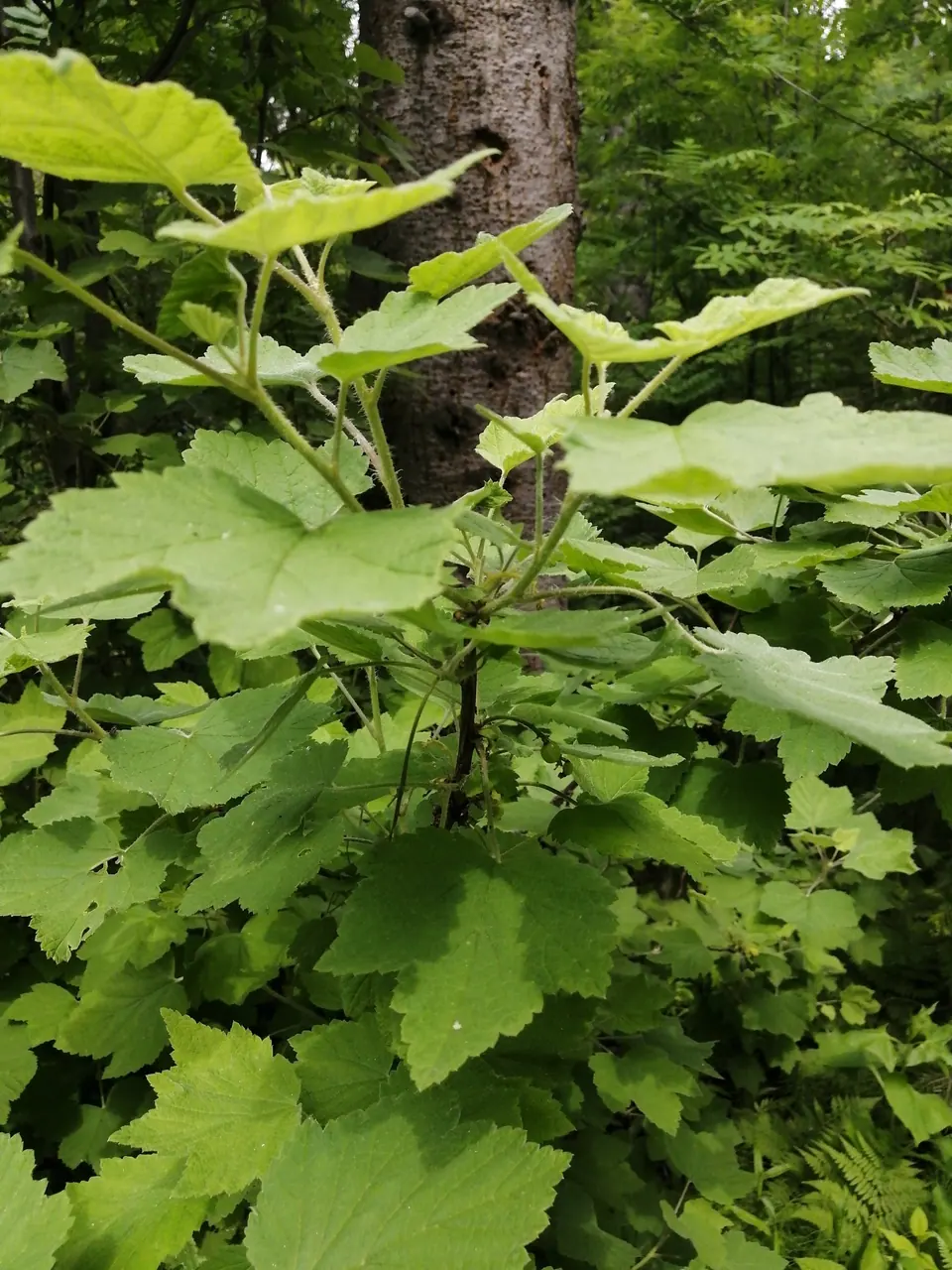
Cómo cultivar y cuidar Ribes nidigrolaria
Ribes nidigrolaria
Escrito por Emilio Marruso · última revisión
De un vistazo
El josta da unas mermeladas excelentes, que algunos consideran mejores que las de grosella roja o uva espina. Dale sol pleno, o algo de semisombra, y un riego adecuado para tener frutos grandes y una buena cosecha. Recógelos cuando estén de color rojo oscuro a negro y blandos; un abonado al año y una poda a finales de invierno lo mantienen fuerte.
- Sol
Sol pleno; también aguanta la semisombra
Qué dicen las fuentes (1)
Luz: Pleno sol; tolera semisombra
Currants, gooseberries and jostaberries grow best in full sunlight but do tolerate partial shade.
— Currants, Gooseberries, and Jostaberries | Colorado State University Extension [1] - Riego
Riega bien para tener frutos grandes; reduce el riego tras la cosecha y da un último riego en noviembre
Qué dicen las fuentes (2)
Riego: Riego adecuado para obtener el mejor tamaño y rendimiento del fruto
Apply adequate irrigation for best fruit size and yield.
— Currants, Gooseberries, and Jostaberries | Colorado State University Extension [1] Notas sobre el riego: Reduce el riego gradualmente después de la cosecha para endurecer las plantas antes del invierno; da un riego final en noviembre
After harvest, gradually reduce the amount of water to harden the plants prior to winter. Give a final watering in November to reduce drying during the winter.
— Currants, Gooseberries, and Jostaberries | Colorado State University Extension [1] - Abonado
Abona una vez al año; antes de plantar, mezcla 2,5 cm de estiércol compostado en los primeros 15–20 cm de suelo
Qué dicen las fuentes (2)
Frecuencia: Una vez al año
For smaller plantings 4-8 ounces of a 10-10-10 fertilizer should be applied per plant per year.
— Currants, Gooseberries, and Jostaberries | Colorado State University Extension [1] Abonos naturales: Antes de plantar, 2.54 cm [1 in] de estiércol o compost a base de estiércol, o 5.08–7.62 cm [2–3 in] de compost a base de plantas, incorporado a los 15.2–20.3 cm [6–8 in] superiores del suelo
For new plantings it may be beneficial to incorporate 3 yards (approximately 1 inch) of manure or manure-based compost or 6-9 yards (2-3 inches) of plant-based compost into the top 6-8 inches of soil per 1,000 square ft.
— Currants, Gooseberries, and Jostaberries | Colorado State University Extension [1] - Poda
Poda a finales de invierno o principios de primavera, antes de que se hinchen las yemas
Qué dicen las fuentes (1)
Poda: Finales de invierno o principios de primavera, antes de que se hinchen los brotes
Prune in late winter or early spring prior to bud swelling.
— Currants, Gooseberries, and Jostaberries | Colorado State University Extension [1] - Cosecha
Recoge los frutos cuando estén de rojo oscuro a negro y blandos; ideales para mermeladas
Qué dicen las fuentes (2)
Cosecha: Cuando estén completamente coloreadas (rojo-negruzco a negro) y blandas
Pick jostaberries when they are fully colored (reddish-black to black) and soft.
— Currants, Gooseberries, and Jostaberries | Colorado State University Extension [1] Cómo cosechar: Recoge cuando estén completamente coloreadas (negro-rojizas a negras) y blandas.
Pick jostaberries when they are fully colored (reddish-black to black) and soft.
— Currants, Gooseberries, and Jostaberries | Colorado State University Extension [1] - Plagas
Pulgón, barrenadores de tallos y araña roja; corta los tallos mustios muy por debajo de la punta
Qué dicen las fuentes (1)
Plagas: pulgones, barrenadores de caña, arañas rojas
Insects most commonly observed are aphids, cane borers and red spider mites.
— Currants, Gooseberries, and Jostaberries | Colorado State University Extension [1]
Resumen
La jostaberry es un híbrido de rápido crecimiento entre el grosellero negro y el grosellero espinoso. [1] Crece mejor a pleno sol, pero tolera la semisombra. [1] No tiene espinas y es resistente a enfermedades. [2]
Citado en inglés, como en la fuente.
Esta ficha está incompleta: las fuentes consultadas aún no cubren todos los campos.
Aún no cubierto por nuestras fuentes: Plantación, Distancia de plantación, Propagación
Cuidados
Riego
Riego
Riego adecuado para obtener el mejor tamaño y rendimiento del fruto
Qué dicen las fuentes (1)
Apply adequate irrigation for best fruit size and yield.Notas sobre el riego
Reduce el riego gradualmente después de la cosecha para endurecer las plantas antes del invierno; da un riego final en noviembre
Qué dicen las fuentes (1)
After harvest, gradually reduce the amount of water to harden the plants prior to winter. Give a final watering in November to reduce drying during the winter.Luz
Pleno sol; tolera semisombra
Qué dicen las fuentes (1)
Currants, gooseberries and jostaberries grow best in full sunlight but do tolerate partial shade.Dónde cultivarla
No figura en las fuentes consultadas.
Propagación
No figura en las fuentes consultadas.
Cultivo
La planta
Familia
Grossulariaceae
Qué dicen las fuentes (1)
Family Grossulariaceae ( 1GROF ) Genus Ribes ( 1RIBG ) Species Ribes x nidigrolaria ( RIBNG )Cosecha y conservación
Cómo cosechar
Recoge cuando estén completamente coloreadas (negro-rojizas a negras) y blandas.
Qué dicen las fuentes (1)
Pick jostaberries when they are fully colored (reddish-black to black) and soft.Plagas y enfermedades
Plagas
pulgones, barrenadores de caña, arañas rojas
Qué dicen las fuentes (1)
Insects most commonly observed are aphids, cane borers and red spider mites.Abonado
Frecuencia
Una vez al año
Qué dicen las fuentes (1)
For smaller plantings 4-8 ounces of a 10-10-10 fertilizer should be applied per plant per year.Abonos naturales
Antes de plantar, 2.54 cm [1 in] de estiércol o compost a base de estiércol, o 5.08–7.62 cm [2–3 in] de compost a base de plantas, incorporado a los 15.2–20.3 cm [6–8 in] superiores del suelo
Qué dicen las fuentes (1)
For new plantings it may be beneficial to incorporate 3 yards (approximately 1 inch) of manure or manure-based compost or 6-9 yards (2-3 inches) of plant-based compost into the top 6-8 inches of soil per 1,000 square ft.Abonos minerales
Fertilizante 10-10-10, 113–226 g por planta por año (plantaciones más pequeñas)
Lo que dice cada fuente
buena tierra de jardín (mantenimiento): Sulfato de amonio 19.5 g/m² y superfosfato triple 9.76 g/m²
suelo pobre: Sulfato de amonio 39.0 g/m², superfosfato triple 19.5 g/m², sulfato de zinc 4.88 g/m² y quelato de hierro 4.88 g/m²
con un acolchado de paja: Nitrógeno a 1 parte por 100 partes de materia seca de paja
Qué dicen las fuentes (4)
buena tierra de jardín (mantenimiento): If planted in good garden soil, the plants need only a maintenance amount of fertilizer— 4 pounds of ammonium sulfate and 2 pounds of treble superphosphate per 1,000 square feet.suelo pobre: However, if the soil has not produced a good garden, apply 8 pounds of ammonium sulfate, 4 pounds of treble superphosphate, 1 pound of zinc sulfate and 1 pound of iron chelate per 1,000 square feet.con un acolchado de paja: These shrubs respond well to a heavy mulch of straw or similar material. When using straw, apply nitrogen at the rate of one part per 100 parts of dry matter.For smaller plantings 4-8 ounces of a 10-10-10 fertilizer should be applied per plant per year.Microelementos
Sulfato de zinc 4.88 g/m² y quelato de hierro 4.88 g/m² en suelos que no hayan producido un buen jardín
Qué dicen las fuentes (1)
However, if the soil has not produced a good garden, apply 8 pounds of ammonium sulfate, 4 pounds of treble superphosphate, 1 pound of zinc sulfate and 1 pound of iron chelate per 1,000 square feet.Problemas
Pulgones
Síntoma: Insectos pequeños, de cuerpo blando y forma de pera, en el envés de las hojas
Qué dicen las fuentes (1)
Aphids are small, soft-bodied, pear-shaped insects on the underside of leaves.
— Currants, Gooseberries, and Jostaberries | Colorado State University Extension [1] Perforadores de caña
Síntoma: Pequeñas larvas blancas perforan los tallos, causando el marchitamiento de la parte superior de la caña
Qué hacer: Poda bien por debajo de la punta marchita y destruye la parte afectada
Qué dicen las fuentes (2)
Caneborers are small white grubs that bore into stems, causing wilting of the upper portion of the cane.
— Currants, Gooseberries, and Jostaberries | Colorado State University Extension [1] Control them by pruning well below the wilted tip and destroying the affected part.
— Currants, Gooseberries, and Jostaberries | Colorado State University Extension [1] Arañitas rojas
Síntoma: Manchas amarillas en las hojas que eventualmente se vuelven marrones
Qué dicen las fuentes (1)
Look for yellow spots on the leaves that eventually turn brown.
— Currants, Gooseberries, and Jostaberries | Colorado State University Extension [1]
Remedios
Cada remedio indica qué dicen las fuentes oficiales; los remedios tradicionales sin fuente oficial aparecen marcados. Los perjudiciales están para que sepas evitarlos.
Cuidar la planta
pulgones
chorro de agua fuerte Funciona
Cómo: Rocía las plantas con un chorro fuerte de agua de la manguera.
Aphids can be despatched with a strong spray of water from the hose, or failing that, an application of neem oil or insecticidal soap.
— gardenerspath.com [4] Qué dicen las pruebas You can physically knock aphids off plants with a strong spray of water from a garden hose.
— extension.umn.edu [5] aceite de neem Funciona en parte
Cómo: Aplica aceite de neem si el chorro de agua no funciona.
Aphids can be despatched with a strong spray of water from the hose, or failing that, an application of neem oil or insecticidal soap.
— gardenerspath.com [4] Qué dicen las pruebas Neem (azadirachtin) is a plant based pesticide that discourages aphid feeding. Insects are not killed quickly, but it makes them stop feeding and they slowly die.
— extension.umn.edu [5] jabón insecticida Funciona
Cómo: Aplica jabón insecticida si el chorro de agua no funciona.
Aphids can be despatched with a strong spray of water from the hose, or failing that, an application of neem oil or insecticidal soap.
— gardenerspath.com [4] Qué dicen las pruebas Insecticidal soap, horticultural oil and pyrethrins can be effective at controlling aphids.
— extension.umn.edu [5]
barrenadores de las cañas
Poda y destruye las cañas afectadas Funciona
Cómo: Poda y destruye las cañas afectadas para evitar la propagación.
As the name suggests, cane borers bore into stems, causing wilting. Prune and destroy affected canes to prevent the spread.
— gardenerspath.com [4] Qué dicen las pruebas Control them by pruning well below the wilted tip and destroying the affected part.
— Currants, Gooseberries, and Jostaberries | Colorado State University Extension [1]
gusano importado del grosellero
recolección manual de larvas No verificado
Remedio tradicional, no verificado por una fuente oficial.
Cómo: Recoge las larvas a mano.
bacillus thuringiensis (bt) No verificado
Remedio tradicional, no verificado por una fuente oficial.
Cómo: Usa un control biológico como Bacillus thuringiensis (Bt) para manejar los brotes.
arañitas rojas
chorro de agua fuerte Funciona
Blast the affected plants with a jet of water under high pressure to dislodge the mites (not suitable for very young or delicate plants).
— extension.oregonstate.edu [7] Cómo: Puedes quitarlas con un chorro fuerte de agua.
To treat red spider mites, you can try wiping rubbing alcohol over the leaves and removing any visible signs of webbing. You can also blast them off with a strong spray of water.
— morningchores.com [6] Qué dicen las pruebas Blast the affected plants with a jet of water under high pressure to dislodge the mites (not suitable for very young or delicate plants).
— extension.oregonstate.edu [7] Limpia las hojas con alcohol isopropílico. No verificado
Remedio tradicional, no verificado por una fuente oficial.
Cómo: Puedes intentar limpiar las hojas con alcohol isopropílico y eliminar cualquier signo visible de telarañas.
pájaros
malla No verificado
Remedio tradicional, no verificado por una fuente oficial.
Cómo: Coloca una malla alrededor del arbusto para protegerlo de criaturas voladoras y otros animales silvestres.
roya vesicular del pino blanco
Poda las cañas infestadas No verificado
Remedio tradicional, no verificado por una fuente oficial.
Cómo: Poda las cañas infestadas y no plantes cerca de pinos orientales.
Calendario
Plantación
No figura en las fuentes consultadas.
Cosecha
Cuando estén completamente coloreadas (rojo-negruzco a negro) y blandas
Qué dicen las fuentes (1)
Pick jostaberries when they are fully colored (reddish-black to black) and soft.Poda
Finales de invierno o principios de primavera, antes de que se hinchen los brotes
Qué dicen las fuentes (1)
Prune in late winter or early spring prior to bud swelling.Meses tal como los dan las fuentes, en su mayoría de Estados Unidos (hemisferio norte). En el hemisferio sur se desplazan unos seis meses.
Comestibilidad
Según la fuente, citada textualmente. No comas una planta basándote solo en esta página: los errores de identificación pueden ser peligrosos.
They make excellent preserves, considered by some to be better than either red currant or gooseberry.
[1]
Valores orientativos
Valores de una fuente secundaria, no comprobados palabra por palabra como el resto de esta página. Úselos como punto de partida.
- Ciclo de vida
- PerenneValor orientativo, adáptalo a tu clima · Fuente secundaria
- Altura adulta
- 152.4-182.9 cm (5-6 pies)Valor orientativo, adáptalo a tu clima · Fuente secundaria
- Horas de sol
- 6-8 horasValor orientativo, adáptalo a tu clima · Fuente secundaria
- Resiste la sequía
- SíValor orientativo, adáptalo a tu clima · Fuente secundaria
- pH del suelo
- 6-6.5Valor orientativo, adáptalo a tu clima · Fuente secundaria
- Zonas de rusticidad USDA
- 3-8 [mínima invernal de −40 a −6,7 °C (de −40 a 20 °F)]Valor orientativo, adáptalo a tu clima · Fuente secundaria
- Nivel de cuidado
- MedioValor orientativo, adáptalo a tu clima · Fuente secundaria
- Crecimiento
- BajoValor orientativo, adáptalo a tu clima · Fuente secundaria
- Propagación
- Esqueje, propagación por acodo, propagación por injerto, división, propagación por semillaValor orientativo, adáptalo a tu clima · Fuente secundaria
Plantas similares
- Grosellero silvestre Ribes alpinum
- Flowering Currant Ribes sanguineum
- Grosella espinosa europea Ribes uva-crispa
- Grosellero rojo Ribes rubrum
- Casis Ribes nigrum
- Golden currant Ribes aureum
- Abeto de Vancuver Abies grandis
- Abraham Trachystemon orientalis
Fuentes
Cada valor anterior se cita de estos documentos. Los enlaces llevan al editor original.
- Currants, Gooseberries, and Jostaberries | Colorado State University Extension · extension.colostate.edu, consultado
- Jostaberry – Uncommon Fruit · uncommonfruit.cias.wisc.edu, consultado
- Ribes x nidigrolaria (RIBNG)[Overview]| EPPO Global Database · gd.eppo.int, consultado
- gardenerspath.com · gardenerspath.com
- extension.umn.edu · extension.umn.edu
- morningchores.com · morningchores.com
- extension.oregonstate.edu · extension.oregonstate.edu
Escrito por Emilio Marruso · última revisión