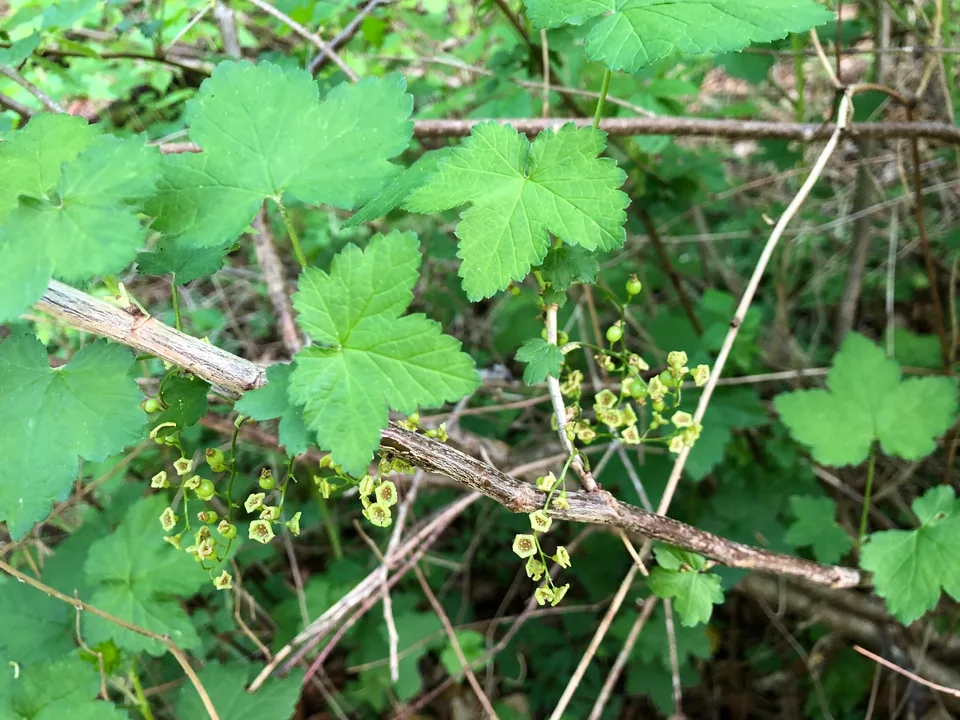
Cómo cultivar y cuidar Grosellero rojo
Ribes rubrum
Escrito por Emilio Marruso · última revisión
De un vistazo
La grosella roja es un arbusto generoso: con unas pocas plantas tendrás bayas ricas en antioxidantes para toda la familia. Crece a gusto a pleno sol o en semisombra, incluso en maceta, y empieza a dar fruto el segundo año, con la cosecha completa el tercero. De mediados de junio a julio solo tienes que cortar racimos enteros de bayas de color intenso, firmes y jugosas.
- Sol
Sol pleno o semisombra
Qué dicen las fuentes (2)
Luz: Pleno sol a semisombra
Redcurrants prefer full sun, but will also grow well in partial shade, such as against a north-facing wall, although the fruit will ripen slightly later and be less sweet.
— How to grow redcurrants | RHS Guide [4] Currants perform well in an area with morning sun, afternoon part-shade and good air circulation.
— How to Grow Red Currants in Your Garden | USU [1] - Riego
No dejes que pase sed: con falta de agua coge oídio con más facilidad; en maceta, humedad constante
Qué dicen las fuentes (2)
Notas sobre el riego: Las plantas estresadas por falta de agua son más susceptibles al mildiu; las plantas en contenedor necesitan un suministro constante de humedad durante la temporada de crecimiento
Plants that are stressed for water are more susceptible to mildew.
— How to Grow Red Currants in Your Garden | USU [1] Redcurrants growing in containers need a steady supply of moisture throughout the growing season
— How to grow redcurrants | RHS Guide [4] - Frío
Necesita 800–1500 horas de frío invernal entre 0 y 7 °C para fructificar bien
Qué dicen las fuentes (3)
Horas de frío: 800–1500 horas entre 0 y 7.2 °C [32–45 °F]
cultivo «Currant»: Currant Chill hours: 800 to 1,500 Currant and gooseberry do best in cool, humid, partially shaded areas.
— [6] Currant Chill hours: 800 to 1,500 Currant and gooseberry do best in cool, humid, partially shaded areas.
— [6] Chill hours are accumulated from November through February when temperatures are between 32° and 45°F.
— [6] - Distancia
0,9–1,5 m entre plantas, 2,4–3 m entre hileras
Qué dicen las fuentes (5)
Distancia de plantación: 91.4-152.4 cm (3-5 pies) entre plantas en una fila
Según USU Extension: Space the plants 3 to 5 feet apart in a row with 8 to 10 feet between rows, depending on the vigor of the cultivar selected.
— How to Grow Red Currants in Your Garden | USU [1] Según RHS, bush plants: Space redcurrants 1.2–1.5m (4–5ft) apart for bush plants, 30-40cm (12-16in) apart for cordons and 1.5m (5ft) apart for fans.
— How to grow redcurrants | RHS Guide [4] Según RHS, cordons: Space redcurrants 1.2–1.5m (4–5ft) apart for bush plants, 30-40cm (12-16in) apart for cordons and 1.5m (5ft) apart for fans.
— How to grow redcurrants | RHS Guide [4] Space the plants 3 to 5 feet apart in a row with 8 to 10 feet between rows, depending on the vigor of the cultivar selected.
— How to Grow Red Currants in Your Garden | USU [1] Distancia entre hileras: 243.84-304.8 cm (8-10 pies)
Space the plants 3 to 5 feet apart in a row with 8 to 10 feet between rows,
— How to Grow Red Currants in Your Garden | USU [1] - Plantación
Planta de finales de otoño a principios de primavera, antes de que brote
Qué dicen las fuentes (2)
Plantación: Finales de otoño a principios de primavera, antes de que comience el crecimiento
Según USU Extension: Transplant to the garden either in the late fall, or early in the spring before the plants begin to grow.
— How to Grow Red Currants in Your Garden | USU [1] Transplant to the garden either in the late fall, or early in the spring before the plants begin to grow.
— How to Grow Red Currants in Your Garden | USU [1] - Abonado
Una vez al año en primavera con compost o estiércol bien hecho; no abones en exceso las plantas jóvenes
Qué dicen las fuentes (10)
Cuándo: Primavera (hasta principios de verano)
En el suelo, cuando las cosechas son pobres o se nota una deficiencia: However, if harvests are poor or your plant is showing signs of nutrient deficiency, apply an organic granular fertiliser to the soil in early spring.
— How to grow redcurrants | RHS Guide [4] In general, Ribes plants need to be fertilized each year in spring.
— Growing Currants, Gooseberries, and Jostaberries in Ohio | CFAES Knowledge Hub [2] They are heavy feeders and require annual fertilizer applications in the spring or early summer.
— Currants – Crops and Soils [3] Frecuencia: Una vez al año
en contenedores: Plants growing in containers benefit from regular feeding. Either apply an organic high-potassium liquid fertiliser every fortnight during the growing season
— How to grow redcurrants | RHS Guide [4] In general, Ribes plants need to be fertilized each year in spring.
— Growing Currants, Gooseberries, and Jostaberries in Ohio | CFAES Knowledge Hub [2] They are heavy feeders and require annual fertilizer applications in the spring or early summer.
— Currants – Crops and Soils [3] Abonos naturales: Estiércol estable; abono verde; cada primavera una capa gruesa de compost de jardín o estiércol bien descompuesto en la base de los arbustos
en contenedores: Plants growing in containers benefit from regular feeding. Either apply an organic high-potassium liquid fertiliser every fortnight during the growing season
— How to grow redcurrants | RHS Guide [4] Currants are heavy nitrogen feeders, and stable manure is a good fertilizer for red currants. Green manure or mulch can also be used.
— How to Grow Red Currants in Your Garden | USU [1] redcurrants growing in the ground each spring, spreading a thick layer of organic matter , such as garden compost or well-rotted manure, on the soil around the base of the bushes.
— How to grow redcurrants | RHS Guide [4] Evitar: Fertilización intensa de plantas jóvenes
Green manure or mulch can also be used. Young plants do not require heavy fertilization.
— How to Grow Red Currants in Your Garden | USU [1] - Poda
Poda a finales de invierno o principios de primavera, en reposo; fructifica en la madera del año anterior
Qué dicen las fuentes (3)
Poda: Finales de invierno a principios de primavera, durante el letargo
Plants should be pruned in late winter or early spring during dormancy.
— How to Grow Red Currants in Your Garden | USU [1] - Cosecha
De mediados de junio a julio, con las bayas de color intenso y firmes; corta racimos enteros
Qué dicen las fuentes (5)
Cosecha: Desde mediados de junio hasta julio
Utah: Most cultivars bear fruit from mid-June to July, and with some simple pruning they remain productive and are long lived.
— How to Grow Red Currants in Your Garden | USU [1] Most cultivars bear fruit from mid-June to July, and with some simple pruning they remain productive and are long lived.
— How to Grow Red Currants in Your Garden | USU [1] Cómo cosechar: Cosecha cuando los frutos estén ricamente coloreados, firmes y jugosos (generalmente desde julio en adelante); corta los racimos completos de fruta (strigs) en lugar de grosellas individuales.
Redcurrants are ready to harvest once the fruits are richly coloured, firm and juicy, usually from July onwards depending on the variety.
— How to grow redcurrants | RHS Guide [4] Cut whole fruit trusses (known as strigs) rather than individual currants, and simply remove the stems in the kitchen.
— How to grow redcurrants | RHS Guide [4] Años hasta el primer fruto: 2 (cosecha ligera en el segundo año, cosecha completa en el tercero)
During the second year of growth, the plants should produce a light crop. Expect a full crop the third year.
— How to Grow Red Currants in Your Garden | USU [1] - Polinización
Una planta da fruto, pero otra variedad cerca da más; la polinizan abejorros y sírfidos
Qué dicen las fuentes (2)
Qué necesita: Una planta produce frutos, pero una segunda planta de una variedad diferente mejora la producción de frutos.
Most plants are self-fruitful but can benefit from cross pollination, so a second plant of a different variety will improve fruit production.
— How to Grow Red Currants in Your Garden | USU [1] Polinizadores: abejorros, sírfidos
Hence, bumblebees, hoverflies, and other insects will need to be active in the cultivation site to visit the Ribes flowers for pollen transfer and effective pollination.
— Growing Currants, Gooseberries, and Jostaberries in Ohio | CFAES Knowledge Hub [2] - Plagas
Pulgón, mosca de sierra del grosellero, mancha foliar y oídio
Qué dicen las fuentes (4)
Plagas: pulgones del grosellero, mosca de la hoja del grosellero
Three aphid (blackfly/greenfly) species feed on currants and can cause distortion to leaves, the currant-sowthistle aphid, currant blister aphid
— How to grow redcurrants | RHS Guide [4] The larvae of several sawfly species can feed on the leaves of gooseberry and red/white currants during spring and summer.
— How to grow redcurrants | RHS Guide [4] Enfermedades: mancha foliar del grosellero y del grosellero espinoso, mildiu polvoriento
This is a fungal disease that attacks the foliage of currants (black, red and white) and gooseberries in summer
— How to grow redcurrants | RHS Guide [4] Areas with poor air circulation increase the incidence of powdery mildew, a foliar disease.
— How to Grow Red Currants in Your Garden | USU [1] - Tamaño
0,9–1,5 m de alto y de ancho
Qué dicen las fuentes (2)
Altura adulta: 91.44-152.4 cm (3-5 pies)
Currant bushes are usually about 3 to 5 feet tall and wide
— How to Grow Red Currants in Your Garden | USU [1] Anchura adulta: 91.44-152.4 cm (3-5 pies)
Currant bushes are usually about 3 to 5 feet tall and wide and the leaves have 3 to 5 lobes.
— How to Grow Red Currants in Your Garden | USU [1] - Multiplicación
Esquejes leñosos a finales de invierno o semileñosos desde mediados de julio
Qué dicen las fuentes (2)
Propagación: Esquejes de madera dura (finales de invierno), esquejes de madera semidura (mediados de julio hasta la primera helada); semilla después de 3-4 meses de estratificación en frío, no fiel al parental
Currants can be propagated from hardwood (fully mature, dormant wood taken in late winter) and semi-hardwood cuttings (partially mature wood of current season’s growth, taken midJuly to first freeze).
— How to Grow Red Currants in Your Garden | USU [1] Currant seeds easily germinate if stratified for three to four months at temperatures just above freezing.
— How to Grow Red Currants in Your Garden | USU [1] - Maceta
Crece también en maceta; abona cada dos semanas durante la temporada de crecimiento
Qué dicen las fuentes (5)
En maceta: Sí
They can even be cultivated in a pot and added to a container garden.
— How to Grow Red Currants in Your Garden | USU [1] These shrubs can be grown in containers and are happy in sun or partial shade.
— How to grow redcurrants | RHS Guide [4] Frecuencia: Una vez al año
en contenedores: Plants growing in containers benefit from regular feeding. Either apply an organic high-potassium liquid fertiliser every fortnight during the growing season
— How to grow redcurrants | RHS Guide [4] In general, Ribes plants need to be fertilized each year in spring.
— Growing Currants, Gooseberries, and Jostaberries in Ohio | CFAES Knowledge Hub [2] They are heavy feeders and require annual fertilizer applications in the spring or early summer.
— Currants – Crops and Soils [3]
Resumen
La grosella roja es un arbusto que se cultiva por sus racimos de frutos rojos y puede cultivarse en contenedores. [4][1] Se desarrolla bien a pleno sol o en semisombra y se propaga por esquejes. [4][1]
Citado en inglés, como en la fuente.
Cuidados
Las medidas entre corchetes son nuestra conversión al otro sistema de unidades; el texto citado no cambia.
Riego
Riego
Las fuentes dan valores distintos según la región, la zona o las condiciones de cultivo.
Lo que dice cada fuente
Utah: 1 a 2 pulgadas [2,5–5,1 cm] de agua por semana hasta que se cosechen los frutos, luego con menos frecuencia
Según RHS (plants in the ground, once established): No se necesita riego de rutina
Qué dicen las fuentes (2)
Utah: Keep plants well watered with 1 to 2 inches of water per week until fruits are harvested, at this point they stop active growth and watering frequency can be reduced.Según RHS (plants in the ground, once established): Once established, bushes growing in the ground shouldn't need any routine watering.Notas sobre el riego
Las plantas estresadas por falta de agua son más susceptibles al mildiu; las plantas en contenedor necesitan un suministro constante de humedad durante la temporada de crecimiento
Luz
Pleno sol a semisombra
Qué dicen las fuentes (2)
Redcurrants prefer full sun, but will also grow well in partial shade, such as against a north-facing wall, although the fruit will ripen slightly later and be less sweet.Currants perform well in an area with morning sun, afternoon part-shade and good air circulation.Dónde cultivarla
En maceta
Sí
Distancia de plantación
91.4-152.4 cm (3-5 pies) entre plantas en una fila
Lo que dice cada fuente
Según USU Extension: 91.4-152.4 cm (3-5 pies) de separación en una fila; filas a 8-10 pies de distancia
Según RHS, bush plants: 120-150 cm (4-5 pies) de separación
Según RHS, cordons: 30-40 cm (12-16 pulgadas) de separación
Qué dicen las fuentes (4)
Según USU Extension: Space the plants 3 to 5 feet apart in a row with 8 to 10 feet between rows, depending on the vigor of the cultivar selected.Según RHS, bush plants: Space redcurrants 1.2–1.5m (4–5ft) apart for bush plants, 30-40cm (12-16in) apart for cordons and 1.5m (5ft) apart for fans.Según RHS, cordons: Space redcurrants 1.2–1.5m (4–5ft) apart for bush plants, 30-40cm (12-16in) apart for cordons and 1.5m (5ft) apart for fans.Space the plants 3 to 5 feet apart in a row with 8 to 10 feet between rows, depending on the vigor of the cultivar selected.Propagación
Esquejes de madera dura (finales de invierno), esquejes de madera semidura (mediados de julio hasta la primera helada); semilla después de 3-4 meses de estratificación en frío, no fiel al parental
Qué dicen las fuentes (2)
Currants can be propagated from hardwood (fully mature, dormant wood taken in late winter) and semi-hardwood cuttings (partially mature wood of current season’s growth, taken midJuly to first freeze).Currant seeds easily germinate if stratified for three to four months at temperatures just above freezing.Cultivo
La planta
Familia
Grossulariaceae
Qué dicen las fuentes (1)
Red currant (Ribes rubrum) is a member of the genus Ribes and part of the gooseberry family (Grossulariaceae).Altura adulta
91.44-152.4 cm (3-5 pies)
Qué dicen las fuentes (1)
Currant bushes are usually about 3 to 5 feet tall and wideAnchura adulta
91.44-152.4 cm (3-5 pies)
Qué dicen las fuentes (1)
Currant bushes are usually about 3 to 5 feet tall and wide and the leaves have 3 to 5 lobes.Años hasta el primer fruto
2 (cosecha ligera en el segundo año, cosecha completa en el tercero)
Qué dicen las fuentes (1)
During the second year of growth, the plants should produce a light crop. Expect a full crop the third year.Siembra y crecimiento
Distancia entre hileras
243.84-304.8 cm (8-10 pies)
Qué dicen las fuentes (1)
Space the plants 3 to 5 feet apart in a row with 8 to 10 feet between rows,Cosecha y conservación
Cómo cosechar
Cosecha cuando los frutos estén ricamente coloreados, firmes y jugosos (generalmente desde julio en adelante); corta los racimos completos de fruta (strigs) en lugar de grosellas individuales.
Qué dicen las fuentes (2)
Redcurrants are ready to harvest once the fruits are richly coloured, firm and juicy, usually from July onwards depending on the variety.Cut whole fruit trusses (known as strigs) rather than individual currants, and simply remove the stems in the kitchen.Plagas y enfermedades
Plagas
pulgones del grosellero, mosca de la hoja del grosellero
Qué dicen las fuentes (2)
Three aphid (blackfly/greenfly) species feed on currants and can cause distortion to leaves, the currant-sowthistle aphid, currant blister aphidThe larvae of several sawfly species can feed on the leaves of gooseberry and red/white currants during spring and summer.Enfermedades
mancha foliar del grosellero y del grosellero espinoso, mildiu polvoriento
Qué dicen las fuentes (2)
This is a fungal disease that attacks the foliage of currants (black, red and white) and gooseberries in summerAreas with poor air circulation increase the incidence of powdery mildew, a foliar disease.Abonado
Cuándo
Primavera (hasta principios de verano)
Lo que dice cada fuente
En el suelo, cuando las cosechas son pobres o se nota una deficiencia: Principios de primavera
Qué dicen las fuentes (3)
En el suelo, cuando las cosechas son pobres o se nota una deficiencia: However, if harvests are poor or your plant is showing signs of nutrient deficiency, apply an organic granular fertiliser to the soil in early spring.In general, Ribes plants need to be fertilized each year in spring.They are heavy feeders and require annual fertilizer applications in the spring or early summer.Frecuencia
Una vez al año
Lo que dice cada fuente
en contenedores: Cada dos semanas durante la temporada de crecimiento
Qué dicen las fuentes (3)
en contenedores: Plants growing in containers benefit from regular feeding. Either apply an organic high-potassium liquid fertiliser every fortnight during the growing seasonIn general, Ribes plants need to be fertilized each year in spring.They are heavy feeders and require annual fertilizer applications in the spring or early summer.Abonos naturales
Estiércol estable; abono verde; cada primavera una capa gruesa de compost de jardín o estiércol bien descompuesto en la base de los arbustos
Lo que dice cada fuente
en contenedores: Fertilizante líquido orgánico de alto contenido en potasio
Qué dicen las fuentes (3)
en contenedores: Plants growing in containers benefit from regular feeding. Either apply an organic high-potassium liquid fertiliser every fortnight during the growing seasonCurrants are heavy nitrogen feeders, and stable manure is a good fertilizer for red currants. Green manure or mulch can also be used.redcurrants growing in the ground each spring, spreading a thick layer of organic matter , such as garden compost or well-rotted manure, on the soil around the base of the bushes.Abonos minerales
Fertilizante completo 10-10-10 esparcido sobre la superficie del suelo, una vez al año
Lo que dice cada fuente
Utah: 10-10-10 o 12-12-12, 114–151 g por planta al año
Ohio: 10-10-10, 114–227 g por planta
Qué dicen las fuentes (4)
Utah: For synthetic fertilizers, lightly broadcast about 1/4 to 1/3 pound of 10-10-10 or 12-12-12 fertilizer per plant each year to promote good growth.Ohio: A complete fertilizer with an analysis of 10-10-10 can be broadcasted at the soil surface at the rate one-quarter to one-half pound per plant.A complete fertilizer with an analysis of 10-10-10 can be broadcasted at the soil surface at the rate one-quarter to one-half pound per plant.For synthetic fertilizers, lightly broadcast about 1/4 to 1/3 pound of 10-10-10 or 12-12-12 fertilizer per plant each year to promote good growth.Evitar
Fertilización intensa de plantas jóvenes
Qué dicen las fuentes (1)
Green manure or mulch can also be used. Young plants do not require heavy fertilization.Polinización
Cuajado
Parcialmente autofértil
Qué dicen las fuentes (1)
Most plants are self-fruitful but can benefit from cross pollination, so a second plant of a different variety will improve fruit production.Qué necesita
Una planta produce frutos, pero una segunda planta de una variedad diferente mejora la producción de frutos.
Qué dicen las fuentes (1)
Most plants are self-fruitful but can benefit from cross pollination, so a second plant of a different variety will improve fruit production.Lo transportan
Insectos
Qué dicen las fuentes (1)
Redcurrant flowers are insect-pollinated, so make sure to remove covers during the dayPolinizadores
abejorros, sírfidos
Qué dicen las fuentes (1)
Hence, bumblebees, hoverflies, and other insects will need to be active in the cultivation site to visit the Ribes flowers for pollen transfer and effective pollination.Poda
Madera que florece
Florece en madera vieja (el crecimiento del año anterior)
Cuándo podar
A fines del invierno o principios de la primavera, durante el reposo; los cordones y los abanicos también se podan en verano.
Frío invernal
Horas de frío
800–1500 horas entre 0 y 7.2 °C [32–45 °F]
Lo que dice cada fuente
cultivo «Currant»: 800–1500 horas
Qué dicen las fuentes (3)
cultivo «Currant»: Currant Chill hours: 800 to 1,500 Currant and gooseberry do best in cool, humid, partially shaded areas.Currant Chill hours: 800 to 1,500 Currant and gooseberry do best in cool, humid, partially shaded areas.Chill hours are accumulated from November through February when temperatures are between 32° and 45°F.Problemas
Mildiu polvoriento
Síntoma: Parches blancos y pulverulentos en las hojas a principios de primavera que se vuelven de color marrón oxidado; también en frutos y tallos
Qué hacer: Poda para aumentar la circulación de aire; evita el estrés hídrico
Qué dicen las fuentes (2)
White powdery patches appear on leaves in early spring and eventually turn rusty brown. Also forms on fruit and stems.
— How to Grow Red Currants in Your Garden | USU [1] Plants that are stressed for water are more susceptible to mildew.
— How to Grow Red Currants in Your Garden | USU [1]
Remedios
Cada remedio indica qué dicen las fuentes oficiales; los remedios tradicionales sin fuente oficial aparecen marcados. Los perjudiciales están para que sepas evitarlos.
Cuidar la planta
mancha foliar
Retira las hojas muertas y los restos de poda Funciona
Cómo: Retira las hojas muertas y los restos de poda del lugar, poda para aumentar la circulación de aire y elimina el riego por aspersión.
Remove dead leaves and prunings from the site. Prune to increase air circulation. Eliminate overhead irrigation.
— How to Grow Red Currants in Your Garden | USU [1] Qué dicen las pruebas Control can be achieved by raking and removing of infected leaves and fruit.
— portal.ct.gov [7]
barrenador de la grosella
Poda y quema las cañas infestadas Funciona
Cómo: Poda y quema las cañas infestadas.
Prune out and burn infested canes. Apply azadirachtin.
— How to Grow Red Currants in Your Garden | USU [1] Qué dicen las pruebas remove and destroy infested canes before June 1. Proper pruning to remove old canes is the best control.
— umass.edu [8]
Calendario
Finales de otoño a principios de primavera, antes de que comience el crecimiento
Lo que dice cada fuente
Según USU Extension: Finales de otoño, o principios de primavera antes de que las plantas comiencen a crecer
Qué dicen las fuentes (2)
Según USU Extension: Transplant to the garden either in the late fall, or early in the spring before the plants begin to grow.Transplant to the garden either in the late fall, or early in the spring before the plants begin to grow.Desde mediados de junio hasta julio
Lo que dice cada fuente
Utah: Desde mediados de junio hasta julio
Qué dicen las fuentes (2)
Utah: Most cultivars bear fruit from mid-June to July, and with some simple pruning they remain productive and are long lived.Most cultivars bear fruit from mid-June to July, and with some simple pruning they remain productive and are long lived.Finales de invierno a principios de primavera, durante el letargo
Qué dicen las fuentes (1)
Plants should be pruned in late winter or early spring during dormancy.Meses tal como los dan las fuentes, en su mayoría de Estados Unidos (hemisferio norte). En el hemisferio sur se desplazan unos seis meses.
Comestibilidad
Según la fuente, citada textualmente. No comas una planta basándote solo en esta página: los errores de identificación pueden ser peligrosos.
A few plants will produce enough to supply a family with plenty of antioxidant-rich berries.
[1]
Plantas similares
- Grosella espinosa europea Ribes uva-crispa
- Ribes nidigrolaria Ribes nidigrolaria
- Grosellero silvestre Ribes alpinum
- Flowering Currant Ribes sanguineum
- Casis Ribes nigrum
- Golden currant Ribes aureum
- Afghan Cherry Prunus jacquemontii
- Castaño estadounidense Castanea dentata
Fuentes
Cada valor anterior se cita de estos documentos. Los enlaces llevan al editor original.
- How to Grow Red Currants in Your Garden | USU · extension.usu.edu, consultado
- Growing Currants, Gooseberries, and Jostaberries in Ohio | CFAES Knowledge Hub · ohioline.osu.edu, consultado
- Currants – Crops and Soils · cropsandsoils.extension.wisc.edu, consultado
- How to grow redcurrants | RHS Guide · rhs.org.uk, consultado
- rhs.org.uk · rhs.org.uk
- escholarship.org · escholarship.org
- portal.ct.gov · portal.ct.gov
- umass.edu · umass.edu
Escrito por Emilio Marruso · última revisión