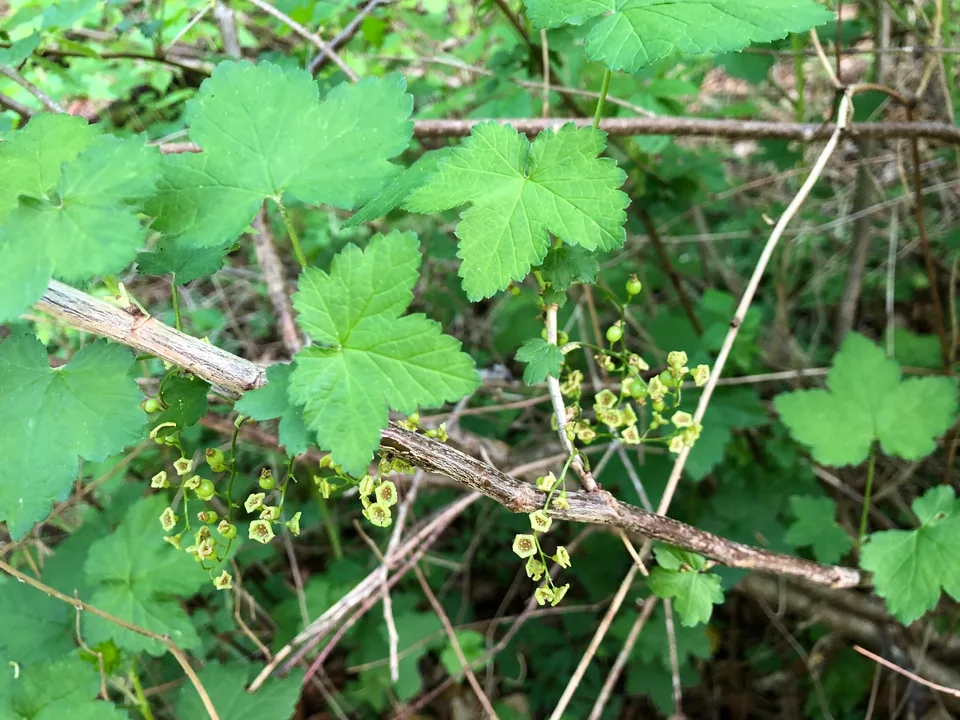
How to Grow and Care for Redcurrant
Ribes rubrum
Written by Emilio Marruso · last checked
At a glance
Redcurrants are generous little bushes: just a few plants give a family plenty of antioxidant-rich berries. They grow happily in full sun or partial shade, even in containers, and start fruiting in their second year, with a full crop in the third. From mid-June to July, you simply snip whole clusters of richly colored, firm and juicy berries.
- Sun
Full sun to partial shade
What the sources say (2)
Light: Full sun to partial shade
Redcurrants prefer full sun, but will also grow well in partial shade, such as against a north-facing wall, although the fruit will ripen slightly later and be less sweet.
— How to grow redcurrants | RHS Guide [4] Currants perform well in an area with morning sun, afternoon part-shade and good air circulation.
— How to Grow Red Currants in Your Garden | USU [1] - Water
Don't let it go thirsty: dry plants get mildew more easily; pots need steady moisture all season
What the sources say (2)
Watering notes: Plants stressed for water are more susceptible to mildew; container plants need a steady supply of moisture through the growing season
Plants that are stressed for water are more susceptible to mildew.
— How to Grow Red Currants in Your Garden | USU [1] Redcurrants growing in containers need a steady supply of moisture throughout the growing season
— How to grow redcurrants | RHS Guide [4] - Cold
Needs 800–1500 hours of winter cold between 32 and 45 °F to fruit well
What the sources say (3)
Chill hours: 800–1500 hours between 0 and 7.2 °C [32–45 °F]
coltura «Currant»: Currant Chill hours: 800 to 1,500 Currant and gooseberry do best in cool, humid, partially shaded areas.
— [6] Currant Chill hours: 800 to 1,500 Currant and gooseberry do best in cool, humid, partially shaded areas.
— [6] Chill hours are accumulated from November through February when temperatures are between 32° and 45°F.
— [6] - Spacing
3–5 ft between plants, 8–10 ft between rows
What the sources say (5)
Spacing: 91.4-152.4 cm (3-5 ft) between plants in a row
According to USU Extension: Space the plants 3 to 5 feet apart in a row with 8 to 10 feet between rows, depending on the vigor of the cultivar selected.
— How to Grow Red Currants in Your Garden | USU [1] According to RHS, bush plants: Space redcurrants 1.2–1.5m (4–5ft) apart for bush plants, 30-40cm (12-16in) apart for cordons and 1.5m (5ft) apart for fans.
— How to grow redcurrants | RHS Guide [4] According to RHS, cordons: Space redcurrants 1.2–1.5m (4–5ft) apart for bush plants, 30-40cm (12-16in) apart for cordons and 1.5m (5ft) apart for fans.
— How to grow redcurrants | RHS Guide [4] Space the plants 3 to 5 feet apart in a row with 8 to 10 feet between rows, depending on the vigor of the cultivar selected.
— How to Grow Red Currants in Your Garden | USU [1] Row spacing: 243.84-304.8 cm (8-10 ft)
Space the plants 3 to 5 feet apart in a row with 8 to 10 feet between rows,
— How to Grow Red Currants in Your Garden | USU [1] - Planting
Plant from late fall to early spring, before growth starts
What the sources say (2)
Planting: Late autumn to early spring, before growth starts
According to USU Extension: Transplant to the garden either in the late fall, or early in the spring before the plants begin to grow.
— How to Grow Red Currants in Your Garden | USU [1] Transplant to the garden either in the late fall, or early in the spring before the plants begin to grow.
— How to Grow Red Currants in Your Garden | USU [1] - Feeding
Once a year in spring with compost or well-rotted manure; don't overfeed young plants
What the sources say (10)
When: Spring (up to early summer)
in the ground, when harvests are poor or deficiency shows: However, if harvests are poor or your plant is showing signs of nutrient deficiency, apply an organic granular fertiliser to the soil in early spring.
— How to grow redcurrants | RHS Guide [4] In general, Ribes plants need to be fertilized each year in spring.
— Growing Currants, Gooseberries, and Jostaberries in Ohio | CFAES Knowledge Hub [2] They are heavy feeders and require annual fertilizer applications in the spring or early summer.
— Currants – Crops and Soils [3] How often: Once a year
in containers: Plants growing in containers benefit from regular feeding. Either apply an organic high-potassium liquid fertiliser every fortnight during the growing season
— How to grow redcurrants | RHS Guide [4] In general, Ribes plants need to be fertilized each year in spring.
— Growing Currants, Gooseberries, and Jostaberries in Ohio | CFAES Knowledge Hub [2] They are heavy feeders and require annual fertilizer applications in the spring or early summer.
— Currants – Crops and Soils [3] Natural fertilizers: Stable manure; green manure; each spring a thick mulch of garden compost or well-rotted manure at the base of the bushes
in containers: Plants growing in containers benefit from regular feeding. Either apply an organic high-potassium liquid fertiliser every fortnight during the growing season
— How to grow redcurrants | RHS Guide [4] Currants are heavy nitrogen feeders, and stable manure is a good fertilizer for red currants. Green manure or mulch can also be used.
— How to Grow Red Currants in Your Garden | USU [1] redcurrants growing in the ground each spring, spreading a thick layer of organic matter , such as garden compost or well-rotted manure, on the soil around the base of the bushes.
— How to grow redcurrants | RHS Guide [4] Avoid: Heavy fertilization of young plants
Green manure or mulch can also be used. Young plants do not require heavy fertilization.
— How to Grow Red Currants in Your Garden | USU [1] - Pruning
Prune in late winter or early spring while dormant; it fruits on last year's wood
What the sources say (3)
Pruning: Late winter to early spring, during dormancy
Plants should be pruned in late winter or early spring during dormancy.
— How to Grow Red Currants in Your Garden | USU [1] - Harvest
Mid-June to July, when berries are richly colored and firm; cut whole clusters
What the sources say (5)
Harvest: Mid-June to July
Utah: Most cultivars bear fruit from mid-June to July, and with some simple pruning they remain productive and are long lived.
— How to Grow Red Currants in Your Garden | USU [1] Most cultivars bear fruit from mid-June to July, and with some simple pruning they remain productive and are long lived.
— How to Grow Red Currants in Your Garden | USU [1] How to harvest: Harvest when the fruits are richly coloured, firm and juicy (usually from July onwards); cut whole fruit trusses (strigs) rather than individual currants.
Redcurrants are ready to harvest once the fruits are richly coloured, firm and juicy, usually from July onwards depending on the variety.
— How to grow redcurrants | RHS Guide [4] Cut whole fruit trusses (known as strigs) rather than individual currants, and simply remove the stems in the kitchen.
— How to grow redcurrants | RHS Guide [4] Years to first fruit: 2 (light crop in the second year, full crop in the third)
During the second year of growth, the plants should produce a light crop. Expect a full crop the third year.
— How to Grow Red Currants in Your Garden | USU [1] - Pollination
One plant fruits, but a second variety gives more; bumblebees and hoverflies do the work
What the sources say (2)
What it needs: One plant sets fruit, but a second plant of a different variety improves fruit production.
Most plants are self-fruitful but can benefit from cross pollination, so a second plant of a different variety will improve fruit production.
— How to Grow Red Currants in Your Garden | USU [1] Pollinators: bumblebees, hoverflies
Hence, bumblebees, hoverflies, and other insects will need to be active in the cultivation site to visit the Ribes flowers for pollen transfer and effective pollination.
— Growing Currants, Gooseberries, and Jostaberries in Ohio | CFAES Knowledge Hub [2] - Pests
Aphids, gooseberry sawfly, leaf spot and powdery mildew
What the sources say (4)
Pests: currant aphids, gooseberry sawfly
Three aphid (blackfly/greenfly) species feed on currants and can cause distortion to leaves, the currant-sowthistle aphid, currant blister aphid
— How to grow redcurrants | RHS Guide [4] The larvae of several sawfly species can feed on the leaves of gooseberry and red/white currants during spring and summer.
— How to grow redcurrants | RHS Guide [4] Diseases: currant and gooseberry leaf spot, powdery mildew
This is a fungal disease that attacks the foliage of currants (black, red and white) and gooseberries in summer
— How to grow redcurrants | RHS Guide [4] Areas with poor air circulation increase the incidence of powdery mildew, a foliar disease.
— How to Grow Red Currants in Your Garden | USU [1] - Size
3–5 ft tall and wide
What the sources say (2)
Mature height: 91.44-152.4 cm (3-5 ft)
Currant bushes are usually about 3 to 5 feet tall and wide
— How to Grow Red Currants in Your Garden | USU [1] Mature width: 91.44-152.4 cm (3-5 ft)
Currant bushes are usually about 3 to 5 feet tall and wide and the leaves have 3 to 5 lobes.
— How to Grow Red Currants in Your Garden | USU [1] - Propagation
Hardwood cuttings in late winter, or semi-hardwood cuttings from mid-July
What the sources say (2)
Propagation: Hardwood cuttings (late winter), semi-hardwood cuttings (mid-July to first freeze); seed after 3-4 months of cold stratification, not true to parent
Currants can be propagated from hardwood (fully mature, dormant wood taken in late winter) and semi-hardwood cuttings (partially mature wood of current season’s growth, taken midJuly to first freeze).
— How to Grow Red Currants in Your Garden | USU [1] Currant seeds easily germinate if stratified for three to four months at temperatures just above freezing.
— How to Grow Red Currants in Your Garden | USU [1] - Containers
Grows in pots too; feed every two weeks during the growing season
What the sources say (5)
In containers: Yes
They can even be cultivated in a pot and added to a container garden.
— How to Grow Red Currants in Your Garden | USU [1] These shrubs can be grown in containers and are happy in sun or partial shade.
— How to grow redcurrants | RHS Guide [4] How often: Once a year
in containers: Plants growing in containers benefit from regular feeding. Either apply an organic high-potassium liquid fertiliser every fortnight during the growing season
— How to grow redcurrants | RHS Guide [4] In general, Ribes plants need to be fertilized each year in spring.
— Growing Currants, Gooseberries, and Jostaberries in Ohio | CFAES Knowledge Hub [2] They are heavy feeders and require annual fertilizer applications in the spring or early summer.
— Currants – Crops and Soils [3]
Overview
Red currant is a shrub grown for its clusters of red fruits and can be grown in containers. [4][1] It does well in sun or partial shade and is propagated by cuttings. [4][1]
Redcurrant care
Measurements in square brackets are our conversion into the other unit system; the quoted text is unchanged.
How to water Redcurrant
Watering
The sources give different values depending on region, zone or growing conditions.
What each source says
Utah: 1 to 2 inches [2.5–5.1 cm] of water per week until fruits are harvested, then less often
According to RHS (plants in the ground, once established): No routine watering needed
What the sources say (2)
Utah: Keep plants well watered with 1 to 2 inches of water per week until fruits are harvested, at this point they stop active growth and watering frequency can be reduced.According to RHS (plants in the ground, once established): Once established, bushes growing in the ground shouldn't need any routine watering.Watering notes
Plants stressed for water are more susceptible to mildew; container plants need a steady supply of moisture through the growing season
How much light Redcurrant needs
Full sun to partial shade
What the sources say (2)
Redcurrants prefer full sun, but will also grow well in partial shade, such as against a north-facing wall, although the fruit will ripen slightly later and be less sweet.Currants perform well in an area with morning sun, afternoon part-shade and good air circulation.Where to grow Redcurrant
In containers
Yes
Spacing
91.4-152.4 cm (3-5 ft) between plants in a row
What each source says
According to USU Extension: 91.4-152.4 cm (3-5 ft) apart in a row; rows 8-10 ft apart
According to RHS, bush plants: 120-150 cm (4-5 ft) apart
According to RHS, cordons: 30-40 cm (12-16 in) apart
What the sources say (4)
According to USU Extension: Space the plants 3 to 5 feet apart in a row with 8 to 10 feet between rows, depending on the vigor of the cultivar selected.According to RHS, bush plants: Space redcurrants 1.2–1.5m (4–5ft) apart for bush plants, 30-40cm (12-16in) apart for cordons and 1.5m (5ft) apart for fans.According to RHS, cordons: Space redcurrants 1.2–1.5m (4–5ft) apart for bush plants, 30-40cm (12-16in) apart for cordons and 1.5m (5ft) apart for fans.Space the plants 3 to 5 feet apart in a row with 8 to 10 feet between rows, depending on the vigor of the cultivar selected.How to propagate Redcurrant
Hardwood cuttings (late winter), semi-hardwood cuttings (mid-July to first freeze); seed after 3-4 months of cold stratification, not true to parent
What the sources say (2)
Currants can be propagated from hardwood (fully mature, dormant wood taken in late winter) and semi-hardwood cuttings (partially mature wood of current season’s growth, taken midJuly to first freeze).Currant seeds easily germinate if stratified for three to four months at temperatures just above freezing.How to grow Redcurrant
The plant
Family
Grossulariaceae
What the sources say (1)
Red currant (Ribes rubrum) is a member of the genus Ribes and part of the gooseberry family (Grossulariaceae).Mature height
91.44-152.4 cm (3-5 ft)
What the sources say (1)
Currant bushes are usually about 3 to 5 feet tall and wideMature width
91.44-152.4 cm (3-5 ft)
What the sources say (1)
Currant bushes are usually about 3 to 5 feet tall and wide and the leaves have 3 to 5 lobes.Years to first fruit
2 (light crop in the second year, full crop in the third)
What the sources say (1)
During the second year of growth, the plants should produce a light crop. Expect a full crop the third year.Sowing and growth
Row spacing
243.84-304.8 cm (8-10 ft)
What the sources say (1)
Space the plants 3 to 5 feet apart in a row with 8 to 10 feet between rows,Harvest and storage
How to harvest
Harvest when the fruits are richly coloured, firm and juicy (usually from July onwards); cut whole fruit trusses (strigs) rather than individual currants.
What the sources say (2)
Redcurrants are ready to harvest once the fruits are richly coloured, firm and juicy, usually from July onwards depending on the variety.Cut whole fruit trusses (known as strigs) rather than individual currants, and simply remove the stems in the kitchen.Pests and diseases
Pests
currant aphids, gooseberry sawfly
What the sources say (2)
Three aphid (blackfly/greenfly) species feed on currants and can cause distortion to leaves, the currant-sowthistle aphid, currant blister aphidThe larvae of several sawfly species can feed on the leaves of gooseberry and red/white currants during spring and summer.Diseases
currant and gooseberry leaf spot, powdery mildew
What the sources say (2)
This is a fungal disease that attacks the foliage of currants (black, red and white) and gooseberries in summerAreas with poor air circulation increase the incidence of powdery mildew, a foliar disease.Fertilizing
When
Spring (up to early summer)
What each source says
in the ground, when harvests are poor or deficiency shows: Early spring
What the sources say (3)
in the ground, when harvests are poor or deficiency shows: However, if harvests are poor or your plant is showing signs of nutrient deficiency, apply an organic granular fertiliser to the soil in early spring.In general, Ribes plants need to be fertilized each year in spring.They are heavy feeders and require annual fertilizer applications in the spring or early summer.How often
Once a year
What each source says
in containers: Every two weeks during the growing season
What the sources say (3)
in containers: Plants growing in containers benefit from regular feeding. Either apply an organic high-potassium liquid fertiliser every fortnight during the growing seasonIn general, Ribes plants need to be fertilized each year in spring.They are heavy feeders and require annual fertilizer applications in the spring or early summer.Natural fertilizers
Stable manure; green manure; each spring a thick mulch of garden compost or well-rotted manure at the base of the bushes
What each source says
in containers: Organic high-potassium liquid fertiliser
What the sources say (3)
in containers: Plants growing in containers benefit from regular feeding. Either apply an organic high-potassium liquid fertiliser every fortnight during the growing seasonCurrants are heavy nitrogen feeders, and stable manure is a good fertilizer for red currants. Green manure or mulch can also be used.redcurrants growing in the ground each spring, spreading a thick layer of organic matter , such as garden compost or well-rotted manure, on the soil around the base of the bushes.Mineral fertilizers
Complete 10-10-10 fertilizer broadcast on the soil surface, once a year
What each source says
Utah: 10-10-10 or 12-12-12, 114–151 g per plant per year
Ohio: 10-10-10, 114–227 g per plant
What the sources say (4)
Utah: For synthetic fertilizers, lightly broadcast about 1/4 to 1/3 pound of 10-10-10 or 12-12-12 fertilizer per plant each year to promote good growth.Ohio: A complete fertilizer with an analysis of 10-10-10 can be broadcasted at the soil surface at the rate one-quarter to one-half pound per plant.A complete fertilizer with an analysis of 10-10-10 can be broadcasted at the soil surface at the rate one-quarter to one-half pound per plant.For synthetic fertilizers, lightly broadcast about 1/4 to 1/3 pound of 10-10-10 or 12-12-12 fertilizer per plant each year to promote good growth.Avoid
Heavy fertilization of young plants
What the sources say (1)
Green manure or mulch can also be used. Young plants do not require heavy fertilization.Pollination
Fruit set
Partly self-fertile
What the sources say (1)
Most plants are self-fruitful but can benefit from cross pollination, so a second plant of a different variety will improve fruit production.What it needs
One plant sets fruit, but a second plant of a different variety improves fruit production.
What the sources say (1)
Most plants are self-fruitful but can benefit from cross pollination, so a second plant of a different variety will improve fruit production.Carried by
Insects
What the sources say (1)
Redcurrant flowers are insect-pollinated, so make sure to remove covers during the dayPollinators
bumblebees, hoverflies
What the sources say (1)
Hence, bumblebees, hoverflies, and other insects will need to be active in the cultivation site to visit the Ribes flowers for pollen transfer and effective pollination.Pruning
Flowering wood
Flowers on old wood (last year's growth)
When to prune
In late winter or early spring, during dormancy; cordons and fans are also pruned in summer.
Winter chill
Chill hours
800–1500 hours between 0 and 7.2 °C [32–45 °F]
What each source says
coltura «Currant»: 800–1500 hours
What the sources say (3)
coltura «Currant»: Currant Chill hours: 800 to 1,500 Currant and gooseberry do best in cool, humid, partially shaded areas.Currant Chill hours: 800 to 1,500 Currant and gooseberry do best in cool, humid, partially shaded areas.Chill hours are accumulated from November through February when temperatures are between 32° and 45°F.Redcurrant pests and problems
Powdery mildew
Symptom: White powdery patches on leaves in early spring that turn rusty brown; also on fruit and stems
What to do: Prune to increase air circulation; avoid water stress
What the sources say (2)
White powdery patches appear on leaves in early spring and eventually turn rusty brown. Also forms on fruit and stems.
— How to Grow Red Currants in Your Garden | USU [1] Plants that are stressed for water are more susceptible to mildew.
— How to Grow Red Currants in Your Garden | USU [1]
Remedies
Each remedy shows what official sources say about it; traditional remedies without an official source are marked as such. Harmful ones are listed so you know to avoid them.
Treating the plant
leaf spot
remove dead leaves and prunings Works
How: Remove dead leaves and prunings from the site, prune to increase air circulation and eliminate overhead irrigation.
Remove dead leaves and prunings from the site. Prune to increase air circulation. Eliminate overhead irrigation.
— How to Grow Red Currants in Your Garden | USU [1] What the evidence says Control can be achieved by raking and removing of infected leaves and fruit.
— portal.ct.gov [7]
currant borer
prune out and burn infested canes Works
How: Prune out and burn infested canes.
Prune out and burn infested canes. Apply azadirachtin.
— How to Grow Red Currants in Your Garden | USU [1] What the evidence says remove and destroy infested canes before June 1. Proper pruning to remove old canes is the best control.
— umass.edu [8]
Calendar
Late autumn to early spring, before growth starts
What each source says
According to USU Extension: Late fall, or early spring before the plants begin to grow
What the sources say (2)
According to USU Extension: Transplant to the garden either in the late fall, or early in the spring before the plants begin to grow.Transplant to the garden either in the late fall, or early in the spring before the plants begin to grow.Mid-June to July
What each source says
Utah: Mid-June to July
What the sources say (2)
Utah: Most cultivars bear fruit from mid-June to July, and with some simple pruning they remain productive and are long lived.Most cultivars bear fruit from mid-June to July, and with some simple pruning they remain productive and are long lived.Late winter to early spring, during dormancy
What the sources say (1)
Plants should be pruned in late winter or early spring during dormancy.Months as given by the sources, which are mostly from the United States (northern hemisphere). In the southern hemisphere they shift by about six months.
Edibility
Reported by the source, quoted verbatim. Do not eat a plant on the basis of this page alone: identification mistakes can be dangerous.
A few plants will produce enough to supply a family with plenty of antioxidant-rich berries.
[1]
Similar plants
- Gooseberry Ribes uva-crispa
- Ribes nidigrolaria Ribes nidigrolaria
- Alpine Currant Ribes alpinum
- Flowering Currant Ribes sanguineum
- European black currant Ribes nigrum
- Golden currant Ribes aureum
- Afghan Cherry Prunus jacquemontii
- American chestnut Castanea dentata
Sources
Every value above is quoted from these documents. Links lead to the original publisher.
- How to Grow Red Currants in Your Garden | USU · extension.usu.edu, consulted
- Growing Currants, Gooseberries, and Jostaberries in Ohio | CFAES Knowledge Hub · ohioline.osu.edu, consulted
- Currants – Crops and Soils · cropsandsoils.extension.wisc.edu, consulted
- How to grow redcurrants | RHS Guide · rhs.org.uk, consulted
- rhs.org.uk · rhs.org.uk
- escholarship.org · escholarship.org
- portal.ct.gov · portal.ct.gov
- umass.edu · umass.edu
Written by Emilio Marruso · last checked