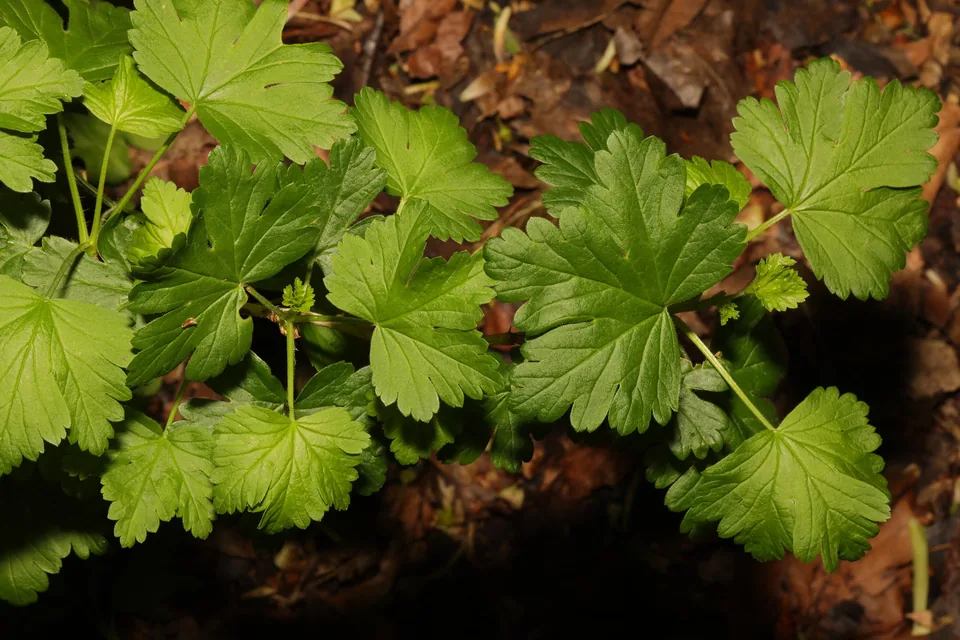
How to Grow and Care for Gooseberry
Ribes uva-crispa
Written by Emilio Marruso · last checked
At a glance
Gooseberry is a perennial shrub that gives small, usually green berries you can eat fresh or turn into syrups and jellies. It likes moist, well-drained soil and a spot out of direct sun, where partial shade is fine. Ripe berries come off easily and don't drop right away, so one or two pickings usually bring in the whole crop.
- Sun
Keep it out of direct sun; partial shade is fine
What the sources say (1)
Light: Protect from direct sun, tolerates partial shade
Protect from direct sun, tolerate partial shade. Prefer cool, moist growing area.
— Gooseberry – Adams County Extension [1] - Water
Keep the soil moist but well drained
What the sources say (1)
Watering: Moist, well-drained soil
Water Requirements | Moist, well drained soil. | Soil Requirements | Rich, well drained soils
— Gooseberry – Adams County Extension [1] - Cold
Survives winters down to −40 °F (−40 °C)
Very hardy · USDA 3 · RHS H7 · Z3
What the sources say (2)
Hardiness, coldest zone: 3 [winter low −40 to −34.4 °C (−40 to −30 °F)]
Hardiness | Zones 3-9 | Sun Requirements | Protect from direct sun
— Gooseberry – Adams County Extension [1] Hardiness, warmest zone: 9 [winter low −6.7 to −1.1 °C (20 to 30 °F)]
Hardiness | Zones 3-9 | Sun Requirements | Protect from direct sun
— Gooseberry – Adams County Extension [1] - Feeding
Feed in spring; if the bush grows too vigorously, use half the nitrogen
What the sources say (3)
When: Spring
first year: Without a soil test, apply ½ ounce (1 tbsp.) 10-10-10 (or equivalent) in an area 18 inches in diameter after plants begin growing. Repeat the application 4 to 6 weeks later.
— [3] Young plants should receive 1 to 2 tablespoons of a high nitrogen fertilizer like ammonium sulfate, ammonium nitrate, or urea annually in the spring.
— [4] Signs of excess: A very vigorous bush producing a lot of new growth (halve the nitrogen)
If the bush is very vigorous, producing a lot of new growth, reduce the nitrogen by half
— [4] - Harvest
Pick ripe berries one by one; eat them fresh or make syrups and jellies
What the sources say (1)
How to harvest: Pick the fruit individually; berries come off easily when ripe and do not drop immediately, so they can usually be harvested in one or two pickings.
Gooseberries are picked as individual fruit and come off easily when they are ripe. Berries do not drop immediately upon ripening, so they usually can be harvested in one or two pickings.
— Gooseberry – Adams County Extension [1] - Size
2 to 5 ft tall
What the sources say (1)
Mature height: 60-150 cm (60 cm to 1.5 m [5 ft])
Habit: Small deciduous shrub with a tangled habit, 60 cm to 1.5 metres tall.
— Ribes uva-crispa L. – Giardino della Flora Appenninica [2]
Overview
Gooseberry is a perennial shrub with spiny branches and edible fruit. [1][2] It prefers protection from direct sun and a cool, moist growing area. [1]
This record is incomplete: the sources we read do not cover every field yet.
Not yet covered by our sources: Planting, Harvest, Spacing, Propagation
Gooseberry care
How to water Gooseberry
Moist, well-drained soil
What the sources say (1)
Water Requirements | Moist, well drained soil.
| Soil Requirements | Rich, well drained soilsHow much light Gooseberry needs
Protect from direct sun, tolerates partial shade
What the sources say (1)
Protect from direct sun, tolerate partial shade. Prefer cool, moist growing area.How much cold Gooseberry can take
Hardiness, coldest zone
3 [winter low −40 to −34.4 °C (−40 to −30 °F)]
What the sources say (1)
Hardiness | Zones 3-9
| Sun Requirements | Protect from direct sunHardiness, warmest zone
9 [winter low −6.7 to −1.1 °C (20 to 30 °F)]
What the sources say (1)
Hardiness | Zones 3-9
| Sun Requirements | Protect from direct sunWhere to grow Gooseberry
Not stated in the sources we read.
How to propagate Gooseberry
Not stated in the sources we read.
How to grow Gooseberry
The plant
Life cycle
perennial shrub
What the sources say (1)
Habit | Perennial Shrub
| Growth Form | Leaves are deeply notched with 3-5 lobes.Family
Grossulariaceae
Mature height
60-150 cm (60 cm to 1.5 m [5 ft])
What the sources say (1)
Habit: Small deciduous shrub with a tangled habit, 60 cm to 1.5 metres tall.Harvest and storage
How to harvest
Pick the fruit individually; berries come off easily when ripe and do not drop immediately, so they can usually be harvested in one or two pickings.
What the sources say (1)
Gooseberries are picked as individual fruit and come off easily when they are ripe. Berries do not drop immediately upon ripening, so they usually can be harvested in one or two pickings.Fertilizing
When
Spring
What each source says
first year: Once plants begin growing, then again 4–6 weeks later
What the sources say (2)
first year: Without a soil test, apply ½ ounce (1 tbsp.) 10-10-10 (or equivalent) in an area 18 inches in diameter after plants begin growing. Repeat the application 4 to 6 weeks later.Young plants should receive 1 to 2 tablespoons of a high nitrogen fertilizer like ammonium sulfate, ammonium nitrate, or urea annually in the spring.How often
The sources disagree:
Young plants should receive 1 to 2 tablespoons of a high nitrogen fertilizer like ammonium sulfate, ammonium nitrate, or urea annually in the spring.
[4]For individual currant or gooseberry plants, use 1 ounce (2 tbsp.) 10-10-10 (or equivalent) per plant in an area 2 ft. by 2 ft. in each of the two applications.
[3]
Natural fertilizers
Aged manure as a source of nitrogen; well-rotted manure or compost worked into the soil before planting
What each source says
before planting: 1.27–2.54 cm [0.5–1 in] of manure or compost mixed into the top 15.2 cm [6 in] of soil
What the sources say (4)
before planting: Keep in mind that manures and composts contain nutrients as well as organic matter. Add ½ inch to one inch of one of these materials to your planting bed and mix it into the top 6 inches of soil.Older plants should receive 3 to 4 tablespoons of high nitrogen fertil- izer in the spring. Nitrogen can also be supplied by aged manures.In the fall or early spring before planting, thor- oughly mix additional organic matter with the soil. Well-rotted manure, compost, granulated peat, or other partially decomposed organic mat- ter are beneficial.Build up the organic matter by incorporating well-rotted manure, compost, peat moss or other organic materials.Mineral fertilizers
High-nitrogen fertilizer (ammonium sulfate, ammonium nitrate or urea) or a complete 10-10-10 in spring; no extra phosphorus or potassium if they were added before planting according to a soil test
What each source says
young plants: 14.8–29.6 mL of high-nitrogen fertilizer each spring
older plants: 44.4–59.2 mL of high-nitrogen fertilizer in spring
first year, without a soil test: 14.2 g of 10-10-10 over a circle 45.7 cm [18 in] across once growth starts, repeated 4–6 weeks later
second year: 28.3 g of 10-10-10 per plant over 61 × 61 cm [24 in], in each of two applications
third year and older: 56.6–84.9 g of 10-10-10 per plant in each of two applications
What the sources say (8)
young plants: Young plants should receive 1 to 2 tablespoons of a high nitrogen fertilizer like ammonium sulfate, ammonium nitrate, or urea annually in the spring.older plants: Older plants should receive 3 to 4 tablespoons of high nitrogen fertil- izer in the spring. Nitrogen can also be supplied by aged manures.first year, without a soil test: Without a soil test, apply ½ ounce (1 tbsp.) 10-10-10 (or equivalent) in an area 18 inches in diameter after plants begin growing. Repeat the application 4 to 6 weeks later.second year: For individual currant or gooseberry plants, use 1 ounce (2 tbsp.) 10-10-10 (or equivalent) per plant in an area 2 ft. by 2 ft. in each of the two applications.third year and older: For individual currant or gooseberry plants, use 2 to 3 ounces (¼ to 1/3 cup) of 10-10-10 (or equivalent) per plant in each of the two applications.Young plants should receive 1 to 2 tablespoons of a high nitrogen fertilizer like ammonium sulfate, ammonium nitrate, or urea annually in the spring.For individual currant or gooseberry plants, use 1 ounce (2 tbsp.) 10-10-10 (or equivalent) per plant in an area 2 ft. by 2 ft. in each of the two applications.If the site was prepared properly and phosphorus and potassium were added based on the soil test, no additional phosphorus or potassium fertilizer should be required.Micronutrients
Magnesium and calcium from dolomitic limestone when the soil needs lime, especially if magnesium is low
What the sources say (1)
It is generally advisable to use a dolomitic limestone that contains both calcium and magnesium, especially if the soil has below optimum magnesium levels.Signs of deficiency
Few new canes and poor growth (increase nitrogen by half)
What the sources say (1)
If few new canes are pro- duced and growth appears poor, increase nitro- gen application by half. For more detailed fertilizer use suggestions, refer to Extension pub- lication Fertilizing Small Fruits in the Home GardenSigns of excess
A very vigorous bush producing a lot of new growth (halve the nitrogen)
What the sources say (1)
If the bush is very vigorous, producing a lot of new growth, reduce the nitrogen by halfWinter chill
Chill hours
800–1000 hours between 0 and 7.2 °C [32–45 °F]
What each source says
coltura «Gooseberry»: 800–1000 hours
What the sources say (3)
coltura «Gooseberry»: Gooseberry Chill hours: 800 to 1,000 Gooseberry and currant do best in cool, humid, partially shaded areas.Gooseberry Chill hours: 800 to 1,000 Gooseberry and currant do best in cool, humid, partially shaded areas.Chill hours are accumulated from November through February when temperatures are between 32° and 45°F.Remedies
Each remedy shows what official sources say about it; traditional remedies without an official source are marked as such. Harmful ones are listed so you know to avoid them.
Treating the plant
powdery mildew
pruning infected shoot tips Official source, not independently tested
How: Prune and dispose of infected branch and shoot tips in early spring.
Prune and dispose of infected branch and shoot tips in early spring.
— umass.edu [6] tip pruning affected shoots Official source, not independently tested
Homemade products are not recommended as they are unregulated and usually untested.
— rhs.org.uk [7] How: Remove the ends of affected shoots as soon as they are seen and dispose of all fallen leaves in autumn.
It is therefore essential to ‘tip’ prune the bushes by removing and disposing of (bonfire or shredding and composting ) the ends of affected shoots as soon as they are seen
— rhs.org.uk [7] horticultural oils Works
If oil is used, multiple applications may delay ripening or reduce sugar accumulation in the berries.
— umass.edu [6] How: Apply when the first signs of powdery mildew are apparent and repeat as necessary, with thorough coverage of leaves and developing fruit.
The oil kills powdery mildew colonies on contact, thus, high water volumes and thorough coverage of the leaves and developing fruit are essential for good results.
— umass.edu [6] What the evidence says Certain horticultural oils (check labels) applied at first sign of mildew can prevent spread.
— umass.edu [6]
anthracnose and septoria leaf spot
raking out fallen infected leaves Partly works
How: Rake out and remove infected leaves after they have fallen and apply mulch to cover any inoculum that remains.
These diseases can be suppressed by raking out and removing infected leaves after they have fallen and apply mulch to cover any inoculum that might remain.
— umass.edu [6] What the evidence says These diseases can be suppressed by raking out and removing infected leaves after they have fallen and apply mulch to cover any inoculum that might remain.
— umass.edu [6]
currant cane blight
pruning out and burning infected canes Official source, not independently tested
How: Prune out and burn infected canes in spring.
Prune out and burn infected canes in spring.
— umass.edu [6]
Calendar
Planting
Not stated in the sources we read.
Harvest
Not stated in the sources we read.
Months as given by the sources, which are mostly from the United States (northern hemisphere). In the southern hemisphere they shift by about six months.
Edibility
Reported by the source, quoted verbatim. Do not eat a plant on the basis of this page alone: identification mistakes can be dangerous.
Similar plants
- Redcurrant Ribes rubrum
- Ribes nidigrolaria Ribes nidigrolaria
- Alpine Currant Ribes alpinum
- Flowering Currant Ribes sanguineum
- European black currant Ribes nigrum
- Golden currant Ribes aureum
- American chestnut Castanea dentata
- American Plum Prunus americana
Sources
Every value above is quoted from these documents. Links lead to the original publisher.
- Gooseberry – Adams County Extension · adams.extension.colostate.edu, consulted
- Ribes uva-crispa L. – Giardino della Flora Appenninica · giardinocapracotta.unimol.it, consulted
- soiltesting.cahnr.uconn.edu · soiltesting.cahnr.uconn.edu
- hort.extension.wisc.edu · hort.extension.wisc.edu
- escholarship.org · escholarship.org
- umass.edu · umass.edu
- rhs.org.uk · rhs.org.uk
Written by Emilio Marruso · last checked