How to Grow and Care for European black currant
Ribes nigrum
Written by Emilio Marruso · last checked
At a glance
Blackcurrants are generous shrubs for sun or partial shade, growing 4–6 ft tall. Plant them in spring or early fall, give them 1 inch of water a week from bloom to harvest, and the first berries arrive in the third year. Pick from June to August, and don't stop at the fruit: the fragrant leaves make a lovely tea.
- Sun
Full sun to partial shade
What the sources say (1)
Light: Full sun to partial shade
DRAINAGE: Currants are very adaptable, but do not tolerate standing water or heavy clay soils PH: 5.5–6.5 LIGHT: Full sun to partial shade ZONES: 3–8 (although some varieties hardy to 2)
— BLACK CURRANT [1] - Water
1 inch a week from bloom to harvest; mulch helps keep the soil moist
What the sources say (2)
Watering: 2.5 cm (1 inch) per week from bloom until harvest and periodically after harvest during drought
Adequate water is needed for black currants to flower and yield properly, with roughly 1 inch per week needed from bloom until harvest and periodically after harvest during periods of drought.
— BLACK CURRANT [1] Watering notes: Drought tolerance is variety dependent; mulching helps maintain soil moisture
Drought tolerance among black currants is variety dependent. Mulching can also be used to help maintain proper soil moisture by reducing water loss.
— BLACK CURRANT [1] - Cold
Survives winters down to −40 °F (−40 °C)
Very hardy · USDA 3 · RHS H7 · Z3
What the sources say (2)
Hardiness, coldest zone: 3 [winter low −40 to −34.4 °C (−40 to −30 °F)]
DRAINAGE: Currants are very adaptable, but do not tolerate standing water or heavy clay soils PH: 5.5–6.5 LIGHT: Full sun to partial shade ZONES: 3–8 (although some varieties hardy to 2)
— BLACK CURRANT [1] Hardiness, warmest zone: 8 [winter low −12.2 to −6.7 °C (10 to 20 °F)]
DRAINAGE: Currants are very adaptable, but do not tolerate standing water or heavy clay soils PH: 5.5–6.5 LIGHT: Full sun to partial shade ZONES: 3–8 (although some varieties hardy to 2)
— BLACK CURRANT [1] - Soil
Soil with a pH of 5.5 or higher
What the sources say (2)
Soil pH, minimum: 5.5
DRAINAGE: Currants are very adaptable, but do not tolerate standing water or heavy clay soils PH: 5.5–6.5 LIGHT: Full sun to partial shade ZONES: 3–8 (although some varieties hardy to 2)
— BLACK CURRANT [1] Black currants perform best in well-drained soil with high organic matter and a slightly acidic pH between 5.5 and 7.0
— BLACK CURRANT [1] - Spacing
12–14 ft between rows
What the sources say (1)
Row spacing: 365.76-426.72 cm (12-14 ft)
Spacing: IN-ROW SPACING (FEET): 2–3 feet BETWEEN ROW SPACING (FEET): 12–14 feet
— BLACK CURRANT [1] - Planting
Plant in spring as soon as the soil can be worked, or in early fall
What the sources say (1)
Planting: Spring as soon as the ground can be worked; early fall
Black currants are typically planted in the spring as soon as the ground can be worked, as the leaves can withstand temperatures down to 20 degrees F. They can also be planted in the early fall to allow root formation
— BLACK CURRANT [1] - Feeding
Feed once a year in spring; wood-chip mulch alone steals nitrogen from the plant
What the sources say (4)
When: Spring, in a single application
Black currants require fertilization, but the rates required are best determined on a site-by-site basis. In some areas, fertilizer is best applied in a single application in the spring.
— BLACK CURRANT [1] How often: Once a year, as a single spring application
Black currants require fertilization, but the rates required are best determined on a site-by-site basis. In some areas, fertilizer is best applied in a single application in the spring.
— BLACK CURRANT [1] Avoid: Wood-chip mulch without added nitrogen (nitrogen immobilization); clover cover crops between rows, which release nitrogen untimely in late fall
Wood chips can be used, but care should be taken to ensure proper nitrogen is added to the wood chips to prevent nitrogen deficiency and to reduce nitrogen immobilization.
— BLACK CURRANT [1] The use of clovers as inter-row cover crops can lead to untimely nitrogen release in the late fall as the clovers senesce.
— BLACK CURRANT [1] - Pruning
Right after spring planting, cut the shoots back to 6–10 in
What the sources say (1)
Pruning: After planting in spring: shoot pruning down to 15-25 cm (6-10 in)
Shoot pruning down to 6-10 inches after planting in the spring can also help encourage new stem development.
— BLACK CURRANT [1] - Harvest
Berries June to August from the third year; the leaves make tea too
What the sources say (4)
Harvest: June-August
North America, frost-free-day basis: Fruiting requires between 120-140 frost-free days, which results in black currants being harvested between mid-to-late June to late July for black currants grown in North America.
— BLACK CURRANT [1] YEARS TO PARTIAL/FULL BEARING: 3–5 years HARVEST SEASON: June–August HARVEST HRS/ACRE: 770 (hand)
— BLACK CURRANT [1] Years to first fruit: 3 (full production in the fourth or fifth year)
Black currants are typically harvested in the third year, with full production typically being reached in the fourth or fifth year.
— BLACK CURRANT [1] Storage: refrigerated 1-2 weeks; frozen up to a year
Black currant berries are well suited to storage with tougher, thicker skin than most berries, maintaining good quality for 1-2 weeks in refrigerated environments and up to a year while frozen.
— BLACK CURRANT [1] - Pests
Aphids, currant worms and borers; powdery mildew, leaf spot and rust
What the sources say (9)
Pests: currant aphid, currant borer, imported currant worm, currant stem girdler, fourlined plant bug, currant fruit fly, San Jose scale, earwigs
The currant aphid, Cryptomyzus ribis (L.), overwinters as eggs on plant stems.
— BLACK CURRANT [1] The currant borer, Synanthedon tipuliformis (Clerk), is a yellow worm-like larva that tunnels through the pith of the cane.
— BLACK CURRANT [1] The imported currant worm, Nematis ribesii (Scopoli), is the most serious insect pest of currants and gooseberries, with the latter being the favored host.
— BLACK CURRANT [1] Adult sawflies, Janus integer (Norton), make numerous punctures in canes during egg laying in spring, resulting in drooping and wilting of new shoots in late spring.
— BLACK CURRANT [1] The fourlined plant bug, Poecilocapsus lineatus (Fabricus), is yellowish green with four dark stripes on its back.
— BLACK CURRANT [1] Fruits infested by the currant fruit fly, Epochra canadensis (Loew), drop early and have dark spots surrounded by a red area.
— BLACK CURRANT [1] The adult San Jose scale, Quadraspidiotus pernicious (Comstock), is a small, grayish, disk-shaped speck about 2 millimeters across with a raised spot in the center.
— BLACK CURRANT [1] Earwigs have also presented a problem in some black currant plantings.
— BLACK CURRANT [1] Diseases: powdery mildew, leaf spot, white pine blister rust
The main disease of black currants in North America is powdery mildew, called American gooseberry mildew in Europe, with leaf spot and white pine blister rust causing minimal damage.
— BLACK CURRANT [1] - Size
4–6 ft tall
What the sources say (1)
Mature height: 121.92-182.88 cm (4-6 ft)
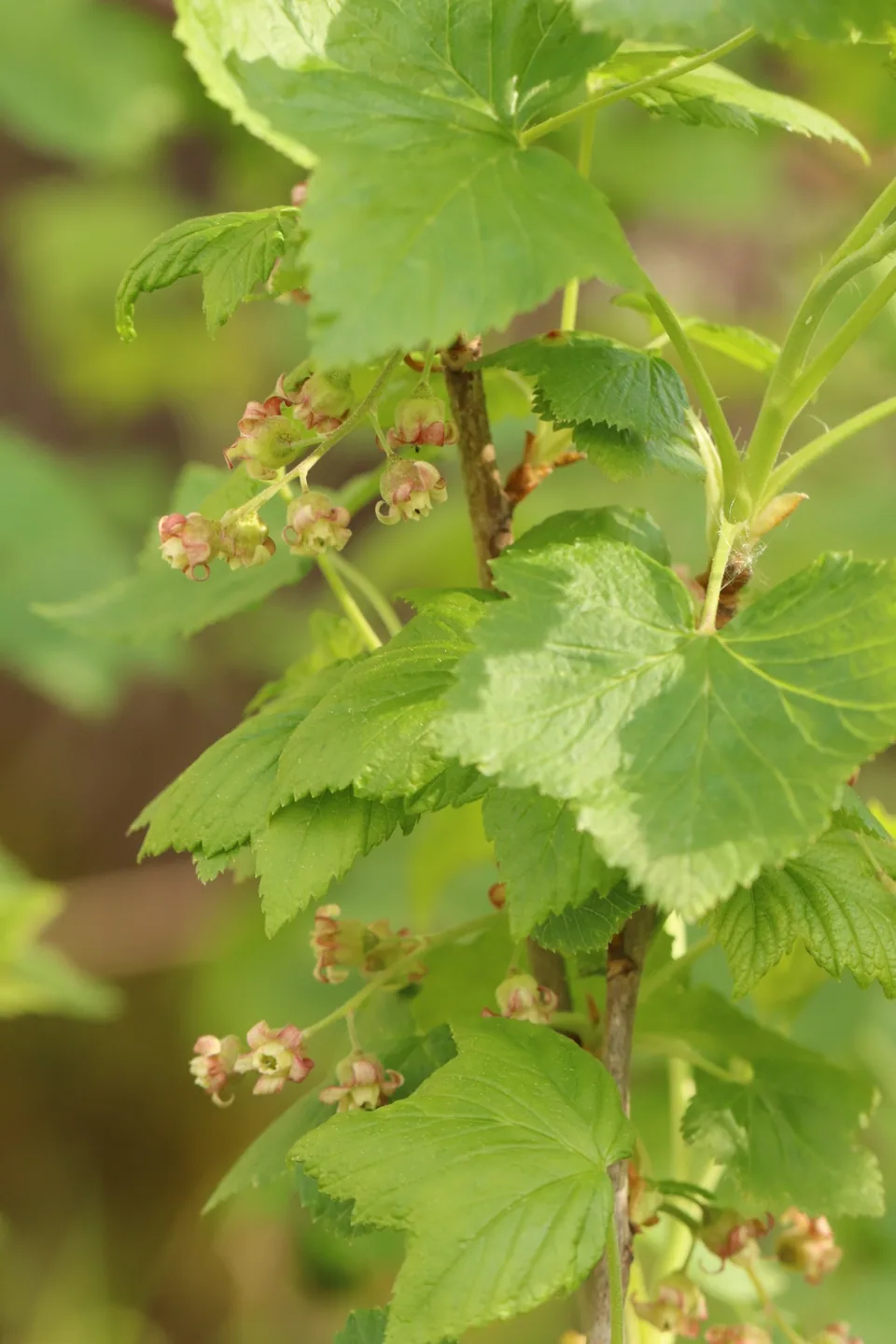
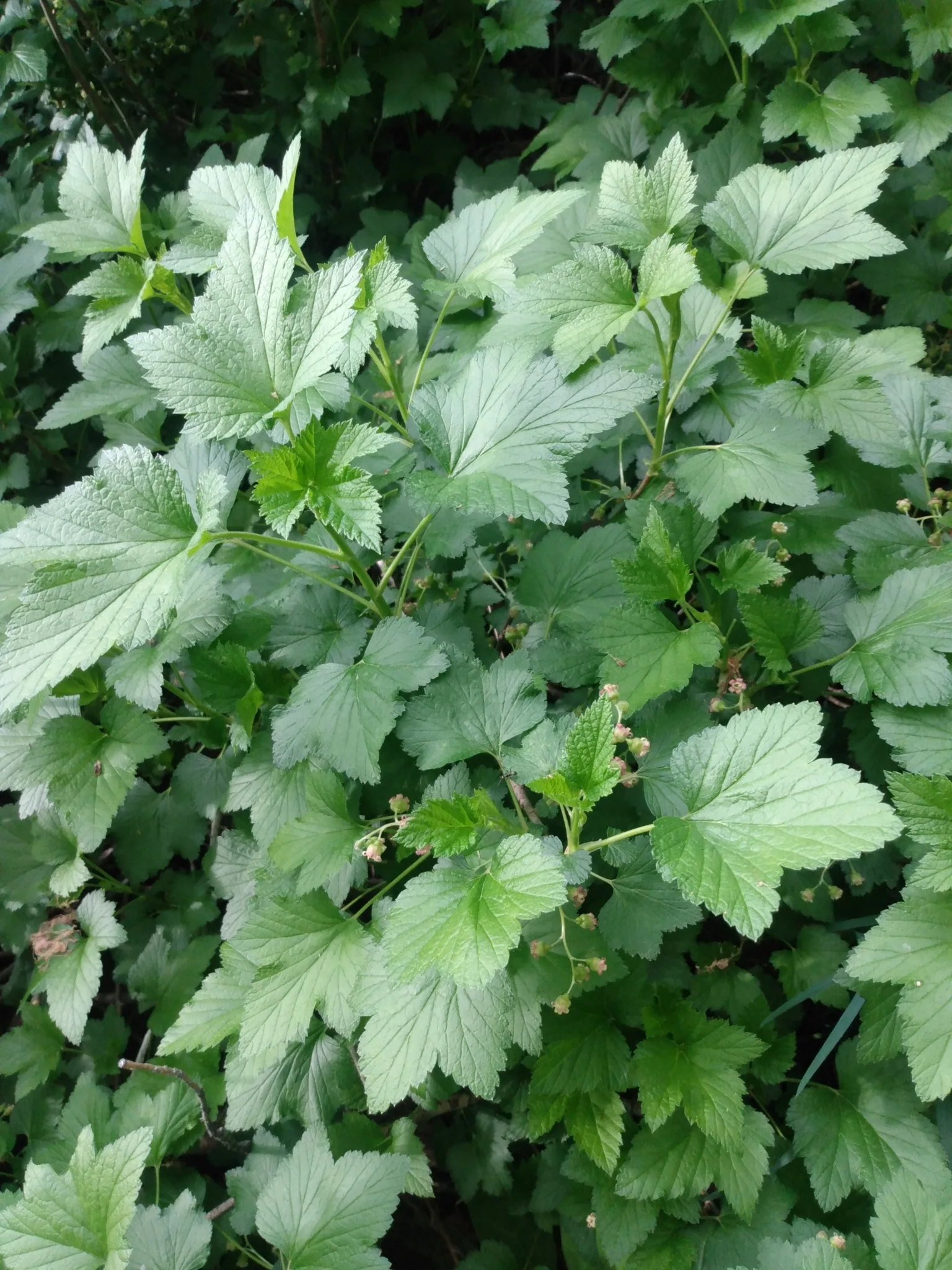
Black currants are a 4-6 foot tall shrub with aromatic leaves grown for their piquant berries.
— BLACK CURRANT [1] - Propagation
6–10 in woody cuttings from late fall to late winter, or by layering
What the sources say (2)
Propagation: Hardwood cuttings (15-25 cm / 6-10 in) from dormant plants in late fall through late winter; layering
Black currants are typically propagated with 6-10 inch hardwood cuttings taken from dormant plants in the late fall through late winter.
— BLACK CURRANT [1] Currants are easily propagated by layering or cuttings if not protected by patent.
— BLACK CURRANT [1]
Overview
Black currant grows in full sun to partial shade and does not tolerate standing water or heavy clay soils. [1] Black currant is typically propagated with hardwood cuttings taken from dormant plants. [1]
European black currant care
How to water European black currant
Watering
2.5 cm (1 inch) per week from bloom until harvest and periodically after harvest during drought
What the sources say (1)
Adequate water is needed for black currants to flower and yield properly, with roughly 1 inch per week needed from bloom until harvest and periodically after harvest during periods of drought.Watering notes
Drought tolerance is variety dependent; mulching helps maintain soil moisture
What the sources say (1)
Drought tolerance among black currants is variety dependent. Mulching can also be used to help maintain proper soil moisture by reducing water loss.How much light European black currant needs
Full sun to partial shade
What the sources say (1)
DRAINAGE: Currants are very adaptable, but do not tolerate standing water or heavy clay soils PH: 5.5–6.5 LIGHT: Full sun to partial shade ZONES: 3–8 (although some varieties hardy to 2)How much cold European black currant can take
Hardiness, coldest zone
3 [winter low −40 to −34.4 °C (−40 to −30 °F)]
What the sources say (1)
DRAINAGE: Currants are very adaptable, but do not tolerate standing water or heavy clay soils PH: 5.5–6.5 LIGHT: Full sun to partial shade ZONES: 3–8 (although some varieties hardy to 2)Hardiness, warmest zone
8 [winter low −12.2 to −6.7 °C (10 to 20 °F)]
What the sources say (1)
DRAINAGE: Currants are very adaptable, but do not tolerate standing water or heavy clay soils PH: 5.5–6.5 LIGHT: Full sun to partial shade ZONES: 3–8 (although some varieties hardy to 2)Best soil for European black currant
Soil pH, minimum
5.5
What the sources say (2)
DRAINAGE: Currants are very adaptable, but do not tolerate standing water or heavy clay soils PH: 5.5–6.5 LIGHT: Full sun to partial shade ZONES: 3–8 (although some varieties hardy to 2)Black currants perform best in well-drained soil with high organic matter and a slightly acidic pH between 5.5 and 7.0Soil pH, maximum
The sources give different values depending on region, zone or growing conditions.
What each source says
According to Savanna Institute guide, requirements table: 6.5
According to Savanna Institute guide, text on soil: 7.0
What the sources say (3)
According to Savanna Institute guide, requirements table: DRAINAGE: Currants are very adaptable, but do not tolerate standing water or heavy clay soils PH: 5.5–6.5 LIGHT: Full sun to partial shade ZONES: 3–8 (although some varieties hardy to 2)According to Savanna Institute guide, text on soil: Black currants perform best in well-drained soil with high organic matter and a slightly acidic pH between 5.5 and 7.0DRAINAGE: Currants are very adaptable, but do not tolerate standing water or heavy clay soils PH: 5.5–6.5 LIGHT: Full sun to partial shade ZONES: 3–8 (although some varieties hardy to 2)Where to grow European black currant
The sources give different values depending on region, zone or growing conditions.
What each source says
hedgerow, in-row: 61.0-91.4 cm (2-3 ft)
individual bush, within row: 91.4-152.4 cm (3-5 ft)
mechanical-harvest hedgerow, within rows: 30.5-38.1 cm (12-15 in)
What the sources say (3)
hedgerow, in-row: Spacing: IN-ROW SPACING (FEET): 2–3 feet BETWEEN ROW SPACING (FEET): 12–14 feet Timing YEARS TO PARTIAL/FULL BEARING: 3–5 yearsindividual bush, within row: When grown individually, spacing is typically 3-5 feet within row, with pruning to keep the number of stems down to 10 to 15mechanical-harvest hedgerow, within rows: In these systems, the spacing is 12-15 inches apart within rows and 10 feet apart between rows with pruning reduced to outward branching.How to propagate European black currant
Hardwood cuttings (15-25 cm / 6-10 in) from dormant plants in late fall through late winter; layering
How to grow European black currant
The plant
Mature height
121.92-182.88 cm (4-6 ft)
What the sources say (1)
Black currants are a 4-6 foot tall shrub with aromatic leaves grown for their piquant berries.Years to first fruit
3 (full production in the fourth or fifth year)
What the sources say (1)
Black currants are typically harvested in the third year, with full production typically being reached in the fourth or fifth year.Sowing and growth
Row spacing
365.76-426.72 cm (12-14 ft)
What the sources say (1)
Spacing: IN-ROW SPACING (FEET): 2–3 feet BETWEEN ROW SPACING (FEET): 12–14 feetHarvest and storage
Storage
refrigerated 1-2 weeks; frozen up to a year
What the sources say (1)
Black currant berries are well suited to storage with tougher, thicker skin than most berries, maintaining good quality for 1-2 weeks in refrigerated environments and up to a year while frozen.Pests and diseases
Pests
currant aphid, currant borer, imported currant worm, currant stem girdler, fourlined plant bug, currant fruit fly, San Jose scale, earwigs
What the sources say (8)
The currant aphid, Cryptomyzus ribis (L.), overwinters as eggs on plant stems.The currant borer, Synanthedon tipuliformis (Clerk), is a yellow worm-like larva that tunnels through the pith of the cane.The imported currant worm, Nematis ribesii (Scopoli), is the most serious insect pest of currants and gooseberries, with the latter being the favored host.Adult sawflies, Janus integer (Norton), make numerous punctures in canes during egg laying in spring, resulting in drooping and wilting of new shoots in late spring.The fourlined plant bug, Poecilocapsus lineatus (Fabricus), is yellowish green with four dark stripes on its back.Fruits infested by the currant fruit fly, Epochra canadensis (Loew), drop early and have dark spots surrounded by a red area.The adult San Jose scale, Quadraspidiotus pernicious (Comstock), is a small, grayish, disk-shaped speck about 2 millimeters across with a raised spot in the center.Earwigs have also presented a problem in some black currant plantings.Diseases
powdery mildew, leaf spot, white pine blister rust
What the sources say (1)
The main disease of black currants in North America is powdery mildew, called American gooseberry mildew in Europe, with leaf spot and white pine blister rust causing minimal damage.Fertilizing
When
Spring, in a single application
What the sources say (1)
Black currants require fertilization, but the rates required are best determined on a site-by-site basis. In some areas, fertilizer is best applied in a single application in the spring.How often
Once a year, as a single spring application
What the sources say (1)
Black currants require fertilization, but the rates required are best determined on a site-by-site basis. In some areas, fertilizer is best applied in a single application in the spring.Mineral fertilizers
Mature plants: 101 kg [222.7 lb] nitrogen, 20.2 kg [44.5 lb] phosphorus and 40.4 kg [89 lb] potassium per hectare; rates set site by site with a leaf analysis in early August
What the sources say (2)
Mature currants typically require around 90 lbs nitrogen per acre, 18 lbs of phosphorus, and 36 pounds of potassium per acre.To properly determine nutrient levels on individual sites, leaf samples should be collected in early August, after shoot growth has ceased, and tested for foliar nutrients.Avoid
Wood-chip mulch without added nitrogen (nitrogen immobilization); clover cover crops between rows, which release nitrogen untimely in late fall
What the sources say (2)
Wood chips can be used, but care should be taken to ensure proper nitrogen is added to the wood chips to prevent nitrogen deficiency and to reduce nitrogen immobilization.The use of clovers as inter-row cover crops can lead to untimely nitrogen release in the late fall as the clovers senesce.Winter chill
Chill hours
800–1500 hours between 0 and 7.2 °C [32–45 °F]
What each source says
coltura «Currant»: 800–1500 hours
What the sources say (3)
coltura «Currant»: Currant Chill hours: 800 to 1,500 Currant and gooseberry do best in cool, humid, partially shaded areas.Currant Chill hours: 800 to 1,500 Currant and gooseberry do best in cool, humid, partially shaded areas.Chill hours are accumulated from November through February when temperatures are between 32° and 45°F.Remedies
Each remedy shows what official sources say about it; traditional remedies without an official source are marked as such. Harmful ones are listed so you know to avoid them.
Treating the plant
aphids
insecticidal soap spray Works
How: Applied when the aphids are first seen.
Dormant sprays are also effective, as are summer horticultural oil or insecticidal soap if applied when the aphids are first seen.
— BLACK CURRANT [1] What the evidence says Dormant sprays are also effective, as are summer horticultural oil or insecticidal soap if applied when the aphids are first seen.
— BLACK CURRANT [1] horticultural oil spray Works
How: Summer horticultural oil applied when the aphids are first seen.
Dormant sprays are also effective, as are summer horticultural oil or insecticidal soap if applied when the aphids are first seen.
— BLACK CURRANT [1] What the evidence says Dormant sprays are also effective, as are summer horticultural oil or insecticidal soap if applied when the aphids are first seen.
— BLACK CURRANT [1]
scale insects
horticultural oil spray Works
How: Applied as either a summer or dormant spray.
Scales may be controlled by applying horticultural oil, which is among the compounds registered for control of this pest in Connecticut, as either a summer or dormant spray.
— portal.ct.gov [3] What the evidence says Dormant treatments with horticultural oil control these scales. A spray of insecticidal soap, which is among the compounds registered for control of this pest in Connecticut, early in June also will destroy the young.
— portal.ct.gov [3]
spider mites
ultrafine horticultural oil spray Works
How: Ultrafine horticultural oil will control these mites while conserving natural predators.
Ultrafine horticultural oil will control these mites while conserving natural predators.
— portal.ct.gov [3] What the evidence says Ultrafine horticultural oil will control these mites while conserving natural predators.
— portal.ct.gov [3]
imported currantworm
bacillus thuringiensis spray Works
How: Start looking for damage shortly after the leaves have fully expanded.
Bacillus thuringiensis-based products and/or a broad-spectrum insecticide should control this insect. Start looking for damage shortly after the leaves have fully expanded.
— BLACK CURRANT [1] What the evidence says Bacillus thuringiensis-based products and/or a broad-spectrum insecticide should control this insect. Start looking for damage shortly after the leaves have fully expanded.
— BLACK CURRANT [1]
currant borer
cutting out infested canes Official source, not independently tested
How: Cut out and destroy infested canes as early as possible.
Cut out and destroy infested canes as early as possible. Once the larvae bore into canes, chemical control is not possible.
— BLACK CURRANT [1]
currant stem girdler
removing infested canes Works
How: Removing and destroying infested canes at the first sign of wilting.
Removing and destroying infested canes at the first sign of wilting is the best control.
— BLACK CURRANT [1] What the evidence says Removing and destroying infested canes at the first sign of wilting is the best control.
— BLACK CURRANT [1]
currant fruit fly
removing dropped fruit Works
How: Remove and bury or destroy dropped fruit.
The removal and burial or the destruction of dropped fruit will keep populations from building.
— BLACK CURRANT [1] What the evidence says The removal and burial or the destruction of dropped fruit will keep populations from building.
— BLACK CURRANT [1]
powdery mildew
horticultural oil spray Works
If oil is used, multiple applications may delay ripening or reduce sugar accumulation in the berries.
— umass.edu [4] Many common pesticides (including sulfur) are phytotoxic when applied with or close to oil sprays; check label for specific restrictions.
— umass.edu [4] How: Horticultural mineral oil applied every 2 weeks from bud break through pre-harvest.
Powdery mildew is most commonly controlled with applications of horticultural mineral oil bud break through pre-harvest every 2 weeks.
— BLACK CURRANT [1] What the evidence says Certain horticultural oils (check labels) applied at first sign of mildew can prevent spread.
— umass.edu [4]
earwigs
rolled-up damp newspaper traps Official source, not independently tested
How: Dampen rolled-up newspapers and place in the production area in the evening.
Dampen rolled-up newspapers and place in the production area in the evening. Generally earwigs feed at night and seek out a damp, sheltered spot during warm dry days.
— BLACK CURRANT [1] diatomaceous earth Partly works
How: Applied to the soil and reapplied, if required, in one week.
Diatomaceous earth also seems to deter them and should be applied to the soil and reapplied, if required, in one week.
— BLACK CURRANT [1] What the evidence says Diatomaceous earth also seems to deter them and should be applied to the soil and reapplied, if required, in one week.
— BLACK CURRANT [1]
Calendar
Spring as soon as the ground can be worked; early fall
What the sources say (1)
Black currants are typically planted in the spring as soon as the ground can be worked, as the leaves can withstand temperatures down to 20 degrees F. They can also be planted in the early fall to allow root formationJune-August
What each source says
North America, frost-free-day basis: mid-to-late June to late July
What the sources say (2)
North America, frost-free-day basis: Fruiting requires between 120-140 frost-free days, which results in black currants being harvested between mid-to-late June to late July for black currants grown in North America.YEARS TO PARTIAL/FULL BEARING: 3–5 years HARVEST SEASON: June–August HARVEST HRS/ACRE: 770 (hand)After planting in spring: shoot pruning down to 15-25 cm (6-10 in)
What the sources say (1)
Shoot pruning down to 6-10 inches after planting in the spring can also help encourage new stem development.Months as given by the sources, which are mostly from the United States (northern hemisphere). In the southern hemisphere they shift by about six months.
Edibility
Reported by the source, quoted verbatim. Do not eat a plant on the basis of this page alone: identification mistakes can be dangerous.
In addition to the fruits, the aromatic black currant leaves are also harvested for tea, flavoring, and medicinal extracts.
[1]
Similar plants
- Golden currant Ribes aureum
- Gooseberry Ribes uva-crispa
- Redcurrant Ribes rubrum
- Ribes nidigrolaria Ribes nidigrolaria
- Alpine Currant Ribes alpinum
- Flowering Currant Ribes sanguineum
- Afghan Cherry Prunus jacquemontii
- American chestnut Castanea dentata
Sources
Every value above is quoted from these documents. Links lead to the original publisher.
- BLACK CURRANT · cropsandsoils.extension.wisc.edu, consulted
- escholarship.org · escholarship.org
- portal.ct.gov · portal.ct.gov
- umass.edu · umass.edu
Written by Emilio Marruso · last checked