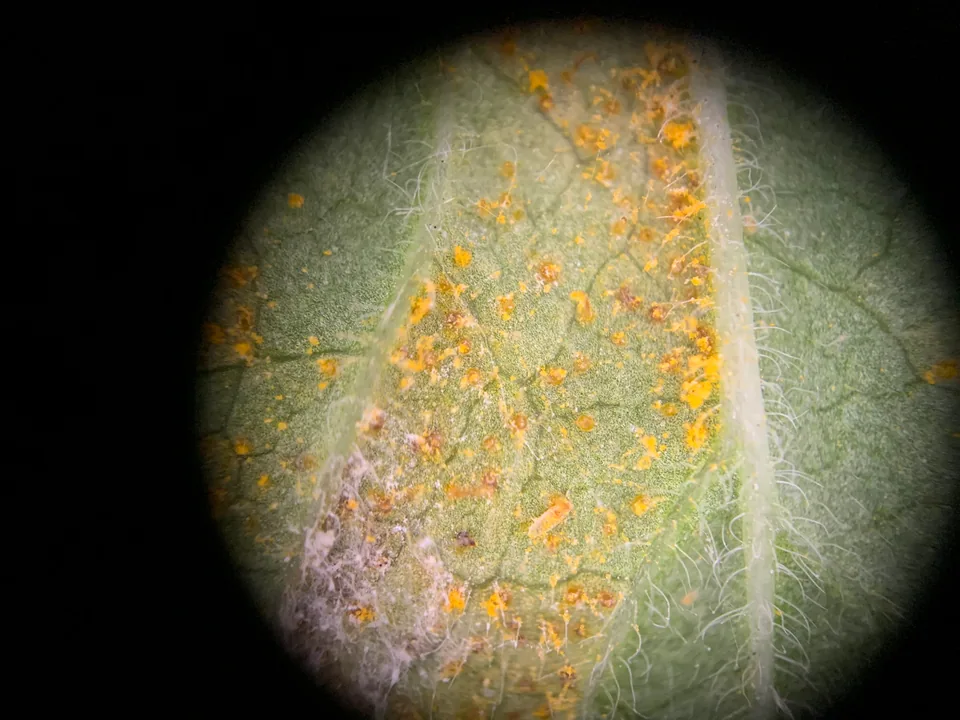
Fungus
Blister rust of white pine
Cronartium ribicola
Written by Emilio Marruso
Classification: Basidiomycota › Pucciniomycotina › Pucciniomycetes › Pucciniales › Cronartiaceae › Cronartium
Plants it attacks
Plants in our guide where this problem is reported. Open a plant to see the sources.
- Limber Pine
Symptom: Bark disease that is usually fatal
- White Pine
Symptom: Blights, canker and rusts; white pine blister rust is usually fatal.
- Alpine Currant
Symptom: Female plants are an alternative host for white pine blister rust; in humid, wet climates leaf spots, rust, and anthracnose can be a problem
- Flowering Currant
Symptom: Female plants are an alternative host; all Ribes are prohibited in North Carolina.
Also reported on: Bristlecone Pine, Himalayan Pine, Korean Pine, Swiss Stone Pine, Western white pine
Remedies
What our plant sheets report, with the outcome checked against official sources. Traditional remedies without an official source are flagged.
Treat
pruning infected branches Partly works
How: Pruning is the treatment of choice for localized infections, taking care not to spread the spores when cutting out diseased tissue; dispose of pruned material immediately in a fire or by double bagging in plastic; prune lower branches before rust symptoms get within six inches of the trunk.
Reported for 2 plants: Limber Pine, Western white pine
removing Ribes plants Partly works
How: Destroying currant and gooseberry (Ribes) plants near the pine, the alternate host of the fungus.
Reported for 2 plants: Limber Pine, Western white pine
pruning cankered branches Partly works
How: Prune off branches with cankers located farther from the trunk, at least six inches beyond any visible symptoms on the trunk side of the cankered branch.
Reported for 1 plant: Korean Pine
pruning infected branches Official source, not independently tested
How: Prune infected branches with cuts well below diseased tissues.
Reported for 2 plants: Bristlecone Pine, Swiss Stone Pine
removing gooseberry and currant plants nearby Official source, not independently tested
How: Remove or uproot gooseberry and currant plants, especially within 200 feet.
Reported for 1 plant: Korean Pine
Where it is found
Present in 38 countries.
Regulated as a quarantine pest in: China, United States, Uruguay.