
How to Grow and Care for White Pine
Pinus strobus
Written by Emilio Marruso · last checked
At a glance
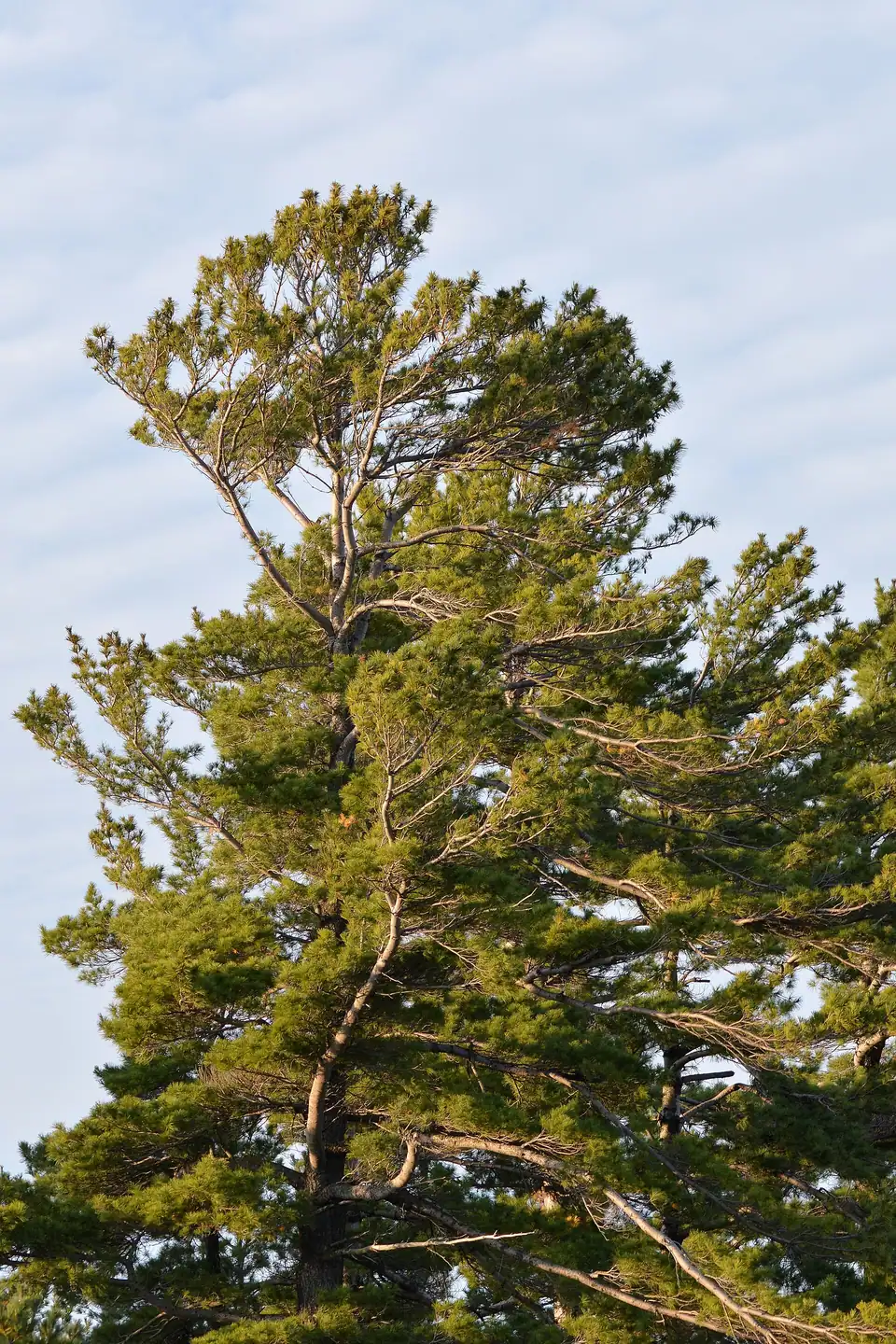
White pine grows into a grand, stately tree, 50–80 feet tall and 20–40 feet wide. Give it full sun or partial shade and moist, well-drained, acidic soil, and it will settle in happily. Keep it away from salt, polluted air and packed-down ground, and go easy on fertilizer while it is young.
- Sun
Full sun to partial shade
What the sources say (4)
Light: Full sun to partial shade
According to NC State Extension: Light: Full sun (6 or more hours of direct sunlight a day) Partial Shade (Direct sunlight only part of the day, 2-6 hours)
— Pinus strobus (Eastern White Pine, North American White Pine, Northern White Pine, Soft Pine, White Pine) | North Carolina Extension Gardener Plant Toolbox [1] According to University of Illinois Extension: Full sun; fertile, moist, but well-drained soils; prefers acid soil.
— Eastern White Pine (Pinus strobus)-Hort Answers - University of Illinois Extension [2] Full sun (6 or more hours of direct sunlight a day) Partial Shade (Direct sunlight only part of the day, 2-6 hours)
— Pinus strobus (Eastern White Pine, North American White Pine, Northern White Pine, Soft Pine, White Pine) | North Carolina Extension Gardener Plant Toolbox [1] Full sun; fertile, moist, but well-drained soils; prefers acid soil.
— Eastern White Pine (Pinus strobus)-Hort Answers - University of Illinois Extension [2] - Water
Likes moist, well-drained soil; suffers in wet, soggy ground
What the sources say (2)
Watering notes: Prefers moist, well-drained soils; tends to suffer when sited in wet soils
Full sun; fertile, moist, but well-drained soils; prefers acid soil.
— Eastern White Pine (Pinus strobus)-Hort Answers - University of Illinois Extension [2] Tends to suffer when sited in wet soils. Intolerant of salt and air pollution; sensitive to soil compaction.
— Eastern White Pine (Pinus strobus)-Hort Answers - University of Illinois Extension [2] - Cold
Survives winters down to −40 °F (−40 °C)
Very hardy · USDA 3a · RHS H7 · Z3
What the sources say (3)
Hardiness, coldest zone: 3a [winter low −40 to −37.2 °C (−40 to −35 °F)]
3a, 3b, 4a, 4b, 5a, 5b, 6a, 6b, 7a, 7b, 8a, 8b
— Pinus strobus (Eastern White Pine, North American White Pine, Northern White Pine, Soft Pine, White Pine) | North Carolina Extension Gardener Plant Toolbox [1] Hardiness, warmest zone: 8b [winter low −9.4 to −6.7 °C (15 to 20 °F)]
According to University of Illinois Extension: USDA Hardiness Zone 3 - 8
— Eastern White Pine (Pinus strobus)-Hort Answers - University of Illinois Extension [2] 3a, 3b, 4a, 4b, 5a, 5b, 6a, 6b, 7a, 7b, 8a, 8b
— Pinus strobus (Eastern White Pine, North American White Pine, Northern White Pine, Soft Pine, White Pine) | North Carolina Extension Gardener Plant Toolbox [1] - Soil
Soil pH no higher than 6.0; in high-pH soil the needles turn yellow
What the sources say (2)
Soil pH, maximum: 6.0
Loam (Silt) Sand Soil pH: Acid (<6.0) Soil Drainage: Good Drainage
— Pinus strobus (Eastern White Pine, North American White Pine, Northern White Pine, Soft Pine, White Pine) | North Carolina Extension Gardener Plant Toolbox [1] Signs of deficiency: Yellowing of the needles (iron chlorosis) in high-pH soils
It is not a good plant for city conditions or along roads. Iron chlorosis (yellowing of the needles) may develop in high pH soils.
— [5] - Feeding
No quick-release fertilizer on newly planted trees: young roots are sensitive
What the sources say (1)
Avoid: Quick-release fertilizer on newly planted trees: young roots are sensitive to overfertilizing
When fertilizing newly planted trees, use slow-release fertilizers. Care should be taken if quick-release fertilizers are used since the roots of young trees are sensitive to overfertilizing.
— [5] - Pests
White pine weevil, bark beetles and aphids; white pine blister rust is usually fatal
What the sources say (4)
Pests: white pine weevil, bark beetles, white pine shoot borer, Zimmerman moth larvae, pine sawfly, scale, aphids, spider mites
Insect problems include white pine weevil, bark beetles, white pine shoot borer, Zimmerman moth larvae, pine sawfly, scale, and aphids. Spider mites are occasional visitors in some areas.
— Pinus strobus (Eastern White Pine, North American White Pine, Northern White Pine, Soft Pine, White Pine) | North Carolina Extension Gardener Plant Toolbox [1] Diseases: blights, canker, rusts, white pine blister rust, white pine needle disease, Caliciopsis canker
It is susceptible to blights, canker, and rusts, especially white pine blister rust, which is usually fatal.
— Pinus strobus (Eastern White Pine, North American White Pine, Northern White Pine, Soft Pine, White Pine) | North Carolina Extension Gardener Plant Toolbox [1] First and most importantly, white pine needle disease (WPND) is primarily responsible for the symptoms that many trees exhibit and is caused by several fungal pathogens.
— Dieback of Eastern White Pine (Pinus strobus): Pathogens, Pests and a Changing Climate | Extension [3] Branch and trunk cankering, caused by Caliciopsis canker, is also as an important component of the decline complex
— Dieback of Eastern White Pine (Pinus strobus): Pathogens, Pests and a Changing Climate | Extension [3] - Watch out
Can't stand salt, air pollution or compacted soil
- Size
50–80 ft tall and 20–40 ft wide
What the sources say (3)
Mature height: 1524-2438 cm (50-80 ft)
It may grow 50 to 80 feet tall and 20 to 40 feet wide.
— Pinus strobus (Eastern White Pine, North American White Pine, Northern White Pine, Soft Pine, White Pine) | North Carolina Extension Gardener Plant Toolbox [1] Mature Height 50-80 Feet
— Eastern White Pine (Pinus strobus)-Hort Answers - University of Illinois Extension [2] Mature width: 610-1219 cm (20-40 ft)
It may grow 50 to 80 feet tall and 20 to 40 feet wide.
— Pinus strobus (Eastern White Pine, North American White Pine, Northern White Pine, Soft Pine, White Pine) | North Carolina Extension Gardener Plant Toolbox [1] - Propagation
Grows from seed
What the sources say (1)
Propagation: Seed
Used for tar, furniture, christmas tree and bark used as astringent and expectorant or antiseptic. Life Cycle: Woody Recommended Propagation Strategy: Seed
— Pinus strobus (Eastern White Pine, North American White Pine, Northern White Pine, Soft Pine, White Pine) | North Carolina Extension Gardener Plant Toolbox [1]
Overview
Eastern white pine is an evergreen conifer tree in the Pinaceae family that may grow 50 to 80 feet [15.2–24.4 m] tall and 20 to 40 feet [6.1–12.2 m] wide. [1] It prefers full sun and moist, well-drained, fertile soils, and is intolerant of salts and alkaline soils. [1] It is susceptible to blights, canker and rusts, especially white pine blister rust, which is usually fatal. [1]
This record is incomplete: the sources we read do not cover every field yet.
Not yet covered by our sources: Watering, Pruning
White Pine care
Measurements in square brackets are our conversion into the other unit system; the quoted text is unchanged.
How to water White Pine
Watering
Not stated in the sources we read.
Watering notes
Prefers moist, well-drained soils; tends to suffer when sited in wet soils
What the sources say (2)
Full sun; fertile, moist, but well-drained soils; prefers acid soil.Tends to suffer when sited in wet soils. Intolerant of salt and air pollution; sensitive to soil compaction.How much light White Pine needs
Full sun to partial shade
What each source says
According to NC State Extension: Full sun to partial shade
According to University of Illinois Extension: Full sun
What the sources say (4)
According to NC State Extension: Light:
Full sun (6 or more hours of direct sunlight a day)
Partial Shade (Direct sunlight only part of the day, 2-6 hours)According to University of Illinois Extension: Full sun; fertile, moist, but well-drained soils; prefers acid soil.Full sun (6 or more hours of direct sunlight a day)
Partial Shade (Direct sunlight only part of the day, 2-6 hours)Full sun; fertile, moist, but well-drained soils; prefers acid soil.How much cold White Pine can take
Hardiness, coldest zone
3a [winter low −40 to −37.2 °C (−40 to −35 °F)]
What the sources say (1)
3a, 3b, 4a, 4b, 5a, 5b, 6a, 6b, 7a, 7b, 8a, 8bHardiness, warmest zone
8b [winter low −9.4 to −6.7 °C (15 to 20 °F)]
What each source says
According to University of Illinois Extension: 8 [winter low −12.2 to −6.7 °C (10 to 20 °F)]
What the sources say (2)
According to University of Illinois Extension: USDA Hardiness Zone
3 - 83a, 3b, 4a, 4b, 5a, 5b, 6a, 6b, 7a, 7b, 8a, 8bBest soil for White Pine
6.0
What the sources say (1)
Loam (Silt)
Sand
Soil pH:
Acid (<6.0)
Soil Drainage:
Good DrainageHow to propagate White Pine
Seed
What the sources say (1)
Used for tar, furniture, christmas tree and bark used as astringent and expectorant or antiseptic.
Life Cycle:
Woody
Recommended Propagation Strategy:
SeedHow to grow White Pine
The plant
Life cycle
woody
What the sources say (1)
Life Cycle:
WoodyFamily
Pinaceae
What the sources say (1)
Eastern white pine is an evergreen conifer tree in the Pinaceae (pine) family.Mature height
1524-2438 cm (50-80 ft)
What the sources say (2)
It may grow 50 to 80 feet tall and 20 to 40 feet wide.Mature Height
50-80 FeetMature width
610-1219 cm (20-40 ft)
What the sources say (1)
It may grow 50 to 80 feet tall and 20 to 40 feet wide.Pests and diseases
Pests
white pine weevil, bark beetles, white pine shoot borer, Zimmerman moth larvae, pine sawfly, scale, aphids, spider mites
What the sources say (1)
Insect problems include white pine weevil, bark beetles, white pine shoot borer, Zimmerman moth larvae, pine sawfly, scale, and aphids. Spider mites are occasional visitors in some areas.Diseases
blights, canker, rusts, white pine blister rust, white pine needle disease, Caliciopsis canker
What the sources say (3)
It is susceptible to blights, canker, and rusts, especially white pine blister rust, which is usually fatal.First and most importantly, white pine needle disease (WPND) is primarily responsible for the symptoms that many trees exhibit and is caused by several fungal pathogens.Branch and trunk cankering, caused by Caliciopsis canker, is also as an important component of the decline complexFertilizing
Mineral fertilizers
The sources give different values depending on region, zone or growing conditions.
What each source says
newly planted trees: Slow-release fertilizer
second year onward, in beds: 10-10-10, 97.6–195 g/m² of bed area
larger trees in open areas: 10-10-10, 908 g per 2.54 cm [1 in] of trunk diameter
What the sources say (3)
newly planted trees: When fertilizing newly planted trees, use slow-release fertilizers. Care should be taken if quick-release fertilizers are used since the roots of young trees are sensitive to overfertilizing.second year onward, in beds: During the second and subsequent years, 2 to 4 pounds of 10-10-10 fertilizer should be applied for every 100 square feet of bed area.larger trees in open areas: For larger trees in open areas, about 2 pounds of 10-10-10 fertilizer can be applied for each inch of trunk diameter of the tree.Micronutrients
Iron: iron chlorosis can develop in high-pH soils
What the sources say (1)
It is not a good plant for city conditions or along roads. Iron chlorosis (yellowing of the needles) may develop in high pH soils.Avoid
Quick-release fertilizer on newly planted trees: young roots are sensitive to overfertilizing
What the sources say (1)
When fertilizing newly planted trees, use slow-release fertilizers. Care should be taken if quick-release fertilizers are used since the roots of young trees are sensitive to overfertilizing.Signs of deficiency
Yellowing of the needles (iron chlorosis) in high-pH soils
What the sources say (1)
It is not a good plant for city conditions or along roads. Iron chlorosis (yellowing of the needles) may develop in high pH soils.White Pine pests and problems
White pine blister rust and other diseases
Symptom: Blights, canker and rusts; white pine blister rust is usually fatal.
What to do: Not stated in the sources.
What the sources say (1)
It is susceptible to blights, canker, and rusts, especially white pine blister rust, which is usually fatal.
— Pinus strobus (Eastern White Pine, North American White Pine, Northern White Pine, Soft Pine, White Pine) | North Carolina Extension Gardener Plant Toolbox [1] Insect pests
Symptom: White pine weevil, bark beetles, white pine shoot borer, Zimmerman moth larvae, pine sawfly, scale and aphids.
What to do: Not stated in the sources.
What the sources say (1)
Insect problems include white pine weevil, bark beetles, white pine shoot borer, Zimmerman moth larvae, pine sawfly, scale, and aphids.
— Pinus strobus (Eastern White Pine, North American White Pine, Northern White Pine, Soft Pine, White Pine) | North Carolina Extension Gardener Plant Toolbox [1] Wet soils, salt, air pollution and compaction
Symptom: Tends to suffer in wet soils; intolerant of salt and air pollution; sensitive to soil compaction.
What to do: Site in moist, well-drained soil.
What the sources say (1)
Tends to suffer when sited in wet soils. Intolerant of salt and air pollution; sensitive to soil compaction.
— Eastern White Pine (Pinus strobus)-Hort Answers - University of Illinois Extension [2] Dieback
Symptom: Yellowing/browning needles, premature needle shedding, thinning canopies, branch dieback and death.
What to do: Management options exist to help improve the health and vigor of stressed white pines.
What the sources say (2)
white pines in the region have exhibited symptoms of decline, which include: yellowing/browning needles, premature needle shedding, thinning canopies, undersized shoots and needles, resinosis, branch dieback and death.
— Dieback of Eastern White Pine (Pinus strobus): Pathogens, Pests and a Changing Climate | Extension [3] management options do exist to help improve the health and vigor of stressed white pines.
— Dieback of Eastern White Pine (Pinus strobus): Pathogens, Pests and a Changing Climate | Extension [3]
Remedies
The sources we checked give no remedies for this plant.
Calendar
Pruning
Not stated in the sources we read.
Months as given by the sources, which are mostly from the United States (northern hemisphere). In the southern hemisphere they shift by about six months.
Indicative values
Values from a secondary source, not checked word for word like the rest of this page. Use them as a starting point.
- Hours of sun
- 6-8 hoursIndicative value, adapt it to your climate · Secondary source
- Watering
- AverageIndicative value, adapt it to your climate · Secondary source
- Drought tolerant
- yesIndicative value, adapt it to your climate · Secondary source
- Soil
- Sandy Loamy RockyIndicative value, adapt it to your climate · Secondary source
- Care level
- MediumIndicative value, adapt it to your climate · Secondary source
- Growth rate
- HighIndicative value, adapt it to your climate · Secondary source
- Pruning
- February, March, AprilIndicative value, adapt it to your climate · Secondary source
Similar plants
- Aleppo Pine Pinus halepensis
- Armand Pine Pinus armandi
- Austrian Pine Pinus nigra
- Bristlecone Pine Pinus aristata
- Chinese Pine Pinus yunnanensis
- Himalayan Pine Pinus wallichiana
- Jack pine Pinus banksiana
- Japanese Black Pine Pinus thunbergii
Sources
Every value above is quoted from these documents. Links lead to the original publisher.
- Pinus strobus (Eastern White Pine, North American White Pine, Northern White Pine, Soft Pine, White Pine) | North Carolina Extension Gardener Plant Toolbox · plants.ces.ncsu.edu, consulted
- Eastern White Pine (Pinus strobus)-Hort Answers - University of Illinois Extension · web.extension.illinois.edu, consulted
- Dieback of Eastern White Pine (Pinus strobus): Pathogens, Pests and a Changing Climate | Extension · extension.unh.edu, consulted
- Eastern White Pine Fact Sheet - Signs of the Seasons: A New England Phenology Program - University of Maine Cooperative Extension · extension.umaine.edu, consulted
- hgic.clemson.edu · hgic.clemson.edu
Written by Emilio Marruso · last checked