
How to Grow and Care for Aleppo Pine
Pinus halepensis
Written by Emilio Marruso · last checked
At a glance
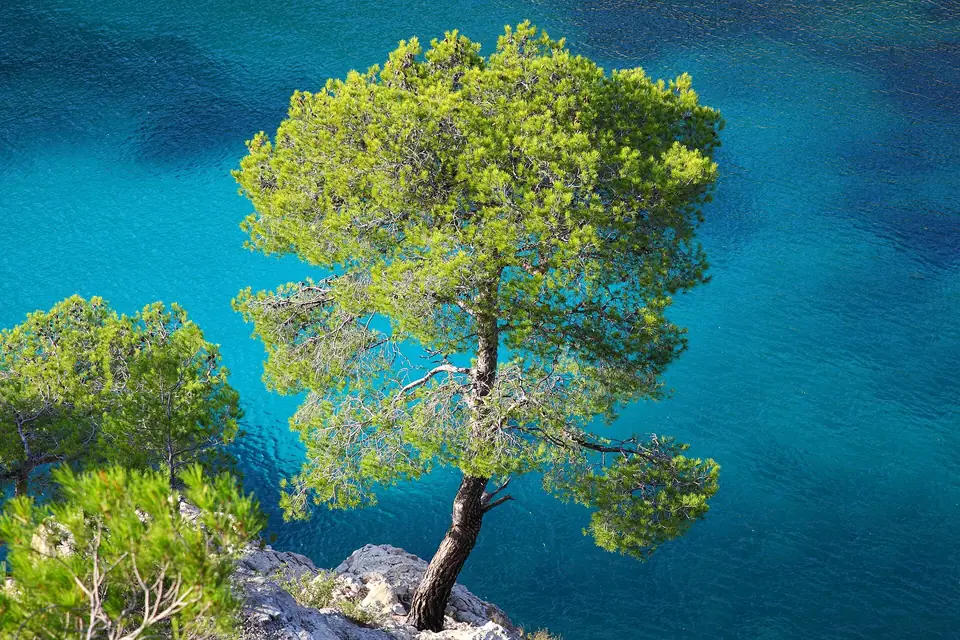
Aleppo pine loves full sun and can grow up to 70 feet tall, a grand tree you can start from a simple seed. Give young trees deep, extra watering for their first two years; from the third year on, they need none at all. Its seeds are even ground into flour in traditional Tunisian cooking.
- Sun
Full sun
What the sources say (3)
Light: Full sun
The one thing to remember if you want to grow an Aleppo pine is to site it in direct sun.
— Aleppo Pine Tree Care - Learn About Aleppo Pines In The Landscape | Gardening Know How [3] The Aleppo Pine grows in full sun and is very heat and drought tolerant.
— Aleppo Pine (Pinus halepensis) — Center for the Study of the Built Environment [4] Heat Tolerance: One of the best pine trees for the desert Sun Exposure: Full sun
— Aleppo Pine (Pinus halepensis) [7] - Water
Young trees: 5–7 gallons twice a week in year one, 11 gallons weekly in year two, then none
What the sources say (5)
Watering: Deep, infrequent irrigation, even in the hottest months
According to Center for the Study of the Built Environment (Jordan): Requires no watering once established. Generally, trees need supplemental irrigation to get established
— Aleppo Pine (Pinus halepensis) — Center for the Study of the Built Environment [4] southern California and the deserts: Fairly drought tolerant, needs supplemental water in southern California and in the deserts
— Aleppo Pine (Pinus halepensis) [7] They are heat tolerant trees and only require deep, infrequent irrigation even in the hottest months.
— Aleppo Pine Tree Care - Learn About Aleppo Pines In The Landscape | Gardening Know How [3] Watering notes: Young trees need supplemental irrigation to establish: first year 20-25 liters [5.3–6.6 gal] twice a week, second year 40 liters [10.6 gal] once a week, none needed from the third year
During the first year, irrigate in the amount of 20 – 25 liters of water twice a week. During its second year, a tree needs to be irrigated in the amount of 40 liters once a week.
— Aleppo Pine (Pinus halepensis) — Center for the Study of the Built Environment [4] Beginning with the third year, trees usually get established, and some, like the Aleppo Pine, do not require any supplemental irrigation.
— Aleppo Pine (Pinus halepensis) — Center for the Study of the Built Environment [4] - Pruning
Prune the lower branches in late winter
What the sources say (1)
Pruning: Late winter (lower branches)
Lower branches may be trimmed in late winter to encourage tall growth.
— Aleppo Pine (Pinus halepensis) — Center for the Study of the Built Environment [4] - Harvest
Its seeds are ground into flour in traditional Tunisian cooking
- Pests
Pine processionary caterpillars, a scale insect, and a fungus it is especially sensitive to
What the sources say (3)
Pests: pine processionary (Thaumetopoea pityocampa), Matsucoccus josephii (scale insect)
Entrambe le specie sono sensibili alla processionaria del pino Thaumetopoea pityocampa che può causare defogliazioni ingenti.
— Linee guida per la conservazione genetica e l’uso [1] Il pino d’Aleppo è sensi-bile agli attacchi della cocciniglia Matsucoccus josephii, mentre il pino bruzio è resistente.
— Linee guida per la conservazione genetica e l’uso [1] Diseases: Sphaeropsis sapinea
Comunque in condizioni di forte stress idrico P. halepen‑ sis presenta una sensibi-lità maggiore al fungo Sphaeropsis sapinea.
— Linee guida per la conservazione genetica e l’uso [1] - Size
Up to 70 ft tall
What the sources say (1)
Mature height: 2134 cm (70 ft), maximum
Form: A medium sized tree (up to 70 feet tall) that develops a broad crown with large limbs and very fine foliage texture.
— Virginia Tech Dendrology Fact Sheet [6] - Propagation
Grows from seed
What the sources say (3)
Propagation: Seed
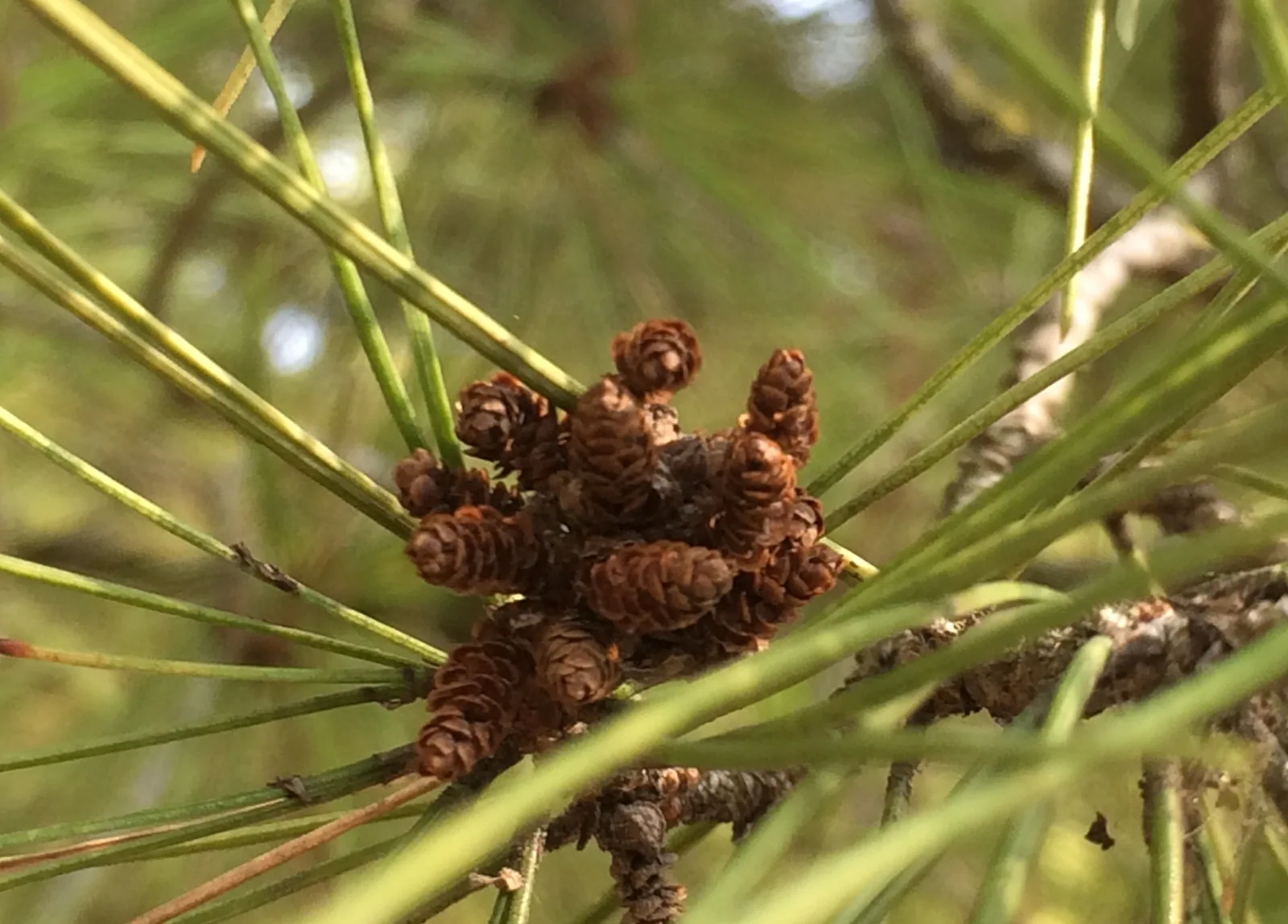
You can propagate the tree by planting the seeds found in the cones.
— Aleppo Pine Tree Care - Learn About Aleppo Pines In The Landscape | Gardening Know How [3] Propagation: May be propagated from seeds.
— Aleppo Pine (Pinus halepensis) — Center for the Study of the Built Environment [4] Watering Needs: Fairly drought tolerant, needs supplemental water in southern California and in the deserts Propagation: Seeds
— Aleppo Pine (Pinus halepensis) [7]
Overview
Aleppo pine is described as the most cultivated ornamental pine in the southwest United States, tolerant of drought, desert and urban conditions. [3] It grows in full sun and, once established, needs only deep, infrequent irrigation. [3][4] Its seeds are used in traditional Tunisian cuisine to make flour. [2]
This record is incomplete: the sources we read do not cover every field yet.
Not yet covered by our sources: Hardiness, coldest zone, Hardiness, warmest zone
Aleppo Pine care
Measurements in square brackets are our conversion into the other unit system; the quoted text is unchanged.
How to water Aleppo Pine
Watering
Deep, infrequent irrigation, even in the hottest months
What each source says
According to Center for the Study of the Built Environment (Jordan): No watering once established
southern California and the deserts: Fairly drought tolerant; needs supplemental water
What the sources say (3)
According to Center for the Study of the Built Environment (Jordan): Requires no watering once established. Generally, trees need supplemental irrigation to get establishedsouthern California and the deserts: Fairly drought tolerant, needs supplemental water in southern California and in the desertsThey are heat tolerant trees and only require deep, infrequent irrigation even in the hottest months.Watering notes
Young trees need supplemental irrigation to establish: first year 20-25 liters [5.3–6.6 gal] twice a week, second year 40 liters [10.6 gal] once a week, none needed from the third year
What the sources say (2)
During the first year, irrigate in the amount of 20 – 25 liters of water twice a week. During its second year, a tree needs to be irrigated in the amount of 40 liters once a week.Beginning with the third year, trees usually get established, and some, like the Aleppo Pine, do not require any supplemental irrigation.How much light Aleppo Pine needs
Full sun
What the sources say (3)
The one thing to remember if you want to grow an Aleppo pine is to site it in direct sun.The Aleppo Pine grows in full sun and is very heat and drought tolerant.Heat Tolerance: One of the best pine trees for the desert
Sun Exposure: Full sunHow much cold Aleppo Pine can take
Hardiness, coldest zone
Not stated in the sources we read.
Hardiness, warmest zone
Not stated in the sources we read.
How to propagate Aleppo Pine
Seed
What the sources say (3)
You can propagate the tree by planting the seeds found in the cones.Propagation:
May be propagated from seeds.Watering Needs: Fairly drought tolerant, needs supplemental water in southern California and in the deserts
Propagation: SeedsHow to grow Aleppo Pine
The plant
Family
Pinaceae
What the sources say (1)
Species : Pinus halepensis
Family : Pinaceae
Common names : Aleppo pineMature height
2134 cm (70 ft), maximum
What the sources say (1)
Form: A medium sized tree (up to 70 feet tall) that develops a broad crown with large limbs and very fine foliage texture.Pests and diseases
Pests
pine processionary (Thaumetopoea pityocampa), Matsucoccus josephii (scale insect)
What the sources say (2)
Entrambe le specie sono sensibili alla processionaria del pino Thaumetopoea pityocampa che può causare defogliazioni ingenti.Il pino d’Aleppo è sensi-bile agli attacchi della cocciniglia Matsucoccus josephii, mentre il pino bruzio è resistente.Diseases
Sphaeropsis sapinea
What the sources say (1)
Comunque in condizioni di forte stress idrico P. halepen‑ sis presenta una sensibi-lità maggiore al fungo Sphaeropsis sapinea.Aleppo Pine pests and problems
Matsucoccus josephii (scale insect)
Symptom: Aleppo pine is susceptible to attack by this scale insect, while Calabrian pine is resistant.
What the sources say (1)
Il pino d’Aleppo è sensi-bile agli attacchi della cocciniglia Matsucoccus josephii, mentre il pino bruzio è resistente.
— Linee guida per la conservazione genetica e l’uso [1] Sphaeropsis sapinea (fungus)
Symptom: Pinus halepensis shows greater sensitivity to this fungus.
What the sources say (1)
halepen‑ sis presenta una sensibi-lità maggiore al fungo Sphaeropsis sapinea.
— Linee guida per la conservazione genetica e l’uso [1]
Remedies
The sources we checked give no remedies for this plant.
Calendar
Pruning
Late winter (lower branches)
What the sources say (1)
Lower branches may be trimmed in late winter to encourage tall growth.Months as given by the sources, which are mostly from the United States (northern hemisphere). In the southern hemisphere they shift by about six months.
Edibility
Reported by the source, quoted verbatim. Do not eat a plant on the basis of this page alone: identification mistakes can be dangerous.
Seeds are used in the traditional Tunisian cusine for making flour
[2]
Similar plants
- Armand Pine Pinus armandi
- Austrian Pine Pinus nigra
- Bristlecone Pine Pinus aristata
- Chinese Pine Pinus yunnanensis
- Himalayan Pine Pinus wallichiana
- Jack pine Pinus banksiana
- Japanese Black Pine Pinus thunbergii
- Japanese Red Pine Pinus densiflora
Sources
Every value above is quoted from these documents. Links lead to the original publisher.
- Linee guida per la conservazione genetica e l’uso · euforgen.org, consulted
- Pinus halepenisis · uv.es, consulted
- Aleppo Pine Tree Care - Learn About Aleppo Pines In The Landscape | Gardening Know How · gardeningknowhow.com, consulted
- Aleppo Pine (Pinus halepensis) — Center for the Study of the Built Environment · csbe.org, consulted
- Pine, Aleppo | TreeBrowser | USU · extension.usu.edu, consulted
- Virginia Tech Dendrology Fact Sheet · dendro.cnre.vt.edu, consulted
- Aleppo Pine (Pinus halepensis) · desert-tropicals.com, consulted
- Aleppo Pine : Herbal,Medicinal,allergenic · wildflowers.co.il, consulted
Written by Emilio Marruso · last checked