
How to Grow and Care for Chinese Pine
Pinus yunnanensis
Written by Emilio Marruso · last checked
At a glance
The Yunnan pine is a woody tree from the pine family, a lasting presence that can give your garden character for years. Give it a bright spot in full sun, with 6 or more hours of direct sunlight a day, and it will feel right at home. Just pick a place sheltered from strong wind, because this tree is easily damaged by it.
- Sun
Full sun: 6 or more hours of direct sunlight a day
What the sources say (1)
Light: Full sun (6 or more hours of direct sunlight a day)
Light: Full sun (6 or more hours of direct sunlight a day)
— Pinus yunnanensis (Chinese Pine, Yunnan Pine) | North Carolina Extension Gardener Plant Toolbox [1] - Cold
Survives winters down to −10 °F (−23.3 °C)
Very hardy · USDA 6a · RHS H7 · Z6
What the sources say (2)
Hardiness, coldest zone: 6a [winter low −23.3 to −20.6 °C (−10 to −5 °F)]
USDA Plant Hardiness Zone: 6a, 6b, 7a, 7b, 8a, 8b
— Pinus yunnanensis (Chinese Pine, Yunnan Pine) | North Carolina Extension Gardener Plant Toolbox [1] Hardiness, warmest zone: 8b [winter low −9.4 to −6.7 °C (15 to 20 °F)]
USDA Plant Hardiness Zone: 6a, 6b, 7a, 7b, 8a, 8b
— Pinus yunnanensis (Chinese Pine, Yunnan Pine) | North Carolina Extension Gardener Plant Toolbox [1] - Watch out
Wind can damage it: plant it in a sheltered spot
Overview
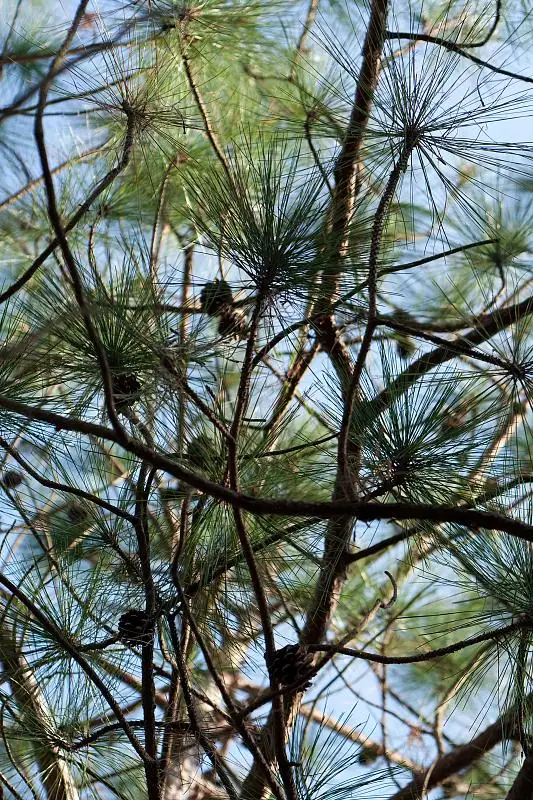
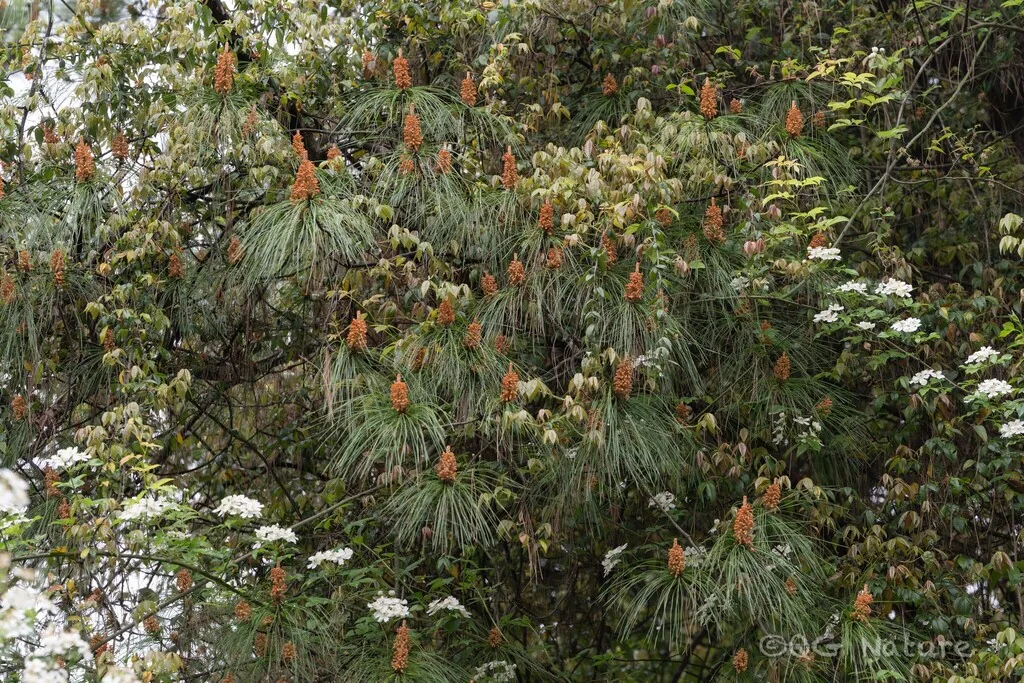
Pinus yunnanensis is a tree with exfoliating bark and a typically conical form. [1] It is listed for full sun and good drainage. [1]
This record is incomplete: the sources we read do not cover every field yet.
Not yet covered by our sources: Watering, Pruning, Propagation
Chinese Pine care
How to water Chinese Pine
Not stated in the sources we read.
How much light Chinese Pine needs
Full sun (6 or more hours of direct sunlight a day)
What the sources say (1)
Light:
Full sun (6 or more hours of direct sunlight a day)How much cold Chinese Pine can take
Hardiness, coldest zone
6a [winter low −23.3 to −20.6 °C (−10 to −5 °F)]
What the sources say (1)
USDA Plant Hardiness Zone:
6a, 6b, 7a, 7b, 8a, 8bHardiness, warmest zone
8b [winter low −9.4 to −6.7 °C (15 to 20 °F)]
What the sources say (1)
USDA Plant Hardiness Zone:
6a, 6b, 7a, 7b, 8a, 8bHow to propagate Chinese Pine
Not stated in the sources we read.
How to grow Chinese Pine
The plant
Life cycle
woody
What the sources say (1)
Genus:
Pinus
Species:
yunnanensis
Family:
Pinaceae
Life Cycle:
WoodyFamily
Pinaceae
What the sources say (1)
Genus:
Pinus
Species:
yunnanensis
Family:
Pinaceae
Life Cycle:
WoodyChinese Pine pests and problems
Wind damage
Symptom: This tree is susceptible to wind damage.
What the sources say (1)
Insect, Diseases, and Other Plant Problems: This tree is susceptible to wind damage.
— Pinus yunnanensis (Chinese Pine, Yunnan Pine) | North Carolina Extension Gardener Plant Toolbox [1]
Remedies
Each remedy shows what official sources say about it; traditional remedies without an official source are marked as such. Harmful ones are listed so you know to avoid them.
Treating the plant
aphids
strong water spray Official source, not independently tested
How: Hose aphids from trees with a strong stream of water, when practical.
Hose aphids from trees with a strong stream of water, when practical.
— hortsense.cahnrs.wsu.edu [2] insecticidal soap spray Works
All of these work by direct contact with the pest so good coverage is necessary.
— entomology.mgcafe.uky.edu [3] How: Insecticidal soap sprayed on the aphids at the tips of the branches; good coverage is necessary because it works by direct contact.
These soft bodied insects are exposed on the tips of branches and spray coverage is easy to obtain on small to moderate-sized trees. Insecticidal soap can provide excellent control
— entomology.mgcafe.uky.edu [3] What the evidence says Insecticidal soap can provide excellent control as well as products such as other products such as acephate and malathion.
— entomology.mgcafe.uky.edu [3]
pine needle scale
insecticidal soap on crawlers Works
How: Spray the crawlers with insecticidal soap, with thorough coverage.
Insecticidal soap, malathion, or [nome commerciale] (acephate) may be used to control the crawlers. Thorough spray coverage is needed for control.
— entomology.mgcafe.uky.edu [3] What the evidence says Insecticidal soap, malathion, or [nome commerciale] (acephate) may be used to control the crawlers. Thorough spray coverage is needed for control.
— entomology.mgcafe.uky.edu [3] dormant oil spray Works
Apply a dormant oil only when temperatures will not go below 40°F for 12 to 24 hours.
— entomology.mgcafe.uky.edu [3] How: Dormant oil spray in late March or early April before new growth develops.
A dormant oil spray in late March or early April before new growth develops also can be an effective control measure.
— entomology.mgcafe.uky.edu [3] What the evidence says A dormant oil spray in late March or early April before new growth develops also can be an effective control measure.
— entomology.mgcafe.uky.edu [3]
needle cast
reduce humidity around the tree Official source, not independently tested
How: Remove weeds under and near trees and thin the canopy to reduce humid conditions.
Reduce humid conditions which favor disease development (remove weeds under and near trees, thin canopy).
— hortsense.cahnrs.wsu.edu [4]
Calendar
Pruning
Not stated in the sources we read.
Months as given by the sources, which are mostly from the United States (northern hemisphere). In the southern hemisphere they shift by about six months.
Similar plants
- Aleppo Pine Pinus halepensis
- Armand Pine Pinus armandi
- Austrian Pine Pinus nigra
- Bristlecone Pine Pinus aristata
- Himalayan Pine Pinus wallichiana
- Jack pine Pinus banksiana
- Japanese Black Pine Pinus thunbergii
- Japanese Red Pine Pinus densiflora
Sources
Every value above is quoted from these documents. Links lead to the original publisher.
- Pinus yunnanensis (Chinese Pine, Yunnan Pine) | North Carolina Extension Gardener Plant Toolbox · plants.ces.ncsu.edu, consulted
- hortsense.cahnrs.wsu.edu · hortsense.cahnrs.wsu.edu
- entomology.mgcafe.uky.edu · entomology.mgcafe.uky.edu
- hortsense.cahnrs.wsu.edu · hortsense.cahnrs.wsu.edu
Written by Emilio Marruso · last checked