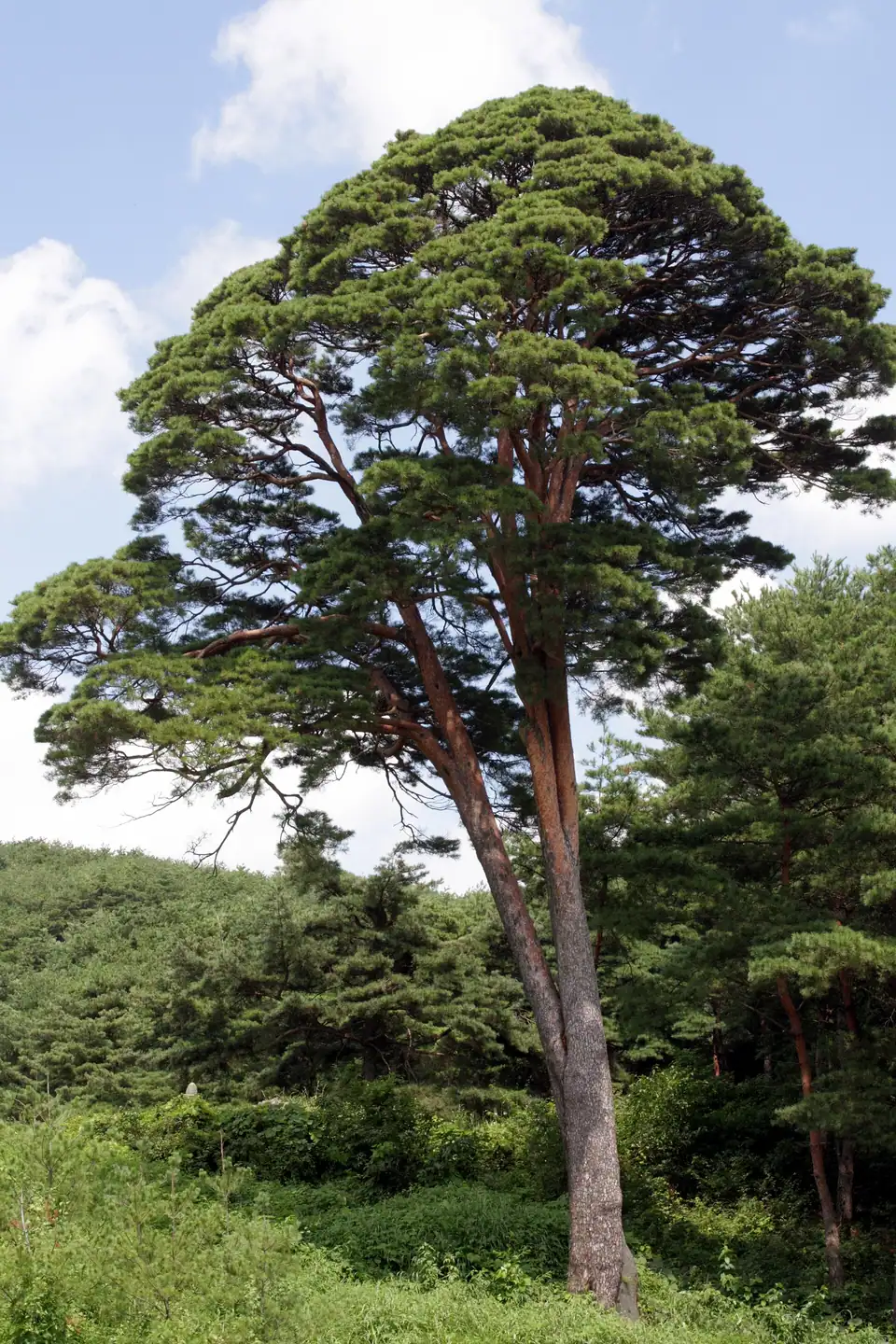


How to Grow and Care for Japanese Red Pine
Pinus densiflora
Written by Emilio Marruso · last checked
At a glance
This pine grows into a grand tree, reaching 40–60 feet tall and just as wide, so it can become the true star of a large garden. It loves full sun, with 6 or more hours of direct light a day, and soil that drains well. Pick a sunny, roomy spot sheltered from strong wind and watch it rise.
- Sun
Full sun: 6 or more hours of direct sunlight a day
What the sources say (1)
Light: Full sun (6 or more hours of direct sunlight a day)
Light: Full sun (6 or more hours of direct sunlight a day)
— Pinus densiflora (Japanese Red Pine) | North Carolina Extension Gardener Plant Toolbox [1] - Cold
Survives winters down to −40 °F (−40 °C)
Very hardy · USDA 3a · RHS H7 · Z3
What the sources say (2)
Hardiness, coldest zone: 3a [winter low −40 to −37.2 °C (−40 to −35 °F)]
USDA Plant Hardiness Zone: 3a, 3b, 4a, 4b, 5a, 5b, 6a, 6b, 7a, 7b
— Pinus densiflora (Japanese Red Pine) | North Carolina Extension Gardener Plant Toolbox [1] Hardiness, warmest zone: 7b [winter low −15 to −12.2 °C (5 to 10 °F)]
USDA Plant Hardiness Zone: 3a, 3b, 4a, 4b, 5a, 5b, 6a, 6b, 7a, 7b
— Pinus densiflora (Japanese Red Pine) | North Carolina Extension Gardener Plant Toolbox [1] - Soil
Needs soil that drains well
What the sources say (1)
Watering notes: Good drainage
Soil Drainage: Good Drainage
— Pinus densiflora (Japanese Red Pine) | North Carolina Extension Gardener Plant Toolbox [1] - Watch out
Strong wind can damage it: plant it in a sheltered spot
- Size
40–60 ft tall and 40–60 ft wide
What the sources say (2)
Mature height: 1219-1829 cm (40-60 ft)
Dimensions: Height: 40 ft. 0 in. - 60 ft. 0 in. Width: 40 ft. 0 in. - 60 ft. 0 in.
— Pinus densiflora (Japanese Red Pine) | North Carolina Extension Gardener Plant Toolbox [1] Mature width: 1219-1829 cm (40-60 ft)
Dimensions: Height: 40 ft. 0 in. - 60 ft. 0 in. Width: 40 ft. 0 in. - 60 ft. 0 in.
— Pinus densiflora (Japanese Red Pine) | North Carolina Extension Gardener Plant Toolbox [1]
Overview
Japanese red pine is a needled evergreen tree with orange to orange-red peeling bark. [1] It is listed for full sun and good drainage. [1]
This record is incomplete: the sources we read do not cover every field yet.
Not yet covered by our sources: Watering, Pruning, Propagation
Japanese Red Pine care
How to water Japanese Red Pine
Watering
Not stated in the sources we read.
Watering notes
Good drainage
What the sources say (1)
Soil Drainage:
Good DrainageHow much light Japanese Red Pine needs
Full sun (6 or more hours of direct sunlight a day)
What the sources say (1)
Light:
Full sun (6 or more hours of direct sunlight a day)How much cold Japanese Red Pine can take
Hardiness, coldest zone
3a [winter low −40 to −37.2 °C (−40 to −35 °F)]
What the sources say (1)
USDA Plant Hardiness Zone:
3a, 3b, 4a, 4b, 5a, 5b, 6a, 6b, 7a, 7bHardiness, warmest zone
7b [winter low −15 to −12.2 °C (5 to 10 °F)]
What the sources say (1)
USDA Plant Hardiness Zone:
3a, 3b, 4a, 4b, 5a, 5b, 6a, 6b, 7a, 7bHow to propagate Japanese Red Pine
Not stated in the sources we read.
How to grow Japanese Red Pine
The plant
Family
Pinaceae
What the sources say (1)
Genus:
Pinus
Species:
densiflora
Family:
Pinaceae
Life Cycle:
WoodyMature height
1219-1829 cm (40-60 ft)
What the sources say (1)
Dimensions:
Height: 40 ft. 0 in. - 60 ft. 0 in.
Width: 40 ft. 0 in. - 60 ft. 0 in.Mature width
1219-1829 cm (40-60 ft)
What the sources say (1)
Dimensions:
Height: 40 ft. 0 in. - 60 ft. 0 in.
Width: 40 ft. 0 in. - 60 ft. 0 in.Pests and diseases
Diseases
The sources give different values depending on region, zone or growing conditions.
What each source says
cultivar 'Pendula':
What the sources say (1)
cultivar 'Pendula': The document also highlights its moderate drought tolerance, pest resistance, and potential issues such as needle blight and rusts.Japanese Red Pine pests and problems
Wind damage
Symptom: Susceptible to wind damage
What the sources say (1)
Insect, Diseases, and Other Plant Problems: This tree is susceptible to wind damage.
— Pinus densiflora (Japanese Red Pine) | North Carolina Extension Gardener Plant Toolbox [1]
Remedies
Each remedy shows what official sources say about it; traditional remedies without an official source are marked as such. Harmful ones are listed so you know to avoid them.
Treating the plant
aphids
insecticidal soap spray Works
How: Spray the aphids with insecticidal soap.
Any of these aphids can be controlled by spraying with acephate or insecticidal soap, which are among the compounds registered for use against this pest in Connecticut.
— portal.ct.gov [4] What the evidence says Any of these aphids can be controlled by spraying with acephate or insecticidal soap, which are among the compounds registered for use against this pest in Connecticut.
— portal.ct.gov [4]
pine wilt nematode
removing dead beetle-infested trees Works
How: Sanitation, fertilizing, irrigating and increasing tree vigor.
Sanitation (the removal of dead, beetle-infested trees), fertilizing, irrigating, and increasing tree vigor are the most effective ways of dealing with this nematode in the U.S.
— portal.ct.gov [4] What the evidence says Sanitation (the removal of dead, beetle-infested trees), fertilizing, irrigating, and increasing tree vigor are the most effective ways of dealing with this nematode in the U.S.
— portal.ct.gov [4]
diplodia tip blight
pruning blighted twigs Works
How: Prune and remove blighted twigs, branches and cones during dry weather in autumn.
Prune and remove blighted twigs, branches, and cones during dry weather in autumn to reduce the amount of fungus available to infect new growth in the spring.
— portal.ct.gov [4] What the evidence says Prune and remove blighted twigs, branches, and cones during dry weather in autumn to reduce the amount of fungus available to infect new growth in the spring.
— portal.ct.gov [4]
needle cast
air circulation and weed control Official source, not independently tested
How: Keep tall weeds from impeding air circulation and avoid planting in low or shady areas.
Maintain good weed control so that tall weeds do not impede air circulation around the lower branches. Avoid planting susceptible trees in low or shady areas where humidity and needle wetness tend to be high for prolonged periods.
— extension.psu.edu [5]
Calendar
Pruning
Not stated in the sources we read.
Months as given by the sources, which are mostly from the United States (northern hemisphere). In the southern hemisphere they shift by about six months.
Indicative values
Values from a secondary source, not checked word for word like the rest of this page. Use them as a starting point.
- Life cycle
- PerennialIndicative value, adapt it to your climate · Secondary source
- Hours of sun
- 6-8 hoursIndicative value, adapt it to your climate · Secondary source
- Watering
- AverageIndicative value, adapt it to your climate · Secondary source
- Soil
- Well-drainedIndicative value, adapt it to your climate · Secondary source
- Soil pH
- 4.5-6Indicative value, adapt it to your climate · Secondary source
- Care level
- MediumIndicative value, adapt it to your climate · Secondary source
- Growth rate
- ModerateIndicative value, adapt it to your climate · Secondary source
- Pruning
- March, AprilIndicative value, adapt it to your climate · Secondary source
- Propagation
- Seed Propagation, Cutting, Grafting Propagation, Layering PropagationIndicative value, adapt it to your climate · Secondary source
- Pests
- Dieback, Heart rot, Rust, Scale insects, Stem borer insects, Wood deformity, Deer resistant, Drought resistantIndicative value, adapt it to your climate · Secondary source
Similar plants
- Aleppo Pine Pinus halepensis
- Armand Pine Pinus armandi
- Austrian Pine Pinus nigra
- Bristlecone Pine Pinus aristata
- Chinese Pine Pinus yunnanensis
- Himalayan Pine Pinus wallichiana
- Jack pine Pinus banksiana
- Japanese Black Pine Pinus thunbergii
Sources
Every value above is quoted from these documents. Links lead to the original publisher.
- Pinus densiflora (Japanese Red Pine) | North Carolina Extension Gardener Plant Toolbox · plants.ces.ncsu.edu, consulted
- Ask IFAS: Topic - Pinaceae · ask.ifas.ufl.edu, consulted
- Pinus | North Carolina Extension Gardener Plant Toolbox · plants.ces.ncsu.edu, consulted
- portal.ct.gov · portal.ct.gov
- extension.psu.edu · extension.psu.edu
Written by Emilio Marruso · last checked