
How to Grow and Care for Sugarberry
Celtis laevigata
Written by Emilio Marruso · last checked
At a glance
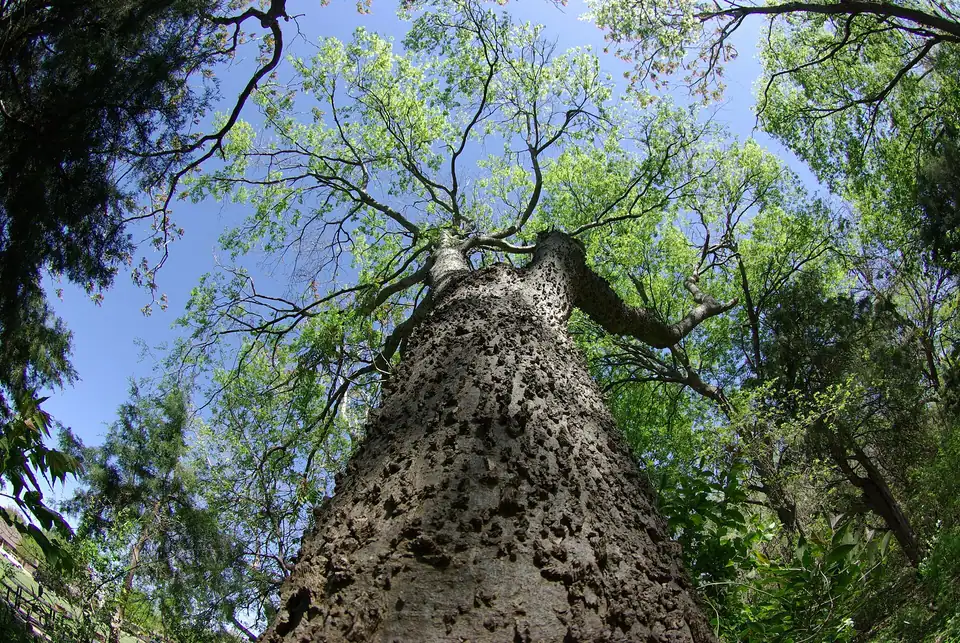
Sugarberry is an easygoing tree that grows happily in full sun to partial shade. Once established it shrugs off drought, and it even tolerates periodic flooding. Its purple fruits hold sweet, edible flesh around a single seed, and many birds and mammals come to feast on them. Give it room: its crown spreads 30 to 60 feet wide.
- Sun
Full sun to partial shade
What the sources say (1)
Light: Full sun to partial shade
It can grow 50-70 feet tall with a rounded vase crown and prefers moist well-drained sandy to clay loam in full sun to partial shade.
— Celtis laevigata (Hackberry, Southern Hackberry, Sugarberry, Sugar Hackberry) | North Carolina Extension Gardener Plant Toolbox [1] - Water
Handles drought once established and tolerates occasional flooding
What the sources say (2)
Watering: Tolerates drought once established
It will tolerate salt, acidic to mildly alkaline pHs, soil compaction, periodic flooding and drought once established.
— Celtis laevigata (Hackberry, Southern Hackberry, Sugarberry, Sugar Hackberry) | North Carolina Extension Gardener Plant Toolbox [1] Watering notes: Tolerates periodic flooding
It will tolerate salt, acidic to mildly alkaline pHs, soil compaction, periodic flooding and drought once established.
— Celtis laevigata (Hackberry, Southern Hackberry, Sugarberry, Sugar Hackberry) | North Carolina Extension Gardener Plant Toolbox [1] - Cold
Survives winters down to −20 °F (−28.9 °C)
Very hardy · USDA 5a · RHS H7 · Z5
What the sources say (2)
Hardiness, coldest zone: 5a [winter low −28.9 to −26.1 °C (−20 to −15 °F)]
USDA Plant Hardiness Zone: 5a, 5b, 6a, 6b, 7a, 7b, 8a, 8b, 9a, 9b, 10a, 10b
— Celtis laevigata (Hackberry, Southern Hackberry, Sugarberry, Sugar Hackberry) | North Carolina Extension Gardener Plant Toolbox [1] Hardiness, warmest zone: 10b [winter low 1.7 to 4.4 °C (35 to 40 °F)]
USDA Plant Hardiness Zone: 5a, 5b, 6a, 6b, 7a, 7b, 8a, 8b, 9a, 9b, 10a, 10b
— Celtis laevigata (Hackberry, Southern Hackberry, Sugarberry, Sugar Hackberry) | North Carolina Extension Gardener Plant Toolbox [1] - Harvest
The flesh of the purple fruit is sweet and edible; birds and mammals love it too
- Pests
Aphids, scales, powdery mildew and leaf spot; leaf galls look bad but don't hurt the tree
What the sources say (3)
Pests: Asian wooly hackberry aphid, scales, hackberry nipple gall
Watch for Asian wooly hackberry aphid and scale. hackberry nipple gall is common and while it disfigures the leaves it does not hurt these trees.
— Celtis laevigata (Hackberry, Southern Hackberry, Sugarberry, Sugar Hackberry) | North Carolina Extension Gardener Plant Toolbox [1] Diseases: powdery mildew, leaf spot, trunk rot
Powdery mildew and leaf spot may occur. Scales of various types may be found on Hackberry.
— Celtis laevigata (Hackberry, Southern Hackberry, Sugarberry, Sugar Hackberry) | North Carolina Extension Gardener Plant Toolbox [1] mature trees are susceptible to trunk rot and planting them in open areas will help avoid injury.
— Sugarberry - School of Forest, Fisheries, & Geomatics Sciences - Institute of Food and Agricultural Sciences - University of Florida, Institute of Food and Agricultural Sciences - UF/IFAS [2] - Watch out
Mature trees can get trunk rot; planting in an open area helps avoid injury
What the sources say (2)
Diseases: powdery mildew, leaf spot, trunk rot
Powdery mildew and leaf spot may occur. Scales of various types may be found on Hackberry.
— Celtis laevigata (Hackberry, Southern Hackberry, Sugarberry, Sugar Hackberry) | North Carolina Extension Gardener Plant Toolbox [1] mature trees are susceptible to trunk rot and planting them in open areas will help avoid injury.
— Sugarberry - School of Forest, Fisheries, & Geomatics Sciences - Institute of Food and Agricultural Sciences - University of Florida, Institute of Food and Agricultural Sciences - UF/IFAS [2] - Size
30 to 60 ft wide
What the sources say (1)
Mature width: 914-1849 cm (30 ft - 60 ft 8 in)
Width: 30 ft. 0 in. - 60 ft. 8 in.
— Celtis laevigata (Hackberry, Southern Hackberry, Sugarberry, Sugar Hackberry) | North Carolina Extension Gardener Plant Toolbox [1]
Overview
Sugarberry is a medium deciduous tree native to North America, growing 50-70 feet [15.2–21.3 m] tall. [1] It prefers moist well-drained soil in full sun to partial shade and tolerates drought once established. [1] Its fruits are eaten by many birds and mammals. [1]
This record is incomplete: the sources we read do not cover every field yet.
Not yet covered by our sources: Pruning, Propagation
Sugarberry care
Measurements in square brackets are our conversion into the other unit system; the quoted text is unchanged.
How to water Sugarberry
Watering
Tolerates drought once established
What the sources say (1)
It will tolerate salt, acidic to mildly alkaline pHs, soil compaction, periodic flooding and drought once established.Watering notes
Tolerates periodic flooding
What the sources say (1)
It will tolerate salt, acidic to mildly alkaline pHs, soil compaction, periodic flooding and drought once established.How much light Sugarberry needs
Full sun to partial shade
What the sources say (1)
It can grow 50-70 feet tall with a rounded vase crown and prefers moist well-drained sandy to clay loam in full sun to partial shade.How much cold Sugarberry can take
Hardiness, coldest zone
5a [winter low −28.9 to −26.1 °C (−20 to −15 °F)]
What the sources say (1)
USDA Plant Hardiness Zone:
5a, 5b, 6a, 6b, 7a, 7b, 8a, 8b, 9a, 9b, 10a, 10bHardiness, warmest zone
10b [winter low 1.7 to 4.4 °C (35 to 40 °F)]
What the sources say (1)
USDA Plant Hardiness Zone:
5a, 5b, 6a, 6b, 7a, 7b, 8a, 8b, 9a, 9b, 10a, 10bHow to propagate Sugarberry
Not stated in the sources we read.
How to grow Sugarberry
The plant
Family
Cannabaceae
What the sources say (2)
Sugarberry is a medium deciduous tree native to North America in the hemp family (Cannabaceae)We list both families as we are in a transition period where the new designation (Cannabaceae) is not yet fully adopted.Mature width
914-1849 cm (30 ft - 60 ft 8 in)
What the sources say (1)
Width: 30 ft. 0 in. - 60 ft. 8 in.Pests and diseases
Pests
Asian wooly hackberry aphid, scales, hackberry nipple gall
What the sources say (1)
Watch for Asian wooly hackberry aphid and scale. hackberry nipple gall is common and while it disfigures the leaves it does not hurt these trees.Diseases
powdery mildew, leaf spot, trunk rot
What the sources say (2)
Powdery mildew and leaf spot may occur. Scales of various types may be found on Hackberry.mature trees are susceptible to trunk rot and planting them in open areas will help avoid injury.Sugarberry pests and problems
Aphids and scale
Symptom: Asian wooly hackberry aphid and scales of various types may be found.
What to do: Scales may be managed with horticultural oil sprays.
What the sources say (2)
Watch for Asian wooly hackberry aphid and scale.
— Celtis laevigata (Hackberry, Southern Hackberry, Sugarberry, Sugar Hackberry) | North Carolina Extension Gardener Plant Toolbox [1] Scales of various types may be found on Hackberry. These may be managed with horticultural oil sprays.
— Celtis laevigata (Hackberry, Southern Hackberry, Sugarberry, Sugar Hackberry) | North Carolina Extension Gardener Plant Toolbox [1] Hackberry nipple gall
Symptom: Common; it disfigures the leaves.
What to do: It does not hurt the trees.
What the sources say (1)
hackberry nipple gall is common and while it disfigures the leaves it does not hurt these trees.
— Celtis laevigata (Hackberry, Southern Hackberry, Sugarberry, Sugar Hackberry) | North Carolina Extension Gardener Plant Toolbox [1] Powdery mildew and leaf spot
Symptom: May occur.
What to do: Not given in the sources.
What the sources say (1)
Powdery mildew and leaf spot may occur. Scales of various types may be found on Hackberry.
— Celtis laevigata (Hackberry, Southern Hackberry, Sugarberry, Sugar Hackberry) | North Carolina Extension Gardener Plant Toolbox [1] Trunk rot
Symptom: Mature trees are susceptible to trunk rot.
What to do: Planting them in open areas will help avoid injury.
What the sources say (1)
mature trees are susceptible to trunk rot and planting them in open areas will help avoid injury.
— Sugarberry - School of Forest, Fisheries, & Geomatics Sciences - Institute of Food and Agricultural Sciences - University of Florida, Institute of Food and Agricultural Sciences - UF/IFAS [2]
Remedies
Each remedy shows what official sources say about it; traditional remedies without an official source are marked as such. Harmful ones are listed so you know to avoid them.
Treating the plant
witches broom
pruning out affected twigs Partly works
How: Prune out the affected twigs if feasible.
Pruning out the affected twigs, if feasible, can help improve the tree's appearance.
— hortnews.extension.iastate.edu [3] What the evidence says Pruning out the affected twigs, if feasible, can help improve the tree's appearance.
— hortnews.extension.iastate.edu [3]
mistletoe
removing mistletoe from limbs Not verified
Traditional remedy, not verified by an official source.
How: Prune weak limbs away from buildings and remove mistletoe from limbs.
Calendar
Pruning
Not stated in the sources we read.
Months as given by the sources, which are mostly from the United States (northern hemisphere). In the southern hemisphere they shift by about six months.
Edibility
Reported by the source, quoted verbatim. Do not eat a plant on the basis of this page alone: identification mistakes can be dangerous.
Indicative values
Values from a secondary source, not checked word for word like the rest of this page. Use them as a starting point.
- Life cycle
- PerennialIndicative value, adapt it to your climate · Secondary source
- Mature height
- 1828.8-2438.4 cm (60-80 ft)Indicative value, adapt it to your climate · Secondary source
- Hours of sun
- 6-8 hoursIndicative value, adapt it to your climate · Secondary source
- Soil pH
- 6-7.5Indicative value, adapt it to your climate · Secondary source
- Care level
- MediumIndicative value, adapt it to your climate · Secondary source
- Growth rate
- LowIndicative value, adapt it to your climate · Secondary source
- Pruning
- February, March, April, December, January, February, March, April, MayIndicative value, adapt it to your climate · Secondary source
- Propagation
- Air Layering Propagation, Grafting Propagation, Cutting, Seed PropagationIndicative value, adapt it to your climate · Secondary source
Similar plants
- Chinese Hackberry Celtis sinensis
- Hackberry Celtis occidentalis
- Hackberry Celtis tenuifolia
- Nettle Tree Celtis australis
- Blue Sandalwood Pteroceltis tatarinowii
- Common hop Humulus lupulus
- Japanese Hops Humulus scandens
- Abies grandis Abies grandis
Sources
Every value above is quoted from these documents. Links lead to the original publisher.
- Celtis laevigata (Hackberry, Southern Hackberry, Sugarberry, Sugar Hackberry) | North Carolina Extension Gardener Plant Toolbox · plants.ces.ncsu.edu, consulted
- Sugarberry - School of Forest, Fisheries, & Geomatics Sciences - Institute of Food and Agricultural Sciences - University of Florida, Institute of Food and Agricultural Sciences - UF/IFAS · ffgs.ifas.ufl.edu, consulted
- hortnews.extension.iastate.edu · hortnews.extension.iastate.edu
Written by Emilio Marruso · last checked