
How to Grow and Care for Nettle Tree
Celtis australis
Written by Emilio Marruso · last checked
At a glance
The European hackberry is a grand tree for a sunny spot, growing 40–70 ft tall and 40–50 ft wide. Its fruits are edible, and their seeds even hold a sweet oil. You can start new trees from seed, cuttings or layering, and if you protect its trunk from bumps and scrapes, it will become a generous presence in your garden.
- Sun
Full sun
What the sources say (2)
Light: Full sun
Light requirement: full sun Soil tolerances: clay; sand; loam; slightly alkaline; acidic; well-drained
— ENH296/ST137: Celtis australis: European Hackberry [1] It is a heliophilous species, preferring sunny exposures, and suffers during intense cold and late frosts
— Celtis australis [2] - Cold
Survives winters down to −5 °F (−20.6 °C)
Very hardy · USDA 6b · RHS H7 · Z6
What the sources say (2)
Hardiness, coldest zone: 6b [winter low −20.6 to −17.8 °C (−5 to 0 °F)]
USDA hardiness zones: 6B through 9B (Figure 2) Origin: not native to North America
— ENH296/ST137: Celtis australis: European Hackberry [1] Hardiness, warmest zone: 9b [winter low −3.9 to −1.1 °C (25 to 30 °F)]
USDA hardiness zones: 6B through 9B (Figure 2) Origin: not native to North America
— ENH296/ST137: Celtis australis: European Hackberry [1] - Harvest
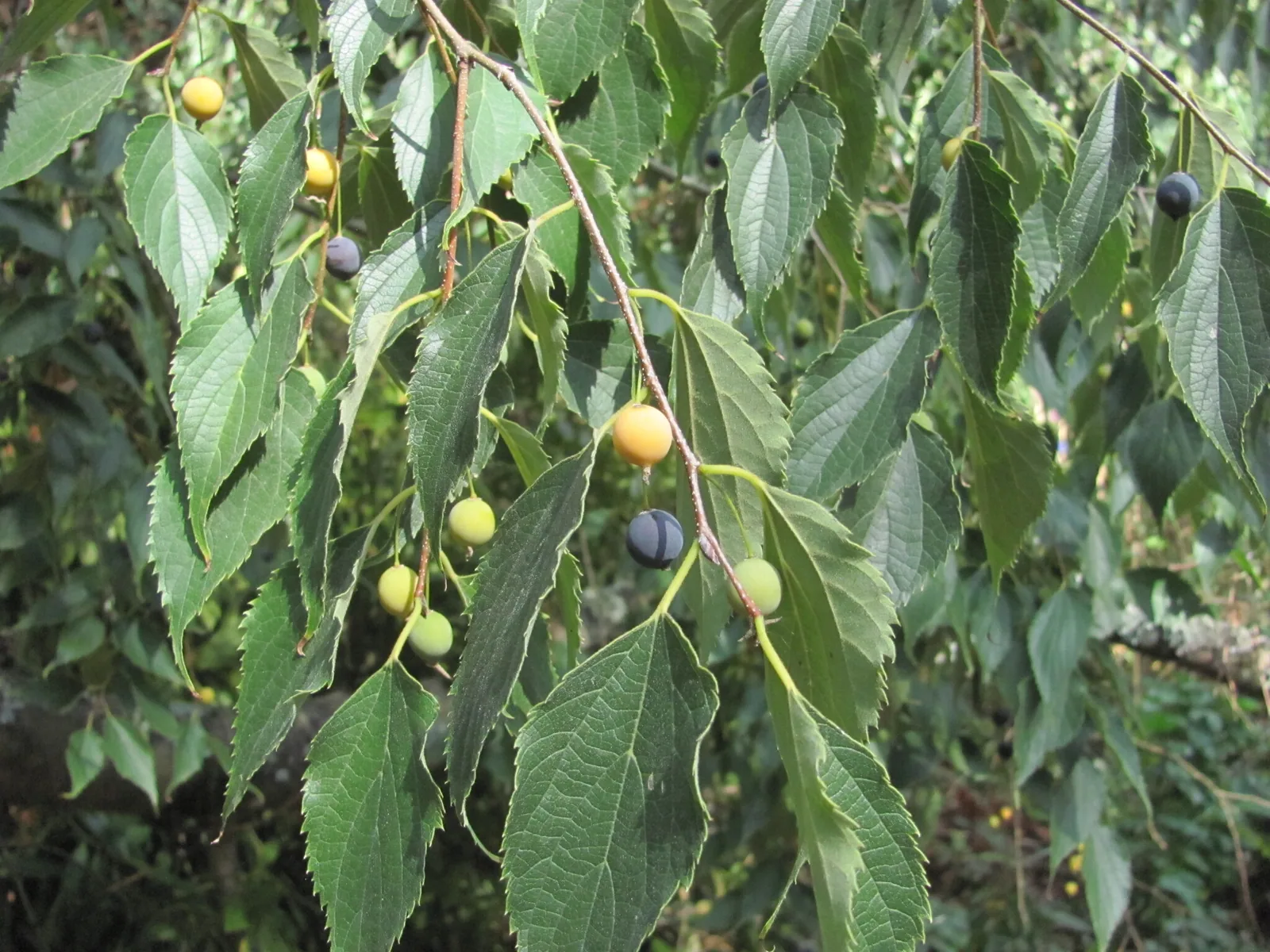
The fruits are edible, and their seeds give a sweet oil
- Pests
Longhorn beetles, witches' broom and trunk rot; cut out dead twigs when you see them
What the sources say (3)
Pests: Xylotrechus namanganensis (namangan longhorn beetle)
nettle tree is affected by Xylotrechus namanganensis (namangan longhorn beetle or willow longhorn beetle).
— Celtis australis [2] Diseases: witches' broom, internal trunk rot
No pests or diseases are of major concern but twigs may occasionally die from the parasitic fungus which causes
— ENH296/ST137: Celtis australis: European Hackberry [1] Hackberry has a reputation for internal trunk rot, particularly following mechanical injury to the trunk.
— ENH296/ST137: Celtis australis: European Hackberry [1] - Watch out
Keep mowers and vehicles away from the trunk: wounds can lead to rot inside
- Size
40–70 ft tall and 40–50 ft wide
What the sources say (2)
Mature height: 1219.2-2133.6 cm (40-70 ft)
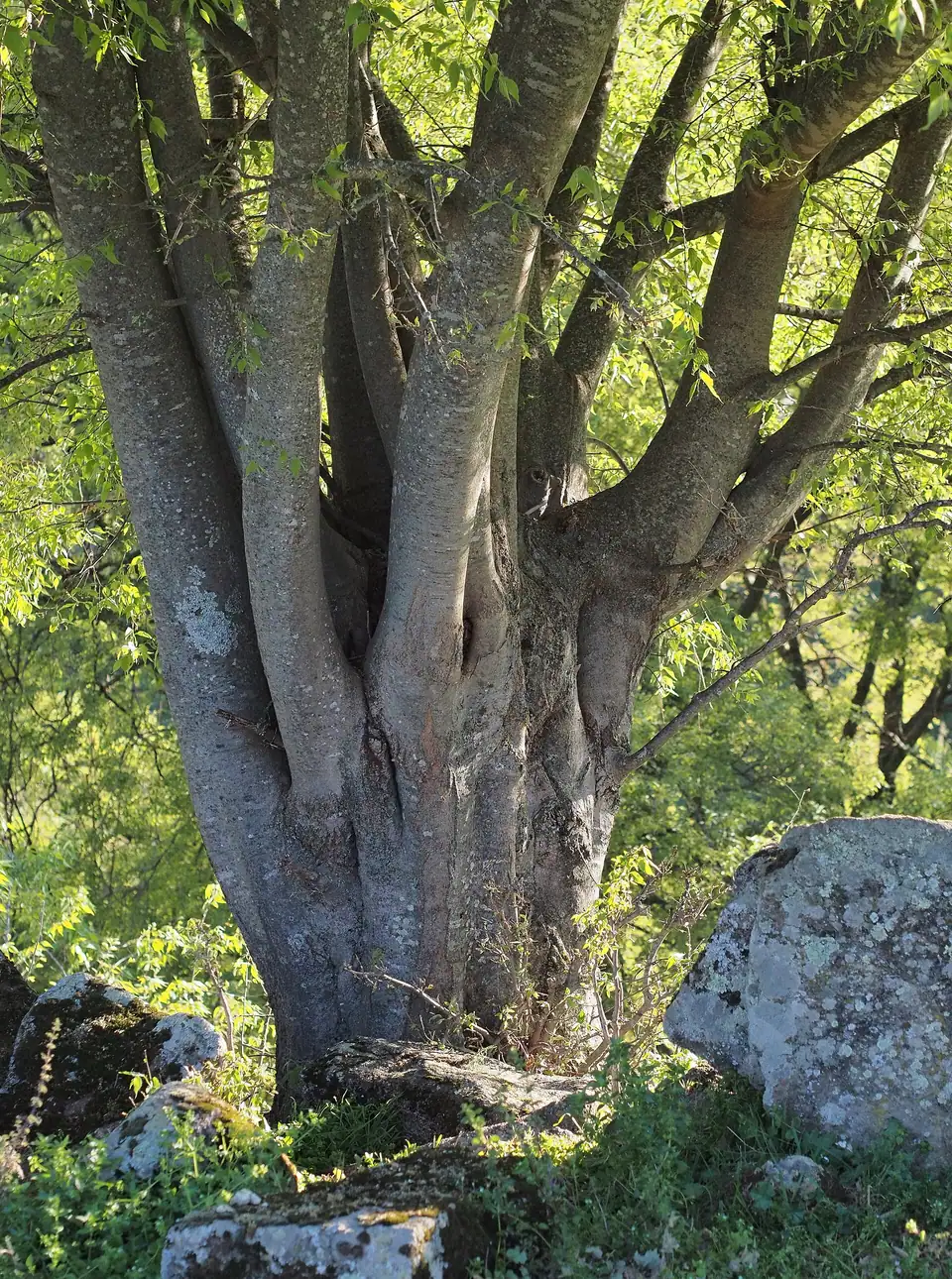
European hackberry is a deciduous tree, 40 to 70 feet tall by 40 to 50 feet wide, with smooth, light grey, somewhat warty bark
— ENH296/ST137: Celtis australis: European Hackberry [1] Mature width: 1219.2-1524 cm (40-50 ft)
European hackberry is a deciduous tree, 40 to 70 feet tall by 40 to 50 feet wide, with smooth, light grey, somewhat warty bark
— ENH296/ST137: Celtis australis: European Hackberry [1] - Propagation
From seed, layering, cuttings or root suckers
What the sources say (2)
Overview
European hackberry is a deciduous tree that prefers full sun. [1][3] It is native to southern Europe from the Mediterranean Basin to Asia Minor and is drought tolerant. [2][3] Its fruits are edible and are eaten by birds and other wildlife. [2]
This record is incomplete: the sources we read do not cover every field yet.
Not yet covered by our sources: Pruning
Nettle Tree care
How to water Nettle Tree
The sources disagree:
European hackberry will display quickest growth in full sun on moist soil but will tolerate poorer soil conditions very well with slower growth. It is moderately drought-tolerant.
[1]
What the sources say (2)
prefers poor soils made of sand, rock, or clay, and is drought tolerantSoil tolerances: clay; sand; loam; slightly alkaline; acidic; well-drained
Drought tolerance: highHow much light Nettle Tree needs
Full sun
What the sources say (2)
Light requirement: full sun
Soil tolerances: clay; sand; loam; slightly alkaline; acidic; well-drainedIt is a heliophilous species, preferring sunny exposures, and suffers during intense cold and late frostsHow much cold Nettle Tree can take
Hardiness, coldest zone
6b [winter low −20.6 to −17.8 °C (−5 to 0 °F)]
What the sources say (1)
USDA hardiness zones: 6B through 9B (Figure 2)
Origin: not native to North AmericaHardiness, warmest zone
9b [winter low −3.9 to −1.1 °C (25 to 30 °F)]
What the sources say (1)
USDA hardiness zones: 6B through 9B (Figure 2)
Origin: not native to North AmericaHow to propagate Nettle Tree
Seed, layering and cuttings; also root suckers
How to grow Nettle Tree
The plant
Family
Ulmaceae
What the sources say (1)
Common name(s): Mediterranean hackberry, European hackberry Family: Ulmaceae USDA hardiness zones: 6B through 9B (Figure 2)Mature height
1219.2-2133.6 cm (40-70 ft)
What the sources say (1)
European hackberry is a deciduous tree, 40 to 70 feet tall by 40 to 50 feet wide, with smooth, light grey, somewhat warty barkMature width
1219.2-1524 cm (40-50 ft)
What the sources say (1)
European hackberry is a deciduous tree, 40 to 70 feet tall by 40 to 50 feet wide, with smooth, light grey, somewhat warty barkPests and diseases
Pests
Xylotrechus namanganensis (namangan longhorn beetle)
What the sources say (1)
nettle tree is affected by Xylotrechus namanganensis (namangan longhorn beetle or willow longhorn beetle).Diseases
witches' broom, internal trunk rot
What the sources say (2)
No pests or diseases are of major concern but twigs may occasionally die from the parasitic fungus which causesHackberry has a reputation for internal trunk rot, particularly following mechanical injury to the trunk.Nettle Tree pests and problems
Witches' broom
Symptom: Twigs may occasionally die
What to do: Remove affected wood when noticed
Internal trunk rot
Symptom: Reputation for internal trunk rot, particularly following mechanical injury to the trunk
What to do: Locate the tree so it is not injured by mowing equipment or other vehicles
What the sources say (2)
Hackberry has a reputation for internal trunk rot, particularly following mechanical injury to the trunk.
— ENH296/ST137: Celtis australis: European Hackberry [1] Locate the tree so it will not be injured by mowing equipment or other vehicles
— ENH296/ST137: Celtis australis: European Hackberry [1]
Remedies
Each remedy shows what official sources say about it; traditional remedies without an official source are marked as such. Harmful ones are listed so you know to avoid them.
Treating the plant
witches' broom
removing affected wood Works
How: Affected wood should simply be removed when noticed.
Affected wood should simply be removed when noticed.
— ENH296/ST137: Celtis australis: European Hackberry [1] What the evidence says Affected wood should simply be removed when noticed.
— ENH296/ST137: Celtis australis: European Hackberry [1]
Getting rid of it
european hackberry seedlings
hand pulling or digging up small seedlings Works
Care should be taken to avoid moving fruit to uninfested areas when manually removing mature trees.
— weeds.dpi.nsw.gov.au [4] How: Hand pull or dig up small seedlings.
Hand pull or dig up small seedlings. Large trees may be cut down and the stump dug up and removed.
— weeds.dpi.nsw.gov.au [4] What the evidence says Hand pull or dig up small seedlings. Large trees may be cut down and the stump dug up and removed.
— weeds.dpi.nsw.gov.au [4]
european hackberry trees
cutting down the tree and digging out the stump Works
Care should be taken to avoid moving fruit to uninfested areas when manually removing mature trees.
— weeds.dpi.nsw.gov.au [4] How: Large trees may be cut down and the stump dug up and removed.
Large trees may be cut down and the stump dug up and removed. Care should be taken to avoid moving fruit to uninfested areas when manually removing mature trees.
— weeds.dpi.nsw.gov.au [4] What the evidence says Hand pull or dig up small seedlings. Large trees may be cut down and the stump dug up and removed.
— weeds.dpi.nsw.gov.au [4]
Calendar
Pruning
Not stated in the sources we read.
Months as given by the sources, which are mostly from the United States (northern hemisphere). In the southern hemisphere they shift by about six months.
Edibility
Reported by the source, quoted verbatim. Do not eat a plant on the basis of this page alone: identification mistakes can be dangerous.
Indicative values
Values from a secondary source, not checked word for word like the rest of this page. Use them as a starting point.
- Life cycle
- PerennialIndicative value, adapt it to your climate · Secondary source
- Drought tolerant
- yesIndicative value, adapt it to your climate · Secondary source
- Soil pH
- 6-7.5Indicative value, adapt it to your climate · Secondary source
- Care level
- MediumIndicative value, adapt it to your climate · Secondary source
- Growth rate
- LowIndicative value, adapt it to your climate · Secondary source
- Pruning
- March, April, May, June, July, August, September, February, March, AprilIndicative value, adapt it to your climate · Secondary source
Similar plants
- Chinese Hackberry Celtis sinensis
- Hackberry Celtis occidentalis
- Hackberry Celtis tenuifolia
- Sugarberry Celtis laevigata
- American Elm Ulmus americana
- Chinese Elm Ulmus parvifolia
- Chinese Zelkova Zelkova schneideriana
- Japanese Zelkova Zelkova serrata
Sources
Every value above is quoted from these documents. Links lead to the original publisher.
- ENH296/ST137: Celtis australis: European Hackberry · edis.ifas.ufl.edu, consulted
- Celtis australis · forest.jrc.ec.europa.eu, consulted
- Celtis australis - EUFORGEN European forest genetic resources programme · euforgen.org, consulted
- weeds.dpi.nsw.gov.au · weeds.dpi.nsw.gov.au
Written by Emilio Marruso · last checked