
How to Grow and Care for Japanese Hops
Humulus scandens
Written by Emilio Marruso · last checked
Toxic to: People · Why
At a glance
Japanese hop is a tough, fast annual vine that takes full sun or partial shade and shrugs off drought. Its vines can stretch up to 35 feet, and it is easy to start from seed. It spreads eagerly and regrows quickly from cut stems, so pull plants before they set seed to keep it right where you want it.
- Sun
Full sun to partial shade
What the sources say (1)
Light: Full sun to partial shade
Light: Full sun (6 or more hours of direct sunlight a day) Partial Shade (Direct sunlight only part of the day, 2-6 hours)
— Humulus scandens (Japanese Hops) | North Carolina Extension Gardener Plant Toolbox [1] - Water
Handles drought well
What the sources say (1)
Watering notes: Drought-tolerant plant
This drought-tolerant plant is listed as invasive in several of the United States and has escaped cultivation in many areas
— Humulus scandens (Japanese Hops) | North Carolina Extension Gardener Plant Toolbox [1] - Cold
Survives winters down to −30 °F (−34.4 °C)
Very hardy · USDA 4a · RHS H7 · Z4
What the sources say (2)
Hardiness, coldest zone: 4a [winter low −34.4 to −31.7 °C (−30 to −25 °F)]
USDA Plant Hardiness Zone: 4a, 4b, 5a, 5b, 6a, 6b, 7a, 7b, 8a, 8b
— Humulus scandens (Japanese Hops) | North Carolina Extension Gardener Plant Toolbox [1] Hardiness, warmest zone: 8b [winter low −9.4 to −6.7 °C (15 to 20 °F)]
USDA Plant Hardiness Zone: 4a, 4b, 5a, 5b, 6a, 6b, 7a, 7b, 8a, 8b
— Humulus scandens (Japanese Hops) | North Carolina Extension Gardener Plant Toolbox [1] - Watch out
Invasive: pull plants before they set seed, roots and all; cut stems regrow fast
- Size
Vines up to 35 ft long
What the sources say (1)
Mature height: up to 1066.8 cm (35 ft, vine length)
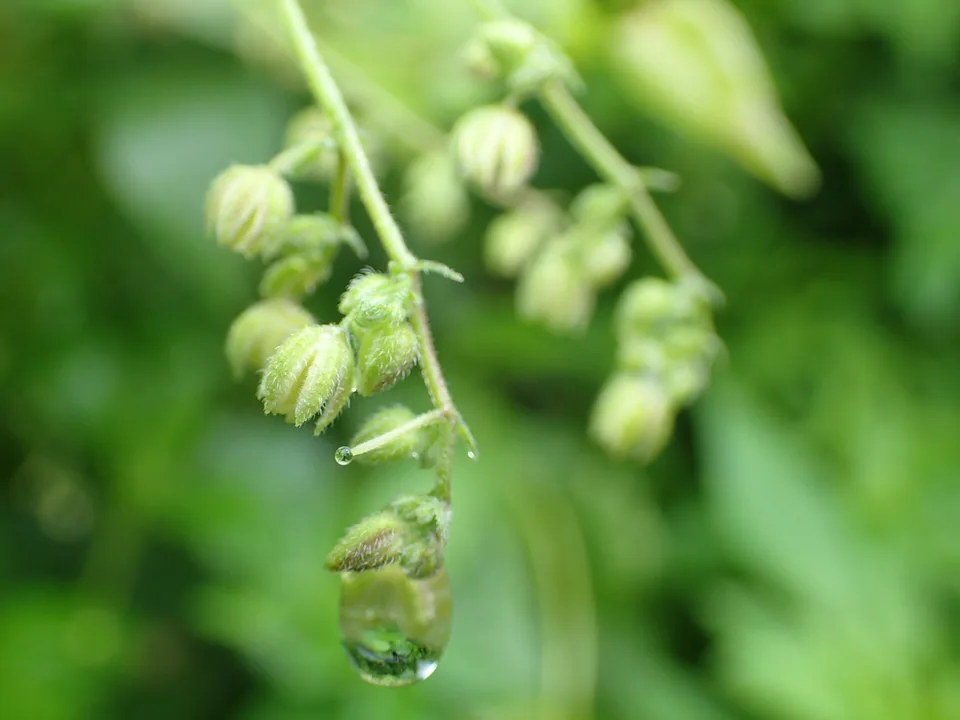
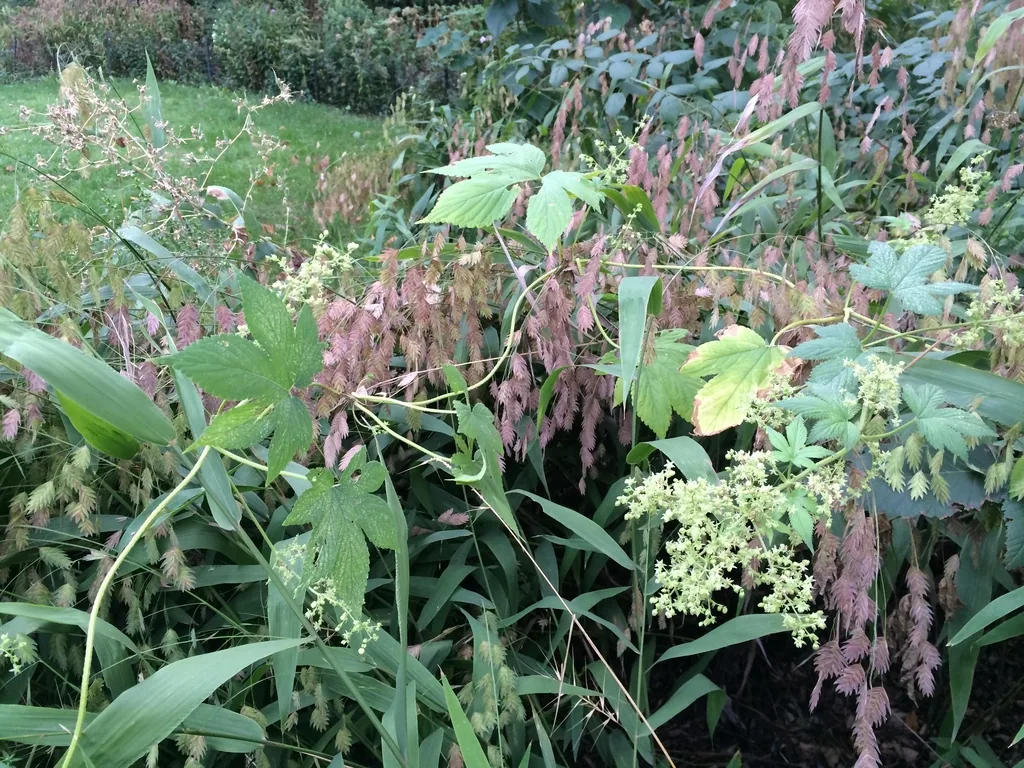
Its rough stems are twining, green or purple streaked, 4-angeld, with stiff 2-branched stalked hairs that aid in climbing. Stems can reach lengths of 35 feet.
— Humulus scandens (Japanese Hops) | North Carolina Extension Gardener Plant Toolbox [1] - Propagation
An annual grown from seed
What the sources say (3)
Propagation: Seed
Recommended Propagation Strategy: Seed Country Or Region Of Origin: Eastern Asia; Russia south to North Vietnam
— Humulus scandens (Japanese Hops) | North Carolina Extension Gardener Plant Toolbox [1] Seeds are spread by wind and water, allowing the plant to reseed itself
— Humulus scandens (Japanese Hops) | North Carolina Extension Gardener Plant Toolbox [1] Life cycle: annual
Japanese Hops is an annual with a tap root, a climbing or twining vine in the hemp family.
— Humulus scandens (Japanese Hops) | North Carolina Extension Gardener Plant Toolbox [1] - Safety
Can cause minor skin irritation that lasts only a few minutes
Overview
Humulus scandens is an annual twining vine that reaches up to 35 feet [10.7 m] and is listed as invasive in several US states. [1] Planting it is not recommended because it reseeds and forms dense colonies of overlapping vines. [1] Contact with the flowers and leaves can cause skin irritation with blisters. [1]
Japanese Hops care
Measurements in square brackets are our conversion into the other unit system; the quoted text is unchanged.
How to water Japanese Hops
Drought-tolerant plant
What the sources say (1)
This drought-tolerant plant is listed as invasive in several of the United States and has escaped cultivation in many areasHow much light Japanese Hops needs
Full sun to partial shade
What the sources say (1)
Light:
Full sun (6 or more hours of direct sunlight a day)
Partial Shade (Direct sunlight only part of the day, 2-6 hours)How much cold Japanese Hops can take
Hardiness, coldest zone
4a [winter low −34.4 to −31.7 °C (−30 to −25 °F)]
What the sources say (1)
USDA Plant Hardiness Zone:
4a, 4b, 5a, 5b, 6a, 6b, 7a, 7b, 8a, 8bHardiness, warmest zone
8b [winter low −9.4 to −6.7 °C (15 to 20 °F)]
What the sources say (1)
USDA Plant Hardiness Zone:
4a, 4b, 5a, 5b, 6a, 6b, 7a, 7b, 8a, 8bHow to propagate Japanese Hops
Seed
What the sources say (2)
Recommended Propagation Strategy:
Seed
Country Or Region Of Origin:
Eastern Asia; Russia south to North VietnamSeeds are spread by wind and water, allowing the plant to reseed itselfHow to grow Japanese Hops
The plant
Life cycle
annual
What the sources say (1)
Japanese Hops is an annual with a tap root, a climbing or twining vine in the hemp family.Family
Cannabaceae
What the sources say (1)
Family:
Cannabaceae
Uses (Ethnobotany):
An annual vine that can be used as screening.
Life Cycle:
AnnualMature height
up to 1066.8 cm (35 ft, vine length)
What the sources say (1)
Its rough stems are twining, green or purple streaked, 4-angeld, with stiff 2-branched stalked hairs that aid in climbing. Stems can reach lengths of 35 feet.Japanese Hops pests and problems
Invasive spread
Symptom: Forms dense colonies of overlapping vines and may displace desirable species
What to do: Pull plants before seeds set, removing as much of the root system as possible
What the sources say (2)
Control can be maintained by pulling plants before its seeds set, ensuring to remove as much of the root system as possible.
— Humulus scandens (Japanese Hops) | North Carolina Extension Gardener Plant Toolbox [1] allowing the plant to reseed itself and often forms dense colonies of overlapping vines.
— Humulus scandens (Japanese Hops) | North Carolina Extension Gardener Plant Toolbox [1] Regrowth after cutting
Symptom: The vine regrows quickly from cut stems
What to do: Pull small plants before the root system is established; mow early in the growing season and repeat
What the sources say (2)
Small occurrences of Japanese hop can be removed by hand pulling before the root system has a chance to become established.
— Invasives in Your Woodland: Japanese Hop | University of Maryland Extension [2] the vine regrows quickly from cut stems, so repeated attention is also required when using this method.
— Invasives in Your Woodland: Japanese Hop | University of Maryland Extension [2]
Remedies
Each remedy shows what official sources say about it; traditional remedies without an official source are marked as such. Harmful ones are listed so you know to avoid them.
First aid
First aid: not a substitute for a doctor
contact dermatitis
washing the skin with a lot of water Official source, not independently tested
Signs of infection such as tenderness, redness, warmth, or fever.
— medlineplus.gov [4] How: Wash the area with a lot of water to get rid of any traces of the irritant still on the skin, and avoid further exposure.
Often, treatment includes washing the area with a lot of water to get rid of any traces of the irritant that are still on the skin.
— medlineplus.gov [4]
Getting rid of it
invasive spread
hand pulling Partly works
Be sure to wear long sleeves and gloves, as this plant is prickly.
— treesatlanta.org [5] How: Hand-pull and uproot an area, tugging one vine at a time; shake excess dirt off the roots and pile them to dry out. Follow-ups are necessary.
The most effective way to remove this invasive vine growing in the ground layer is to hand-pull and uproot an area. This plant is an annual, and therefore has very shallow roots, making it very easy to hand-pull.
— treesatlanta.org [5] What the evidence says Small occurrences of Japanese hop can be removed by hand pulling before the root system has a chance to become established.
— Invasives in Your Woodland: Japanese Hop | University of Maryland Extension [2]
regrowth after cutting
repeated mowing or cutting Partly works
How: Repeated cutting with a weed-whip, brush-cutter or mower; the vines re-grow quickly so frequent cutting is necessary. Best time to mow is mid-May through July; do not mow after seed set.
Unfortunately, the vines re-grow quickly from cut stems so frequent cutting is necessary.
— sudbury.ma.us [6] What the evidence says Cutting through mowing or weed trimmer is also effective; however, the vine regrows quickly from cut stems, so repeated attention is also required when using this method.
— Invasives in Your Woodland: Japanese Hop | University of Maryland Extension [2]
Is Japanese Hops poisonous?
Reported by the source, quoted verbatim. This is not medical or veterinary advice: if a person or an animal may have eaten this plant, contact a poison control centre or a veterinarian.
Poison Severity: Low Poison Symptoms: SKIN IRRITATION MINOR, OR LASTING ONLY FOR A FEW MINUTES.
[1]- Poisonous parts
Causes Contact Dermatitis: Yes Poison Part: Flowers Leaves
[1]- Toxic principle
Poison Toxic Principle: Volatile oils and bitter acids
[1]- Symptoms
SKIN IRRITATION MINOR, OR LASTING ONLY FOR A FEW MINUTES. Skin irritation with blisters upon contact.
[1]- Severity
Poison Severity: Low Poison Symptoms: SKIN IRRITATION MINOR, OR LASTING ONLY FOR A FEW MINUTES.
[1]
Similar plants
- Common hop Humulus lupulus
- Chinese Hackberry Celtis sinensis
- Blue Sandalwood Pteroceltis tatarinowii
- Hackberry Celtis occidentalis
- Hackberry Celtis tenuifolia
- Sugarberry Celtis laevigata
- Abraham Trachystemon orientalis
- Acacia longifolia Acacia longifolia
Sources
Every value above is quoted from these documents. Links lead to the original publisher.
- Humulus scandens (Japanese Hops) | North Carolina Extension Gardener Plant Toolbox · plants.ces.ncsu.edu, consulted
- Invasives in Your Woodland: Japanese Hop | University of Maryland Extension · extension.umd.edu, consulted
- Growing Hops at Home · extension.psu.edu, consulted
- medlineplus.gov · medlineplus.gov
- treesatlanta.org · treesatlanta.org
- sudbury.ma.us · sudbury.ma.us
Written by Emilio Marruso · last checked