
Cómo cultivar y cuidar Almez del Mississippi
Celtis laevigata
Escrito por Emilio Marruso · última revisión
De un vistazo
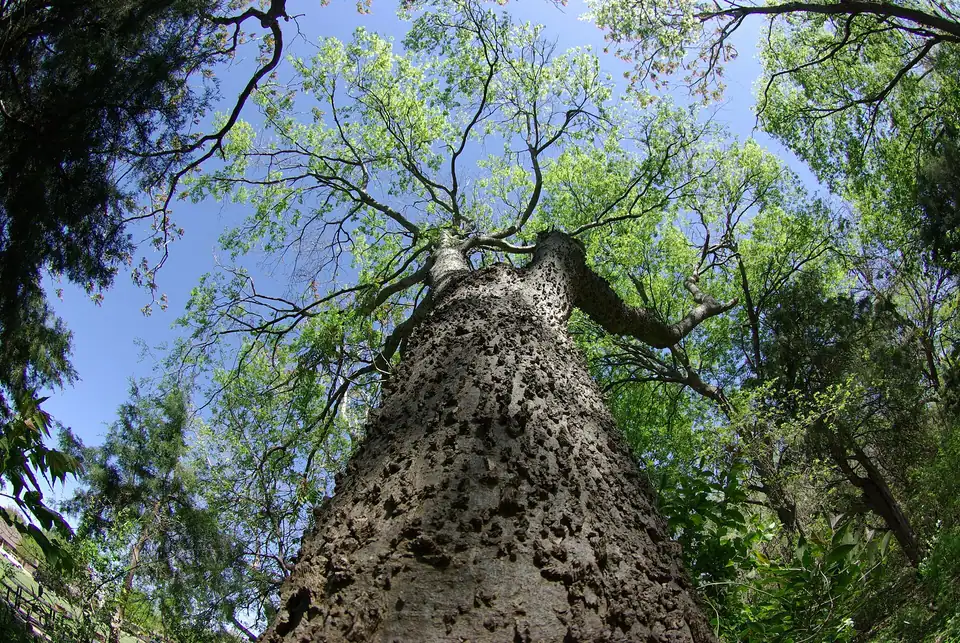
El almez americano es un árbol agradecido que crece a pleno sol o en semisombra. Una vez establecido aguanta la sequía e incluso tolera inundaciones ocasionales. Sus frutos morados tienen una pulpa dulce y comestible alrededor de una sola semilla, y atraen a muchas aves y mamíferos. Dale espacio: su copa llega a medir de 9 a 18 m de ancho.
- Sol
Sol pleno o semisombra
Qué dicen las fuentes (1)
Luz: Pleno sol a semisombra
It can grow 50-70 feet tall with a rounded vase crown and prefers moist well-drained sandy to clay loam in full sun to partial shade.
— Celtis laevigata (Hackberry, Southern Hackberry, Sugarberry, Sugar Hackberry) | North Carolina Extension Gardener Plant Toolbox [1] - Riego
Aguanta la sequía una vez establecido y tolera inundaciones ocasionales
Qué dicen las fuentes (2)
Riego: Tolera la sequía una vez establecido
It will tolerate salt, acidic to mildly alkaline pHs, soil compaction, periodic flooding and drought once established.
— Celtis laevigata (Hackberry, Southern Hackberry, Sugarberry, Sugar Hackberry) | North Carolina Extension Gardener Plant Toolbox [1] Notas sobre el riego: Tolera inundaciones periódicas
It will tolerate salt, acidic to mildly alkaline pHs, soil compaction, periodic flooding and drought once established.
— Celtis laevigata (Hackberry, Southern Hackberry, Sugarberry, Sugar Hackberry) | North Carolina Extension Gardener Plant Toolbox [1] - Frío
Aguanta inviernos de hasta −28,9 °C (−20 °F)
Muy rústica · USDA 5a · RHS H7 · Z5
Qué dicen las fuentes (2)
Rusticidad, zona más fría: 5a [mínima invernal de −28,9 a −26,1 °C (de −20 a −15 °F)]
USDA Plant Hardiness Zone: 5a, 5b, 6a, 6b, 7a, 7b, 8a, 8b, 9a, 9b, 10a, 10b
— Celtis laevigata (Hackberry, Southern Hackberry, Sugarberry, Sugar Hackberry) | North Carolina Extension Gardener Plant Toolbox [1] Rusticidad, zona más cálida: 10b [mínima invernal de 1,7 a 4,4 °C (de 35 a 40 °F)]
USDA Plant Hardiness Zone: 5a, 5b, 6a, 6b, 7a, 7b, 8a, 8b, 9a, 9b, 10a, 10b
— Celtis laevigata (Hackberry, Southern Hackberry, Sugarberry, Sugar Hackberry) | North Carolina Extension Gardener Plant Toolbox [1] - Cosecha
La pulpa de los frutos morados es dulce y comestible; también encanta a aves y mamíferos
- Plagas
Pulgones, cochinillas, oídio y manchas en las hojas; las agallas afean las hojas pero no dañan el árbol
Qué dicen las fuentes (3)
Plagas: Pulgón lanoso asiático del almez, cochinillas, agalla de pezón del almez
Watch for Asian wooly hackberry aphid and scale. hackberry nipple gall is common and while it disfigures the leaves it does not hurt these trees.
— Celtis laevigata (Hackberry, Southern Hackberry, Sugarberry, Sugar Hackberry) | North Carolina Extension Gardener Plant Toolbox [1] Enfermedades: Mildiu polvoriento, mancha foliar, pudrición del tronco
Powdery mildew and leaf spot may occur. Scales of various types may be found on Hackberry.
— Celtis laevigata (Hackberry, Southern Hackberry, Sugarberry, Sugar Hackberry) | North Carolina Extension Gardener Plant Toolbox [1] mature trees are susceptible to trunk rot and planting them in open areas will help avoid injury.
— Sugarberry - School of Forest, Fisheries, & Geomatics Sciences - Institute of Food and Agricultural Sciences - University of Florida, Institute of Food and Agricultural Sciences - UF/IFAS [2] - Atención
Los árboles adultos pueden sufrir podredumbre del tronco; plantarlo en un lugar abierto ayuda a evitar daños
Qué dicen las fuentes (2)
Enfermedades: Mildiu polvoriento, mancha foliar, pudrición del tronco
Powdery mildew and leaf spot may occur. Scales of various types may be found on Hackberry.
— Celtis laevigata (Hackberry, Southern Hackberry, Sugarberry, Sugar Hackberry) | North Carolina Extension Gardener Plant Toolbox [1] mature trees are susceptible to trunk rot and planting them in open areas will help avoid injury.
— Sugarberry - School of Forest, Fisheries, & Geomatics Sciences - Institute of Food and Agricultural Sciences - University of Florida, Institute of Food and Agricultural Sciences - UF/IFAS [2] - Tamaño
De 9 a 18 m de ancho
Qué dicen las fuentes (1)
Anchura adulta: 914-1849 cm (30 pies - 60 pies 8 pulgadas)
Width: 30 ft. 0 in. - 60 ft. 8 in.
— Celtis laevigata (Hackberry, Southern Hackberry, Sugarberry, Sugar Hackberry) | North Carolina Extension Gardener Plant Toolbox [1]
Resumen
El almez es un árbol caducifolio mediano nativo de América del Norte, que crece entre 50 y 70 pies [15,2–21,3 m] de altura. [1] Prefiere suelo húmedo y bien drenado a pleno sol o semisombra y tolera la sequía una vez establecido. [1] Sus frutos son consumidos por muchas aves y mamíferos. [1]
Citado en inglés, como en la fuente.
Esta ficha está incompleta: las fuentes consultadas aún no cubren todos los campos.
Aún no cubierto por nuestras fuentes: Poda, Propagación
Cuidados
Las medidas entre corchetes son nuestra conversión al otro sistema de unidades; el texto citado no cambia.
Riego
Riego
Tolera la sequía una vez establecido
Qué dicen las fuentes (1)
It will tolerate salt, acidic to mildly alkaline pHs, soil compaction, periodic flooding and drought once established.Notas sobre el riego
Tolera inundaciones periódicas
Qué dicen las fuentes (1)
It will tolerate salt, acidic to mildly alkaline pHs, soil compaction, periodic flooding and drought once established.Luz
Pleno sol a semisombra
Qué dicen las fuentes (1)
It can grow 50-70 feet tall with a rounded vase crown and prefers moist well-drained sandy to clay loam in full sun to partial shade.Clima y frío
Rusticidad, zona más fría
5a [mínima invernal de −28,9 a −26,1 °C (de −20 a −15 °F)]
Qué dicen las fuentes (1)
USDA Plant Hardiness Zone:
5a, 5b, 6a, 6b, 7a, 7b, 8a, 8b, 9a, 9b, 10a, 10bRusticidad, zona más cálida
10b [mínima invernal de 1,7 a 4,4 °C (de 35 a 40 °F)]
Qué dicen las fuentes (1)
USDA Plant Hardiness Zone:
5a, 5b, 6a, 6b, 7a, 7b, 8a, 8b, 9a, 9b, 10a, 10bPropagación
No figura en las fuentes consultadas.
Cultivo
La planta
Familia
Cannabaceae
Qué dicen las fuentes (2)
Sugarberry is a medium deciduous tree native to North America in the hemp family (Cannabaceae)We list both families as we are in a transition period where the new designation (Cannabaceae) is not yet fully adopted.Anchura adulta
914-1849 cm (30 pies - 60 pies 8 pulgadas)
Qué dicen las fuentes (1)
Width: 30 ft. 0 in. - 60 ft. 8 in.Plagas y enfermedades
Plagas
Pulgón lanoso asiático del almez, cochinillas, agalla de pezón del almez
Qué dicen las fuentes (1)
Watch for Asian wooly hackberry aphid and scale. hackberry nipple gall is common and while it disfigures the leaves it does not hurt these trees.Enfermedades
Mildiu polvoriento, mancha foliar, pudrición del tronco
Qué dicen las fuentes (2)
Powdery mildew and leaf spot may occur. Scales of various types may be found on Hackberry.mature trees are susceptible to trunk rot and planting them in open areas will help avoid injury.Problemas
Pulgones y cochinillas
Síntoma: Pueden encontrarse el pulgón asiático del almez y cochinillas de varios tipos.
Qué hacer: Las cochinillas pueden controlarse con pulverizaciones de aceite hortícola.
Qué dicen las fuentes (2)
Watch for Asian wooly hackberry aphid and scale.
— Celtis laevigata (Hackberry, Southern Hackberry, Sugarberry, Sugar Hackberry) | North Carolina Extension Gardener Plant Toolbox [1] Scales of various types may be found on Hackberry. These may be managed with horticultural oil sprays.
— Celtis laevigata (Hackberry, Southern Hackberry, Sugarberry, Sugar Hackberry) | North Carolina Extension Gardener Plant Toolbox [1] Agalla de pezón del almez
Síntoma: Común; desfigura las hojas.
Qué hacer: No daña a los árboles.
Qué dicen las fuentes (1)
hackberry nipple gall is common and while it disfigures the leaves it does not hurt these trees.
— Celtis laevigata (Hackberry, Southern Hackberry, Sugarberry, Sugar Hackberry) | North Carolina Extension Gardener Plant Toolbox [1] Mildiu polvoriento y mancha foliar
Síntoma: Puede ocurrir.
Qué hacer: No se indica en las fuentes.
Qué dicen las fuentes (1)
Powdery mildew and leaf spot may occur. Scales of various types may be found on Hackberry.
— Celtis laevigata (Hackberry, Southern Hackberry, Sugarberry, Sugar Hackberry) | North Carolina Extension Gardener Plant Toolbox [1] Pudrición del tronco
Síntoma: Los árboles maduros son susceptibles a la pudrición del tronco.
Qué hacer: Plantarlos en áreas abiertas ayudará a evitar daños.
Qué dicen las fuentes (1)
mature trees are susceptible to trunk rot and planting them in open areas will help avoid injury.
— Sugarberry - School of Forest, Fisheries, & Geomatics Sciences - Institute of Food and Agricultural Sciences - University of Florida, Institute of Food and Agricultural Sciences - UF/IFAS [2]
Remedios
Cada remedio indica qué dicen las fuentes oficiales; los remedios tradicionales sin fuente oficial aparecen marcados. Los perjudiciales están para que sepas evitarlos.
Cuidar la planta
escoba de bruja
poda de las ramas afectadas Funciona en parte
Cómo: Poda las ramas afectadas si es posible.
Pruning out the affected twigs, if feasible, can help improve the tree's appearance.
— hortnews.extension.iastate.edu [3] Qué dicen las pruebas Pruning out the affected twigs, if feasible, can help improve the tree's appearance.
— hortnews.extension.iastate.edu [3]
muérdago
eliminando el muérdago de las ramas No verificado
Remedio tradicional, no verificado por una fuente oficial.
Cómo: Poda las ramas débiles lejos de los edificios y elimina el muérdago de las ramas.
Calendario
Poda
No figura en las fuentes consultadas.
Meses tal como los dan las fuentes, en su mayoría de Estados Unidos (hemisferio norte). En el hemisferio sur se desplazan unos seis meses.
Comestibilidad
Según la fuente, citada textualmente. No comas una planta basándote solo en esta página: los errores de identificación pueden ser peligrosos.
Valores orientativos
Valores de una fuente secundaria, no comprobados palabra por palabra como el resto de esta página. Úselos como punto de partida.
- Ciclo de vida
- PerenneValor orientativo, adáptalo a tu clima · Fuente secundaria
- Altura adulta
- 1828.8-2438.4 cm (60-80 pies)Valor orientativo, adáptalo a tu clima · Fuente secundaria
- Horas de sol
- 6-8 horasValor orientativo, adáptalo a tu clima · Fuente secundaria
- pH del suelo
- 6-7.5Valor orientativo, adáptalo a tu clima · Fuente secundaria
- Nivel de cuidado
- MedioValor orientativo, adáptalo a tu clima · Fuente secundaria
- Crecimiento
- BajoValor orientativo, adáptalo a tu clima · Fuente secundaria
- Poda
- Febrero, marzo, abril, diciembre, enero, febrero, marzo, abril, mayoValor orientativo, adáptalo a tu clima · Fuente secundaria
- Propagación
- Propagación por acodo aéreo, propagación por injerto, esqueje, propagación por semillaValor orientativo, adáptalo a tu clima · Fuente secundaria
Plantas similares
- Almez chino Celtis sinensis
- Almez americano Celtis occidentalis
- Hackberry Celtis tenuifolia
- Almez Celtis australis
- Blue Sandalwood Pteroceltis tatarinowii
- Lúpulo Humulus lupulus
- Lúpulo japonés Humulus scandens
- Abeto de Vancuver Abies grandis
Fuentes
Cada valor anterior se cita de estos documentos. Los enlaces llevan al editor original.
- Celtis laevigata (Hackberry, Southern Hackberry, Sugarberry, Sugar Hackberry) | North Carolina Extension Gardener Plant Toolbox · plants.ces.ncsu.edu, consultado
- Sugarberry - School of Forest, Fisheries, & Geomatics Sciences - Institute of Food and Agricultural Sciences - University of Florida, Institute of Food and Agricultural Sciences - UF/IFAS · ffgs.ifas.ufl.edu, consultado
- hortnews.extension.iastate.edu · hortnews.extension.iastate.edu
Escrito por Emilio Marruso · última revisión